Quebec Lighting Requirements at Night
Riding your ATV or UTV in Quebec after the sun dips below the horizon, or when the fog rolls in across a misty trail, can be an absolutely breathtaking experience. But it also comes with a significant responsibility: ensuring your machine is properly lit. There's nothing more frustrating than getting ready for a twilight adventure only to realize your taillight is out, or worse, being stopped by a trail patrol because your lighting doesn't meet the standards. This guide will walk you through exactly what Quebec's laws demand for your off-highway vehicle's lighting, helping you stay safe, visible, and compliant whether you're heading out for a night ride or just trying to beat the sunset back to camp.
Understanding Quebec's Core Lighting Laws for ATVs and UTVs
When you hit the trails in Quebec, especially when the light starts to fade, your visibility becomes paramount, not just for your own safety, but for everyone else sharing the trail, or even those just enjoying the quiet of the wilderness nearby. Quebec takes this seriously, and so should every rider.
Why Proper Lighting is Non-Negotiable After Dark
Let's be real, riding in low light conditions or complete darkness adds a layer of challenge that even seasoned riders need to respect. Without adequate lighting, you're not just risking a ticket; you're putting yourself and others in genuine danger. Imagine cruising down a federated trail, the kind that snakes through dense forests, and suddenly, you come across a fallen tree limb that your dim headlights didn't catch until it was too late. Or perhaps a group is riding behind you, and your taillight is out, leading to a surprise braking situation and a potential rear-end collision. These aren't just hypothetical nightmares; they're very real risks.
Proper lighting isn't just about seeing where you're going; it's crucially about being seen. Other riders, snowmobilers (if you're on a shared winter trail), or even wildlife need to be able to spot you from a safe distance. The legislative push in Quebec, especially with [Quebec's 2021 Law and What Changed], has consistently emphasized safety and responsible riding practices, and proper lighting sits right at the heart of that. It's a fundamental aspect of navigating the diverse Quebec landscape safely, from remote logging roads to sections of trail that might briefly touch a municipal thoroughfare.
The Legal Framework: What the LVHR Says About Lights
In Quebec, the primary legal document governing ATVs and UTVs (which we fondly call VHRs—véhicules hors route) is the Loi sur les véhicules hors route, or LVHR. This isn't just a suggestion list; it's the law. When it comes to lighting, the LVHR is quite clear: your machine must be equipped with and use certain lights during specific times.
Specifically, the law requires that your ATV or UTV have functional headlights and taillights from half an hour before sunset until half an hour after sunrise. This also applies at any other time when visibility is poor due to weather conditions like fog, heavy rain, or snow. "Operational" doesn't just mean that the light turns on; it means it's working as intended, emitting the correct colour, and is properly aimed and maintained. A headlight that's barely glowing, or a taillight caked in mud, isn't truly operational in the spirit of the law, and could still lead to issues with trail patrols. So, before you even think about firing up your machine for a night ride, make sure you're well-versed in [Quebec ATV Road Rules Under the LVHR] and that your lighting system is up to snuff.
Specific Headlight and Taillight Rules for Night Riding
Diving a little deeper, let's look at the specific requirements for the lights that illuminate your path and ensure you're visible to others on Quebec's vast network of trails and permissible road crossings.
Headlights: Illuminating Your Path
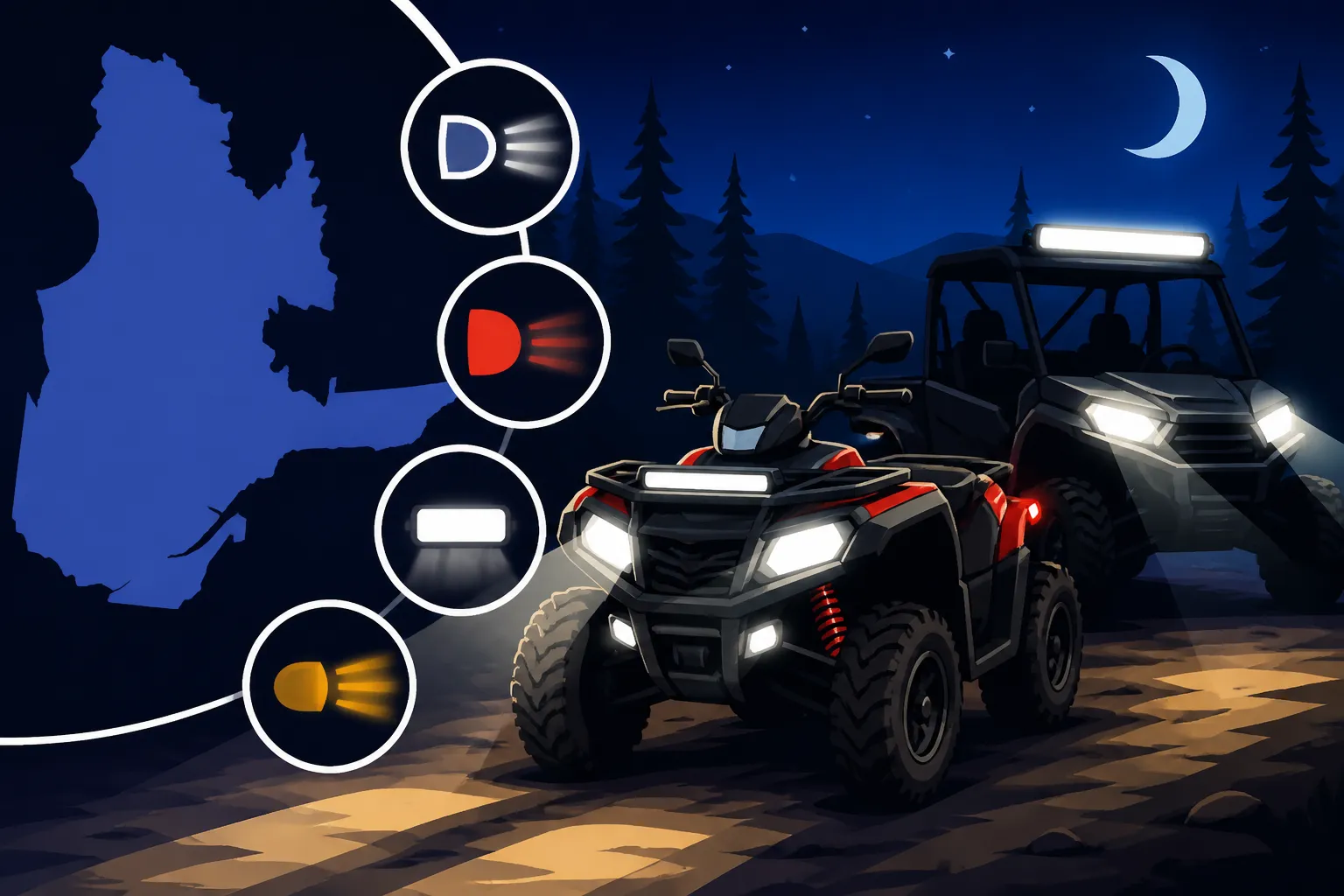
When you're out on a dark Quebec trail, your headlights are your eyes. The LVHR mandates that your ATV or UTV must be equipped with at least one headlight that emits a white or amber light to the front. Now, while one is the minimum, most modern machines come with two, and for good reason – better visibility.
But it’s not just about having a light; it's about the quality and functionality of that light. Your headlights should be bright enough to clearly illuminate the path ahead, allowing you to react safely to terrain changes, obstacles, or sudden appearances of wildlife. Many machines offer high and low beam settings, and it's crucial to understand when to use each. Just like in a car, high beams are for open, dark stretches where you need maximum illumination, but they should be dipped to low beams when you encounter oncoming riders to avoid blinding them. Imagine a fellow rider coming around a bend on a narrow trail; your high beams could momentarily disorient them, leading to a dangerous situation.
The intensity and aim of your headlights are also important. A light that's pointing straight up into the trees isn't helping you see the trail, and one that's pointing too far down might not give you enough reaction time at speed. It's a good habit to periodically check your headlight aim, especially if you've done any maintenance or if your suspension has changed. Also, keep those lenses clean! Mud, dust, and bug splatters can significantly reduce light output. A quick wipe before a night ride can make a world of difference. Whether your machine has traditional halogen bulbs or modern LEDs, ensuring they are functional and emitting proper light is key to a safe journey.
Taillights and Brake Lights: Being Seen From Behind
While headlights help you see, taillights and brake lights ensure that you are seen, especially crucial when riding in a group or when sharing trails with other vehicles. Quebec's regulations require at least one red taillight at the rear of your ATV or UTV. This light must be continuously illuminated whenever your headlights are on. It creates a critical safety buffer, letting riders behind you know where you are.
But let's not forget the brake light – that often-underappreciated hero of rear-end collision prevention. Your machine must also have a brake light that illuminates when you apply the brakes, signaling to anyone behind you that your speed is decreasing. Think about riding in a convoy on a winding trail. If the lead rider suddenly brakes, and their brake light is out, the rider behind them has no immediate visual cue until it's almost too late. This could lead to a chain reaction of braking, or worse, a collision. This is especially pertinent when you're on a [Riding a Shared Winter Trail] where snowmobiles might be moving at higher speeds and need clear indications of your intentions.
Before every ride, particularly if you anticipate being out after dark, do a quick check: have someone stand behind your machine while you turn on the ignition and apply the brakes. Confirm both your taillight is lit and your brake light gets brighter when you hit the lever or pedal. Mud, water, or loose connections are common culprits for non-functional taillights or brake lights, so a quick visual inspection can save you a lot of grief—and keep you safe.
Reflectors and Side Marker Lights
While not "lights" in the electrical sense, reflectors play a vital role in passive visibility, especially if your electrical system fails or if your machine is parked without power. Quebec's regulations generally require certain reflectors on off-highway vehicles, typically red to the rear and amber to the side. These small, often overlooked, pieces of plastic can catch the light from another vehicle's headlights, making your machine visible even when its own lights are off.
For wider machines like side-by-sides (UTVs) or when you're [Quebec Towing a Trailer], side marker lights or additional reflective tape can be incredibly beneficial. While not always explicitly mandated as active lights for ATVs/UTVs in the same way as commercial trucks, any additional measure that increases your machine's profile and visibility is a smart move. When a wider machine is partially obscured by brush or terrain, those side markers or reflectors can mean the difference between being noticed and being overlooked. Always check the specifics for your machine type and any towed implements, but generally, more visibility is always better, within reason and legality.
Beyond the Basics: Auxiliary Lighting and Enforcement
Many riders love to trick out their machines with extra lights, and for good reason—they can significantly improve visibility and safety in challenging conditions. But there are rules to these additions, and you need to be aware of how trail patrols view them.
Auxiliary Lighting: When More is Better (and Legal)
Ah, auxiliary lighting! This is where riders often get creative with light bars, spot lights, flood lights, and rock lights. For serious off-road enthusiasts tackling demanding night trails, these can be absolute game-changers, turning night into day and illuminating every rock, root, and puddle. Products from brands like SuperATV are incredibly popular for their robust and high-performance auxiliary lighting options, offering everything from powerful LED light bars to specialized cube lights that can withstand the rigours of the Quebec wilderness.
However, here's the crucial caveat: while these lights are fantastic for off-road use, their use on federated trails or any public road segment is often restricted. Imagine coming face-to-face with a blinding 50-inch light bar on a narrow trail at night. It’s incredibly disorienting and dangerous for oncoming traffic. Because of this, many regulations, including those in Quebec, stipulate that auxiliary lights must be covered or switched off when riding on designated trails, roads, or when meeting other vehicles.
So, while that powerful SuperATV light bar might be perfect for navigating a deep forest section where you know you won't encounter anyone, you need to be prepared to cover it or switch it off instantly if you enter a more regulated area or see another machine approaching. This is a common point of confusion and enforcement, so it's always better to err on the side of caution. Using auxiliary lights responsibly means understanding when and where they are appropriate, ensuring you enhance your own visibility without becoming a hazard to others.
Enforcement on the Trail and Road
Quebec's trail patrols, whether they're Sûreté du Québec officers or authorized club volunteers, are out there to ensure everyone's safety and compliance with the LVHR. And yes, your lighting system is definitely on their checklist during [Quebec Equipment Checks by Patrols]. They're looking for operational headlights, taillights, and brake lights, as well as the appropriate use of any auxiliary lighting.
Being caught with non-functional or non-compliant lights can lead to more than just a stern warning. You could face fines, and in some cases, be instructed to immediately fix the issue or even be turned back from the trail. Imagine being halfway through a multi-day trip, only to be told you can't continue after dark because a crucial light is out. [Quebec Ticket Costs for Trail Violations] can add up quickly, and a lighting infraction is definitely on that list. For instance, a patrol officer might observe a group and notice one machine whose brake light isn't activating. They might pull the group over, explain the danger, and issue a citation. It’s not about ruining your fun; it’s about preventing accidents. Always ensure you have your [Quebec Insurance Proof on the Machine] and other necessary documents, but also make sure your machine itself is in legal working order. Don't give patrols any reason to cut your ride short.
Ensuring Compliance and What to Carry
Staying safe and legal on Quebec's trails, especially during night rides, involves more than just having lights; it requires diligence, preparation, and carrying the right gear.
Pre-Ride Checks for Night Operations
Before you even think about hitting the ignition for a night ride, or even if you suspect your return might stretch into dusk, a quick but thorough pre-ride check of your lighting system is non-negotiable. It only takes a few minutes and can save you a world of trouble. Here's a simple checklist to run through:
- Headlights: Turn on your machine and switch on your headlights. Check both high and low beams (if applicable). Are they bright? Are both working? Are the lenses clear of mud or debris?
- Taillight: Walk around to the back. Is your red taillight illuminated?
- Brake Light: With the machine running, apply your brakes (both hand and foot, if separate). Does the brake light illuminate brightly?
- Turn Signals (if equipped/required): If your machine has turn signals, often necessary for road crossings or specific trail sections, check that they flash correctly.
- Auxiliary Lights: If you have them, ensure they are functioning but are off or covered as per regulations if you're on a public trail or road section. Make sure you can easily switch them off or cover them if needed.
- Battery Charge: A weak battery can lead to dim lights or intermittent power issues. Ensure your battery is fully charged, especially if you have a lot of accessories draining power.
Making this a routine habit can help catch minor issues before they become major problems. It's the kind of small effort that pays off big in peace of mind.
Essential Gear for Night Riders
Beyond the lights on your machine, what you wear and what you carry can significantly boost your safety and compliance during night operations.
- Reflective Vests/Clothing: Even if your machine is perfectly lit, adding reflective elements to your own gear is a smart move. A reflective vest or jacket can make you much more visible if you have to dismount your machine on the trail, perhaps to clear an obstacle or assist another rider.
- Headlamps: A personal headlamp is invaluable. It frees up your hands for tasks like checking a map (though the iQuad app is often better!), making a quick repair, or even setting up camp. Don't rely solely on your machine's lights for off-machine activities.
- Spare Bulbs/Fuses: While modern LED lights are generally robust, traditional bulbs can burn out, and any electrical system can blow a fuse. Carrying a few spare bulbs and appropriate fuses for your lighting circuit, along with basic tools, means you can often fix a non-functional light trailside, avoiding a potential ticket or the need to cut your ride short. For those with SuperATV aftermarket lights, knowing their specific bulb or fuse requirements is important, though many LEDs are designed for longevity.
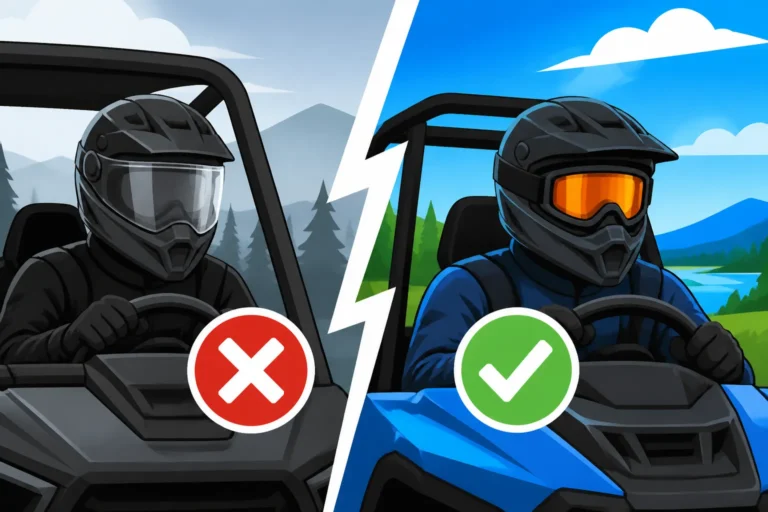
- Helmet with Visor or Goggles: While not directly lighting, good vision is paramount. Ensure your helmet's visor is clean, scratch-free, and suitable for night riding (clear or lightly tinted, not dark). If you use goggles, ensure they are also clear. For more on this, check out [Does Your Helmet Need a Visor or Goggles?].
The Importance of a Well-Maintained Electrical System
All these lights rely on a healthy electrical system. A weak battery, corroded terminals, frayed wires, or a faulty charging system can lead to frustrating issues like dim lights, flickering, or complete failure. Imagine your lights suddenly going out in the middle of a dark trail; it's a heart-stopping moment.
Regular maintenance of your machine’s electrical system is just as important as engine maintenance. Check battery terminals for corrosion, ensure all wiring connections are secure, and listen for any unusual electrical noises. If you notice your lights dimming at idle or acting erratically, it’s a sign that your charging system (stator, regulator/rectifier) might need attention. A well-maintained electrical system ensures consistent power to all your lights, protecting you from unexpected failures and keeping you safe on the trails, especially when the sun isn't there to light your way.
Here’s a quick overview of lighting considerations for your Quebec quad or side-by-side:
| Feature | Basic Legal Requirement (Quebec) | Auxiliary Lighting (e.g., Light Bars) |
|---|---|---|
| Purpose | Visibility, basic illumination, safety | Enhanced illumination, task lighting |
| Timing of Use | Mandatory half-hour before sunset to half-hour after sunrise, or in poor visibility | Permitted for off-road use, discretion advised |
| Placement | Front (headlight), Rear (taillight/brake) | Front, sides, rear (as desired) |
| Colour | White/Amber (front), Red (rear) | Typically white, but variations exist |
| Use on Federated Trail | Mandatory when required by law | Permitted, but often requires covering/off when meeting others or on regulated sections |
| Use on Public Road | Mandatory, compliant beam pattern | Generally prohibited or must be covered/off |
| Enforcement Focus | Functionality, proper colour, correct timing | Appropriate use, avoidance of blinding others |
| Brands | All manufacturers | SuperATV, other aftermarket brands |
Disclaimer
This article is for general informational purposes only and does not constitute professional advice. Laws, prices and regulations vary by location and change over time. Consult a qualified professional for guidance on your specific situation.