Quebec Rules for Riding a Rail Trail
It's incredibly tempting to look at those long, relatively flat, and often scenic rail trails crisscrossing Quebec and think they'd make a perfect route for your ATV or side-by-side. Many riders assume that because they're trails, they're open to all off-highway vehicles, but this assumption can lead to a lot of frustration—and even expensive fines. This guide will walk you through the specific rules and realities of riding your quad on former railway lines in Quebec, helping you understand where you can and cannot go, and what you need to do to stay on the right side of the law.
Understanding Quebec's Rail Trails and Their Designation
In Quebec, what we commonly call a "rail trail" is usually a former railway line that has been converted for recreational use. These trails are often part of a larger network, like the Route Verte for cyclists, or local municipal paths. The key thing to understand is that just because it's an old railway bed, it doesn't automatically mean it's open to off-highway vehicles (OHVs) like ATVs and side-by-sides. In fact, many of them are specifically designated for non-motorized use, or for specific types of motorized vehicles.
The legal framework governing trail access for ATVs in Quebec is primarily the Act respecting off-highway vehicles (often referred to by its French acronym, LVHR). This act clearly defines where OHVs can and cannot operate, and rail trails fall into a bit of a grey area that demands careful attention to specific signage and local bylaws. You might encounter a section of rail trail that is part of a [Quebec ATV Trails: The FQCQ Network], which means it's authorized. However, the next kilometre down the line, it might revert to a non-motorized path or private property, creating a really confusing experience for riders who aren't absolutely sure. It's a common frustration to find what looks like a perfect riding path only to be met with a "no motorized vehicles" sign.
The Different Faces of Rail Trails
Rail trails can come in several forms, each with its own set of rules, or lack thereof, for ATV riders:
- Federated Trails: Some sections of former railway beds have been integrated into the FQCQ (Fédération Québécoise des Clubs Quads) network. These are your safest bet. If a rail trail is part of a [Trans-Québec Trails Explained] route or a local club's authorized path, it will be clearly marked with FQCQ signage. These are maintained, often groomed, and you'll need your [Quebec's Annual FQCQ Trail Pass] to ride them.
- Municipal Trails: Local municipalities sometimes manage sections of rail trails. These can be trickier, as municipal bylaws dictate access. Some towns might allow ATVs on certain stretches, especially if they connect to federated trails or provide access to services. Others might strictly prohibit all motorized vehicles. The signage is paramount here; if there's no clear sign permitting ATVs, assume you cannot ride.
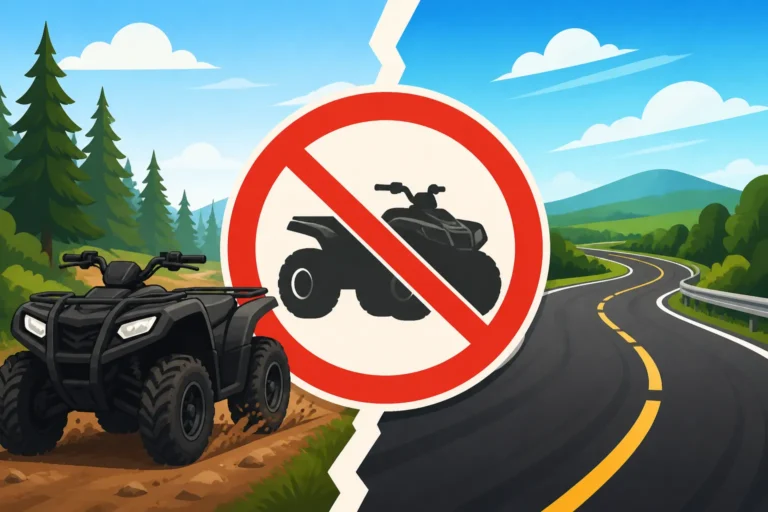
- Non-Motorized Paths: The vast majority of rail trails, especially those integrated into the Route Verte or other greenway initiatives, are designated exclusively for cycling, walking, and sometimes snowmobiling in winter. These are strictly off-limits for ATVs. You'll see clear signs prohibiting motorized vehicles, and ignoring these signs can lead to significant fines.
- Private Land: Even if a rail trail isn't part of an official network, it often crosses private land. Without explicit permission from the landowner, you are trespassing, which is a serious offence. This adds another layer of complexity to the already confusing situation.
The Legal Complexities of Riding on Unsanctioned Rail Trails
Quebec's Off-Highway Vehicle Act is quite clear about where you can ride your ATV. Generally, you need to be on a designated trail that is part of the FQCQ network, on private land with the owner's permission, or on certain public roads where municipal bylaws explicitly allow it for short distances (usually for access to a trail or service). Rail trails, unless specifically authorized and signed by the FQCQ or a municipality, do not fall into these categories.
The problem arises because rail trails look like ideal riding spots. They're often wide, relatively smooth, and cut through beautiful landscapes. It’s a natural impulse to want to explore them, but the law doesn’t operate on impulse or appearance. The [Quebec ATV Road Rules Under the LVHR] are strict, and applying them to rail trails means that if a section isn't explicitly sanctioned for ATV use, it's considered illegal. This often frustrates riders who simply want to enjoy the outdoors responsibly, but find themselves navigating a patchwork of rules that aren't always intuitively clear on the ground.
Where the LVHR Draws the Line
The LVHR outlines specific types of land and paths where off-highway vehicles can operate.
- Federated Trails: These are the backbone of authorized ATV riding. They are leased from landowners or secured through agreements, maintained by local clubs, and clearly marked. If a rail trail segment is part of this network, you'll see the distinct FQCQ signage.
- Public Roads (Limited Access): Under strict conditions, you can ride on public roads for up to [Quebec Municipal Road Access Up to 1 Kilometre] to connect trail segments or access services like fuel. This doesn't mean you can freely ride a rail trail that happens to run parallel to a road. The rail trail itself needs its own authorization.
- Private Property: With express permission from the landowner, you can ride on private land. This is why many farm or forest roads, which might resemble rail trails, are acceptable if you have the owner's consent.
- Unsanctioned Trails: Rail trails that aren't federated or covered by specific municipal bylaws permitting ATVs are simply considered off-limits. They might be former railways, but legally, they are no different from riding through a farmer's field without permission. The lack of specific "ATV Prohibited" signs doesn't imply permission; rather, permission must be explicitly granted through signage or bylaw.
For those who enjoy customizing their machines for diverse terrain, it's worth noting that even with top-notch parts from brands like SuperATV that enhance capability and durability, the legal restrictions on where you can ride remain unchanged. A high-performance machine still needs an authorized trail to operate on legally.
Identifying Authorized Rail Trail Sections for ATV Use
Given the complexities, how do you know if a specific rail trail section is open to your quad? The answer lies in official sources and diligent scouting. Relying on anecdotal information or simply observing others riding can lead to trouble. Always verify access through official channels before you hit the trail. It’s better to spend a few minutes researching than to face a hefty fine or, worse, cause an accident on a trail not designed for motorized traffic.
It’s a common complaint among riders that accessing reliable, up-to-date information on trail status can be a challenge. The landscape of trails and their designations can change, and what was open last year might be closed today. This is why checking with the right sources every season is so crucial.
Your Best Resources for Verification
- The FQCQ iQuad App and Website: This is your primary source for federated trail information. The [Quebec Trail Maps and the iQuad App] are invaluable. If a rail trail is part of the FQCQ network, it will be clearly displayed on the app's map. You can zoom in, check for trail numbers, and verify its status. If it's not on the FQCQ map, assume it's not a federated ATV trail.
- Local ATV Clubs: [Quebec Clubs and What They Maintain] are the boots on the ground. Reach out to the local ATV club in the region you plan to ride. They are familiar with local bylaws, specific trail agreements, and any exceptions or recent changes regarding rail trails. Their knowledge can be incredibly helpful and save you a lot of hassle.
- Municipal Websites and Offices: For municipal trails, check the municipality's official website or contact their recreation department. Some towns actively promote multi-use trails, while others strictly segregate them. Look for specific bylaws or maps that indicate ATV access.
- On-Site Signage: When you are actually on the ground, signage is king. Look for the distinctive blue and white FQCQ signs, or specific municipal signs that clearly indicate ATV access. Conversely, if you see signs prohibiting motorized vehicles, or signs for cycling and walking only, respect them. The absence of a "no ATV" sign does not automatically mean "yes ATV."
Table: Common Trail Designations and ATV Access in Quebec
| Trail Type/Designation | Primary Use | ATV Access | Key Indicators |
|---|---|---|---|
| FQCQ Federated Trail | Multi-use (ATV, SxS, snowmobile in winter) | YES | Blue/white FQCQ signs, trail numbers, iQuad app map. |
| Route Verte / Greenways | Cycling, walking, non-motorized | NO | Green signage, "no motorized vehicles" signs, cycling focus. |
| Municipal Multi-Use Trail | Varies by bylaw | SOMETIMES | Specific municipal signs permitting OHVs; check local rules. |
| Former Rail Bed (Undesignated) | Varies; often non-motorized or abandoned | NO | No specific ATV signs; assume prohibited. |
| Private Land | Private property | YES (with permission) | Owner's explicit written or verbal consent. |
It’s really important to remember that riding on an unauthorized rail trail is not just a minor infraction. It can lead to serious consequences, including fines and potential legal action if you damage property or disturb other users. Protecting your machine with quality components, like a sturdy skid plate or A-arm guards from SuperATV, is a smart move for any rider, but even the toughest machine won't protect you from a ticket on an illegal trail.
Penalties and What to Expect if Caught on an Unauthorized Rail Trail
Let's be direct: getting caught riding your ATV on a rail trail that isn't authorized for off-highway vehicles can be an expensive and frustrating experience. The peace and quiet of a scenic ride can quickly turn into a headache when you encounter a trail patrol officer or local law enforcement. It's not just about the monetary fine; it's also about potential court costs, the inconvenience of dealing with legal processes, and even the risk of having your machine impounded in more severe cases.
Riders often express surprise and annoyance when ticketed on what they perceived as an innocent trail. The reality is, ignorance of the law is rarely an excuse. The authorities are increasingly vigilant about enforcing ATV regulations, especially in areas where there's conflict between motorized and non-motorized users, or where environmental concerns are high.
Understanding the Financial and Legal Repercussions
The fines for riding an unregistered or unauthorized vehicle on a prohibited trail in Quebec are significant. While specific amounts can fluctuate, you're looking at penalties that can easily run into hundreds of dollars for a single infraction.
Here's a breakdown of what you might face:
- Fines: The base fine for riding on a prohibited trail can be substantial, often starting in the range of a few hundred dollars. This is a direct penalty for violating the Act respecting off-highway vehicles or relevant municipal bylaws.
- Court Costs: If you decide to contest the ticket and lose, or if the infraction is severe enough to warrant a court appearance, you could incur additional court costs.
- Impoundment: In certain circumstances, especially if you are a repeat offender, or if your machine is deemed a nuisance or a danger, law enforcement has the authority to impound your ATV. The costs associated with impoundment, towing, and storage can quickly add up, easily surpassing the initial fine. Imagine having to pay to get your quad back after it's been hauled away – it’s a situation no one wants to be in.
- Other Infractions: Depending on the situation, you might also face additional tickets for related infractions, such as [Quebec Penalties for Riding Without a Trail Pass] (if it's a federated trail but you don't have a pass), riding without proper [Quebec Helmet and Visor Rules] compliance, or even [Quebec Fines for Riding Without a Licence].
- Civil Liability: Beyond fines, if you cause damage to property or injure another person while riding illegally on a rail trail, you could face civil lawsuits. While your [Quebec's $1 Million Liability Floor Every Owner Carries] insurance provided through the SAAQ covers you on authorized trails, its application can become complicated or void if you are operating outside legal parameters.
The enforcement officers on Quebec trails can range from local police to SAAQ officers, or even authorized FQCQ trail patrols who have the authority to issue tickets. They are trained to identify ATVs operating where they shouldn't be and are increasingly equipped to track down offenders. The best defense is always prevention: know the rules, verify your routes, and stick to authorized trails. Using quality equipment, like robust suspension components or protective accessories from SuperATV, can make your ride more enjoyable and safer, but it won't grant you immunity from legal consequences if you're riding where you shouldn't be. Staying informed about [Quebec's 2021 Law and What Changed] is also crucial, as rules are updated periodically.
Disclaimer
This article is for general informational purposes only and does not constitute professional advice. Laws, prices and regulations vary by location and change over time. Consult a qualified professional for guidance on your specific situation.