Quebec Rules for a 15-Year-Old on Family Land
It’s a common scenario in many Quebec families: you’ve got a teenager who’s absolutely itching to hop on the ATV or UTV, and you, as the parent, want to encourage their passion while keeping them safe and, of course, legal. But when it comes to a 15-year-old and riding on your own family land, the rules can feel like a tangled web of regulations, leaving many parents scratching their heads and worrying about fines. This guide is here to untangle that web, offering clear, empathetic advice on exactly what you need to know to ensure your 15-year-old can ride responsibly and within the bounds of Quebec law on your private property.
Understanding Quebec's Off-Highway Vehicle Act on Private Property
Let's face it, navigating the ins and outs of Quebec's Off-Highway Vehicle Act, or LVHR (Loi sur les véhicules hors route), can be a real headache. There’s a lot of information out there, and it’s often geared towards public trails or roads. But what about when your teenager is just riding around on your own slice of heaven, away from all that? It’s a completely different ballgame, and it’s important to understand where the lines are drawn.
The General Rule for Private Land vs. Public Trails
The most fundamental distinction in Quebec’s ATV and UTV regulations is between riding on federated trails, public roads, or Crown land, and riding on private land that you own. On federated trails, which are maintained by ATV clubs and covered by your [Quebec's 25,000 Kilometres of Federated Trail] pass, the rules are much stricter, especially concerning age, licensing, and machine registration. Public roads are even more restrictive, with very specific conditions under which an ATV or UTV can even touch the pavement.
However, when it comes to your own private property, the regulations relax significantly. Think of it as your personal playground. While you still have a responsibility to ensure safety, the provincial government doesn't impose the same strict age limits, training certificate requirements, or even the need for a specific driver's license that it does for public access areas. This doesn't mean it’s a free-for-all, but it does mean you, as the landowner and parent, have more direct control and responsibility over the riding environment. This distinction is crucial for parents of eager young riders.
Age and Supervision for a 15-Year-Old on Family Land
Here’s where a lot of parents get confused. On federated trails, the law is very clear: a rider must be at least 16 years old and possess a valid driver’s license or a specific training certificate issued by the FQCQ (Fédération québécoise des clubs de quads). For a 15-year-old, those public trails are off-limits, full stop. But on your private land, the rules shift.
While there isn't a hard-and-fast legal minimum age for riding on private property, Quebec law implicitly requires parental authorization for anyone under 16. This authorization means you, as the parent, are giving permission and are ultimately responsible for the child's safety and actions. It's not just a casual nod; it's a genuine act of responsibility. Many experienced parents and club members would strongly advise against letting a 15-year-old ride unsupervised, even on private land. Direct adult supervision is highly recommended, especially when they are still developing their skills and judgment. Think of it less as a legal requirement and more as a crucial safety practice. Having an experienced adult present can make all the difference in preventing accidents and ensuring the young rider learns good habits from the start. This includes being able to step in immediately if a tricky situation arises or if the rider needs assistance.
Essential Safety Measures and Equipment on Family Land
Just because your 15-year-old is riding on your own property doesn't mean safety takes a backseat. In fact, some might argue it's even more important, as you're solely responsible for the environment and the equipment. There's no trail patrol to step in, no club volunteers to clear hazards. It's all on you, and that means putting safety first, every single time.
Helmets and Protective Gear: Non-Negotiable
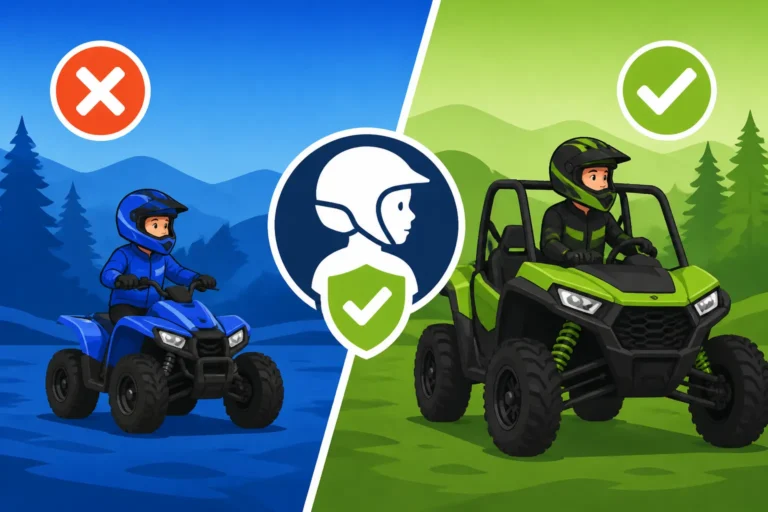
This is one area where there should be absolutely no compromise, regardless of where your child is riding. A properly fitted, DOT-approved helmet is the single most important piece of safety gear an ATV or UTV rider can have. It can mean the difference between a minor bump and a life-altering injury. For a 15-year-old, whose judgment might still be developing and whose riding skills are likely not fully honed, a helmet is absolutely essential. Don't skimp here; invest in a good quality helmet that fits snugly and comfortably. [Quebec ATV Helmet Rules] on public trails are strict, and you should enforce the same level of protection on your land.
Beyond the helmet, think about other protective gear. Goggles or a helmet visor are crucial for eye protection against dust, debris, and branches. Sturdy over-the-ankle boots will protect their feet and ankles. Long pants and a long-sleeved shirt, even in summer, can prevent scrapes and reduce the impact of minor falls. Gloves offer better grip and hand protection. Remember, safety gear isn't about avoiding tickets on a trail; it's about protecting your child. You can find excellent quality protective gear from reputable brands, ensuring your young rider is as safe as possible while out enjoying the property.
Machine Suitability and Maintenance
The type of machine your 15-year-old is riding also plays a huge role in their safety on private land. Is it a youth-model ATV appropriate for their size and experience level, or are they trying to handle a full-sized utility quad? While the LVHR has specific displacement limits for youth machines on public trails, these don't strictly apply on private land. However, common sense should absolutely prevail. A machine that is too powerful, too heavy, or too large for a teenager can quickly become unmanageable, leading to accidents.
Regular maintenance is another often-overlooked aspect. Even if the machine only sees use on your property, it needs to be in tip-top shape. Check the tires for proper inflation and wear. Test the brakes to ensure they're functioning perfectly. Inspect the throttle for smooth operation and ensure there are no sticky cables. Check fluid levels (oil, coolant, brake fluid) regularly. A poorly maintained machine is a hazard waiting to happen. Consider adding safety enhancements like sturdy skid plates or brush guards, some of which are available from brands like SuperATV, to protect the machine and rider from unexpected impacts when riding off the beaten path on your property. Making sure the machine is appropriate and well-maintained is a critical part of your parental responsibility.
| Feature | On Federated Trails (15-year-old) | On Family Private Land (15-year-old) |
|---|---|---|
| Minimum Age | 16 (with licence/certificate) | No strict legal minimum, but parental authorization & supervision expected |
| Driver's Licence | Required (Class 5 or FQCQ cert) | Not legally required |
| Training Cert. | Required if under 18 | Not legally required |
| Helmet | Mandatory, DOT-approved | Highly Recommended, DOT-approved |
| Registration (VHR) | Required with SAAQ | Not legally required for machine, but liability insurance is implied for property owners |
| Liability Ins. | Minimum $1 Million (SAAQ) | Covered by homeowner's insurance (check policy) or private off-road policy |
| Supervision | N/A (cannot ride) | Highly Recommended |
| Trail Pass | Required | Not applicable |
| Speed Limits | 50 km/h | Parent/landowner discretion |
Defining "Family Land" and What It Entails
The concept of "family land" seems straightforward, right? It's your property, your rules. But in the context of ATV and UTV riding, it's worth taking a moment to clarify what truly falls under this umbrella and to consider the implications of those boundaries, especially with eager young riders.
What Qualifies as Private or Family Land?
When we talk about "family land" for riding purposes, we're specifically referring to property that you or an immediate family member legally own. This isn't leased Crown land, land with public access easements, or property you're merely borrowing without formal permission. It’s your deeded property, where you have the legal right to control who enters and what activities take place. A small lot next to your cottage, a sprawling farm, or a large wooded acreage that you own outright – these would all qualify.
This distinction is important because the moment your teenager crosses a property line onto land you don't own, even inadvertently, they are no longer under the relaxed "private land" rules. They could suddenly be subject to the full force of Quebec’s off-highway vehicle laws, including age restrictions, licensing requirements, and even trespass charges. It can be easy for a young rider, engrossed in the thrill of the ride, to lose track of boundaries, especially in wooded or open areas without clear markers. This is why clear communication and establishing visual cues are so important when your child is riding.
Avoiding Trespass and Neighborly Relations
Even on your own land, it’s crucial to impress upon your 15-year-old the importance of respecting boundaries. Accidents happen, and sometimes a rider might inadvertently stray onto a neighbor's property. This can lead to tension, complaints, and potentially legal issues if the neighbor feels their property is being damaged or their privacy invaded.
Before allowing your teen to ride, take the time to clearly mark your property lines, especially in areas where riding might occur close to a neighbor's land. Talk to your neighbors if your riding activities might cause noise or dust. Being a good neighbor means being proactive. While the laws are more lenient on your own land, your actions still impact those around you. Ensuring your teen understands and adheres to property boundaries is not just about avoiding legal trouble; it's about maintaining good community relations. If you have any concerns about potential boundary issues or shared access roads, it’s always best to clarify these with your neighbors beforehand. You don't want a fun afternoon on the quad to turn into a dispute with someone living next door, particularly if your teen is out exploring areas that could be mistaken for public access.
Practical Tips for Parents and Young Riders
Even with a good understanding of the rules, putting safety into practice for a 15-year-old on family land requires a proactive approach from parents. It's about setting up the environment for success, fostering good habits, and keeping the lines of communication open.
Creating a Safe Riding Environment
Your private land offers the unique opportunity to design a riding environment tailored to your child's skill level. Take a good look at your property through the eyes of a safety officer. Are there hidden stumps, large rocks, or sudden drops? Clear these hazards. Are there fences, buildings, or other obstacles that could be dangerous? Mark them clearly. Consider creating a designated riding area, especially for younger or less experienced riders, perhaps a loop or a field where they can practice without encountering too many surprises.
Establish clear rules with your 15-year-old: no riding too close to buildings, no stunts, maintaining reasonable speeds, and always being aware of their surroundings. Discuss potential risks, such as losing control on a slippery patch or hitting an unseen obstacle. Even on private land, common sense and a structured approach to riding are your best friends. Equip their machine with safety flags or brighter lighting, especially if they ride at dusk, which can be easily installed with parts from companies like SuperATV. This makes them more visible if someone else is on the property or if you need to locate them.
The Importance of Communication and Training
Open, honest communication with your teenager about the responsibilities that come with riding an ATV or UTV is paramount. It’s not just a toy; it’s a powerful machine that demands respect. Talk about the potential dangers, the consequences of reckless riding, and why certain rules are in place. Remind them that while it’s fun, their safety (and yours) is the top priority.
Even though formal training certificates are not mandatory for riding on private land for a 15-year-old, the principles of responsible riding taught in such courses are incredibly valuable. Consider going over basic riding techniques with them yourself, or even enrolling them in a youth safety course if one is available locally that focuses on fundamental skills. Things like proper throttle control, braking techniques, body positioning, and navigating different terrains are universal skills that will serve them well, no matter where they ride. Regular refreshers on these techniques, perhaps at the start of each riding season, can reinforce safe habits. Teach them about [Quebec Accident Reporting Rules] if an incident were to occur, even on private land, so they know what to do in an emergency. Encouraging a respectful attitude towards the machine and its power will help them become a safer, more confident rider for years to come.
Disclaimer
This article is for general informational purposes only and does not constitute professional advice. Laws, prices and regulations vary by location and change over time. Consult a qualified professional for guidance on your specific situation.