Quebec Crossings at Right Angles
It’s a familiar scenario for any ATV or UTV rider tearing through Quebec’s incredible trail network: you're in a groove, enjoying the scenery, when suddenly, a paved road appears. That moment can feel jarring, often bringing with it a flash of anxiety about navigating the legal requirements of crossing public thoroughfares. This guide is all about one of those critical rules: Quebec's insistence on right-angle crossings for off-highway vehicles, and how to do it safely and legally.
Understanding the "Right Angle" Rule for Off-Highway Vehicles in Quebec
Riding Quebec's vast network of trails is an exhilarating experience, offering breathtaking scenery and endless adventure. However, these trails inevitably intersect with public roads, and it's at these junctions that specific rules come into play to ensure safety for everyone. One of the most fundamental of these, and sometimes one of the most misunderstood, is the requirement for off-highway vehicles (OHVs) to cross public roads at a right angle. This isn't just a suggestion; it's a strict legal mandate designed to protect riders, motorists, and pedestrians alike. Ignoring it can lead to serious consequences, both legally and physically.
What Exactly Does "Right Angle" Mean for ATV Crossings?
When the law states you must cross at a "right angle," it means your machine's path should form a 90-degree angle with the road you are crossing. Imagine a perfect 'T' shape. Your ATV or UTV should approach the road, stop, and then proceed directly across to the other side, making the shortest possible transit across the traffic lanes. This isn't about veering slightly or trying to get a running start down the shoulder before cutting across. It's about a direct, perpendicular movement from one side of the trail to the other, minimizing your time in the roadway.
This perpendicular approach is crucial because it makes your intentions clear to other road users. When you move straight across, drivers on the road can more easily predict your trajectory and react accordingly. Any deviation – a diagonal approach, a short stint on the shoulder – introduces ambiguity, confusion, and significantly increases the risk of a collision. It's a simple rule, but its exact execution is vital. You're aiming for precision, as if you're drawing a straight line on a map directly over the road.
Why This Specific Rule Exists: Safety and Visibility
The right-angle crossing rule isn't some arbitrary bureaucratic decree; it's steeped in practical safety considerations. The primary goal is to minimize the time an OHV spends in active traffic lanes and to maximize the visibility of the OHV to oncoming motorists. Imagine trying to merge diagonally onto a highway shoulder from a blind trail exit – it’s a recipe for disaster. The right-angle approach forces you to stop, assess, and then make a quick, decisive move, ensuring you're seen and that you don't linger in a vulnerable position.
OHVs, even with [Quebec Lighting Requirements at Night], are often smaller and less visible than cars or trucks, especially in challenging light conditions or amidst varied terrain leading up to a road. By requiring a perpendicular crossing, the law reduces the potential for an OHV to become a moving target or to be misjudged by a faster-moving vehicle. It forces riders to be present and deliberate in their actions, rather than attempting a hurried or casual entry into traffic. This rule also implicitly encourages riders to choose crossing points with better sightlines, although the rule itself governs the method of crossing rather than the location.
The Legal Framework: Where to Find This Rule in Quebec Law
This specific requirement is enshrined within Quebec's off-highway vehicle legislation, commonly known as the Loi sur les véhicules hors route (LVHR) or Off-Highway Vehicle Act. This act, and its accompanying regulations, lays out all the rules for operating ATVs and UTVs in the province, including how you interact with public roads. It's not hidden in some obscure annex; it’s a core component of safe and legal riding. When you read up on [Quebec ATV Road Rules Under the LVHR], you'll find this stipulation front and center.
For any rider, whether a seasoned veteran or someone new to the Quebec trail system, it's absolutely paramount to be familiar with the LVHR. Understanding this legal framework isn't just about avoiding fines; it's about protecting yourself and others. The SAAQ (Société de l'assurance automobile du Québec), which handles [Quebec ATV Registration With the SAAQ] and regulations, is clear on these requirements. Ignorance of the law is never an excuse, and a trail patrol officer or law enforcement will expect you to know and follow these basic principles, particularly concerning public road interfaces.
Practical Application: How to Execute a Right-Angle Crossing Safely
Knowing the rule is one thing; executing it flawlessly and safely every single time is another. Crossing a public road on an ATV or UTV can be one of the riskiest moments of a ride, even more so when visibility is poor or traffic is heavy. It requires concentration, patience, and a methodical approach. It's not a moment for bravado or shortcuts; it’s a moment for absolute adherence to safety protocols and the law. Think of it as a brief but critical transition that demands your full attention.
Pre-Crossing Preparation: Stopping, Looking, Listening
The moments leading up to a road crossing are arguably the most important. Before you even think about putting a wheel on the pavement, you must come to a complete stop. This means stopping at the edge of the trail, well before the roadway itself. Don't creep out to get a better look; stop, then assess. Once stopped, activate your brakes and engage your parking brake if your machine has one. This ensures you won't accidentally roll into traffic.
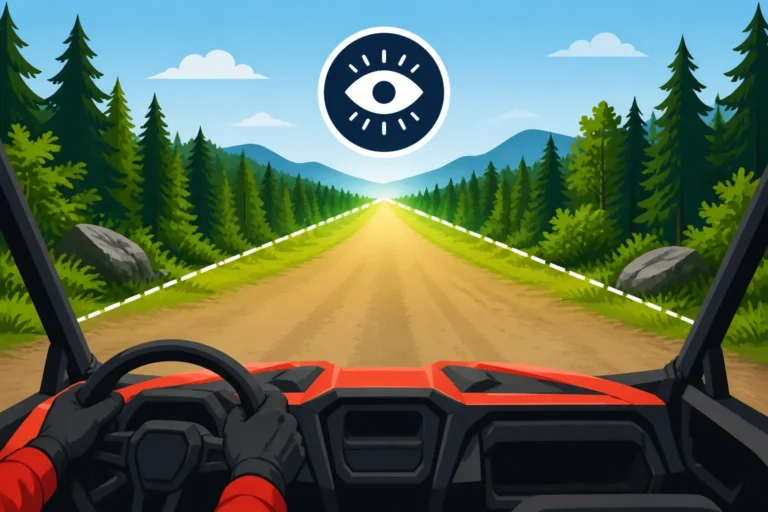
Next, it’s a full sensory scan: look left, look right, then look left again for oncoming traffic. And don't just glance – really look. Check for cars, trucks, cyclists, and pedestrians. This is also where listening comes into play, especially if your sightlines are obstructed. Turn off your engine if possible, or at least minimize noise, to better hear approaching vehicles. If you're riding with a group, communicate clearly. The lead rider should signal "stop" and "clear" or "wait." Patience is key here; if you can't see clearly or hear traffic, you wait until you can. Sometimes this means waiting a minute or two for a gap, sometimes it means waiting much longer.
The Crossing Manoeuvre Itself: Straight and Swift
Once you've confirmed that the road is clear in both directions, it's time to execute the crossing. Release your parking brake, select your gear (usually first or low), and then proceed directly across the road. Remember: straight and swift. Maintain that strict 90-degree angle to the road surface. Do not accelerate excessively, but ensure you have enough momentum to cross the road quickly and confidently. You want to minimize your time exposed to potential traffic.
Keep your head on a swivel as you cross, continuing to scan for any unexpected vehicles. Do not weave or make sudden turns. Your trajectory should be a straight line from the trail entrance on one side to the trail exit on the other. This isn't the time to check your phone, adjust your helmet, or chat with a passenger. Your entire focus must be on completing the crossing safely and efficiently. Once your entire machine is clear of the paved surface and you are safely on the opposite trail, you can resume your normal riding pace.
Post-Crossing: Rejoining the Trail Safely
Just because you've cleared the pavement doesn't mean the safety procedures end. As you re-enter the trail on the other side, take a moment to ensure you're fully back in control of your machine and that you're not cutting off any other trail users. If you're in a group, wait for all members to cross safely before proceeding. This might involve pulling slightly off the trail entrance to allow space for others.
It's common for riders to feel a sense of relief after a successful road crossing, but immediately regaining focus on the trail ahead is crucial. The terrain on the other side might be different, or there could be immediate obstacles. Don't let your guard down. A quick check in your [Quebec Mirror Requirements on a Quad] can confirm everyone in your group has made it over. Always prioritize group cohesion and safety before speeding off.
Common Mistakes and Misconceptions About Road Crossings
Even experienced riders can sometimes fall into bad habits or operate under incorrect assumptions when it comes to road crossings. These mistakes, often born of convenience or a lack of understanding, can have severe repercussions. The rules for OHVs interacting with public roads are quite different from those for cars, and treating an ATV or UTV like another street-legal vehicle can lead to fines, accidents, or worse. It’s important to continually remind ourselves of the specific regulations governing our machines.
The Temptation to Ride Along the Shoulder and Why Not To
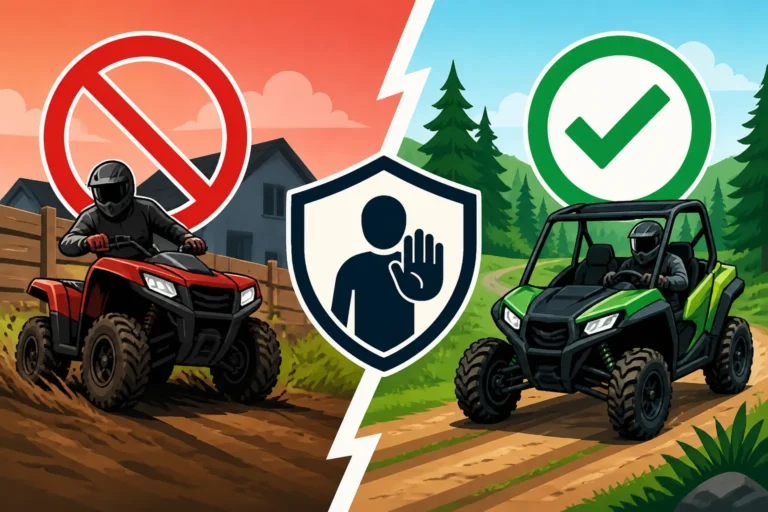
One of the most tempting, and most dangerous, infractions is riding along the shoulder of a public road to get to a perceived safer crossing point or to cover a short distance between trail sections. This is almost universally prohibited for ATVs and UTVs in Quebec, outside of very specific, marked exceptions for limited distances (like [Quebec Municipal Road Access Up to 1 Kilometre] when signage is present, which is a rare, specific case and not a general rule). Even then, the rules for that kilometre are strict, and riding on the shoulder is still generally not allowed.
Riding the shoulder puts you directly in the path of road traffic, often at significantly lower speeds than other vehicles, and exposes you to debris and uneven surfaces. It blurs the line between off-highway and highway use, which is precisely what the law aims to prevent. Patrols are very vigilant about this. If you are caught riding on the shoulder, you can expect a hefty fine for riding illegally on a public road, which can range significantly. Always prioritize legal and safe crossings, even if it means backtracking or finding an alternative route.
Deviating from a True Right Angle: What's the Risk?
It's easy to think a slight diagonal approach or a curve will save you a second or two, but deviating from that true 90-degree angle creates serious hazards. When you cross diagonally, you increase the distance you travel across the road, meaning you spend more time in the path of potential traffic. More importantly, it makes your movement unpredictable for motorists. A driver approaching from a distance might see you start a diagonal cross and misjudge your speed or trajectory, thinking you're turning onto the road rather than crossing it.
This confusion dramatically increases the risk of a collision. The right-angle rule is about clarity and minimizing variables. Any deviation sabotages that clarity. So, resist the urge to angle your machine even slightly. Come to a full stop, aim straight across, and execute a direct, decisive crossing. This might feel a bit awkward at first, especially if the terrain leading to the trail on the other side isn't perfectly aligned, but maintaining that perpendicular line is non-negotiable for safety and legality.
When a Crossing Isn't Allowed: Understanding Prohibited Zones
Not every intersection of a trail and a road is a legal crossing point. Some roads are simply off-limits for OHVs, regardless of how you attempt to cross them. This could be due to high traffic volumes, poor sightlines, a lack of designated trail access on the other side, or specific municipal bylaws. Riders need to be aware that simply because a trail ends at a road, it doesn't automatically grant permission to cross. Always consult your [Quebec ATV Trail Maps and the iQuad App] to identify designated crossings and avoid areas where OHV access is prohibited.
Sometimes, a bridge might be for vehicle traffic only, or a road might be designated a highway where OHV presence is entirely forbidden. Attempting to cross in these prohibited zones is not only illegal but extremely dangerous. Fines can be substantial, and in the event of an accident, your [Quebec's Liability Insurance Rule] might not cover you if you were operating illegally. Always pay attention to signage, and if in doubt, turn around and find an authorized crossing or an alternative route. Safety should always come before convenience.
Equipment and Visibility for Safer Road Crossings
While the right-angle rule dictates how you cross, your machine's setup and your personal gear play a huge role in how safely you do it. Maximizing your visibility to other road users is paramount, as is ensuring your machine is in top operational condition. Think of it as preparing your machine and yourself for those critical few seconds you'll spend in a shared space with faster, heavier vehicles. It's about being seen, being heard, and being ready.
Essential Lighting and Reflective Gear for Day and Night
Whether you're riding in broad daylight or under the stars, adequate lighting and reflective gear are non-negotiable for road crossings. For your machine, this means fully functional headlights, tail lights, and brake lights. These aren't just for trail riding; they're vital for alerting motorists to your presence. If you've upgraded your lighting, great – brighter is always better for visibility. Many riders opt for aftermarket LED light bars from brands like SuperATV to really cut through the gloom or make themselves more noticeable even on a sunny day.
For yourself, reflective clothing, especially on your helmet and jacket, can make a significant difference. Even during the day, brightly coloured gear stands out. At night, reflective stripes catch headlights, giving drivers an earlier warning. Think about adding reflective tape to your machine or even your helmet. Remember, the goal is to be seen. You can never be too visible when sharing space with road traffic.
Maintaining Your Machine for Optimal Crossing Performance
A safe crossing isn't just about what you wear or what lights you have; it's also about your machine performing flawlessly when you need it most. Before every ride, and especially before venturing onto trails with road crossings, do a quick check of your brakes, steering, and tires. Are your brakes responsive and firm? Is your steering tight and predictable? Are your tires properly inflated and do they have good tread for traction on varied surfaces, including pavement?
A malfunctioning brake or a loose steering tie rod could spell disaster during a critical crossing. Ensure your engine is running smoothly and that you have no unexpected stalls or power issues. If your machine needs maintenance, get it done before hitting the trails. This isn't just about preventing breakdowns in the backcountry; it's about ensuring your ATV or UTV is reliable for those brief, high-stakes moments when you intersect with public roads. Regular checks, even simple ones, contribute immensely to your safety.
Enhancing Visibility: Aftermarket Accessories
Beyond standard lighting, there's a whole world of aftermarket accessories designed to enhance your visibility and safety, particularly for road crossings. As mentioned, upgrading to more powerful LED headlights or adding auxiliary floodlights can make a huge difference, and brands like SuperATV offer robust options for this. Consider adding side mirrors, even if your machine didn't come with them as standard, to give you a better view of approaching traffic without turning your whole body. These are often required under [Quebec Mirror Requirements on a Quad] anyway.
Another fantastic upgrade is an illuminated whip flag. While primarily used for dune riding in some regions, a tall, brightly coloured whip flag with an LED light can significantly increase your vertical profile, making you visible over obstacles or from a greater distance. Even a simple, bright safety triangle attached to the rear of your machine can provide an extra layer of visibility to drivers approaching from behind, especially if you need to pause briefly at a crossing point. These investments are small compared to the cost of an accident.
Penalties for Non-Compliance and What to Expect
Riding illegally, particularly when it comes to road crossings, isn't just a theoretical risk. Quebec's trail patrols and law enforcement are diligent, and the penalties for non-compliance with the LVHR can be steep. It’s not just about getting a ticket; repeated infractions or serious incidents can have lasting consequences, affecting your wallet, your insurance, and potentially your ability to ride. Understanding the potential fallout can be a strong motivator for always riding by the book.
Fines and Legal Consequences of Improper Crossings
Getting caught crossing a road improperly, riding on the shoulder, or attempting to cross where it's prohibited will almost certainly result in a fine. [Quebec Fines for Riding a Public Road] can be significant, starting in the hundreds of dollars and increasing depending on the severity of the infraction or if other rules are also being broken (e.g., no licence, no registration, no helmet). These fines are designed to deter unsafe behaviour and can quickly add up, turning a fun day on the trails into a very expensive headache.
Beyond the immediate financial penalty, repeated infractions could lead to more serious legal consequences, such as having your machine impounded or your driving privileges revoked for OHV operation. Remember, the SAAQ oversees all of this. If you are involved in an accident while violating the crossing rules, the legal implications can escalate rapidly, potentially involving civil lawsuits for damages if someone else is injured or property is destroyed. It’s far better to take the extra minute to cross correctly than to face the legal system.
Insurance Implications After an Incident
One of the often-overlooked consequences of illegal riding, including improper road crossings, is the impact on your insurance. Every registered ATV or UTV in Quebec must carry [Quebec's Liability Insurance Rule], and the SAAQ also acts as a basic insurer. However, this coverage, or any additional private insurance you carry (which many riders wisely choose to do), can be jeopardized if you were operating outside the bounds of the law at the time of an incident.
If you have an accident while crossing a road improperly, your insurance provider might deny coverage for damages to your machine or even for liability claims from other parties. This could leave you personally responsible for thousands, or even hundreds of thousands, of dollars in repair costs or medical bills. Insurance policies typically have clauses that void coverage if you're engaged in illegal activity. Always ride legally to ensure your insurance net remains intact – it’s there to protect you when unforeseen events occur, not when you willingly disregard the rules.
Avoiding Enforcement Encounters: Best Practices
The best way to avoid fines and legal trouble is simple: know the rules and follow them meticulously. This means keeping your machine properly registered and insured, carrying your [Carrying Papers on a Long Ride] including your driver's licence (which is mandatory since [Quebec Requires a Driver's Licence Since 2021]), and adhering strictly to all trail and road regulations. Always assume you might encounter a patrol officer, whether they are Sûreté du Québec, a municipal officer, or a [What a Club Trail Patroller Can Make You Do] from a local club.
When you approach a road, be extra vigilant. Slow down well in advance, and prepare for the crossing as described earlier. If you see a patrol vehicle, make it a point to demonstrate your knowledge of the rules by executing a perfect, safe, right-angle crossing. They are looking for safe and responsible riders, not trying to catch people out. By consistently practicing safe and legal riding habits, you not only ensure your own safety but also contribute to a positive public image for the entire Quebec ATV and UTV community.
Situational Nuances: When the Rule Might Feel Different
While the fundamental rule of right-angle crossings remains constant, the actual experience can vary significantly based on the environment and the type of crossing. A quiet country road crossing feels very different from an intersection with heavy traffic, and understanding these nuances can help you approach each situation with the appropriate level of caution and awareness. It's about adapting your application of the rule to the specific context, without ever compromising the rule itself.
Crossings in Remote vs. Populated Areas
The right-angle rule applies equally whether you're deep in the wilderness crossing a logging road or navigating the outskirts of a small village. However, the approach you take might need to be adjusted. In remote areas, you might have fewer vehicles, but speeds can be higher, and drivers might be less accustomed to seeing OHVs. Your vigilance needs to be extreme, especially for commercial vehicles like logging trucks or heavy equipment. They are often large and fast, and their drivers might not expect recreational riders.
In more populated areas, you'll likely encounter more frequent but potentially slower-moving traffic. Pedestrians, cyclists, and children might also be present. This demands an even higher level of caution and a lower speed of approach. Ensure your [Quebec Helmet and Visor Rules] are followed. While the physical act of crossing remains a right angle, your overall awareness needs to be dialed up to account for the increased complexity and varied road users. Never assume a driver in a populated area will see you or anticipate your move, even if you are crossing legally.
Designated Crossings vs. Unmarked Intersections
Ideally, all trail-to-road intersections would be clearly marked as designated crossing points, with appropriate signage warning both OHV riders and motorists. In many parts of Quebec, especially on the federated trail system, you will find signs like "TRAVERSE VTT" or "VHR CROSSING" on the road, indicating a legal and often safer spot to cross. These are the gold standard. Always prioritize using these designated crossings.
However, sometimes trails simply intersect roads without any specific signage. These unmarked intersections still fall under the right-angle crossing rule, but they demand even greater caution from the rider. Without specific warnings for motorists, you cannot assume they are expecting an OHV. Your reliance on stopping, looking, listening, and executing a swift, clear crossing becomes even more critical. If an unmarked intersection has poor [Quebec Crossing Sightline Distances], it might be prudent to find an alternative route, even if it means backtracking a bit, rather than risking a blind crossing.
Special Exceptions for Workers on ATVs
While recreational riders must adhere strictly to the right-angle crossing rule, Quebec law does acknowledge certain operational needs for workers. For instance, individuals using ATVs or UTVs for work purposes, such as farmers, trappers, or utility workers, might have limited exemptions or specific provisions that allow them to operate on roads for short distances or under specific conditions. For example, a farmer might be able to cross a road to access different fields, or a trapper might be able to ride a specific section to reach a trapline.
However, these are exceptions to the general rule and are highly conditional. They typically require the worker to be actively engaged in their work, often involve specific safety equipment, and usually apply only for very short distances or specific locations. A recreational rider cannot simply claim to be "working" to bypass the rules. Unless you are clearly operating under a valid and recognized exception for work purposes, always assume the standard right-angle crossing rule applies to you. For most of us enjoying the trails, these exceptions won't apply, so it's always best to stick to the recreational rider's regulations.
Quebec Road Crossing Sightline Distance Chart
Understanding how far you need to see when crossing a road is critical for safety. The Quebec Off-Highway Vehicle Act (LVHR) has specific guidelines based on the speed of vehicles on the road you are crossing. This table provides a quick reference to these essential sightline distances. Remember, these are minimums; more visibility is always better.
| Road Speed Limit (km/h) | Minimum Sightline Distance Required (metres) | Description of Requirement |
|---|---|---|
| 30 km/h or less | 50 metres | Clear view of oncoming traffic for 50m in both directions. |
| 50 km/h | 100 metres | Clear view of oncoming traffic for 100m in both directions. |
| 70 km/h | 150 metres | Clear view of oncoming traffic for 150m in both directions. |
| 90 km/h or more | 200 metres | Clear view of oncoming traffic for 200m in both directions. |
Note: These distances are for both recreational and work-related crossings where allowed. Always ensure you have a clear, unobstructed view before proceeding.
Disclaimer
This article is for general informational purposes only and does not constitute professional advice. Laws, prices and regulations vary by location and change over time. Consult a qualified professional for guidance on your specific situation.