Quebec Private Sale vs Dealer Purchase at the SAAQ
Buying an ATV or side-by-side in Quebec can feel like navigating a maze, especially when you're trying to figure out if it's better to buy from a friendly neighbour down the road or head to a shiny new dealership. Many riders get frustrated by the seemingly endless forms and differing rules, wondering if they're making the right choice before they even get to hit the trails. This comprehensive guide will walk you through everything you need to know about registering your off-road machine with the SAAQ, whether you've purchased it through a private sale or from an authorized dealer, making the process much clearer.
Navigating the Initial Purchase: Private Seller or Dealership?
The very first step on your journey to owning a quad in Quebec is deciding where to buy it. Both private sellers and dealerships offer distinct experiences, and understanding these differences upfront can save you a lot of headaches, time, and money. It’s not just about the sticker price; it’s about the entire transaction, from paperwork to peace of mind.
The Appeal of a Private Sale
There’s something uniquely appealing about buying a machine from a private seller. Often, you're dealing with another enthusiast who genuinely loves their quad, offering insights into its history and quirks that you might not get from a dealer. This direct interaction can build a sense of trust, and many riders appreciate the person-to-person aspect of these transactions. It feels more personal, less like a purely commercial exchange.
One of the biggest draws, of course, is the potential for cost savings. Private sellers typically don't have the overhead costs of a dealership, which often translates to lower asking prices. You might find a well-maintained machine for a fraction of its new cost, making it an excellent option for riders on a tighter budget or those looking for an older, harder-to-find model. You also have more room to negotiate the price directly with the owner, which can be a satisfying experience for those who enjoy haggling. However, this flexibility also comes with the responsibility of doing your due diligence, as there's less protection than when buying from a business. When you're [Buying From a Neighbour Instead of a Dealer], remember to approach it with caution and thoroughness.
The Advantages of Buying from a Dealer
On the flip side, purchasing your ATV or side-by-side from an authorized dealership brings a different set of benefits, often centered around convenience, selection, and reliability. Dealers typically offer a wide range of new and sometimes certified pre-owned machines, giving you the chance to compare different models, brands, and features all in one place. You can sit on multiple machines, test out the controls, and even take a demo ride if the dealer permits, helping you make a truly informed decision.
Beyond the selection, dealerships provide a structured purchasing experience. They handle a significant portion of the administrative burden, including much of the SAAQ paperwork, which can be a huge relief for first-time buyers or those intimidated by bureaucracy. You also often benefit from warranties (for new machines) or certified inspections (for pre-owned), offering a layer of protection and peace of mind that a private sale simply can't match. Dealers can also offer financing options, trade-in programs, and access to parts and service departments, making them a one-stop shop for all your off-road needs. While the upfront cost might be higher due to these added services and overheads, many buyers find the comprehensive support and reduced hassle worth the investment. For new riders, especially, knowing that a professional has checked over the machine can be invaluable.
Understanding the Paperwork: What You'll Need for the SAAQ
Regardless of where you purchase your machine, getting it properly registered with the Société de l'assurance automobile du Québec (SAAQ) is absolutely mandatory before you can legally ride on federated trails or even cross public roads. The SAAQ acts as both the registrar and the insurer for off-highway vehicles in Quebec, which makes their paperwork central to the entire process. The specific documents you'll need can vary quite a bit depending on whether you're buying privately or from a dealership. Knowing what to expect for each scenario will help you gather everything necessary and avoid multiple trips to the service counter.
Key Documents for a Private Sale
When you're buying an ATV or side-by-side directly from another individual in Quebec, the responsibility for securing the correct paperwork falls squarely on your shoulders as the buyer, often in conjunction with the seller. The cornerstone of any private sale is the bill of sale. This isn't just a casual receipt; it's a legally binding document that proves the transfer of ownership from the seller to you. It absolutely must include crucial details like the full names and addresses of both buyer and seller, the date of the sale, the purchase price, and a thorough description of the machine, including its make, model, year, and — most importantly — the Vehicle Identification Number (VIN) or serial number. Without a proper bill of sale, the SAAQ won't process your registration, as they won't have clear [Quebec Registration and Proof of Ownership].
In addition to the bill of sale, you'll need the seller's original SAAQ registration certificate. This document serves as proof that the machine was legally registered in Quebec prior to your purchase. The seller should detach and sign the "Certificate of Sale" portion of their existing registration certificate. You, as the buyer, will then present this signed document, along with your bill of sale and personal identification, to the SAAQ. It's also wise to check for any liens on the machine before completing the purchase; a lien search, often available through online services or your bank, can confirm that the seller has full, unencumbered ownership of the machine. Services like LawDepot can be helpful for creating a robust, legally sound bill of sale template that covers all these essential points, giving both parties clarity and protection in the transaction.
Paperwork Provided by a Dealership
Buying from a dealership significantly streamlines the paperwork process, as they are equipped to handle most of it for you. When you purchase a new or used off-road vehicle from an authorized dealer, they will typically prepare and submit much of the necessary documentation to the SAAQ on your behalf. This is one of the main conveniences that makes a dealer purchase attractive to many. They’ll ensure that all the forms are correctly filled out and submitted, minimizing the chances of errors that could delay your registration. Dealers often deal with the SAAQ daily, so they know exactly what's required.
The primary documents you'll receive from a dealer include a detailed purchase agreement or contract, outlining the sale price, any trade-in value, applicable taxes, and various fees. This document will also contain all the machine's specifics, including the VIN. For new machines, the dealer will also provide a Manufacturer's Statement of Origin (MSO) or Manufacturer's Certificate of Origin (MCO), which is the birth certificate of the vehicle. For used machines, they'll have the previous SAAQ registration certificate. The dealer will use these documents, along with their own internal paperwork, to process the transfer of ownership and initial registration with the SAAQ. They usually take care of calculating and collecting the provincial sales tax (QST) directly, so you don't have to worry about paying it separately at the SAAQ. This means that when you pick up your new machine, it's often ready to roll, with temporary plates or even your permanent [Quebec VHR Plates Explained] already on order. This makes the [Quebec SAAQ Steps After a Dealer Purchase] much smoother for the buyer.
The SAAQ Registration Process: Step-by-Step for Each Scenario
Once you've sorted out the purchase and gathered your initial documents, the next big step is to formally register your ATV or side-by-side with the SAAQ. This is where your machine officially becomes yours in the eyes of the law, and where you secure the mandatory liability insurance that Quebec requires for all off-highway vehicles. The process has some fundamental similarities, but key differences arise depending on whether you bought from a private seller or a dealer. Understanding these nuances will ensure a smooth experience.
Registering a Privately Purchased Machine
When you've bought your off-road machine from a private individual, you'll be responsible for initiating and completing the registration process yourself at an SAAQ service centre. First, make sure you have all your ducks in a row: the original SAAQ registration certificate signed over by the seller, a comprehensive bill of sale (as discussed earlier, LawDepot can provide excellent templates for this), and your valid Quebec driver's licence or other acceptable proof of identity. Without these documents, the SAAQ simply cannot proceed. It's often helpful to bring an extra copy of the bill of sale, just in case.
Upon arrival at the SAAQ service centre, you’ll present these documents to a clerk. They will verify the information, process the change of ownership, and calculate the provincial sales tax (QST) based on the purchase price stated on your bill of sale, or sometimes based on the SAAQ's estimated value for the machine if the declared price seems unusually low. You will then pay this tax, along with the annual registration fee, which includes the mandatory liability insurance. This is also where you'll be issued your new [Quebec VHR Plates Explained] and a registration sticker. Remember, this is a crucial step for legal riding, as [Quebec ATV Registration With the SAAQ] is not optional. The SAAQ clerk will be your primary point of contact for any questions you might have about the documents you've provided.
Registering a Dealer-Purchased Machine
One of the significant advantages of buying from a dealer is the ease of registration. In most cases, the dealership handles the lion's share of the SAAQ registration for you as part of the purchase process. This means that when you pick up your machine, it's often already provisionally registered or has its registration fully in process. The dealer will collect all necessary information from you during the sale, including your identification details, and use that to complete the SAAQ forms. They will submit the application, often electronically, directly to the SAAQ, facilitating a quick turnaround.
The dealer will typically collect the provincial sales tax (QST) from you at the point of sale, which they then remit to the government. They will also factor in the SAAQ's annual registration fee and mandatory insurance into your total purchase price. This means you usually won't have to make a separate trip to the SAAQ service centre specifically to register the machine or pay the initial taxes and fees. Instead, you'll simply wait for your official registration certificate and VHR plate to arrive, either directly from the SAAQ or through the dealership. While this process is more hands-off for you, it's still wise to ensure you receive copies of all relevant documents from the dealer, including the official SAAQ registration receipt, for your records. This ensures you're fully informed about your [Quebec ATV Registration Costs Explained] and that the process is complete.
Costs Beyond the Price Tag: Taxes, Fees, and Surprises
When you're budgeting for a new ATV or side-by-side, it's easy to focus solely on the sticker price of the machine itself. However, both private and dealer purchases come with a series of additional costs that can significantly inflate your total expenditure. Overlooking these expenses can lead to an unwelcome surprise, so it's critical to understand them upfront. From sales taxes to administrative fees, being prepared for these extra charges is just as important as choosing the right machine.
Sales Tax Implications for Private Sales
In Quebec, when you buy an ATV or side-by-side from a private seller, you are still responsible for paying the provincial sales tax (QST) to the SAAQ. This often catches first-time private buyers off guard, as they might assume sales tax only applies to commercial transactions. However, the SAAQ acts as the collection agent for QST on private vehicle sales, including off-highway vehicles. The tax amount is calculated based on the higher of two figures: either the actual purchase price you declared on your bill of sale or the SAAQ's estimated market value for that specific make, model, and year of machine. If the SAAQ determines your declared purchase price is significantly lower than the market value, they reserve the right to tax you on their estimated value. This is why it's crucial to have a realistic and accurate price on your bill of sale.
For example, if you declare you bought a 2018 Can-Am Outlander 850 for $2,000, but the SAAQ's database shows similar models are valued at $8,000, they might choose to apply the QST based on the $8,000 figure, not your declared $2,000. This is to prevent individuals from undervaluing a sale to avoid taxes. Besides the QST, you'll also pay the annual SAAQ registration fee, which incorporates the mandatory basic liability insurance. These costs are paid directly to the SAAQ at the time of registration. Understanding the [Quebec Tax on a Private ATV Sale] is essential for accurate budgeting and avoiding unexpected expenses.
Dealer Fees and Additional Charges
While a dealership simplifies the SAAQ paperwork, they also typically come with a range of additional fees and charges that go beyond the advertised price of the machine. These can include preparation fees, delivery charges, documentation fees, and sometimes even environmental levies. Preparation fees, for instance, cover the dealer's cost of assembling the machine (if new), performing pre-delivery inspections, and ensuring it's ready for you to ride. Delivery charges might apply if the machine needs to be transported from a central warehouse to the dealership. Documentation fees cover the administrative costs associated with preparing all the sales and registration paperwork.
It's absolutely critical to ask your dealer for a full, itemized breakdown of all these fees before you finalize your purchase. Don't be shy about questioning what each fee covers; a reputable dealer should be transparent and able to explain everything clearly. While some fees might be non-negotiable, knowing them upfront prevents sticker shock and allows you to negotiate the total "out-the-door" price more effectively. Remember that the provincial sales tax (QST) will be applied to the total price, including all these additional fees, before being remitted by the dealer. This means the actual cost of your machine can be considerably higher than the initial price tag, so always factor in these extra charges when comparing options. Being aware of [Quebec Dealer Fees to Expect] can make a huge difference in your budget planning.
Protecting Your Investment: Ownership, Liens, and Recourse
Buying an ATV or side-by-side is a significant investment, and like any major purchase, it's crucial to protect yourself against potential issues. This goes beyond just the initial transaction and delves into ensuring clear ownership and understanding your options if something goes wrong. The level of protection and the steps you need to take differ significantly between private sales and dealer purchases.
Verifying Ownership and Checking for Liens in a Private Sale
When buying from a private seller, you are largely responsible for your own due diligence. The biggest risk is purchasing a machine with an undisclosed lien or one that the seller doesn't legally own. A lien means someone else (like a bank or credit union) has a financial claim on the machine, and if the seller defaults on their loan, the lienholder could repossess the ATV, even from you, the innocent new owner. Imagine spending thousands, only to have your machine taken away because of the previous owner's debt – it's a nightmare scenario.
To protect yourself, always verify the seller's identity against the name on the SAAQ registration certificate. Ensure the VIN on the machine matches the VIN on the registration and the bill of sale. Most importantly, conduct a lien search. In Quebec, you can check the Register of Personal and Movable Real Rights (RDPRM) to see if there are any registered liens against the machine's VIN. This small step, often costing a minimal fee, can save you from a massive financial loss. Never proceed with a private sale if the seller can't produce the original SAAQ registration, if the VINs don't match, or if a lien search reveals outstanding claims. Using a detailed bill of sale, perhaps one from a service like LawDepot, can also provide you with a written record of the transaction and protect you in certain legal situations. This due diligence is paramount when [Buying From a Private Seller in Quebec].
Dealer Guarantees and Consumer Protection
Purchasing from an authorized dealer generally offers a much higher degree of consumer protection and recourse. For new machines, you benefit directly from the manufacturer's warranty, covering defects and often offering roadside assistance or repair services for a specified period. This means if a major component fails prematurely, you're usually covered, saving you potentially thousands in repair costs. Many dealers also offer extended warranty plans for an additional cost, which can provide long-term peace of mind, particularly for complex and expensive side-by-sides.
For used machines, reputable dealers often provide their own limited warranties or guarantees, which can range from a 30-day powertrain warranty to a comprehensive multi-month plan. They also have an obligation to disclose any known defects or past damage to the vehicle, adhering to consumer protection laws. If a major issue arises shortly after purchase that was not disclosed, you generally have legal recourse through consumer protection agencies. Furthermore, when you deal with an established business, there's a clear point of contact for issues, and they have a reputation to uphold. This structure offers a level of accountability and support that is virtually non-existent in a private sale. Dealers are also responsible for ensuring clear title and handling any existing liens, so you don't have to perform those checks yourself. They often take care of [What a Lienholder on File Means for a Buyer] before the machine ever reaches their sales floor.
Common Pitfalls and How to Avoid Them
The excitement of acquiring a new off-road machine can sometimes make us overlook potential problems. However, being aware of common pitfalls, whether you're dealing with a private individual or a professional dealership, is crucial for a smooth and satisfying purchase. A little foresight and skepticism can save you a lot of trouble down the line.
Red Flags in Private Transactions
Private sales, while often offering better deals, come with inherent risks. One of the biggest red flags is a seller who is vague or hesitant to provide complete information about the machine's history, maintenance records, or even their own identity. If they can't produce the original SAAQ registration certificate or claim to have lost the bill of sale from their own purchase, proceed with extreme caution. This could indicate that the machine is stolen, has a hidden lien, or was never properly registered in the first place, leaving you with [Quebec Machines With No Paperwork].
Another significant warning sign is an unusually low price that seems too good to be true. While private sales are typically cheaper, a price that is drastically below market value for the machine's age and condition should trigger alarm bells. This could suggest hidden mechanical issues, flood damage, or a problematic history. Always inspect the machine thoroughly, and if you're not mechanically inclined, consider paying for a pre-purchase inspection by a qualified mechanic. Also, be wary of sellers who insist on meeting in unusual locations or demand cash-only payments without a proper, verifiable paper trail. A detailed bill of sale, explicitly stating that the machine is sold "as is" but also confirming the seller's ownership and absence of liens, can be prepared using services like LawDepot and helps protect both parties. Make sure to have a clear understanding of [Paperwork Two Individuals Sign on a Private Sale].
Navigating Dealer Contracts and Disclosures
Even with the protections offered by dealerships, it's vital to remain vigilant when reviewing sales contracts and understanding all disclosures. Dealers, like any business, are looking to maximize their profits, and sometimes this can involve adding optional features or services that you might not need or want. Always read the sales contract meticulously before signing anything. Don't feel pressured to rush; take your time, ask questions, and ensure every line item is clear. Watch out for ambiguous clauses, unexplained fees, or discrepancies between what was verbally promised and what is written in the contract.
Pay close attention to any clauses regarding "as is" sales for used machines, which can limit your recourse if problems arise. Ensure that any warranties, whether manufacturer's or dealer-specific, are clearly documented and understood. Also, be aware of "preparation fees" or "delivery charges" that can inflate the price; while legitimate for certain services, it's important to understand what you're paying for. If you're trading in an old machine, ensure the [Trade-In Allowances at a Quebec Dealer] are clearly stated and applied correctly. Reputable dealers will be transparent, but it's your responsibility as the buyer to be informed and assertive. If something doesn't feel right, don't hesitate to walk away or seek a second opinion. Always confirm [What a Dealer Must Disclose] before you commit.
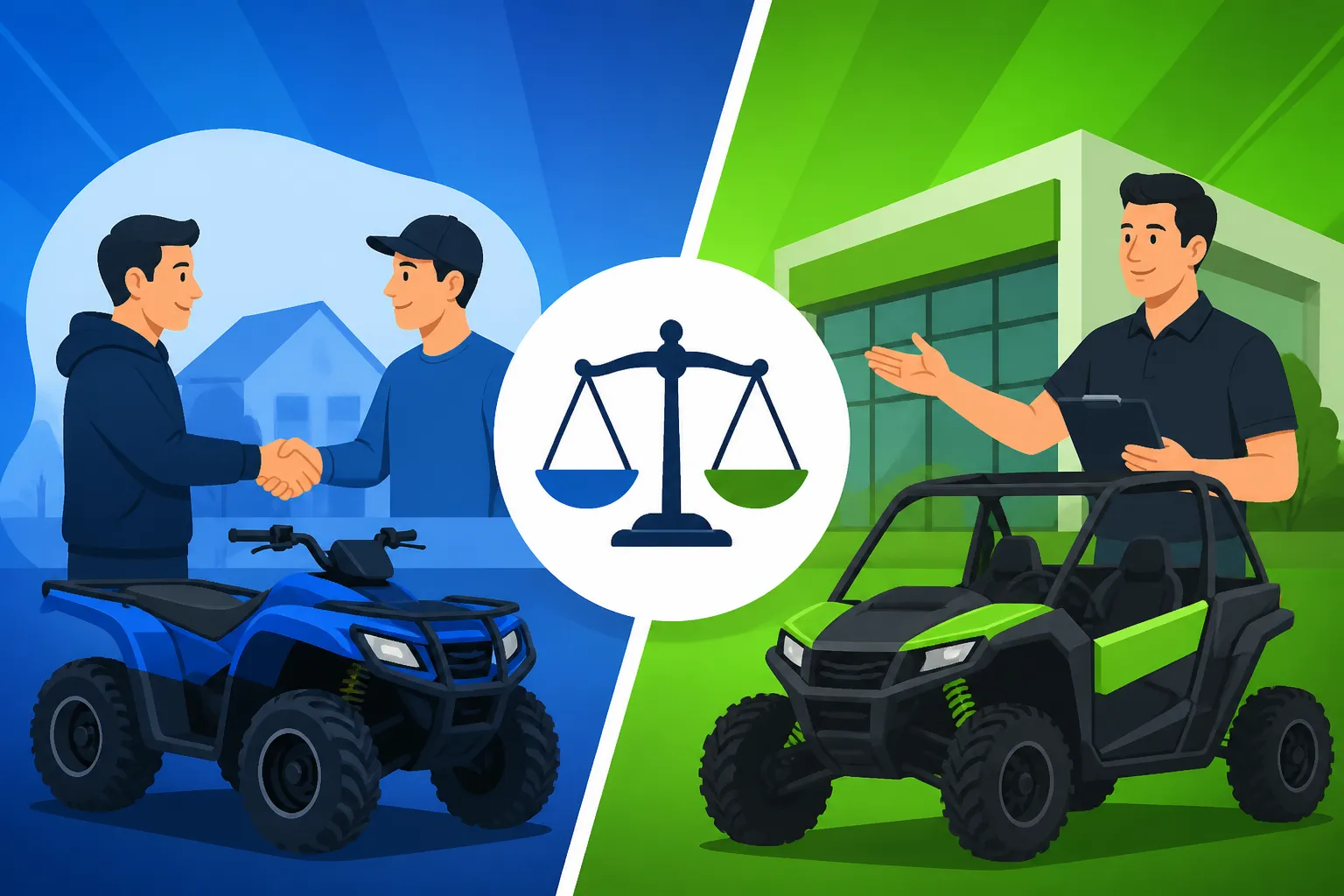
Here's a comparison table summarizing the key differences:
| Feature | Private Sale | Dealer Purchase |
|---|---|---|
| Price | Often lower, more room for negotiation | Generally higher, but may include added value |
| Machine Condition | "As-is," buyer inspects | Often inspected, some warranties/guarantees |
| Paperwork | Buyer/seller responsible for all SAAQ forms | Dealer handles most SAAQ registration forms |
| Proof of Ownership | Bill of sale, seller's SAAQ registration | Purchase agreement, MSO/MCO (new), SAAQ cert (used) |
| Lien Checks | Buyer's responsibility (RDPRM search) | Dealer typically ensures clear title |
| Sales Tax (QST) | Paid by buyer directly to SAAQ at registration | Collected by dealer, remitted to government |
| Additional Fees | Minimal, usually none beyond purchase price | Prep fees, documentation fees, delivery charges |
| Warranties | Usually none (unless manufacturer's remains) | Manufacturer warranty (new), dealer warranty (used) |
| Financing | Buyer arranges own | Dealer may offer financing options |
| Consumer Protection | Limited, "buyer beware" | Stronger, regulated by consumer laws |
| Convenience | Requires more effort from buyer | More streamlined, one-stop shop |
After Registration: What Comes Next?
Congratulations! You've successfully navigated the purchase and registration of your ATV or side-by-side with the SAAQ. But the journey doesn't quite end there. Owning an off-road machine in Quebec comes with ongoing responsibilities, from displaying your plate correctly to renewing your registration annually. Understanding these next steps ensures you remain compliant with the law and can continue enjoying the vast network of [Quebec ATV Trails: The FQCQ Network] without interruption.
Receiving Your Quebec VHR Plate and Sticker
Once your registration is processed by the SAAQ, whether you handled it yourself after a private sale or the dealer did it for you, you'll receive your official Quebec VHR (Véhicule Hors Route, or off-road vehicle) plate and registration sticker. This plate is typically smaller than a standard car plate and is specifically designed to fit on the fender or rear of your ATV or side-by-side. It's not just a decorative item; it's a legal requirement to clearly display this plate on your machine whenever it's in operation on a federated trail or crossing a public road. Without it, you could face fines from trail patrols or law enforcement.
Along with the plate, you'll get an annual validation sticker. This sticker needs to be affixed to your plate and indicates that your registration and mandatory liability insurance are current for the year. The SAAQ will also send you a registration certificate, which is your proof of registration and insurance. It's crucial to carry this certificate, or a copy of it, with you whenever you're riding. Think of it like your vehicle's driver's licence; you need to be able to produce it if asked by a trail patrol officer or a police officer. Familiarizing yourself with [Why a VHR Plate Fits on a Fender] and its placement is important.
Annual Renewal and Ongoing Responsibilities
The SAAQ registration for your ATV or side-by-side is not a one-time affair; it must be renewed annually. Typically, the SAAQ sends out renewal notices well in advance of your expiry date, which is usually tied to your birth month or the month of initial registration. This notice will detail the upcoming year's registration fee, which includes your mandatory liability insurance. You can usually renew your registration online, through your financial institution, or in person at an SAAQ service centre. It's crucial to complete this renewal on time, as riding with an expired registration is illegal and will leave you uninsured in case of an accident.
Beyond the annual renewal, your responsibilities as an off-road vehicle owner include maintaining your machine in safe working order, adhering to [Quebec ATV Road Rules Under the LVHR] and trail regulations, and carrying proof of your valid driver's licence and [Quebec's Annual FQCQ Trail Pass] if you're riding on federated trails. You're also responsible for notifying the SAAQ of any changes to your address or if you sell the machine. Selling a registered machine requires you to complete the "Certificate of Sale" portion of your registration certificate and provide it to the new owner, so they can properly register it in their name. Staying on top of these ongoing duties ensures you can enjoy your off-road adventures safely, legally, and without unexpected penalties.
Disclaimer
This article is for general informational purposes only and does not constitute professional advice. Laws, prices and regulations vary by location and change over time. Consult a qualified professional for guidance on your specific situation.