Quebec Registration for a Trapper’s Machine
Being a trapper in Quebec involves a unique set of challenges and responsibilities, not least of which is understanding the rules for your all-terrain vehicle. It's easy to assume that because you're often far from paved roads, the usual registration requirements might not apply, but that's a common misconception that can lead to unexpected fines. This comprehensive guide will walk you through everything you need to know about registering your ATV or UTV specifically for trapping activities in Quebec, ensuring you stay compliant and focus on your important work out in the wilderness.
Understanding the Basics: Why Trappers Need to Register an ATV in Quebec
As a trapper, your ATV or UTV is more than just a recreational toy; it's a crucial piece of equipment, a workhorse that helps you access remote traplines, haul gear, and transport your harvest. However, even if its primary use is for your livelihood, it's still an off-highway vehicle (OHV) in the eyes of Quebec law, and that comes with some very specific obligations.
The SAAQ and Off-Highway Vehicle Act
The Société de l'assurance automobile du Québec (SAAQ) is the government body responsible for registering all road vehicles and off-highway vehicles in the province. This means your trapper's machine, whether it's an ATV (often called a VTT here in Quebec) or a side-by-side, falls under their purview. The province's Off-Highway Vehicle Act (often referred to by its French acronym, LVHR) outlines the framework for how these machines must be registered, insured, and operated, regardless of whether you're using it for fun or for work. The goal is public safety, financial protection, and proper identification of machines. Many trappers are surprised by the strictness, especially if they operate mostly on what feels like their own isolated turf. It's not just about the trails; it's about the vehicle itself. Ignoring these rules can lead to serious headaches down the line, including fines and impoundment, which would be a major disruption to your trapping season. You can learn more about the general process in [Quebec ATV Registration With the SAAQ].
Liability Insurance: A Non-Negotiable Requirement
Perhaps one of the most critical aspects for any ATV owner in Quebec, including trappers, is mandatory liability insurance. The SAAQ acts as both the registrar and the primary insurer for off-highway vehicles. When you register your machine, a portion of that fee goes directly towards this liability coverage. This isn't just a suggestion; it's a legal cornerstone. As of a recent update, the minimum liability coverage for off-highway vehicles in Quebec is now $1 million. This means that if your machine is involved in an accident, and you are found at fault for property damage or injury to another person, this mandatory insurance will cover costs up to that amount. This is a huge safeguard, especially when operating in remote areas where an incident could have significant consequences. Even if you believe your machine will never encounter another person or property, the law requires this protection. It’s peace of mind, yes, but more importantly, it's a legal obligation. This mandatory coverage is outlined in [Quebec's Liability Insurance Rule].
Specific Use Cases for Trappers and Registration Nuances
The life of a trapper often takes you off the beaten path, far from official recreational trails. This unique operational environment raises specific questions about how and why a machine needs to be registered. It's not always as simple as just "registering for a trail pass."
Riding on Public Trails vs. Traplines on Private/Crown Land
This is where many trappers get confused. If your trapline involves even a single kilometre of a federated ATV trail, or a designated municipal road segment that quads are allowed on, then your machine absolutely needs to be registered and you need a valid trail pass. There's no exception for "work use" in these scenarios. However, many trappers primarily operate on private land that they own or have permission to use, or on vast tracts of Crown land for which they hold trapping rights.
Even in these cases, the machine itself generally still needs to be registered with the SAAQ. The distinction often lies in where you are riding and what papers you need to carry. While a trail pass isn't required if you never touch a federated trail, the basic VHR (Véhicule Hors Route) registration and the associated liability insurance are still mandatory for the machine to be legally operated. The law is designed to cover the vehicle itself, not just its use on organized trails. This means that even if you only ride deep into the forest on your own exclusive trapline, that registration is still a foundational requirement. Understanding [Quebec Machines Used Only on Private Land] can clarify some of these nuances, but the general rule for registration still stands.
Transporting Trapping Gear and Harvested Animals
Your ATV is indispensable for carrying traps, bait, tools, and, of course, the fur and animals you harvest. When you're using your machine in this capacity, especially when it's heavily loaded, safety and legality remain paramount. The registration ensures that if something were to happen – say, an accident while transporting a substantial load – the vehicle is identifiable and covered by the mandatory liability insurance.
There aren't specific "trapper" registration plates or categories, but your machine must meet the general requirements for an off-highway vehicle. This includes ensuring your machine is in good working order, has proper lighting if operated at night, and that any modifications for carrying gear do not compromise its stability or safety. The law expects you to operate a safe and legally compliant vehicle, irrespective of its cargo. Imagine a scenario where a heavily loaded quad tips over on a remote logging road, causing significant damage. The SAAQ registration ensures there's a record of the machine and the basic liability insurance is in place. For more specific details on what you might need to carry, check out [What a Trapper's Quad Needs on the Trapline].
Required Documents and the Registration Process for Trappers
Getting your trapper's machine registered with the SAAQ isn't overly complicated, but it does require careful attention to detail and a few key documents. Being prepared will make the process much smoother.
Proof of Ownership and Identity
When you head to an SAAQ service counter, you'll need to prove two main things: who you are and that you legally own the machine.
For proof of identity, you'll need a valid piece of government-issued identification, typically your Quebec driver's licence. If you're new to Quebec, you might need additional documentation to prove residency.
For proof of ownership, this is crucial.
- New Machine from a Dealer: If you purchased your ATV or UTV new from a dealer, they will typically handle much of the SAAQ paperwork for you. You'll receive a sales contract and often a temporary registration. The dealer will send the necessary documents to the SAAQ, and your permanent registration certificate will be mailed to you.
- Used Machine from a Private Seller: This is where many trappers find themselves. You'll need a bill of sale signed by both you and the seller. This document must clearly state the vehicle identification number (VIN), the make, model, year, purchase price, and the names and addresses of both parties. It's a good idea to use a standardized bill of sale form to ensure all necessary information is captured. Resources like LawDepot offer templates for bills of sale that can ensure you cover all the legal bases and avoid issues down the road. Having a clear, detailed bill of sale protects both the buyer and the seller.
- Other Scenarios: If you inherited the machine, you'll need the will or a letter from the estate. If you imported it from outside Quebec, you'll need customs documentation. Regardless of how you acquired it, having undeniable proof of your legal ownership is non-negotiable for SAAQ registration.
You can find a more general checklist in [Quebec Registration Paperwork Checklist].
Navigating the SAAQ for Registration
Once you have your documents in order, you'll need to visit an SAAQ service counter. It's often best to go during off-peak hours if possible, as wait times can vary.
Here's a general overview of the steps:
- Gather Documents: As mentioned, bring your ID and proof of ownership. Don't forget any previous registration documents if the machine was already registered in Quebec.
- Visit an SAAQ Service Counter: Locate your nearest SAAQ branch. You cannot register an off-highway vehicle entirely online for a first-time registration.
- Complete the Forms: The SAAQ agent will guide you through the necessary forms. If you're registering a machine purchased from a private seller, you'll likely need the SAAQ's "Declaration of Sale of an Off-Road Vehicle" form, which is used to transfer ownership and record the sale for tax purposes. This is where a clear bill of sale (perhaps one you prepared with a LawDepot template) will be invaluable, as it contains all the information needed to complete these forms accurately.
- Pay Fees and Taxes: You'll pay the registration fee, which includes the mandatory liability insurance. If you bought the machine privately, you'll also pay the provincial sales tax (QST) on the purchase price at this time. This is a common point of confusion for private sales, as many assume tax is only paid at a dealer. Not so in Quebec! The SAAQ collects it upon registration. Read more about [Quebec Tax on a Private ATV Sale].
- Receive Your Plate and Registration Certificate: Once everything is processed, you'll be issued a VHR plate for your machine and a temporary registration certificate. Your permanent certificate will be mailed to you within a few weeks. The plate must be affixed to the rear of your machine in a visible manner.
Remember, the SAAQ is both registrar and insurer, so all these elements come together at one counter.
Document Checklist for Trapper's ATV Registration
To ensure a smooth registration process for your trapping machine, use this checklist:
| Document Category | Specific Documents Required | Notes for Trappers |
|---|---|---|
| Proof of Identity | Valid Quebec Driver's Licence, Quebec Health Insurance Card, or other government-issued photo ID. | Ensure your ID is current and matches the name you wish to register the machine under. |
| Proof of Ownership | Dealer Purchase: Sales contract/invoice. Private Sale: Signed Bill of Sale (e.g., from LawDepot), previous owner's registration certificate. Inherited: Will or executor's letter. Imported: Customs documents. | The bill of sale for a private transaction is critical. Ensure it includes VIN, make, model, year, price, and full contact info for both parties. |
| Machine Information | Vehicle Identification Number (VIN) | Have the VIN readily accessible. It's typically stamped on the frame. |
| SAAQ Forms | "Declaration of Sale of an Off-Road Vehicle" (if private sale), or other forms provided by the SAAQ agent. | The agent will guide you, but having a clear bill of sale simplifies this step considerably. |
| Payment | Debit card, credit card, or other accepted payment methods for registration fees and sales tax. | Be prepared to pay the registration fee (includes liability insurance) and the Quebec Sales Tax (QST) on the purchase price if you bought privately. |
Exceptions and Special Considerations for Trapper Machines
While most ATVs and UTVs used for trapping need full SAAQ registration, there are a few scenarios and rules that might seem like exceptions or require special attention.
Machines Used Exclusively on Private Land (and the catch)
This is a common point of confusion. If your machine is exclusively used on private land that you own or have explicit, documented permission to use (and it never, ever touches a public road, shared trail, or Crown land unless specifically designated for such use without registration), then the provincial registration with the SAAQ might not be strictly required.
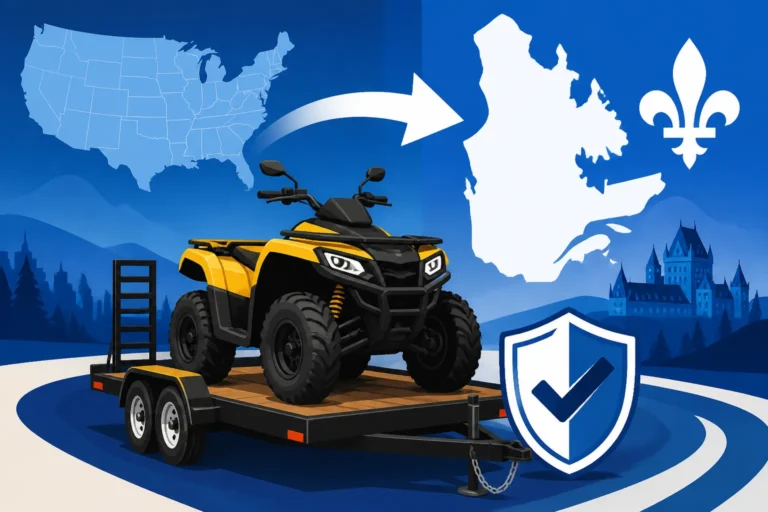
However, this is a very narrow exception, and it comes with a massive catch: if you are ever found operating that unregistered machine off your private property – even just to cross a ditch, drive down a short stretch of municipal road to access another part of your property, or if you simply load it onto a trailer on your private land and then drive the trailer on a public road – you could face significant fines. The SAAQ's mandatory liability insurance is also tied to registration. Without it, you are personally exposed to immense financial risk in case of an accident. Given the nature of trapping, which often requires access across various land types, relying on this "private land only" exception is incredibly risky and generally not recommended. Most trappers will find their activities necessitate some form of public or Crown land access, making registration essential. [Quebec Machines Used Only on Private Land] delves into this in more detail, but the takeaway for trappers is almost always: register it.
Speed Limits and Helmet Rules for Trappers
Even when you're working on your trapline, certain safety regulations apply. Quebec has specific rules regarding speed limits and helmet use for ATVs. On federated trails, the speed limit for ATVs is 50 km/h. On municipal roads where they are permitted, it's also generally 50 km/h or less, depending on the posted limit.
For helmet use, the general rule is that anyone riding an ATV or UTV in Quebec must wear an approved helmet that meets safety standards, usually with a visor or appropriate eye protection. However, there is a specific exception that can apply to trappers: "a person riding an off-road vehicle during a trapping activity at a speed not exceeding 30 km/h and making frequent stops." This means if you are actively trapping, moving slowly between traps, and stopping frequently, you might be exempt from the helmet requirement during those specific moments.
BUT HERE'S THE CRITICAL CAVEAT: This exception is very specific. The moment you speed up, travel on a federated trail, or are not engaged in active trapping (e.g., just returning to camp at a higher speed), the helmet rule absolutely applies. It's not a blanket exemption for all trappers. Most trappers find it safer and simpler to just wear their helmet whenever they are operating their machine, especially when considering the varied terrain and potential for unforeseen hazards. For more details on these rules, you can refer to [Trapping Under 30 km/h Without a Helmet] and [Quebec Helmet and Visor Rules].
Maintaining Your Registration and Staying Compliant
Getting your machine registered is the first step, but staying compliant is an ongoing responsibility. For a trapper, whose livelihood depends on reliable access and smooth operations, maintaining proper registration is vital.
Annual Renewal and Keeping Your Papers Current
Unlike some other types of registrations, ATV and UTV registrations in Quebec need to be renewed annually. The SAAQ will send you a renewal notice in the mail, usually a few weeks before your current registration expires. This notice will detail the fees for the upcoming year.
You can renew your registration online through the SAAQ's website, or in person at a service counter. It's a straightforward process, but it's crucial not to let it lapse. A lapsed registration means you are technically riding an unregistered and uninsured machine, which brings us to the next point: penalties. Keep your mailing address updated with the SAAQ so you don't miss these important notices. Missing a [Quebec Registration Renewal Notices] is not an excuse for riding an unregistered machine.
Penalties for Non-Compliance on the Trapline
Riding an unregistered or uninsured ATV or UTV in Quebec, whether on a federated trail, a public road where permitted, or even on Crown land, carries significant penalties. These aren't just minor slaps on the wrist.
- Fines for Unregistered Vehicle: You could face substantial fines for operating a machine that isn't properly registered. These fines can quickly add up, especially if you're caught multiple times.
- Impoundment: In some cases, the vehicle can be impounded by law enforcement officials, meaning your machine is seized, and you'll have to pay impoundment fees on top of the fines to get it back. This could put a serious halt to your trapping activities.
- No Liability Coverage: Without SAAQ registration, you lose the mandatory $1 million liability insurance. If you cause an accident, you are personally on the hook for all damages and injury costs, which could be financially devastating.
- Fines for No Proof of Registration/Insurance: Even if your machine is registered, if you cannot produce proof of registration and insurance when requested by a peace officer or trail patrol, you could still be fined. Always carry your registration certificate and insurance proof with you, perhaps in a waterproof pouch on your machine. [What a Patrol Can Ask to See] details what officials might request.
For a trapper, losing access to your ATV due to impoundment, or facing massive fines, can be a major setback to your season and your income. It's far better to ensure your machine is always properly registered and insured. Staying informed on [Quebec Penalties for Riding Unregistered] is essential for all owners. Always carry your [Quebec Insurance Proof on the Machine] as well, it's just as important.
Disclaimer
This article is for general informational purposes only and does not constitute professional advice. Laws, prices and regulations vary by location and change over time. Consult a qualified professional for guidance on your specific situation.