Why the SAAQ Registers and Insures Your Quad
It can feel a bit overwhelming when you first dive into the world of ATV and UTV ownership in Quebec. Many new quad owners, and even some seasoned veterans, find themselves scratching their heads, wondering why the SAAQ (Société de l'assurance automobile du Québec) is involved with their off-highway vehicles in such a unique way, handling both registration and mandatory insurance. This guide is here to untangle that knot, explaining the SAAQ's dual role and what it means for you as a quad enthusiast in Quebec.
The Unique Role of the SAAQ in Quebec's Off-Highway World
When you bring home a new quad or side-by-side in Quebec, whether it's shiny and new from a dealer or a pre-loved machine from a private seller, you'll quickly realize that the SAAQ isn't just for cars and trucks. For off-highway vehicles, or VTTs as they're officially known here, the SAAQ plays a foundational role that combines two critical functions: registration and basic liability insurance. This setup is quite distinct from many other jurisdictions where these responsibilities are often split between different government agencies or private insurers. It's a system designed to ensure every rider meets a baseline of responsibility before they even hit the trails.
More Than Just Plates: Registration and Identification
Think of the SAAQ's registration process for your ATV or UTV as giving your machine its official identity within Quebec. It's not just about getting a small, distinctive plate – often referred to as a VHR plate – to affix to your fender. It’s about creating a legal record of ownership, ensuring your machine is properly classified, and making sure it can be identified should it ever be involved in an incident or stolen. Without this registration, your quad is effectively invisible to the provincial authorities and, more importantly, illegal to operate on federated trails or permitted public access roads.
This registration is a mandatory step that links your machine to you, the owner. It helps track the vehicle through its lifespan, from its first owner to its last. When you register, the SAAQ records essential details about your machine, like its vehicle identification number (VIN), make, and model. This creates a provincial database that is crucial for law enforcement, trail patrols, and even for future sales. It’s the formal recognition that your quad is ready for the Quebec wilderness, provided you follow all the other rules, of course! You can learn more about this process in our guide on [Quebec ATV Registration With the SAAQ].
The Mandatory Insurance Component
Here's where many people experience a bit of a head-scratcher. Unlike road vehicles where you purchase liability insurance from a private provider after registration, the SAAQ bundles a basic level of mandatory civil liability insurance directly into your annual ATV registration fee. This isn't optional; it's part and parcel of being a registered off-highway vehicle owner in Quebec. This means that every single registered quad in the province carries a minimum level of financial protection against damages or injuries it might cause to third parties.
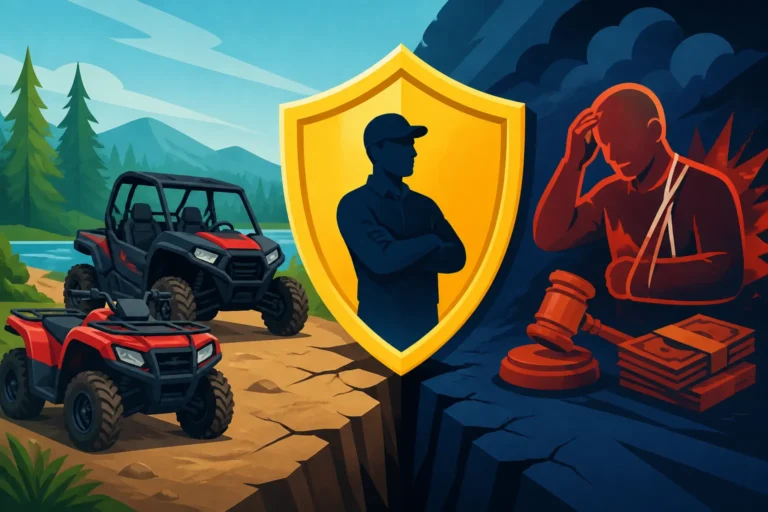
This mandatory coverage is a cornerstone of Quebec's approach to off-highway vehicle safety and accountability. It ensures that if you're involved in an accident where you cause damage to another person's property, or injure someone, there's at least a safety net in place to cover the basic costs. This system aims to protect innocent parties who might be affected by an off-highway vehicle incident. While this SAAQ coverage is a great starting point, it's crucial to understand its limits and when you might need additional private insurance, which we'll delve into later. The current minimum liability protection through the SAAQ stands at a substantial figure, recently increased, so you'll want to check the SAAQ's official site for the latest figures. For instance, the [Quebec Liability Minimum Rose to $1 Million] in recent years.
A Look Back: Why the SAAQ Stepped In
Understanding why the SAAQ handles off-highway vehicles in this dual capacity helps clarify the current system. It wasn't always this way, and the evolution of off-highway vehicle use in Quebec led to a need for a more structured, province-wide approach to safety and accountability. The current framework is a direct response to the growth of quad riding and the recognition that these machines, while fun and useful, also carry inherent risks.
The Evolution of Off-Highway Vehicle Regulation
For many years, off-highway vehicle regulation was perhaps less centralized, leaving more to local municipalities or even club-level oversight. As quads and side-by-sides grew in popularity, so did the number of incidents, accidents, and disputes. Imagine a time when an accident on a remote trail might have involved lengthy and complicated legal battles because there was no standardized system for identifying vehicles or ensuring basic financial responsibility. This piecemeal approach simply wasn't sustainable for a province with such an extensive network of trails and a vibrant off-highway vehicle community.
The need for a unified system became apparent. The government recognized that off-highway vehicles, while distinct from road vehicles, still operated in public and semi-public spaces, and needed a similar level of oversight to ensure public safety and order. This led to a significant shift in how ATVs and UTVs were treated under provincial law, culminating in the SAAQ taking on its expanded role. It's an example of how regulations evolve to meet the realities of how people are using their recreational and utility vehicles.
Centralizing Control and Public Safety
The decision to place both registration and mandatory liability insurance under the SAAQ's umbrella was primarily driven by a desire to centralize control and enhance public safety. By having one provincial body manage both aspects, Quebec ensured a consistent standard across all regions. It simplified the process for owners – you go to one place for your plate and your basic insurance. More importantly, it guaranteed that every single registered machine operating legally on Quebec's trails or designated access roads would have that crucial minimum liability coverage.
This centralization aimed to reduce the administrative burden on various levels of government and, crucially, to provide a clear, unambiguous framework for off-highway vehicle operation. It also aligned with the SAAQ's broader mandate of promoting road safety and compensating victims of road accidents, extending that philosophy to the off-highway world. This integrated approach, formalized through legislative changes like [Quebec's Off-Highway Vehicle Act and Your Papers], provides a robust foundation for regulating this popular outdoor activity.
What the SAAQ's Dual Role Means for You, the Quad Owner
Alright, so we've talked about the "why" and the history. Now, let's get down to brass tacks: what does this unique SAAQ setup practically mean for you as a quad or side-by-side owner in Quebec? It affects how you buy, how you ride, and what you need to keep in mind for your annual obligations. Understanding these implications will help you avoid headaches down the line and ensure you're always riding responsibly and legally.
Streamlined Registration and Renewal
One of the biggest advantages of the SAAQ's dual role is the streamlined process for getting your machine on the trails. When you purchase an ATV or UTV, whether from a dealer or a private seller, you head to the SAAQ. They handle the transfer of ownership, issue your VHR plate, and activate your mandatory liability insurance all in one go. There’s no need to then go to a separate insurance company just to get the minimum coverage required to hit the trails. This convenience is definitely a plus for busy riders. Our guide on [How to Register an ATV in Quebec] breaks down the steps for you.
Each year, you'll receive a renewal notice for your registration, and with it, the renewal of your SAAQ liability insurance is automatically included. It’s a single payment, a single process. This makes it hard to accidentally let your basic coverage lapse while keeping your plate current. You simply pay your annual fee, and you're good to go for another season of riding, knowing you have that foundational protection. The SAAQ makes it pretty straightforward, often allowing renewals online, which is a huge time-saver.
Understanding Your SAAQ Liability Coverage
While the SAAQ provides mandatory liability coverage, it's vital to understand what this means and, more importantly, what it doesn't mean. The SAAQ's coverage is specifically for civil liability, meaning it covers damages or injuries you might cause to other people or their property while operating your off-highway vehicle. For example, if you accidentally hit another rider's machine on the trail, or cause damage to someone's fence on private property, this coverage would kick in to protect you against financial claims up to the specified limit. The [Quebec Insurance Minimum for an Owner] is a key figure to be aware of here.
However, this SAAQ coverage does not protect your own machine. If you crash your quad and damage it, or if it gets stolen, the SAAQ's mandatory insurance won't cover your repair or replacement costs. It also generally doesn't cover your own injuries. For these types of protections, you'll need to look into purchasing additional private insurance. It's a common misunderstanding, and it's essential to grasp this distinction to make informed decisions about your overall insurance needs.
Navigating Additional Insurance Needs
Given the limitations of the SAAQ's mandatory coverage, most responsible quad owners will seriously consider — and often purchase — additional private insurance. This is where you can get protection for your machine against theft, fire, vandalism, or collision damage. You can also opt for higher liability limits than what the SAAQ provides, which is always a good idea in today's litigious world, especially if you have significant assets to protect. Some private policies also offer coverage for your own medical expenses if you're injured.
When looking at private insurance, you'll find various options tailored to off-highway vehicles. It's worth shopping around and comparing what different insurance providers offer, as policies can vary widely in terms of deductibles, coverage limits, and included perils. If you're riding with friends or even sharing ownership of a machine, you might find yourself needing specific agreements or waivers. Services like LawDepot can be incredibly useful for drafting clear, legally sound documents such as co-ownership agreements or even simple liability waivers for guests riding on your property. This can provide an extra layer of protection and clarity, beyond what standard insurance covers, especially in unique scenarios.
The Legal Framework: How It All Works Together
The SAAQ's role isn't just a matter of policy; it's deeply rooted in Quebec's legal framework for off-highway vehicles. There are specific laws that govern how these machines are operated, registered, and insured, ensuring that there's a clear legislative mandate for the SAAQ's actions. This framework is designed to promote safety, protect the environment, and ensure harmonious coexistence between riders, landowners, and other trail users.
Quebec's Off-Highway Vehicle Act and Your Papers
The cornerstone of off-highway vehicle regulation in Quebec is the Act respecting off-highway vehicles, often simply referred to as the Off-Highway Vehicle Act. This piece of legislation outlines everything from age restrictions for riders to helmet requirements, speed limits, and, crucially, the requirement for registration and insurance. It's this Act that grants the SAAQ the authority to be the sole registrar and mandatory insurer for ATVs and UTVs in the province. Without this Act, the SAAQ wouldn't have the legal standing to enforce these rules.
Understanding the implications of this Act is paramount. It means that your registration certificate isn't just a piece of paper; it's proof that you're complying with provincial law. This certificate, along with your driver's license and proof of any additional private insurance, should always be carried with you when you ride. Trail patrols and law enforcement officers have the authority to ask for these documents, and failure to produce them can result in fines or other penalties. This ensures that every rider on the system is accounted for and has met their basic legal obligations. Keeping your [Quebec Registration Paperwork Checklist] up to date is key.
Connecting Registration to Trail Access
One of the most direct ways the SAAQ's registration process impacts you is through its connection to trail access. In Quebec, a vast network of federated trails crisscrosses the province, maintained by dedicated clubs under the umbrella of the FQCQ (Fédération québécoise des clubs de VTT). To ride on these trails, you absolutely must have a current SAAQ registration and display a valid trail pass. There's no getting around this requirement. Without a current registration, you cannot legally obtain a trail pass, effectively locking you out of the federated trail system.
This linkage serves a dual purpose. Firstly, it ensures that every rider benefiting from the extensive trail network is contributing to its upkeep through their trail pass fees and is also covered by the mandatory SAAQ liability insurance. Secondly, it provides a layer of accountability. If a machine is involved in an incident on the trails, its registration makes it traceable. This integrated system means that legal operation on Quebec's trails starts with your SAAQ registration, solidifying the SAAQ's fundamental role in enabling the sport.
Here's a quick comparison of what SAAQ mandatory insurance covers versus what private insurance might add:
| Feature | SAAQ Mandatory Insurance (Built into Registration) | Private Off-Highway Vehicle Insurance (Optional Add-on) |
|---|---|---|
| Purpose | Covers civil liability for damages/injuries you cause to others. | Covers damage to your own machine, theft, fire, vandalism, higher liability. |
| Coverage Type | Third-party liability. | Comprehensive, collision, increased liability, medical. |
| Cost | Included in annual SAAQ registration fee. | Separate premium, varies by provider, coverage, deductible. |
| Coverage Limit | Provincial minimum (e.g., $1 Million, check SAAQ site). | Can be significantly higher, chosen by owner. |
| Required to Ride | Absolutely mandatory for registered machines on public trails. | Not mandatory, but highly recommended for financial protection. |
| Covers My Machine? | No. | Yes (with comprehensive/collision). |
| Covers My Injuries? | No (generally). | Yes (with specific medical riders). |
| Proof Required on Trail | SAAQ registration certificate. | Proof of private policy recommended in addition to SAAQ cert. |
Common Misconceptions and Clarifications
Despite the system being in place for quite some time, there are still a few persistent myths and misunderstandings that float around among quad owners in Quebec. It’s easy to get confused, especially if you're used to different rules from other provinces or even from how cars are insured. Let's tackle some of the most common ones to set the record straight and help you navigate the landscape with confidence.
"But I Already Have Private Insurance!"
This is a really common point of confusion. Many new owners will say, "I've already bought an insurance policy for my quad from [My Insurance Company], so I should be good to go, right?" While it's fantastic that you've secured private insurance for comprehensive coverage, theft, or higher liability limits, it's absolutely crucial to remember that this does not replace your mandatory SAAQ liability coverage. Even if your private policy includes a higher liability limit, you still must pay the SAAQ registration fee, which includes their baseline liability coverage. Think of it as a mandatory provincial layer of protection that every single off-highway vehicle operating in Quebec carries.
Your private insurance policy acts as an additional layer of protection, sitting on top of the SAAQ's coverage. For example, if you cause an accident and the damages exceed the SAAQ's mandatory coverage limit, your private policy would typically kick in to cover the excess, up to its own limits. Or, it would cover your machine's damage, which the SAAQ won't touch. So, having private insurance is highly recommended, but it doesn't exempt you from the SAAQ's registration and its integrated basic liability. It's a "both, not either/or" situation for many serious riders.
The Myth of the "Private Land Only" Loophole
Another widespread misconception is that if you only ever ride your quad on private land, you don't need to register it with the SAAQ or carry any insurance. While it's true that some very specific, closed-course competitive events on private land might have different rules, for the vast majority of personal use, this "private land only" loophole simply doesn't exist for registration and basic SAAQ liability.
The Off-Highway Vehicle Act is quite clear: if you operate an off-highway vehicle in Quebec, it must be registered with the SAAQ and have the associated mandatory liability insurance, regardless of whether you're on a federated trail, a forest road, or even your own backyard. The only true exception would be for machines never operated (e.g., purely for display) or in very rare, controlled environments not accessible to the public. If your machine is capable of being used off-highway, the SAAQ wants it registered and insured. This ensures accountability even if an incident occurs on what you consider "private" land but still involves other parties. You really don't want to get caught riding an unregistered machine; the penalties can be significant. Our post on [Quebec Machines Used Only on Private Land] goes into more detail.
Practical Tips for Quebec Quad Owners
Understanding the SAAQ's role is one thing, but putting that knowledge into practice is another. As a quad owner, there are several practical steps you can take to ensure you're always compliant, prepared, and riding worry-free. A little proactive effort can save you a lot of grief on the trail or at a service counter.
Keeping Your Documents in Order
This might seem basic, but it's incredibly important. Your SAAQ registration certificate is your most vital piece of paperwork. You should carry an original or a clear copy of it with you every time you ride. While some patrols might accept a clear photo on your phone, it's always safer to have a physical copy or the digital certificate from the SAAQ's app. This is also true for your driver's license and your trail pass. Think of it like your vehicle's identity card and your permission slip for the trails.
Beyond what you carry on the machine, keep all your purchase documents, bills of sale (especially if you bought privately), and private insurance policy details in a safe place at home. If you're using forms for private sales, perhaps from a resource like LawDepot, make sure they are fully completed and signed by all parties. These documents are crucial for proving ownership, facilitating future sales, or handling insurance claims. Having a well-organized file will make any interaction with the SAAQ, police, or insurance companies much smoother. Need help with a private sale? Check out [Paperwork Two Individuals Sign on a Private Sale].
When to Consult Professionals
While this guide aims to be comprehensive, there are always situations where professional advice is invaluable. If you have complex questions about ownership (e.g., shared ownership, inherited machines), specific legal queries about an incident, or need to draft custom agreements, don't hesitate to consult a legal professional. Similarly, for detailed advice on private insurance, speak with a licensed insurance broker who specializes in off-highway vehicles. They can help you understand all the nuances of coverage and find a policy that perfectly fits your needs and budget.
Even for everyday transactions, if you're unsure about the documentation required for a specific SAAQ process, like [Quebec Registration for an Imported Machine] or [Quebec Registration After the Owner Dies], calling the SAAQ directly or visiting a service counter can clarify things. For individuals or small businesses needing to formalize agreements, such as renting out a quad or outlining a co-ownership structure, using templates from LawDepot can provide a solid starting point for creating legally sound documents. It’s always better to ask questions and seek expert advice than to proceed with assumptions and potentially face problems later.
Disclaimer
This article is for general informational purposes only and does not constitute professional advice. Laws, prices and regulations vary by location and change over time. Consult a qualified professional for guidance on your specific situation.