Returning a VHR Plate After a Sale
After you’ve successfully sold your ATV or side-by-side in Quebec, it’s easy to get caught up in the excitement of the transaction, maybe even dreaming of your next machine. But there’s one critical, often overlooked step that many owners forget or put off: returning the Vehicle Hors Route (VHR) plate to the Société de l'assurance automobile du Québec (SAAQ). Failing to complete this final piece of paperwork can lead to unnecessary complications, from ongoing liability exposure to issues with future registrations, and nobody wants those kinds of headaches. This comprehensive guide will walk you through exactly how to return your VHR plate, ensuring a clean break from your previous machine and peace of mind.
Understanding Your Obligation: Why Returning the VHR Plate Matters
Selling your off-road machine isn't just about handing over the keys and collecting payment. There's a vital administrative step that needs to happen at the SAAQ, and it directly involves that little VHR plate you had mounted on your quad or side-by-side. Many folks assume that once the bill of sale is signed and the new owner rides off, their responsibility ends. Unfortunately, that's not always the case in Quebec, and understanding why you need to return the plate is the first crucial step to avoiding future problems.
Avoiding Lingering Liability Concerns
Imagine this: you've sold your ATV, but the plate is still technically linked to you in the SAAQ's system. What happens if the new owner, for whatever reason, doesn't register the machine right away? Or worse, if they get into an accident before the registration transfer is completed? While the new owner is legally responsible for registering the machine, if your plate is still active and associated with you, there could be an initial period of confusion where authorities might still try to link the machine back to you. This is especially true concerning the mandatory [Quebec's Liability Insurance Rule] that comes with your VHR registration. You don't want to be in a position where you're trying to prove you sold a machine months ago because a plate was still technically in your name.
Think of it as closing a chapter completely. When you properly return your VHR plate, you're formally telling the SAAQ that you are no longer the registered owner of that specific machine, and therefore, you are no longer responsible for its registration or the associated liability insurance that comes with it. This clear separation is for your protection, giving you tangible proof that your ownership obligations have ended. It’s a small step that can save a big headache down the road.
Preventing Future Renewal Notices and Fees
Another practical reason to return your VHR plate is to stop receiving those annual [Quebec Registration Renewal Notices]. Even after you’ve sold your ATV, if the plate remains active in the SAAQ’s system under your name, you might continue to receive renewal notices for a machine you no longer own. While you could technically ignore them, it's an unnecessary piece of administrative clutter that can cause confusion. Furthermore, if the system doesn't accurately reflect the sale, there's a slim chance of being charged for a renewal you don't need, or having to deal with SAAQ queries down the line.
Returning the plate signals to the SAAQ that the machine is no longer yours, effectively canceling your portion of the registration for that specific VHR. This prevents any automatic renewal processes or future fees from being incorrectly attributed to you. It's about cleaning up your administrative slate and ensuring that your SAAQ file accurately reflects your current off-road vehicle ownership status. It’s important to understand that the plate itself is linked to your file, not just the machine.
The Step-by-Step Process for Returning Your Plate to the SAAQ
Now that we understand why it's so important, let's get down to the nitty-gritty of how to actually return that VHR plate. The process itself is fairly straightforward, but like all administrative tasks, it requires a few key pieces of information and the plate itself. You’ll be dealing directly with the SAAQ, which is the registrar and insurer for all off-road vehicles in Quebec.
Gathering Your Documents and the Plate Itself
Before you even think about heading to an SAAQ service counter, make sure you have everything in order. This isn't a "show up and hope for the best" kind of situation; a little preparation goes a long way. The main items you'll need are:
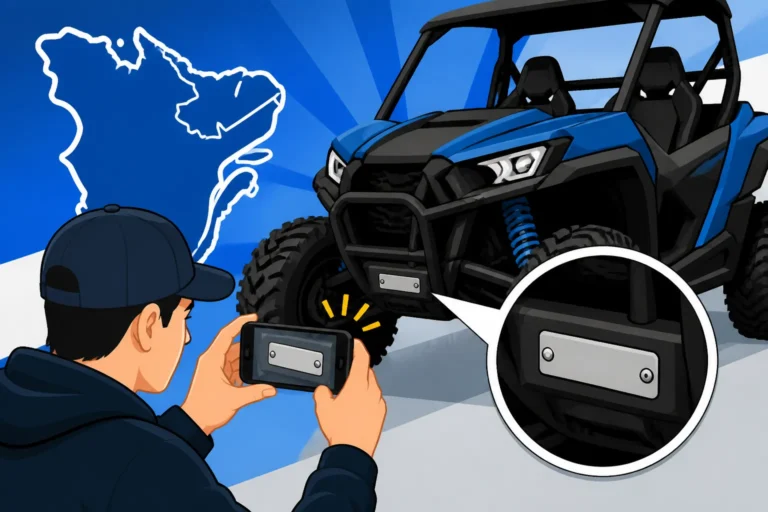
- The VHR Plate: This is, obviously, the star of the show. Make sure you've removed it from your ATV or side-by-side. It’s usually attached with a couple of bolts to the rear fender.
- Your Driver's Licence: This is for identification purposes, so the SAAQ agent can confirm you are the registered owner returning the plate.
- Proof of Sale: While not always strictly required to simply return the plate and cancel your registration, having proof of sale is highly recommended. This could be a bill of sale, especially one that you might have put together using templates from services like LawDepot, which provides legally sound documents for private sales. This document clearly states the date of sale, the buyer's information, and the machine's details. It helps provide an extra layer of documentation for your records and for the SAAQ's if any questions arise. If you used a [Quebec SAAQ Forms for a Private Sale], bring your copy.
- Your Most Recent Registration Certificate: This paper document, which you should have been carrying on your machine, confirms the VHR plate number, your name as the owner, and the details of the ATV or side-by-side.
Having these documents ensures a smooth transaction. The SAAQ clerk can quickly verify your identity and the plate information, making the process efficient.
Visiting an SAAQ Service Counter
Unlike some other administrative tasks you might be able to do online, returning a physical plate usually requires an in-person visit to an SAAQ service counter. There are SAAQ offices scattered across Quebec, so you should be able to find one that's reasonably convenient for you.
Here's what to expect:
- Take a Number: Upon arrival, you'll likely need to take a number for "registration services" or similar. The SAAQ offices can sometimes be busy, especially during peak hours or around renewal periods, so be prepared for a potential wait.
- Present Your Documents: When your number is called, approach the counter and inform the agent that you wish to return a VHR plate after selling your machine. Hand over your driver's licence, the VHR plate, and any supporting documents like your bill of sale (perhaps one you prepared with a reliable template from LawDepot) and your registration certificate.
- SAAQ Processing: The agent will process the plate return in their system. They will confirm the details, record the return, and officially cancel the registration associated with that plate number from your name. They might ask for the name of the new owner or the sale date if you have it. This is also the point where you might be informed about any potential refunds for unused registration periods.
- Confirmation: Once the process is complete, the SAAQ agent should provide you with a confirmation of the plate return and registration cancellation. This might be a stamped document or a printout from their system. Keep this document safe. It serves as your official proof that you've fulfilled your obligation.
By physically returning the plate and receiving confirmation, you are making sure that the SAAQ has a clear record of the transaction and that you are no longer tied to the machine or its registration. This is crucial, especially in light of the updated [Quebec's 2021 Law and What Changed] regarding off-road vehicle operations and owner responsibilities.
What Happens After the Plate Is Returned
So, you’ve made the trip to the SAAQ, handed over your VHR plate, and walked out with your confirmation. What exactly happens next in the background, and what are the implications for you, the seller? Understanding these follow-up steps can further reassure you that you've done everything correctly.
Cancellation of Your Registration and Insurance
When you return your VHR plate, the primary action taken by the SAAQ is the official cancellation of the registration associated with that plate. This means that your name is formally removed as the registered owner of that specific off-road vehicle in their database. Consequently, the mandatory [Quebec's SAAQ Is Registrar and Insurer] aspect also ceases. The basic liability insurance that is tied directly to your SAAQ registration is also cancelled for that machine. This is a huge relief, as it eliminates your legal exposure related to the machine's operation.
It's important to remember that this SAAQ-provided insurance is a fundamental part of operating a VHR in Quebec, with the [Quebec Liability Minimum Rose to $1 Million] for all owners. By cancelling your registration, you're also ending your responsibility for this minimum coverage for the sold machine. The new owner will then be responsible for obtaining their own registration and associated liability coverage, as highlighted in topics like [Quebec Registration Transfer After a Sale]. Your part in this cycle is complete.
Potential for a Refund for Unused Registration Period
One of the most frequently asked questions after selling an ATV is, "Will I get a refund for the unused portion of my registration?" The answer, happily, is often yes! If you sell your machine partway through your annual registration period and return your plate, the SAAQ typically calculates a pro-rated refund for the remaining months. This means you won't be paying for registration and insurance that you're no longer using.
The refund amount will depend on how many full months are left on your registration from the date you return the plate. The SAAQ will process this refund, usually by mailing you a cheque or by crediting an account if you have one linked. It might take a few weeks for the refund to be processed and reach you, so don't expect it instantly. This is a common and welcome benefit, and it's one of the best incentives to get that plate returned promptly. If you're wondering about the specifics, articles like [Does Quebec Refund an Unused VHR Registration?] delve into this topic.
Implications for Your SAAQ Driver File
Returning your VHR plate also updates your overall SAAQ driver file. While it won't directly impact your driver's licence points or classification, it ensures that your record accurately reflects the vehicles you own and are responsible for. This tidiness in your administrative file is beneficial for several reasons. For instance, if you purchase a new machine in the future, your history with the SAAQ regarding previous vehicles will be clear and updated.
It also prevents any lingering administrative loose ends that could complicate future transactions or inquiries. For example, if you move and need to update your [Quebec Registration Address Change], having a clean record of sold vehicles makes that process smoother. The SAAQ system is designed to track vehicles and their owners, and by completing this step, you're making sure your part of that tracking is accurate and up-to-date.
Navigating Common Scenarios and Potential Issues
While returning a VHR plate is usually a straightforward process, sometimes life throws a curveball. What if your plate is lost, or you can't get to an SAAQ office right away? Understanding these common scenarios and how to address them can save you stress and ensure you still meet your obligations.
What if the VHR Plate is Lost or Stolen?
It happens. Plates can fall off on a rough trail, get misplaced during a garage cleanout, or even be stolen. If your VHR plate is lost or stolen before you have a chance to return it to the SAAQ after a sale, don't panic, but do act swiftly. You'll still need to inform the SAAQ about the loss.
Your first step should be to report the loss or theft to your local police department. They will provide you with a police report number, which is crucial. Then, contact the SAAQ (or visit a service counter) and explain the situation. You'll need to provide the police report number and identify the machine by its Vehicle Identification Number (VIN) and your previous plate number. The SAAQ will then be able to cancel the registration associated with that lost plate. While you won't have a physical plate to return, the police report serves as documentation of its absence, allowing the SAAQ to update your file. For more details on this, you can look up information on [Quebec Plate Replacement If Lost], though in this case, you're canceling, not replacing.
Dealing with Delays in Returning the Plate
Life gets busy, and sometimes getting to an SAAQ office isn't your top priority immediately after selling your ATV. Perhaps you sold it during a busy work week, or you live far from the nearest service counter. While it's always best to return the plate as soon as possible, a slight delay is usually not catastrophic, as long as the ownership transfer is properly recorded.
However, the longer you delay, the longer your name remains associated with that plate and the underlying liability insurance in the SAAQ system. If you used a detailed bill of sale, perhaps even one found on LawDepot, that explicitly states the date and time of the transfer, that document becomes your primary defense in case of any interim issues. While the new owner is responsible for registering the machine promptly, your formal cancellation of the plate solidifies your separation from the machine. Aim to return the plate within a reasonable timeframe, ideally within a few weeks of the sale, to fully protect yourself and ensure you receive any eligible refund for unused registration.
Here's a quick comparison of what happens when you act promptly versus delaying:
| Action | Immediate Plate Return (Recommended) | Delayed Plate Return (Not Ideal) |
|---|---|---|
| Liability Insurance | Officially cancelled from your name immediately. | Lingers on your record until plate is returned or new owner registers (if they do). |
| Refund for Unused Registration | Processed promptly based on return date, maximizing your refund. | Refund may be smaller if calculated from a later return date, or missed entirely. |
| SAAQ Record Accuracy | Your file is immediately updated, reflecting the sale. | Your file shows you as current owner until processed, potential for confusion. |
| New Owner's Registration | Clear path for new owner; less chance of system overlap. | Potential for administrative glitches if both try to register/de-register around same time. |
| Peace of Mind | Immediate and complete. | Lingering worry about potential issues. |
Selling the Machine Out of Province
If you've sold your ATV to someone who lives outside of Quebec – perhaps an Ontarian coming over from across the Ottawa River, or an American from Vermont – the process of returning your VHR plate remains the same. The key is that you, as the Quebec seller, are still responsible for de-registering the machine from your name with the SAAQ. The fact that the machine is leaving the province doesn't change your obligation to formally sever your ties to its Quebec registration.
The new owner will then be responsible for registering the machine in their home province or state according to their local regulations. Your focus remains solely on ensuring your SAAQ record is clean. Having a robust bill of sale, which could be generated from a template on LawDepot, is even more critical in out-of-province sales to clearly delineate the transfer of ownership and liability. This makes the entire process of [Selling a Registered Machine in Quebec] much cleaner for both parties involved.
In conclusion, returning your VHR plate to the SAAQ after selling your ATV or side-by-side isn't just a minor detail; it's a vital final step that protects you from lingering liability, administrative headaches, and ensures you receive any due refunds. Make it a priority to visit your local SAAQ service counter with the plate and your documents to officially close that chapter of your off-road vehicle ownership.
Disclaimer
This article is for general informational purposes only and does not constitute professional advice. Laws, prices and regulations vary by location and change over time. Consult a qualified professional for guidance on your specific situation.