Photographing a Serial Number Before You Buy
One of the biggest headaches you can face when buying a used ATV or UTV in Quebec is discovering, after you've handed over your hard-earned cash, that the machine's identity is a tangled mess. We're talking about serial numbers that are impossible to read, don't match the paperwork, or worse, show signs of tampering. This guide is here to walk you through the absolutely critical step of photographing the serial number before you finalize any purchase, helping you avoid a registration nightmare and protect your investment.
Why a Clear Serial Number Photo Is Non-Negotiable
When you're looking at a used off-road machine, whether it's an ATV (or VTT, as they say here) or a side-by-side, it's easy to get caught up in the excitement of the deal. You're checking the engine, kicking the tires, maybe even taking it for a quick spin. But if you skip verifying the serial number with a clear photo, you're opening yourself up to a world of potential problems down the road. This isn't just a suggestion; it's a foundational step to a safe and legal purchase.
Verifying Ownership and History
A clear photograph of the machine's Vehicle Identification Number (VIN) or serial number is your first line of defense against buying a problematic quad. This little string of characters is the unique identifier for that specific machine, much like a social security number for a person. With a clear photo in hand, you can then compare it directly to the seller's registration papers and other ownership documents. Does everything line up perfectly? It absolutely should. If there's any discrepancy, even a single digit, that's a massive red flag.
Beyond just matching paperwork, a verifiable serial number allows you to perform essential background checks. You can inquire about liens that might be attached to the machine, ensuring that when you buy it, you're not inheriting someone else's debt. You can also check if the machine has been reported stolen or if it has a history of major accidents or unresolved recalls. Imagine buying a machine only to find out it was stolen last year; not only would you lose your money, but you could also face legal repercussions. Your photograph of the serial number becomes the key to unlocking this critical information, helping you avoid a world of hurt.
Avoiding Registration Headaches with the SAAQ
The SAAQ (Société de l'assurance automobile du Québec) is incredibly strict when it comes to vehicle registration, and off-road machines are no exception. They are the gatekeepers, ensuring every machine on their registry has a clear, verifiable identity. If you show up to register your newly purchased ATV and the serial number on the machine doesn't perfectly match the ownership documents, or if it appears to be altered or unreadable, they will simply refuse to register it. It's that simple, and that frustrating.
Think about the scenario where you've purchased a machine, brought it home, and then realized the serial number is so rusted or obscured it's illegible. You might find yourself in the unenviable position of trying to register [Quebec Registration When the Serial Is Gone], a process that can be incredibly complex, time-consuming, and often requires extensive extra steps, like sworn declarations or inspections by an expert. A clear photo, taken before the sale, means you would have caught this issue much earlier, giving you the power to negotiate, demand clarity from the seller, or simply walk away from a bad deal. This single photo can save you hours of paperwork, dozens of phone calls, and the profound disappointment of owning a machine you can't legally ride. The SAAQ needs to know exactly what they're registering, and without that clear serial, you're dead in the water.
Protecting Your Investment and Legal Standing
Your ATV or UTV is a significant investment, and like any major purchase, you need to protect it. A clear photo of the serial number isn't just about avoiding bureaucratic hurdles; it's about safeguarding your legal standing and investment. For private sales, where you don't have the protection or guarantees of a licensed dealer, this photo becomes a vital piece of evidence. Should any dispute arise later — perhaps the seller misrepresented the machine's condition, or a lien surfaces unexpectedly — your photo, linked to a proper bill of sale, helps establish exactly which machine you purchased and what its identity was at the time of sale.
When you're dealing with [Buying From a Private Seller in Quebec], you're relying heavily on the integrity of the individual. Using a robust bill of sale, perhaps a template from a service like LawDepot, is crucial, and that document should explicitly include the serial number. Your clear photograph of that serial number serves as undeniable proof that the number recorded on the bill of sale accurately represents the machine you inspected. It validates the details of the transaction and reduces ambiguity. This simple step can prevent lengthy legal battles or financial losses if things go south, giving you solid documentation to fall back on.
How to Get the Best Serial Number Photo
Getting a good, usable photo of the serial number might sound straightforward, but there are a few tricks to ensure it's clear, complete, and genuinely helpful. Don't just snap a quick blurry shot; put a little effort into it, and you'll thank yourself later.
Locating the Serial Number on Your Machine
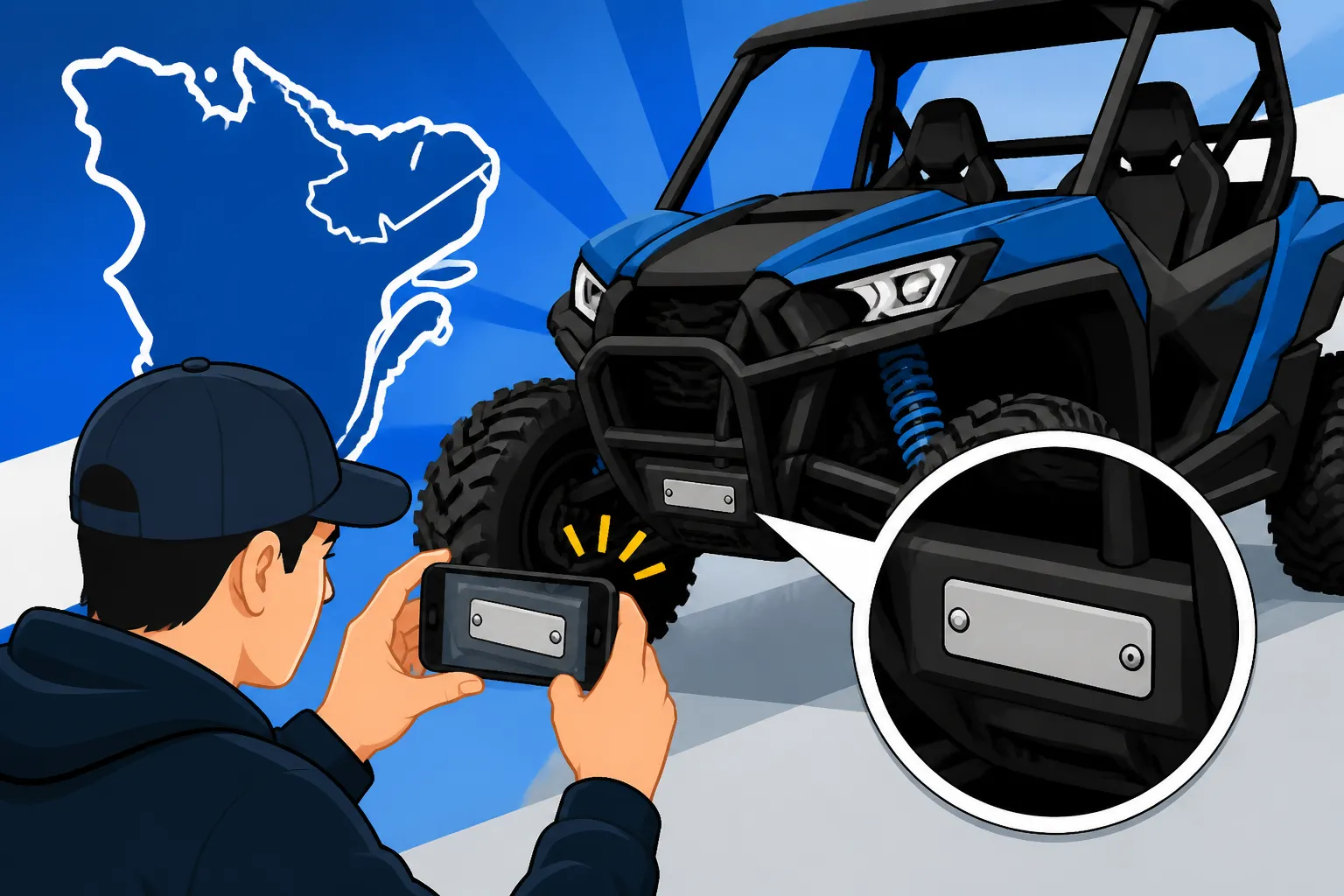
Before you can photograph it, you need to find it! The Vehicle Identification Number (VIN) or serial number on an ATV or UTV isn't always in the most obvious spot. Generally, it's stamped onto the frame, usually on the left-hand side, near the front wheel well, or sometimes near the footpeg. For side-by-sides, it can often be found on the frame near the driver's seat or under the hood. Some manufacturers might also place a secondary serial number on the engine casing or on a small, riveted plate in another accessible area.
It's a good practice to locate all serial numbers on the machine, if there are multiple, and photograph each one. If you're struggling to find it, don't hesitate to ask the seller. A legitimate seller should know exactly where their machine's serial number is located and be happy to show you. Be wary if they seem hesitant or can't pinpoint it immediately; this could be a sign of something amiss. Always check the physical stamping, not just a sticker, as stickers can be easily removed or replaced.
Tips for a Clear and Usable Image
Once you've found the serial number, your goal is to get the clearest possible image. Here's how to ensure your photo is up to snuff:
- Lighting is Key: Natural daylight is always best. Try to position yourself so the light falls directly on the serial number, avoiding any shadows cast by your body or parts of the machine. If you're indoors or it's a dark day, use your phone's flashlight or a separate light source to illuminate the area.
- Focus, Focus, Focus: This might seem obvious, but a blurry photo is useless. Tap on the serial number on your phone's screen to make sure the camera focuses sharply on the digits. Take several photos, varying the distance slightly, to ensure at least one is perfectly clear.
- Multiple Angles and Context: Don't just take one head-on shot. Take a few from different angles to show the depth of the stamping. Also, take some wider shots that include the serial number and the surrounding parts of the machine. This contextual photo proves that the serial number belongs to that specific machine and isn't just a random picture of numbers.
- Clean the Area: Often, serial numbers can be obscured by dirt, mud, or rust. Gently wipe the area clean with a damp cloth. Avoid using harsh chemicals or abrasive materials that could further damage or obscure the numbers. Your goal is to reveal, not to alter.
What to Do with the Photos
Once you've got those crisp, clear photos, don't just leave them buried in your phone's gallery. Treat them as important documentation. Email them to yourself or upload them to a cloud storage service immediately. This creates a timestamp and a backup, proving when you took the photos. You might also consider sharing them with the seller, asking them to confirm that the numbers match what they have on their [Quebec ATV Registration With the SAAQ]. This collaborative step adds another layer of verification and transparency to the buying process.
Make sure these photos are stored in a way that you can easily retrieve them if needed for [Quebec Registration Transfer After a Sale] or any future disputes. They serve as a permanent record of the machine's identity at the time of your inspection.
Beyond the Photo: What Else to Check
While the serial number photo is paramount, it's just one piece of the puzzle. To truly protect yourself, you need to combine that visual evidence with other critical checks. A comprehensive approach ensures you're not missing any vital information that could turn your dream machine into a bureaucratic headache.
Comparing the Photo to Paperwork
This step is where your diligent photo-taking really pays off. With your clear serial number photo handy, meticulously compare every single digit and letter to the serial number listed on the seller's official documents. This includes the SAAQ registration certificate, any past bills of sale, or import documents. This direct comparison is absolutely crucial for [Quebec ATV Registration and Proof of Ownership]. The numbers must match exactly.
Look for any inconsistencies: a "0" that looks like an "O," a "1" that might be an "I," or any faded digits that make identification difficult. Also, pay close attention to the formatting and spacing. Manufacturers stamp serial numbers in a very specific way. If the paperwork shows a different format, or if there's an extra space or hyphen that isn't on the machine, these are all red flags. Don't accept "close enough." If you spot any discrepancies, question them immediately. A legitimate seller will be able to explain, or ideally, the numbers will be an identical match across all sources.
Running a Background Check
Having a clear photo of the serial number makes it much easier to run a proper background check. Before you commit to the purchase, ask the seller for the full serial number (which you've confirmed with your photo) and use it to check for any existing liens or theft reports. In Quebec, the SAAQ can help with some of this information during the registration process, but you can also use private services that provide vehicle history reports. These reports can reveal if there's any financial interest (a loan or lease) still attached to the machine, which means someone else legally owns a part of it.
If there's a lien, it needs to be cleared before the sale is finalized. Otherwise, you could buy a machine only to have it repossessed because the previous owner didn't pay their debt. A bill of sale template from LawDepot can include specific clauses about the seller declaring no outstanding liens, adding another layer of legal protection. Verifying this proactively, using the accurate serial number from your photo, is an indispensable step to ensure you're buying a machine with a clean slate, free from hidden financial burdens, as you learn in [Quebec Registration and Lien Records].
Physical Inspection for Tampering
The clear serial number photo and matching paperwork are excellent, but you also need to physically inspect the area where the serial number is stamped on the machine. This is where you look for any signs of tampering. Criminals sometimes try to alter or remove serial numbers to hide a machine's true identity, especially if it's stolen or has a problematic history.
Look for signs of:
- Grinding or sanding: Is the metal around the serial number area rough or discolored, as if someone tried to remove the original numbers?
- Re-stamping: Do the numbers look like they've been stamped over the original ones, or are they unevenly spaced and inconsistent in depth compared to other factory markings?
- Welding or patching: Has a piece of metal been welded over the original serial number location?
- Stickers or plates: Is the serial number on a simple sticker or a riveted plate that looks like it could be easily removed or replaced, rather than being deeply stamped into the frame itself?
Any of these signs should be an immediate deal-breaker. A tampered serial number is a massive red flag and almost certainly indicates a stolen machine or one with a very shady past. It's not worth the risk, legal trouble, or the certainty that the SAAQ will never register such a machine. Trust your gut; if something looks off, it probably is. This vigilance helps prevent you from becoming entangled in the consequences of [Quebec Machines With No Paperwork].
Common Pitfalls and How to Avoid Them
Buying a used ATV or UTV can be an exciting process, but it's also fraught with potential missteps that can lead to disappointment and financial loss. Being aware of these common pitfalls, especially concerning serial numbers, will equip you to navigate the process with confidence.
The "Just Trust Me" Scenario
It's common to feel a sense of trust when dealing with a seller, especially if they seem friendly or you've found the machine through a mutual acquaintance. The seller might try to rush the process or tell you not to worry about the "boring" paperwork details, assuring you everything is fine. This "just trust me" approach is a significant pitfall. While trust is nice, due diligence is better. A genuine seller will have nothing to hide and will be patient and cooperative with your requests to verify the serial number, inspect the machine, and review all documents.
If a seller resists your request to take a clear photo of the serial number, or if they brush off your questions about its history or the registration papers, consider that a major red flag. It's not about being suspicious of everyone; it's about protecting yourself and your investment. Politely insist on completing your checks. It's your money and your responsibility to ensure a legal and smooth transaction.
Blurry or Incomplete Photos
One of the most common mistakes is taking a quick, blurry, or poorly framed photo of the serial number. You might think you've captured it, but later, when you try to compare it to paperwork or submit it to the SAAQ, you realize individual digits are unreadable, or crucial parts of the number are cut off. A blurry or incomplete photo is almost as bad as no photo at all.
Always take your time. Ensure the lighting is good, the camera is focused, and you capture the entire serial number clearly. Take multiple shots from various angles. Zoom in on your phone screen immediately after taking the photo to verify that every character is crisp and legible. Remember, this photo could be the single most important piece of evidence if you run into problems, so make it count.
Ignoring Discrepancies
Another trap buyers fall into is noticing a small discrepancy – perhaps one digit on the machine's serial number doesn't quite match the registration paper, or there's a slight difference in the stamping – and deciding to overlook it. They might rationalize it, thinking it's a minor error or that it won't be an issue. This is a huge mistake, especially in Quebec. The SAAQ is meticulous, and even a single digit mismatch can bring the entire registration process to a grinding halt.
What seems like a minor error to you could be a clerical mistake that's easily fixed by the seller, or it could be a subtle sign of a serious underlying problem, such as a tampered VIN or a fraudulent document. If you notice any inconsistency, no matter how small, address it directly with the seller before you hand over any money. Get a clear, satisfactory explanation, and if necessary, have the seller rectify the issue with the SAAQ or provide irrefutable proof of the discrepancy's origin. This is particularly important for [Quebec ATV Registration for Newcomers] who might not be familiar with Quebec's specific vehicle identification rules.
Not Having a Proper Bill of Sale
Even with a perfect photo of the serial number, you absolutely cannot skip having a comprehensive bill of sale. The photo proves the identity of the machine you inspected, but the bill of sale legally documents the transaction, including the transfer of ownership. A simple handwritten note on a scrap of paper is not sufficient for a clear and legally sound transaction in Quebec.
A detailed bill of sale, which you can easily find templates for online from providers like LawDepot, should include:
- The full names and addresses of both the buyer and seller.
- A clear, precise description of the ATV/UTV, including its make, model, year, and crucially, the exact serial number you photographed and verified.
- The purchase price and payment method.
- The date and time of the sale.
- A declaration from the seller that they are the legal owner and the machine is free of liens or encumbrances.
- Signatures of both parties.
This document, along with your serial number photo, is what you'll present to the SAAQ when you go to register the machine using the [Quebec SAAQ Forms for a Private Sale]. Without a solid bill of sale, even with your photo, proving legal ownership and completing the registration can become a drawn-out battle. It's the final, crucial piece of your due diligence puzzle.
Disclaimer
This article is for general informational purposes only and does not constitute professional advice. Laws, prices and regulations vary by location and change over time. Consult a qualified professional for guidance on your specific situation.