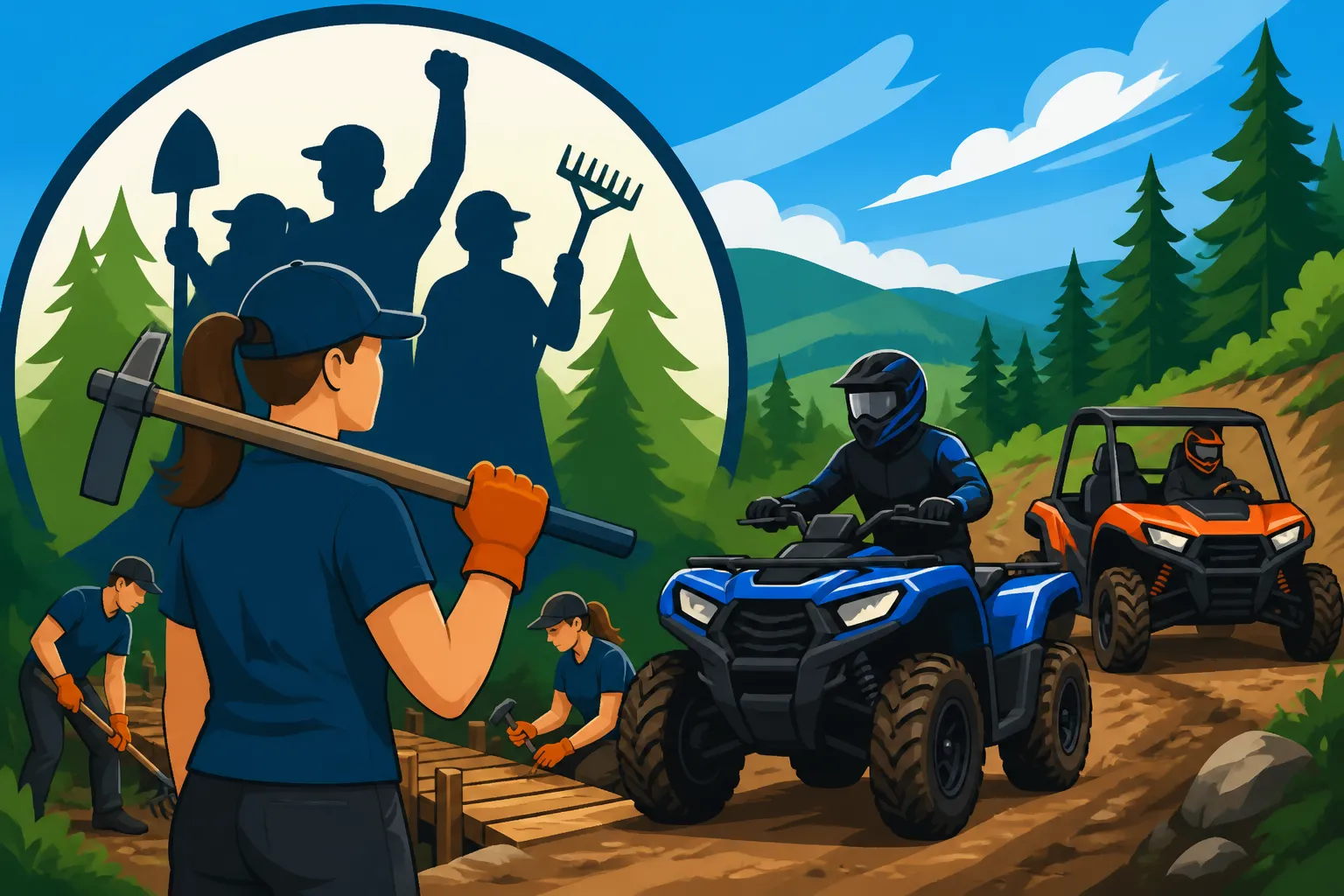
Quebec’s 2,500 Trail Volunteers
Quebec’s ATV trail network does not maintain itself. Behind a signed route, a cleared corridor or a passable bridge are people giving their time to keep riding areas usable. Understanding what those volunteers do—and what riders can do in return—helps you plan better trips, avoid preventable trail damage and support the communities that make the network possible.
Why volunteers matter to Quebec ATV trails
A trail network is more than a line on a map
A route may look like a simple line on a screen, but riding it depends on a long chain of practical work. Someone has to confirm that a corridor is available, keep signs visible, respond to washouts and communicate when a section is closed. On a busy weekend, riders may only notice this work when something goes wrong: a confusing junction, a fallen tree or a bridge that needs attention.
In Quebec, volunteer involvement is often organized through local clubs connected with the broader trail network. The network is not just a collection of paths through the woods. Routes may cross private property, connect communities and pass through terrain that changes with rain, snowmelt and seasonal use. Clubs help coordinate trail stewardship, and volunteers contribute the hands-on effort that keeps those connections functioning. For a wider look at the local role clubs play, see [Quebec Clubs and What They Maintain].
The figure of roughly 2,500 trail volunteers conveys the scale of that contribution. It does not mean every volunteer is working on every trail, every week, or that each corridor receives identical maintenance. It points to a shared effort spread across a large network and many local communities. A route that feels remote and effortless to ride may depend on people who live nearby and know exactly where spring water tends to collect or which junction riders often miss.
Volunteers help protect access, not just the riding surface
Trail access is especially easy to take for granted. A corridor may depend on a landowner’s permission, a club’s relationship with the community and riders respecting the route’s boundaries. If riders cut a corner, leave a gate open or continue onto an unsigned track, the effects can go beyond a rough patch of trail. Those choices can create conflict, damage land or weaken the trust that allows a route to remain available.
Volunteers can help maintain those relationships by keeping riders informed and by helping preserve the agreed route. Their work may include checking signs, reporting problems and reminding riders to stay on the marked corridor. That is why following a trail map is not simply a navigation preference. It is part of using a shared route responsibly. [Staying on a Federated Corridor] offers a useful companion to this idea.
Picture a group approaching a fork where one branch looks wider and less muddy than the signed route. Taking the tempting shortcut might seem harmless in the moment, but it could lead onto land that is not part of the trail. Staying with the signs protects the route and reduces the chance that a landowner, another trail user or a volunteer has to deal with the consequences later.
What trail volunteers do throughout the year
Maintenance starts with observation and small repairs
Trail maintenance is not always dramatic. It can mean checking a marker that has turned, clearing brush that blocks visibility, noticing a drainage problem before it becomes a washout or relaying a report about a damaged culvert. Small repairs and early observations can make a route easier to follow and help a club decide where attention is most urgently needed.
The work also varies by location. A forest corridor, a gravel connection near a village and a low-lying stretch beside a stream can each present different challenges. In some places, the main concern may be vegetation or confusing intersections. Elsewhere, water, erosion or repeated heavy use may be the bigger issue. Volunteers familiar with local conditions can spot changes that a visiting rider might not recognize as a developing problem.
It helps to remember that a volunteer is not necessarily equipped or authorized to fix every issue on the spot. A damaged bridge, a blocked public crossing or a safety concern may require coordination, materials or permission. If you see a problem, report it clearly rather than attempting an improvised repair that could create a new hazard. Include the location, the direction you were travelling and what you observed. [Reporting Trail Damage to a Club] explains why a useful report can make a difference.
Seasonal work changes what a trail needs
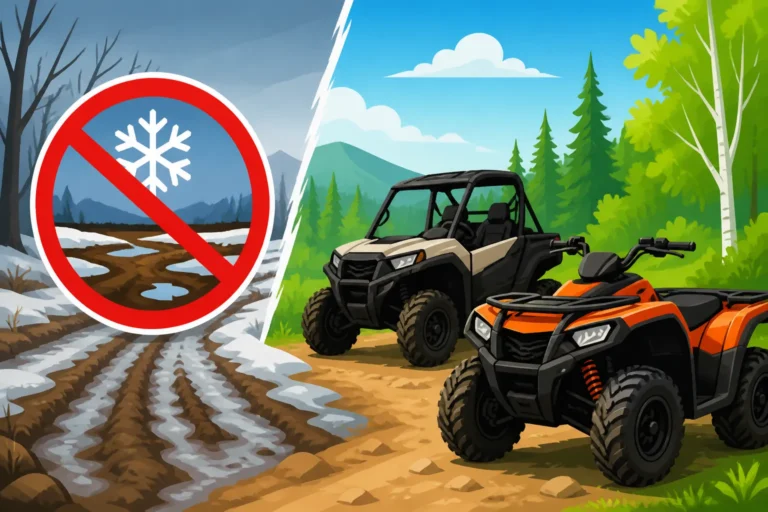
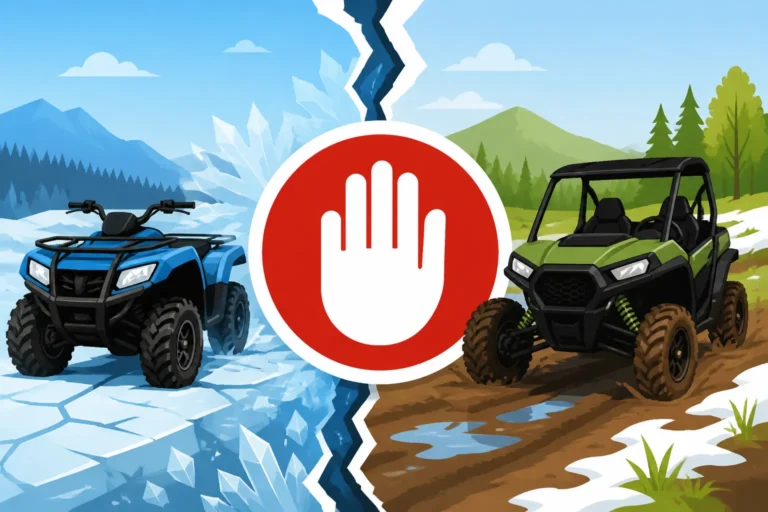
A trail that was firm and easy to ride during one visit may be soft, muddy or closed during another. Spring thaw is a particularly sensitive period: wet ground can be vulnerable to ruts and erosion, and riding a closed section can turn a temporary condition into lasting damage. Volunteers and clubs may share local updates, but riders still need to check conditions before setting out and respect posted closures.
The same route can need different attention in different seasons. Summer brings vegetation growth and heavy recreational use. Autumn can mean fallen leaves that obscure surface changes or signs, as well as local closures connected with hunting activity. Winter corridors may be shared with snowmobilers, bringing different expectations around passing and trail etiquette. The maintenance calendar is shaped by weather, land conditions and the kind of use a corridor receives.
A practical planning habit is to check [Quebec Trail Conditions Before You Go] before loading the machine. A navigation app such as onX Offroad can help you understand where a route lies and how a planned ride fits together, but a mapped line should not be treated as proof that a trail is open. Confirm current local notices and signs, and turn around if conditions or closures make the route unsuitable.
| Volunteer work | Why riders notice it | What riders can do |
|---|---|---|
| Checking signs and junctions | Clear markings reduce wrong turns | Follow markers and report missing or confusing signs |
| Clearing brush and debris | Better visibility and safer passage | Slow down and report obstacles that need attention |
| Observing erosion or drainage issues | Early reports can help prevent worsening damage | Avoid riding around a wet spot and widening the trail |
| Supporting winter trail work | Shared corridors need considerate use | Yield carefully and follow local winter guidance |
| Communicating closures | Notices help protect sensitive ground or access | Check updates and do not ride around a barrier |
Grooming and winter preparation involve specialized effort
Winter trail work can require equipment, planning and local coordination. The reference figure of 215 trail groomers points to a substantial grooming effort associated with Quebec’s network, but machines alone do not make a winter route safe or ready. People plan work, monitor conditions, maintain equipment and respond to changing snow and weather. A groomed surface also depends on riders respecting the route and not damaging it with unsuitable behaviour.
For riders, the important point is not to assume that every trail is groomed or open simply because winter riding is possible in the region. Conditions can vary from one corridor to the next. A route may share space with snowmobiles or have local restrictions that affect when and how an ATV can use it. Follow the signs and club updates, and avoid treating a groomed corridor as an invitation to ride aggressively or cut across its edges.
Winter preparation is also a good reminder that volunteer work has real costs in time, equipment and coordination, even when the rider never sees the work happening. A thoughtful rider can help by slowing down near crews, giving them room, and not obstructing access points. [Quebec Winter Trails Shared With Snowmobiles] provides additional context for riding on shared winter corridors.
How riders can make volunteer work easier
Follow signs, gates and closures
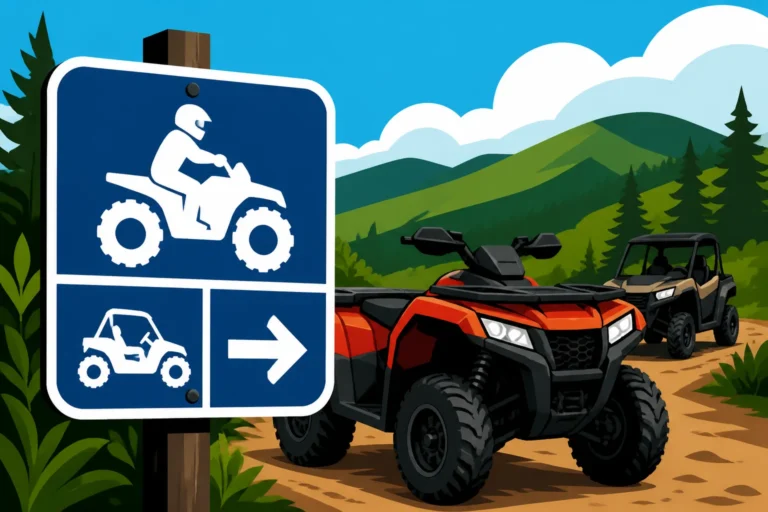
Trail signs are there to guide riders, but they also mark boundaries and communicate local conditions. If a route is closed, do not ride around a barrier or look for a parallel path. A closure can protect soft ground, address a safety issue or reflect a change in access. Riding past it can make the original problem worse and place pressure on the club’s relationship with landowners.
Gates deserve similar care. If a route requires riders to open a gate, leave it as you found it unless a sign says otherwise. A gate left open can allow livestock to wander or create trouble for a landowner. Closing it is a small action, but it shows respect for the property and for the people whose cooperation helps keep a route available. For a closer look at this basic courtesy, see [Leaving Gates as You Found Them].
Closures can be frustrating, particularly if you have trailered a long way or planned a full day around a particular loop. That frustration is understandable. Still, riding around a closure often shifts the problem onto volunteers and landowners and may damage the very route riders want to use. Check for an alternate route, adjust your plan or choose another riding area rather than turning a closed trail into a bigger repair job.
Ride in a way that limits wear and conflict
A rider can create damage without intending to. Spinning the tires in a muddy stretch, leaving the marked corridor to avoid a puddle or riding too close to the edge can widen a trail and increase erosion. If a wet section is passable on the route, follow the established track instead of creating a new one. If it is not passable or is closed, turn back rather than forcing your way through.
Courtesy also matters around homes, farms, pedestrians and other trail users. Slow down where visibility is limited, give others room and keep noise and dust in mind near nearby properties. A club can work hard to maintain a route, but one rider’s inconsiderate behaviour can still sour relations with a community. [Quebec Trail Etiquette Locals Expect] is a useful reference for the habits that help keep shared riding areas welcoming.
Navigation tools can help reduce wrong turns, especially when a route has several junctions. onX Offroad can be useful for reviewing a planned route and keeping your bearings, but it should complement—not replace—official signs, local updates and sound judgment. If the app’s line appears to conflict with a closure sign or marked route, follow the on-the-ground information and verify the situation with the local club.
Report problems in a way someone can act on
A vague message such as “the trail is bad near the river” can be difficult to investigate. A more useful report identifies the route or nearby junction, gives an approximate location, describes the issue and notes whether it appears to create an immediate hazard. If you can do so safely, a photo may help explain what you saw. Do not stop in a dangerous place or put yourself at risk to document a problem.
It is also helpful to distinguish between an urgent hazard and a routine maintenance concern. A large fallen tree blocking the entire corridor is different from a marker that is leaning but still readable. Clear details let volunteers or club contacts assess what should be handled first. If you are unsure who to contact, start with the local club responsible for the area or the official channel that provided the trail information.
Avoid trying to repair infrastructure yourself unless you have permission and the right skills. A rider may be tempted to move a barrier, alter a sign or fill a rut to make the trail passable. But the barrier may mark a closure, and an improvised repair can hide a hazard or create a liability concern. Reporting the issue gives the people responsible for the corridor a chance to decide what is appropriate.
How to support the people behind the trails
Join a club or take part in a volunteer day
A local club is often the most direct way to learn how trail work is organized in a riding area. Membership can help riders connect with local information and understand what the club is working on. Some clubs also invite members to volunteer days, where tasks may include checking signs, clearing vegetation or helping with other practical work. The exact activities vary by club and season.
You do not need to be an experienced trail builder to be useful. A club may need help with straightforward tasks, event support, communications or reporting conditions. If you are new to the area, ask what work is suitable for beginners and what clothing or tools to bring. [Quebec Club Volunteer Days] is a good place to explore what participation can look like.
Volunteering can also change how you ride. Once you have helped clear a junction or checked a route after a storm, it becomes easier to understand why riders are asked to stay on the marked corridor and respect closures. You see the route not just as a recreation opportunity but as shared infrastructure maintained through cooperation.
Support the system even when you cannot volunteer
Not everyone has the time, equipment or physical ability to join a work crew, and that is okay. Riders can still support the trail network by following rules, purchasing the required trail access pass where applicable, respecting closures and encouraging other riders to do the same. Those habits help reduce avoidable damage and demonstrate that the riding community values the access it receives.
Trail passes and club involvement are not substitutes for respectful behaviour. A pass does not authorize a rider to use a closed route, cross private land outside the permitted corridor or ignore local instructions. Think of access requirements as one part of responsible riding, alongside planning, safe operation and care for the land.
When a ride goes smoothly, take a moment to notice what made it possible: readable signs, a clear junction, a stable crossing or a well-maintained connection between communities. If the club provides a channel for feedback, a brief, specific note of appreciation can be welcome. More importantly, make your own ride the kind that gives landowners, clubs and other users confidence in keeping the corridor open.
Planning a ride with volunteer-maintained trails in mind
Build flexibility into your route
A carefully planned loop is satisfying, but trail conditions can change after rain, during thaw periods or when a club needs to close a section. Plan an alternate route and avoid scheduling your fuel, meal or lodging around a single narrow connection if there is no backup. This is especially helpful when riding in an unfamiliar region or travelling with a group whose pace and experience levels differ.
Before departure, check the route information available through the relevant club or trail source. Use an app such as onX Offroad to help orient yourself and review the broader route, while checking local advisories for closures and current conditions. Download or save the information you will need before entering areas where cell service may be limited. Do not assume that an app’s map is a live record of every local change.
It is worth agreeing on a simple group plan: where you will stop, what to do if the group gets separated and which person will check updates. If a closure forces a change, pause somewhere safe and decide together rather than having riders split off to find their own way. That small bit of planning can prevent confusion and keep the group from accidentally wandering off the authorized route.
Teach new riders to see the work behind the route
New riders may focus on machine handling, route distance and whether the trail looks challenging. Those are important, but it is also worth explaining why signs, gates and closures matter. A beginner who understands that a route depends on permission and maintenance is more likely to follow the marked corridor and less likely to treat a barrier as an inconvenience to bypass.
A practical approach is to point out the signs and markers as you ride, explain what they mean and show how to report a problem. If the group encounters a muddy area, talk through why riding around it can widen the trail. If you meet a volunteer crew, slow down and give them space. These moments make trail etiquette concrete rather than turning it into a list of rules delivered at the trailhead.
The goal is not to make every ride feel like a maintenance tour. It is to help riders understand that enjoyable access is shared work. A route that stays open and usable benefits everyone, and small decisions—following signs, checking conditions and reporting damage—can reduce the burden on the volunteers who help care for it.
Disclaimer
This article is for general informational purposes only and does not constitute professional advice. Laws, prices and regulations vary by location and change over time. Consult a qualified professional for guidance on your specific situation.