Quebec’s 215 Trail Groomers
A groomed Quebec ATV trail can feel smooth and easy to follow, but that finish depends on far more than a machine passing over the snow. The people operating trail groomers work around weather, terrain, access and safety, while clubs coordinate maintenance across a vast network. This guide explains what Quebec’s 215 trail groomers represent, what riders can expect, and how to plan around their work.
What Quebec’s 215 trail groomers actually represent
A network of machines, people and club decisions
The phrase “215 trail groomers” gives a sense of the equipment behind Quebec’s riding network, but a groomer count is not the same as a promise that every trail is being groomed at once. Machines are distributed among clubs and regions, and each club has to decide where and when to use its equipment. A groomer is only one part of the system: operators, volunteers, local knowledge and safe access all matter too.
That distinction is useful when you are planning a ride. A route may be listed as part of a larger trail network, yet its condition can vary from one section to the next. One club may have recently groomed a corridor, while a neighbouring section may be waiting for suitable weather or attention to a local problem. The number of machines tells you something about the scale of the work, not the exact condition of a particular trail on a particular day.
Clubs also have different terrain and operating needs. A corridor through open country may be relatively straightforward to maintain, while a route with steep grades, tight turns, forest cover or frequent road crossings can take more time and care. To understand the work beyond the machines themselves, see [Quebec Clubs and What They Maintain] and [Quebec's 2,500 Trail Volunteers].
Grooming is not the same as trail access
Grooming a trail does not give riders permission to use it under every condition. The route must be open, authorized and suitable for the type of vehicle and season. A machine can pass over a trail for maintenance, or a route can be groomed for a specific use, without that meaning every ATV or side-by-side may ride there whenever it wants.
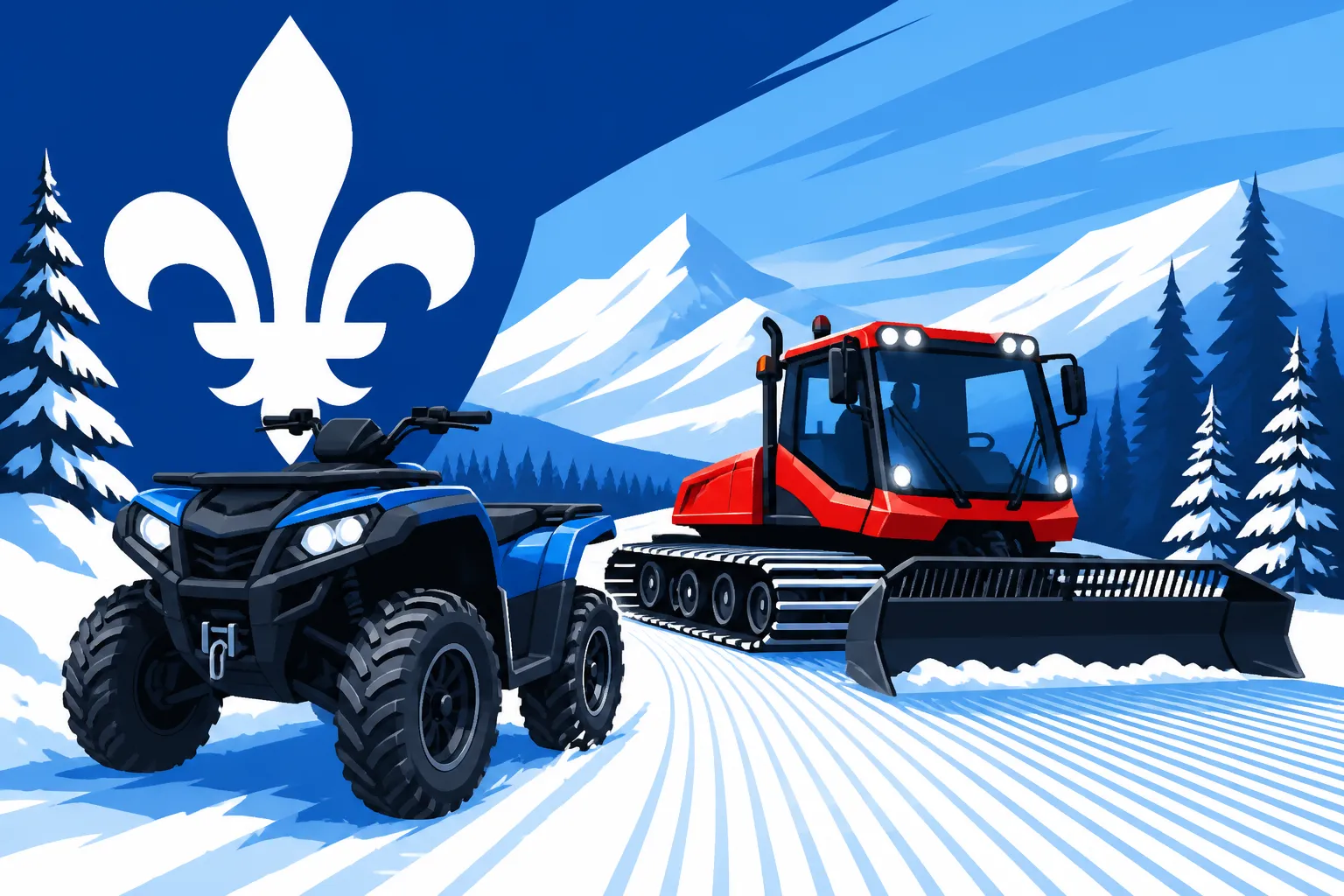
This is especially important in winter. Some corridors are shared with snowmobilers, and local arrangements may determine whether and when an ATV can use a groomed section. Grooming can also happen before a trail is ready for regular traffic, or a route may close again if conditions deteriorate. Always check current club or trail-network information rather than assuming that visible tracks mean the route is open.
Treat the groomed surface as evidence of maintenance, not as an invitation to improvise. Stay on the authorized corridor, respect closures and follow posted signs. [Quebec Winter Quad Riding on Shared Trails] explains why a trail’s winter condition and its permitted use are related but not interchangeable.
How groomers keep trails rideable
What the machine does to the trail surface
A trail groomer helps shape and smooth the surface, but the result depends on the conditions it encounters. On a winter trail, the operator may work to create a more even base, reduce roughness and manage accumulated snow. The job is not simply to make a route look polished. A surface that is too soft, too hard, icy or uneven can still be challenging, even after maintenance.
The trail itself affects the outcome. A broad, gentle section may be easier to groom consistently than a narrow, winding stretch with uneven ground. Water, thawing, drifting snow, traffic and shade can all change how a trail behaves. A route that felt comfortable in the morning may become rougher after repeated use, while a shaded section may hold a different surface than an exposed one nearby.
For riders, the practical takeaway is to adjust speed and expectations. Grooming can improve the surface, but it cannot remove every bump, hidden obstacle or sharp change in traction. Keep enough distance to see how the trail is developing ahead, especially around corners and on hills. Even on a smooth-looking corridor, ride at a pace that lets you respond safely.
Timing depends on weather and conditions
Grooming schedules are shaped by conditions, not just calendars. A club may need to wait for enough snow or for the surface to firm up before sending a machine out. A sudden warm spell, heavy snowfall, rain, wind or repeated traffic can change the work that is needed. The same route may need a different approach from one outing to the next.
That is one reason a trail report matters more than an old memory of a good ride. If you rode a corridor last weekend, the conditions may have changed since then. A club might have groomed it, temporarily closed it, or discovered an issue that requires attention. Check [Quebec Trail Conditions Before You Go] before leaving, and pay attention to updates for the specific region or club you plan to visit.
Spring brings its own complications. Thawing ground can be vulnerable to damage from vehicle traffic, and a groomed winter trail is not automatically suitable for riding once temperatures rise. A closure during the thaw protects the route from ruts and erosion that can take considerable effort to repair. Read [Quebec's Spring Thaw Closure] before treating a familiar route as a year-round option.
The people and planning behind every groomed route
Operators need skill, local knowledge and judgment
A groomer operator is doing more than steering a machine down a corridor. They need to read the surface, understand the route, recognize changing hazards and make decisions about where the equipment can work safely. Narrow passages, steep slopes, poor visibility and unexpected obstacles all require attention. The operator’s local knowledge can be as important as the machine’s capabilities.
Grooming can also be physically demanding and time-consuming. A route may cover a long distance, and the operator may have to work in cold, dark or changing weather. On some sections, a minor issue can slow the job considerably. If a machine cannot safely reach a stretch, or a trail needs repair before grooming can proceed, the club may need to adjust its plan.
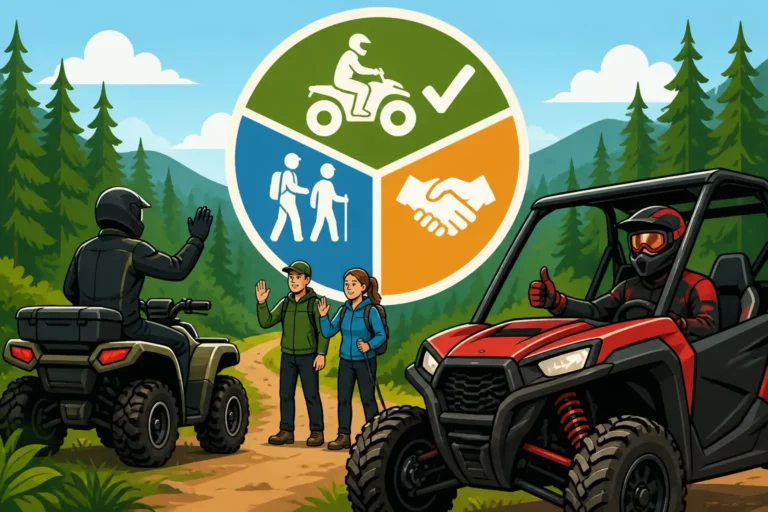
Riders can make that work safer by slowing down when they encounter trail crews and following instructions. Do not assume that a machine operator can see or hear you approaching. Give equipment plenty of space, avoid crowding it, and wait for a clear signal before passing. The habits described in [Quebec Trail Etiquette Locals Expect] help keep shared corridors safer for riders and workers alike.
Clubs balance maintenance, safety and limited resources
Local clubs often coordinate more than grooming. Their work may include checking signs, addressing damage, arranging repairs, communicating closures and coordinating volunteers. A trail network can cross different types of terrain and involve multiple landowners or local partners, so a maintenance decision in one place may affect the flow of an entire route.
This is why a club may prioritize one section over another. A washout, fallen tree, drainage problem or safety concern can take precedence over routine smoothing. Equipment also requires maintenance and operators need to be available. When a trail is not freshly groomed, it does not necessarily mean the club has forgotten it; the work may be delayed by conditions or competing needs.
The system works best when riders treat clubs as partners rather than anonymous service providers. Report a problem clearly, include the route or nearby landmark, and avoid moving barriers or riding around a closure. [Reporting Trail Damage to a Club] offers practical guidance on sharing useful information without adding confusion for the people responsible for the corridor.
What riders should expect on a groomed Quebec trail
A groomed surface can still be unpredictable
A freshly worked surface may feel more comfortable than a rough one, but it can still change quickly. Traffic can create ruts, loose material can collect on corners, and shaded or exposed sections may offer different grip. In winter, snow conditions can vary by elevation, forest cover and recent weather. A groomed trail is maintained, not guaranteed to be perfectly uniform.
That is why it helps to leave a little extra space between machines. If the rider ahead slows down for a rough patch, you need room to respond without braking abruptly or swinging outside the authorized route. On a group ride, choose a pace that accommodates the least experienced rider and arrange a clear plan for regrouping if the line gets stretched out.
Do not judge safety by appearance alone. A smooth stretch can lead into a sharp turn, a hill or a crossing where visibility is limited. Keep your attention on the trail and follow posted speed and access rules. If the conditions feel beyond your ability or your machine’s setup, turning around is a sensible decision, not a failure.
Shared trails require extra courtesy
On a shared corridor, riders may encounter other recreational users, maintenance equipment or snowmobiles. The exact arrangement varies by location and season, so check the rules for your route before you set out. Do not assume that a trail groomed for one group is automatically open to every vehicle type.
When you meet a groomer, slow down early and follow the operator’s directions. Avoid stopping in a blind corner or on a narrow section where another rider cannot see you. If you need to wait, choose a safe place that does not block the trail. Keep your machine under control and do not pressure the operator to move before it is safe.
The same courtesy applies when passing other riders. Leave room, avoid throwing debris or snow toward them, and do not cut around a line of machines where sightlines are poor. [Staying on a Federated Corridor] is a useful reminder that the trail has defined boundaries for a reason. Staying within them helps protect the route, nearby land and the future of riding access.
| What you encounter | A sensible rider response |
|---|---|
| A groomer ahead | Slow down, keep clear and wait for the operator’s direction |
| A closure sign or barrier | Stop and use an authorized alternative route |
| A rough or soft patch | Reduce speed and leave extra following distance |
| A shared corridor | Confirm local access rules and yield courteously |
| A damaged section | Avoid making it worse and report its location to the club |
| A trail that looks open but has no recent update | Check local trail information before committing to the route |
Planning a ride around grooming and trail updates
Check route information before loading up
A little planning can prevent the frustrating experience of hauling your ATV or UTV to a trailhead only to find a closure or an unsuitable surface. Start by identifying the clubs and regions your route crosses. Then check the latest trail information, closures and seasonal notices for those areas. If your route links several regions, verify each segment rather than relying on one general map.
Maps are helpful for orientation, but they are not always a substitute for current local conditions. A route line can show where a corridor goes without telling you whether it is open, recently maintained or appropriate for your vehicle that day. The [Quebec Trail Maps and the iQuad App] can help with route planning, while club updates provide context about closures and conditions.
Some riders also use onX Offroad as a planning aid to organize route ideas and understand where they are in relation to a broader area. Treat it as one tool in your kit, not the final authority on trail access or closures. Cross-check the route with the relevant Quebec club or official trail information before setting out, especially when the route passes through unfamiliar areas.
Prepare for delays and changing conditions
A trail ride rarely unfolds exactly as planned. Grooming or maintenance may be underway, conditions may change after a storm, or a closure may require you to turn back. Build time into your trip rather than planning a schedule that only works if every trail is in perfect shape. A flexible route is more enjoyable than a rushed ride with no safe alternative.
Before leaving, tell someone where you expect to ride and when you plan to return. Carry the essentials appropriate to your trip, and make sure your phone or navigation setup is ready. Remote corridors can have limited service, so do not rely on being able to look up a new route at every junction. OnX Offroad may be useful for keeping track of a planned route, but download or prepare the information you need before entering an area with poor coverage.
For a multi-region ride, identify places where you can safely stop, turn around or shorten the route. Keep enough fuel and daylight for a change of plan. If you are riding in a group, agree on what to do if someone falls behind or a trail becomes impassable. A second check of local information before departure can prevent a long detour and make the ride safer for everyone.
Support the work that keeps trails open
A groomed trail is the result of ongoing care, not a one-time service. Riders help preserve that work by following closures, staying on the marked corridor and avoiding actions that damage the surface. Riding around a barrier or cutting a new line through a soft section may seem like a quick fix, but it can create erosion, widen the trail or put access at risk.
Trail passes and club participation also support the organized network. Before riding, make sure you understand what is required for your route and season. [Quebec Trail Passes Cover Every Club] explains how the pass system relates to the network, while [Quebec Club Volunteer Days] can help riders learn more about ways to contribute beyond simply using the trails.
Respectful feedback matters too. If a route is rough, share a clear, constructive report rather than removing signs or confronting volunteers. If the trail is in good shape, a thank-you to the club is welcome as well. Grooming machines may be the most visible part of the work, but consistent rider cooperation helps make the whole system sustainable.
Disclaimer
This article is for general informational purposes only and does not constitute professional advice. Laws, prices and regulations vary by location and change over time. Consult a qualified professional for guidance on your specific situation.