Importing a Quad Into Quebec From the United States
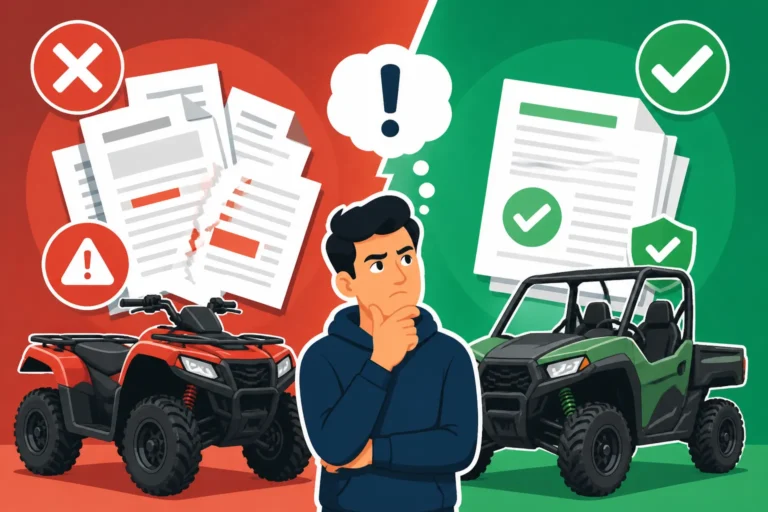
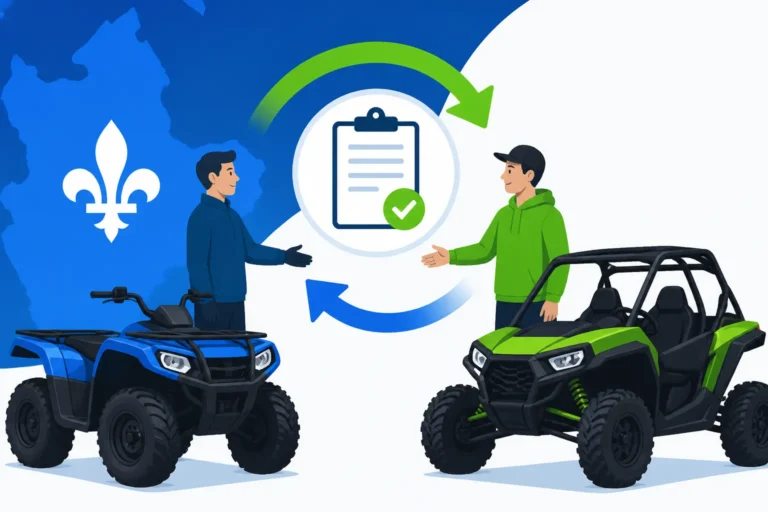
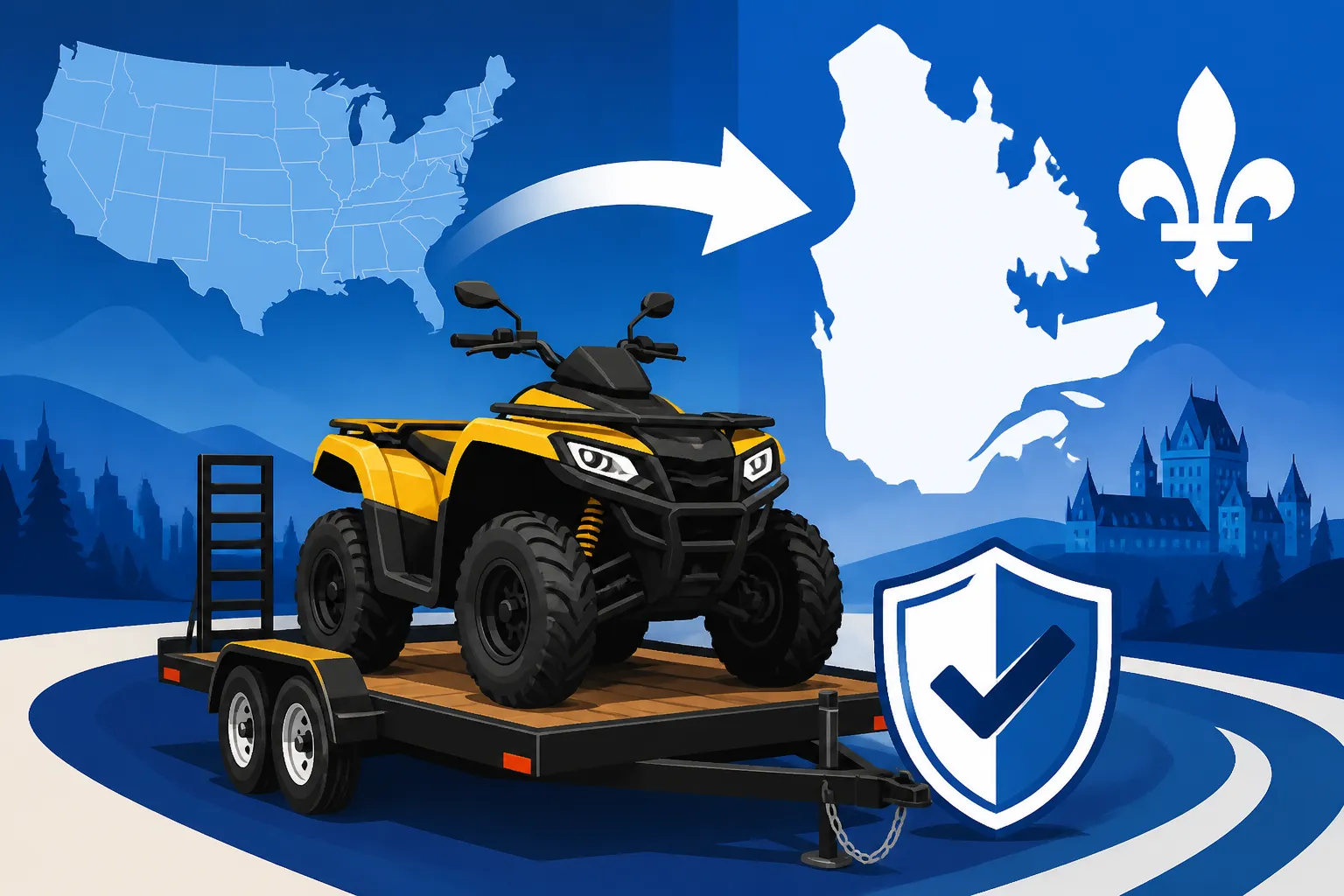
Trying to bring a quad into Quebec from the United States can feel like navigating a maze blindfolded, especially with all the different regulations at play. It's not just a matter of buying it south of the border and driving it home; there are federal import rules, customs declarations, and then the whole Quebec registration process to contend with. This guide is here to untangle that knot for you, walking you through each step so you can get your imported off-road machine legally on Quebec trails.
The First Big Hurdle: Understanding Federal Import Requirements for Quads
Before you even think about hitting "buy" on that shiny ATV or side-by-side in Vermont or New York, you need to understand that Canada has its own set of rules for vehicles entering the country. These aren't just suggestions; they are federal mandates designed to ensure safety and environmental standards are met. Failing to understand these can lead to major headaches, significant delays at the border, or even your quad being refused entry. It's a common mistake to assume that if it's legal in the US, it's automatically legal here, but that's simply not the case.
Why Federal Oversight Matters for Importing an ATV
When we talk about importing any vehicle, including off-highway vehicles like ATVs and UTVs, we're talking about more than just a simple purchase. The Canadian government, through various agencies, has a vested interest in what comes across its borders. This oversight primarily revolves around safety standards, emissions, and ensuring that vehicles meet Canadian Motor Vehicle Safety Standards (CMVSS). A quad built for the US market might not have all the specific compliance labels or features required for Canadian roads and trails, even if it looks identical. This is crucial because if your machine doesn't meet these federal requirements, you won't be able to register it in Quebec, effectively making your new purchase unusable on any public land or federated trails.
Imagine spending thousands of dollars on a machine only to find out you can't get it past customs or registered with the SAAQ because it lacks a specific sticker or component. That's the nightmare scenario federal oversight aims to prevent, but it's also why you, as the importer, need to do your homework upfront. This isn't about bureaucracy for the sake of it; it's about ensuring every vehicle on Canadian terrain is safe for its operators and the environment. Without these checks, our trails could become a free-for-all, leading to increased accidents and environmental damage.
The Role of the Registrar of Imported Vehicles (RIV)
When importing a quad from the United States, one of the most important entities you'll encounter is the Registrar of Imported Vehicles, or RIV. The RIV program exists to ensure that vehicles imported into Canada from the U.S. that are not manufactured to Canadian standards are modified and inspected to meet Canadian safety standards. While some newer ATVs and UTVs might already be dual-certified (meeting both US and Canadian standards), many older or specific US-market models will require RIV processing. You generally have to initiate this process before you even bring the vehicle across the border.
The RIV website is your go-to resource, outlining which vehicles are admissible, which are inadmissible, and the step-by-step process for making an admissible vehicle compliant. They will guide you through getting the necessary inspection after import, often focusing on items like proper lighting, mirrors, and sometimes even specific safety decals. Think of the RIV as the federal gatekeeper ensuring your quad eventually meets Canadian specs, which is a prerequisite for provincial registration. Neglecting this step means your quad will remain in a bureaucratic limbo, unable to be legally registered and used in Quebec.
Checking for Canadian Compliance Before You Buy
This is perhaps the most critical step you can take before committing to purchasing a quad in the United States. Not all ATVs or UTVs are created equal when it comes to cross-border compatibility. Before you hand over any money, you absolutely must verify if the specific make, model, and year of the machine you're eyeing is admissible for import into Canada. The RIV website has a searchable database that can tell you if a vehicle is eligible for import and what, if any, modifications it might require. This list is frequently updated, so don't rely on old information or hearsay.
Look for a sticker or plate on the machine, usually under the seat or on the frame, that indicates it conforms to Canadian Motor Vehicle Safety Standards (CMVSS) or is "dual-certified" for both US and Canadian markets. If it only states US Federal Motor Vehicle Safety Standards (FMVSS), it will likely need RIV processing. Purchasing an inadmissible vehicle is a direct path to disappointment, as you simply won't be able to bring it in. It's far better to spend a little extra time researching upfront than to face rejection at the border or be stuck with a machine you can't register. This initial check can save you a world of grief and expense. You want to make sure you're on solid ground before you even think about what paperwork you'll need at customs for [Federal Import Requirements for a Quebec ATV].
Navigating Canadian Customs and Border Services: Your Paperwork Checklist
Once you've confirmed your quad is eligible for import, the next major hurdle is crossing the border. This isn't just a casual drive-through; it's a formal process involving specific documentation, declarations, and often, the payment of duties and taxes. Many people underestimate this part, thinking that because it's a recreational vehicle, it might be less scrutinized than a car. This couldn't be further from the truth. The Canada Border Services Agency (CBSA) takes their role seriously, and having everything in order will make your experience much smoother.
Essential Documents for the Border Crossing
When you pull up to the Canadian border with your newly acquired US quad in tow, the CBSA officer will expect a very specific set of documents. Missing any of these can lead to significant delays, refusal of entry, or even seizure of the vehicle. First and foremost, you need proof of ownership. This typically means the original Certificate of Title (or a manufacturer's statement of origin if it's brand new from a dealer and never titled). If you bought it from a private seller, you'll also need a clear, legible bill of sale. This bill of sale should include the seller's and buyer's full names and addresses, the date of sale, the purchase price, and a detailed description of the quad, including its Vehicle Identification Number (VIN) and odometer reading (if applicable). Make sure the VIN on the bill of sale matches the VIN on the machine perfectly.
Beyond ownership, you'll need your personal identification (passport, driver's license), and you should have already completed the RIV import form (Form 1) online before you arrive. This form notifies the RIV of your intent to import and starts their process. It's wise to carry proof of any prior payments made, even if just a deposit. For private sales, if you're concerned about having a legally sound bill of sale, services like LawDepot can help you generate a professional document to ensure all necessary details are included and legally binding. Having all these papers neatly organized in a folder will demonstrate your preparedness and often speeds up the inspection process. Remember, a smooth border crossing starts with impeccable [Customs Paperwork at the Border].
Understanding Duties and Taxes on Imported Quads
This is where many people get a surprise at the border. Just because you paid for the quad in the US doesn't mean it's the final price. When importing a quad into Canada, you will almost certainly be subject to federal duties (tariffs) and provincial sales tax. The federal Goods and Services Tax (GST) applies to all imports. On top of that, Quebec has its own sales tax, the Quebec Sales Tax (QST). These taxes are typically calculated on the declared value of the vehicle, which is usually the purchase price, converted to Canadian dollars.
The amount of duty can vary depending on the country of manufacture and specific trade agreements. Most quads manufactured in North America (US, Canada, Mexico) often qualify for duty-free entry under agreements, but if your machine was made elsewhere, you might face additional tariffs. It's crucial to research the duty rates for your specific quad's country of origin before you buy, as these can add a significant chunk to your total cost. These taxes and duties are paid directly to the CBSA officer at the border when you make your declaration. Be prepared to pay these on the spot, usually by credit card or debit. Without paying these, your quad won't be allowed to officially enter Canada. Knowing these costs beforehand is key to understanding your [Quebec ATV Registration Costs Explained].
Declaring Your Machine and Paying What's Due
The moment of truth arrives when you present your documents to the CBSA officer. This is where you formally declare your intent to import the quad. Be honest and transparent about the purchase price and any accessories included in the sale. Trying to undervalue the machine to save on taxes is a serious offense that can lead to heavy fines and even seizure of your vehicle. The officer will review your documents, verify the VIN, and calculate the applicable duties and taxes (GST and QST). They might also inspect the vehicle itself to confirm its description.
Once the assessment is complete, you'll be directed to pay the calculated amount. After payment, the CBSA will stamp your RIV Form 1, which serves as official proof that the vehicle has been imported. They will also issue you a B3 Form, which is your official receipt and import declaration. Keep all these documents safe! The stamped RIV Form 1 and your bill of sale are absolutely essential for the next steps in Quebec. Without this proof of legal importation and payment of taxes, the SAAQ will not register your quad. This process, while sometimes a bit daunting, is a non-negotiable step in ensuring your machine is properly imported and cleared for its new life in Quebec.
Bringing It Home: Quebec SAAQ Registration After Importing
So, you've made it through the border, paid your dues, and your quad is officially on Canadian soil. Congratulations! But the journey isn't over yet. Now you need to make it legal to ride on Quebec's trails and designated off-road areas, which means registering it with the Société de l'assurance automobile du Québec (SAAQ). This provincial step ensures your machine has a [Quebec VHR Plates Explained] and meets local operational requirements, including mandatory liability insurance. This process has its own specific set of documents and procedures, distinct from the federal import requirements.
Proving Ownership and Importation to the SAAQ
When you visit an SAAQ service counter to register your imported quad, you'll need to demonstrate two key things: that you are the legal owner, and that the vehicle was legally imported into Canada. For ownership, you'll present your original Certificate of Title (or Manufacturer's Statement of Origin for a new unit) and the bill of sale from the US seller. These documents prove the chain of ownership. The SAAQ clerk will scrutinize these for accuracy, ensuring the VIN matches and all details are correct. They're looking for clear, unambiguous proof that the machine is yours.
To prove legal importation, you'll need the stamped RIV Form 1 and the B3 Form you received from the CBSA at the border. These are your golden tickets, showing that the federal government has cleared the vehicle for entry and that all federal duties and taxes have been paid. Without these documents, the SAAQ simply won't proceed with registration. They are not authorized to register a vehicle that hasn't completed the federal import process. Think of it as a two-stage rocket: the federal stage gets it into the country, and the provincial stage gets it ready to fly on Quebec trails. This is why keeping your [Quebec Registration Paperwork Checklist] meticulously organized is so important.
Getting Your Quebec VHR Plate After Importing
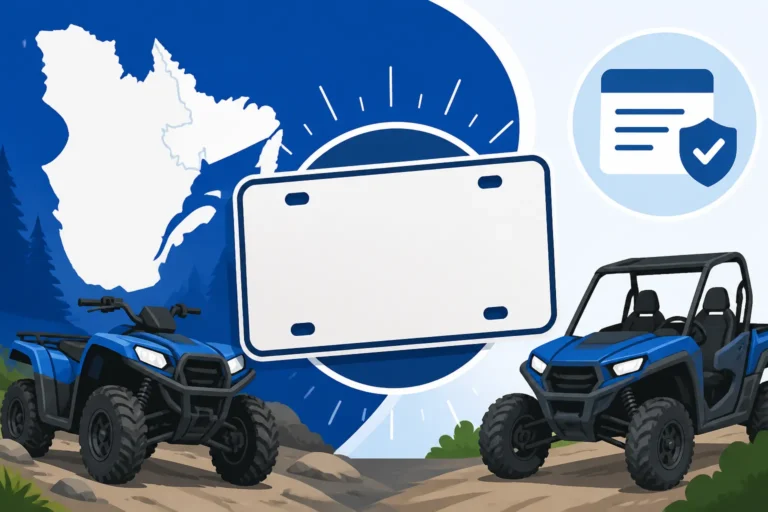
Once the SAAQ is satisfied with your ownership and import documentation, and you've passed the RIV inspection (if required), you're ready to get your Quebec VHR (Véhicule Hors Route, or Off-Road Vehicle) plate. This plate is mandatory for any quad used on federated trails or any public land in Quebec. The SAAQ will process your registration, which includes the mandatory liability insurance that every off-road vehicle in Quebec must carry. This insurance is automatically included in your registration fee and is a non-negotiable part of the process.
You will typically receive your VHR plate and registration sticker on the spot at the SAAQ counter. This sticker is affixed directly to your machine's fender, making it clearly visible to trail patrols. The SAAQ also issues a registration certificate, which you must carry with you whenever you're operating the quad. The process for an imported machine is essentially the same as for a Quebec-bought one, once you've cleared the import hurdles. Remember, a VHR plate is your ticket to legally exploring Quebec's vast network of trails under [Quebec's Off-Highway Vehicle Act and Your Papers].
The Costs Involved in Registering an Imported Quad
Beyond the purchase price, federal duties, and taxes already paid at the border, there are further costs associated with registering your imported quad in Quebec. The primary cost will be the annual SAAQ registration fee, which includes the mandatory minimum liability insurance. This fee varies depending on the type of machine and can change periodically, so it's always best to check the SAAQ's current rate schedule. As part of your [Quebec ATV Registration With the SAAQ], you'll be paying for this combined registration and insurance.
If your quad required an RIV inspection, there will also be a fee for that inspection and any necessary modifications to bring it up to Canadian safety standards. These modification costs can sometimes be substantial, especially if components like lights or mirrors need to be replaced. Additionally, don't forget the provincial sales tax (QST) which, if not already fully collected at the border, might have an outstanding balance due at the SAAQ if you paid a lower amount originally (e.g., if you undervalued the machine, though this is not recommended). Factor in all these potential costs to avoid any surprises and ensure your imported quad is truly ready for adventure.
Common Pitfalls and How to Avoid Them When Importing a Quad
The process of importing an ATV or UTV can be complex, and it's easy to stumble into common traps if you're not fully prepared. From missing paperwork to unexpected compliance issues, these pitfalls can turn your dream of a new-to-you quad into a bureaucratic nightmare. Being aware of these challenges ahead of time can save you considerable time, money, and frustration.
Dealing with Missing or Incomplete Paperwork
One of the most frequent issues encountered by individuals importing quads is missing or incomplete paperwork. This might be a title that wasn't properly signed, a bill of sale lacking crucial information like the VIN, or even an outright lack of a title for older machines from states where they weren't always issued for ATVs. The Canadian border services and the SAAQ are very strict about proof of ownership and legal status. If your documents aren't perfect, you will face delays. For example, if you buy from a private seller in the US and they don't have a formal bill of sale, you might consider using a template from a service like LawDepot to create a clear, comprehensive document that meets legal requirements.
Before you even leave the US seller's property, meticulously review all documents. Compare the VIN on the title and bill of sale against the physical VIN on the quad. Ensure all names, addresses, and purchase details are correct and legible. If you encounter a situation where a title is genuinely missing (e.g., an older machine from a non-title state), research the specific procedures for that state to obtain proof of ownership that Canada will accept. This might involve obtaining a certificate of origin, a certified lien search, or other state-issued documents. Do not assume "it'll be fine" – it almost never is. Having a solid [Quebec Registration and Proof of Ownership] is non-negotiable.
What to Do If Your Quad Isn't Canadian-Compliant
Another major pitfall is discovering, usually at the RIV inspection stage, that your imported quad doesn't meet Canadian safety standards. This can range from minor issues like missing specific reflectors or English-French safety decals to more significant problems with lighting systems or even structural modifications. The RIV inspection is mandatory for many imported US vehicles, and your quad won't pass until all deficiencies are corrected.
If your machine fails the RIV inspection, you'll be given a list of required modifications. It's then your responsibility to have these changes made, often by a certified mechanic or a shop specializing in import compliance. This can add unexpected costs and delays. To avoid this, reiterate the importance of checking the RIV's admissible list and specific requirements before purchase. If you're looking at an older machine, or one that was heavily modified in the US, the risk of non-compliance increases significantly. Sometimes, the cost of modifications can outweigh the savings of buying in the US, making the whole endeavor not worthwhile. This is especially true for [Quebec Machines With No Paperwork] or questionable origins.
Unexpected Delays and How to Plan For Them
The import process is rarely a quick, seamless affair. Delays can crop up at multiple stages: waiting for a title from the seller, coordinating with the RIV, scheduling an inspection, or simply navigating busy periods at the SAAQ. Customs processing can take longer if the officer has questions or decides to conduct a more thorough inspection. The RIV process itself involves a waiting period for documents to be processed and for inspections to be scheduled.
The best strategy for dealing with potential delays is to plan for them. Don't assume you can buy a quad in the US on a Friday and have it registered and ready for a Quebec trail ride by Saturday afternoon. Give yourself ample time, ideally several weeks or even a month, between purchase and your planned first ride. Keep all communications, receipts, and documents meticulously organized. Follow up proactively with the RIV if you haven't heard back within expected timeframes. Patience and persistence are key. And above all, have a realistic expectation that this is a multi-step process with multiple agencies involved, each with their own timelines. Trying to rush it will only add stress and increase the likelihood of missing a critical step. If you understand [How to Register an ATV in Quebec], you'll see why these delays are part of the process.
Disclaimer
This article is for general informational purposes only and does not constitute professional advice. Laws, prices and regulations vary by location and change over time. Consult a qualified professional for guidance on your specific situation.