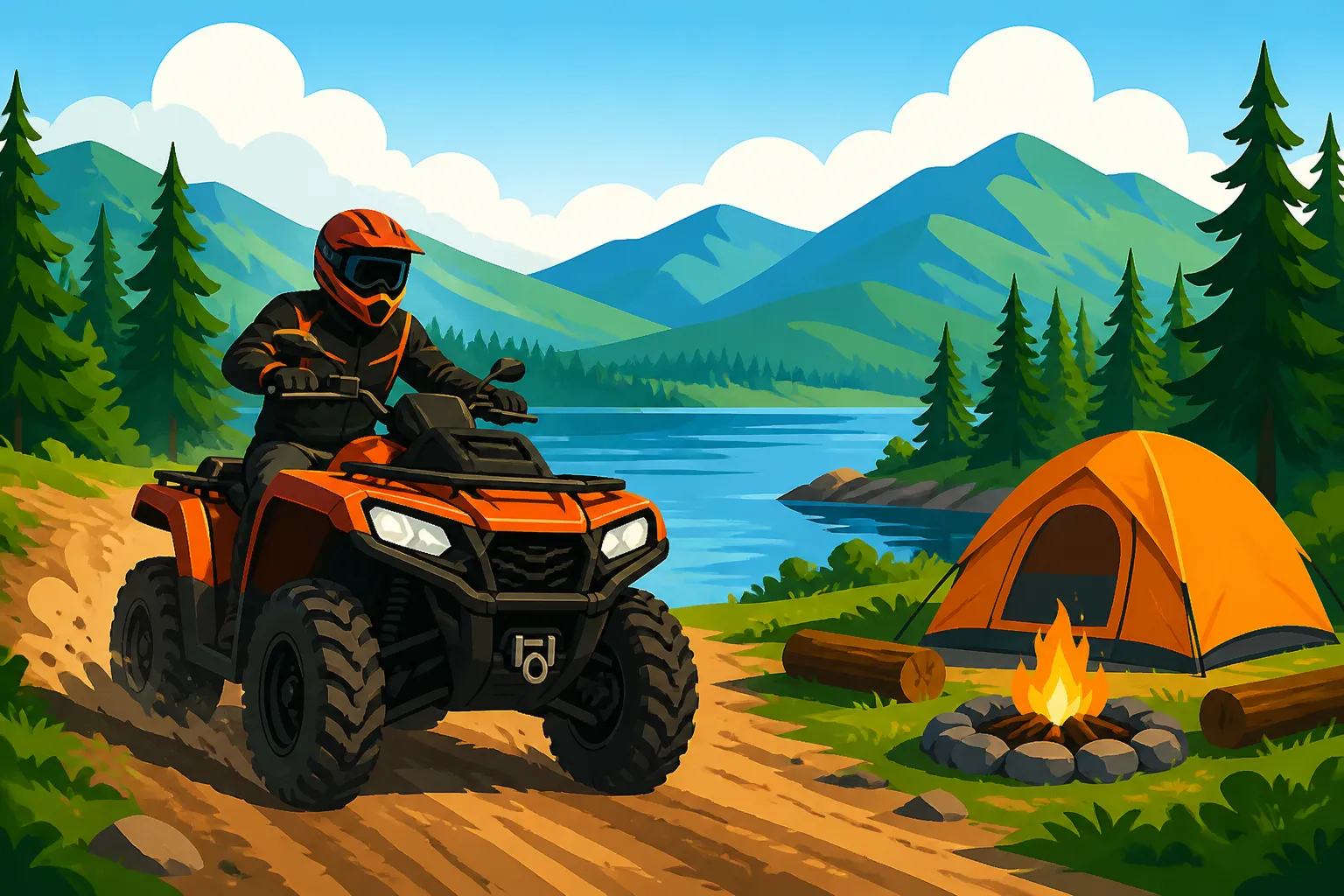
Quebec Campgrounds on a Quad Route
Finding a Quebec campground that looks close to a quad trail is only half the job. The route may be closed, the campground may not allow machines on its property, or a legal trail connection may be farther away than the map suggests. This guide explains how to choose a practical base, confirm access, and plan a ride that works for both your group and the campground.
Choose a campground that fits your route
Start with the trail network, not the campsite listing
It is tempting to book a campground first and assume the nearby forest roads will lead to a ride. In Quebec, that assumption can leave you with a machine, a campsite, and no legal way to connect the two. Federated trails are managed corridors, and access can depend on current club conditions, signage, permissions, and seasonal closures.
Start by choosing the riding area, then look for campgrounds within a sensible distance of the trail network. For example, Saint-Hippolyte can be a useful place to investigate when planning a Laurentians trip, while Baie-Saint-Paul and La Malbaie are familiar starting points for exploring Charlevoix. These are regional planning anchors, not promises that a particular campsite connects directly to a trail.
Use a current trail map or club information to identify the corridor you want to ride. Then contact the campground and ask how riders actually reach it. “Close to the trail” might mean a legal connection from the property, a short trailer drive to a trailhead, or simply a nearby route that cannot be reached directly from the campsite. Those are very different trip setups.
For a broader look at places to ride, compare your intended route with [Quebec Trails With Lodging Along the Way] and [Quebec Trailheads With Parking]. If you are still deciding on a region, [Quebec Trails for a Weekend Trip] can help you think in terms of ride length and overnight stops rather than picking a campground at random.
Decide whether you want a trail-side stay or a staging base
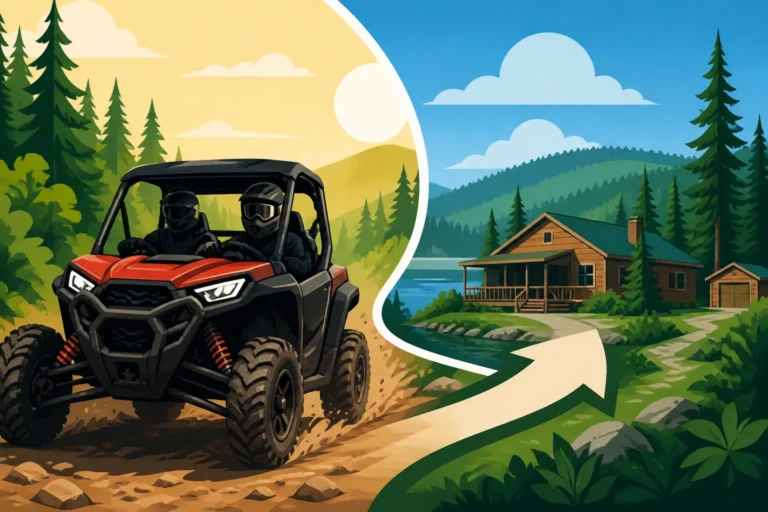
A trail-side campground can make mornings easier, but “trail-side” should be confirmed rather than inferred from a map pin. Ask whether the trail is currently open, whether it is a federated corridor, and whether the campground has an authorized connection. Also ask whether guests may ride their machines on internal roads or must load them onto a trailer before leaving the property.
A staging base works differently. You park the truck and trailer at the campground, then tow your ATV or side-by-side to an approved trailhead each day. This adds setup time, but it can be the better choice when a campground has excellent facilities and no direct trail access. It also gives you more flexibility if weather or trail conditions change.
Think through a typical morning before booking. If your group has several machines, where will you unload? Is there enough room to turn around with a trailer? Can you leave the truck and trailer parked while you ride? If the answer depends on “we’ll figure it out when we get there,” ask the campground first. A five-minute phone call can prevent a frustrating arrival.
Verify trail access and campground rules before booking
Ask the campground specific questions
A campground may welcome ATV riders without allowing machines to travel freely around the property. Noise, dust, speed, children playing, and other guests’ expectations all affect campground rules. Get the details before you pay a deposit, especially if you are travelling with a group or bringing a large side-by-side.
Ask whether the campground permits ATV or UTV use on its internal roads, whether there is a designated parking or unloading area, and whether a trailer can remain on your site. Confirm the route from the property to the trail: is it an authorized connection, or do you need to transport the machine to a trailhead? If access depends on a nearby road, check whether local rules allow that use rather than assuming the road is open to off-highway vehicles.
It is also worth asking about practical comforts. Is there a wash station or outdoor hose for muddy machines? Are there restrictions on washing equipment? Can you store helmets and riding gear securely? Are quiet hours enforced in a way that affects early departures or late returns? The answers can matter as much as the view from your campsite.
Confirm the route is legal and open
A line on a general mapping app is not enough to establish that a route is legal for an ATV. Private roads, logging roads, municipal roads, and club trails can look similar on a screen. Access may also change because of trail work, landowner decisions, weather damage, hunting-season restrictions, or seasonal closures.
Before you leave, confirm the trail’s status with the relevant club or current trail information. Check whether your trip requires a pass, and make sure each rider has the required documents and equipment. [Quebec Trail Passes Cover Every Club] explains why a pass and access are connected, while [Quebec Trail Conditions Before You Go] is a useful reminder to check conditions close to departure rather than relying on an old screenshot.
You can use a navigation tool such as onX Offroad as a planning aid, especially for organizing waypoints or saving information for a trip. Treat it as a secondary reference, not proof that a corridor is open or that you have permission to ride it. Compare its route with current Quebec trail information and ask the local club or campground about any uncertain connection. If you use onX Offroad, download the relevant maps before heading into areas where cell service may be limited.
Match the campground to your riding style
Compare your options before you reserve
The best campground depends on how you plan to spend the trip. A family wanting a relaxed weekend may value clean facilities, swimming, and a short ride more than a long circuit. A group aiming to cover distance may care more about secure parking, trailer space, fuel access, and a reliable connection to the trail network.
| Campground setup | Best for | What to confirm before booking |
|---|---|---|
| Authorized trail connection | Riders who want to start close to camp | Whether the connection is legal, open, and usable by your machine |
| Campground near a trailhead | Groups comfortable towing each day | Parking space, trailer access, and trailhead rules |
| Regional campground farther from the route | Families combining riding with other activities | Daily driving time and where machines can be unloaded |
| Campground with limited machine access | Riders using it mainly as a place to sleep | Whether machines must remain on trailers or in a designated area |
A campground that is ideal for a family may not suit a group of six machines, even if both groups want the same riding region. Likewise, a remote site may feel peaceful but leave you with limited fuel, food, or repair options. Decide which trade-offs matter most before comparing amenities.
If you are planning a longer circuit, look at the route in daily sections. Estimate where you will stop for fuel, food, and rest, and identify a campground or other lodging option that fits the end of each day. [Quebec Trails With Fuel Stops] can help you consider the gaps between services. For longer trips, [Quebec Trails for a Week-Long Trip] offers a useful planning angle: build the itinerary around realistic daily distances, not just the total kilometres on a route map.
Plan for trailers, fuel, and everyday logistics
Many campground problems are not about the ride itself. They happen when a trailer will not fit on a narrow site, a group has nowhere to unload, or the truck blocks the only clear space. When reserving, describe what you are bringing: number of machines, approximate trailer size, tow vehicle, and whether you need room to turn around. Ask whether the site is level and whether there are restrictions on parking equipment.
Fuel planning also deserves attention. Do not assume a campground has fuel or that a nearby village has a station open when you need it. Check the route and service hours before departure, and allow for a longer-than-expected detour. On remote sections, a fuel stop that looks close on a map may still be inconvenient if it requires leaving the trail and retracing your route.
If your phone is part of your navigation setup, save route details in advance and bring a charging option. onX Offroad may help organize an offline map where its coverage and features support your plan, but carry a backup such as a paper map or saved club information. A group can lose time quickly if one phone dies and nobody knows the next trail junction or campground turnoff.
Build a safer, smoother campground-to-trail plan
Make a simple pre-trip checklist
A good plan does not need to be complicated. It does need to answer the questions that can derail the first day: where you will unload, which trail you will take, whether it is open, and how you will get back before the campground’s quiet hours.
Before leaving home, work through this checklist:
- Confirm your campground reservation and ask about machine, trailer, and parking rules.
- Identify the legal route or trailhead you will use each day.
- Check current trail conditions and closures with relevant local information.
- Confirm pass, registration, insurance, and rider-document requirements.
- Save route details and campground contact information for offline access.
- Plan fuel, food, and return times with room for delays.
- Tell someone outside the riding group where you plan to go and when you expect to return.
For the paperwork side of trip preparation, [Quebec Registration Before Your First Ride] and [Quebec Insurance Proof on the Trail] can help you review what to have in order. Requirements can depend on the machine and circumstances, so check the rules that apply to your own ride instead of relying on another rider’s setup.
Keep the ride considerate of campground neighbours
A campground is a shared space, not just a parking area for machines. Follow posted speed limits and property rules, avoid unnecessary engine warm-ups near occupied sites, and keep departures and returns within the campground’s quiet-hour expectations. If a route requires riding past cottages or homes, stay on the authorized corridor and ride quietly.
Mud is part of many Quebec rides, but it can create extra work for campground staff and neighbours. Ask where, if anywhere, you may clean a machine. Avoid washing mud into drainage areas or onto another campsite, and do not assume that an outdoor tap is intended for equipment. If no washing area is available, carry a brush or cloth and plan to clean the machine elsewhere.
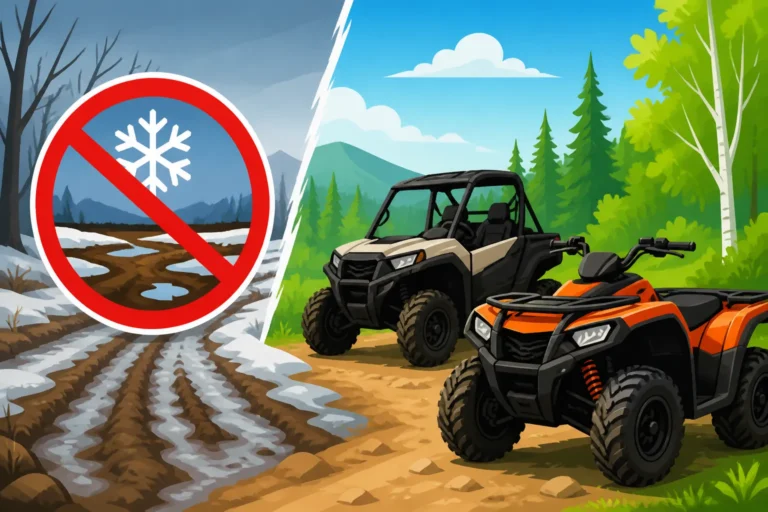
Finally, be ready to change plans. Heavy rain, thaw conditions, hunting-season restrictions, or a local trail closure can make a route unsuitable even when the campground remains open. Keep a backup trailhead or a non-riding activity in mind. A campground reservation should give you a comfortable base, not pressure you into riding a closed or uncertain route.
Disclaimer
This article is for general informational purposes only and does not constitute professional advice. Laws, prices and regulations vary by location and change over time. Consult a qualified professional for guidance on your specific situation.