Carrying a Driver’s Licence on a Federated Trail
It's a beautiful sunny day, you've geared up, your quad is running smoothly, and you're ready to hit those amazing Quebec trails. You've got your helmet, your gloves, maybe even a snack and some water. But stop right there for a moment – do you have your driver's licence on you? This isn't just a "good idea" when you're riding in Quebec; it's a non-negotiable legal requirement that can save you a whole lot of hassle, fines, and even the potential impoundment of your machine. This guide is going to walk you through exactly why your driver's licence is so crucial on the trails, what could happen if you don't have it, and how to make sure you're always prepared.
Why Your Driver's Licence is Non-Negotiable on Quebec Trails
Riding an ATV or UTV in Quebec is an incredible experience, but it comes with responsibilities, and chief among them is carrying your valid driver's licence. It's not just a suggestion; it's the law. The province has clear rules about who can operate these machines and what documentation they must carry, and overlooking this seemingly simple detail can turn a fantastic ride into a costly headache.
The Legal Requirement for All Drivers
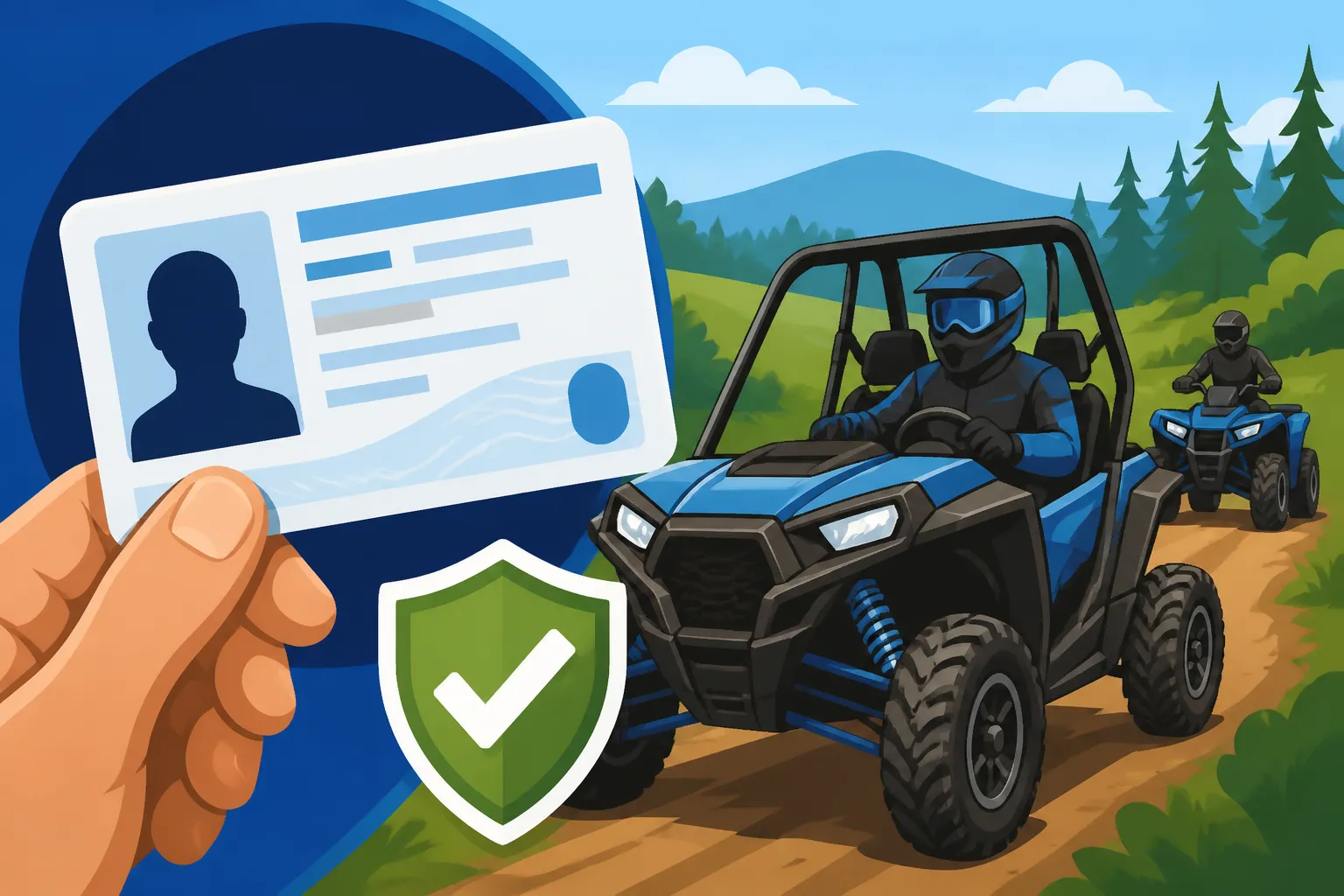
Let's get straight to it: since September 10, 2021, the Loi sur les véhicules hors route (LVHR), or Off-Highway Vehicles Act, explicitly states that anyone operating an off-highway vehicle – that includes your ATV, side-by-side (SxS), or any other VTT (Véhicule Tout-Terrain) – must hold a valid driver's licence. This isn't just for when you're crossing a public road or venturing into town; this applies to any operation of the machine, whether you're deep in the forest on a federated trail or even on designated private land that allows public access.
This rule essentially treats operating an off-highway vehicle with the same gravitas as driving a car. You wouldn't think of leaving your driver's licence at home if you were heading out in your pickup truck, would you? The same principle applies here. The law's intention is to ensure that only individuals who have demonstrated basic competence and are legally allowed to drive are behind the handlebars or steering wheel. For new residents to Quebec, this often means understanding [Quebec ATV Registration for Newcomers] and ensuring their out-of-province licence is recognized or they obtain a Quebec one.
Who Checks for Your Licence on the Trail
You might be thinking, "Who's going to find me out there in the middle of nowhere?" Well, plenty of people, actually! The Quebec federated trail network, managed by the Fédération des clubs de VTT du Québec (FQCQ) and its member clubs, is actively patrolled. These patrols aren't just there to show you directions or offer help; they're also tasked with ensuring riders comply with the rules.
You could encounter a few different types of individuals or groups on the trail who have the authority to ask for your licence and other documents:
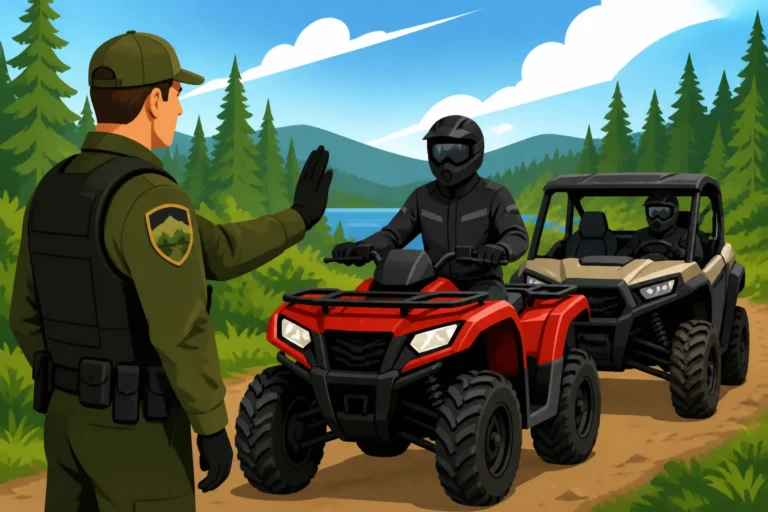
- FQCQ Trail Patrols: These are often dedicated club volunteers, sometimes paid staff, who are out monitoring trail conditions, assisting riders, and enforcing FQCQ rules. They can stop you and request to see your documents, including your driver's licence. They are the frontline enforcers of trail etiquette and legal requirements. If you've ever had a [Being Stopped on a Trail] experience, you know how professional these interactions can be.
- Sûreté du Québec (SQ) and Municipal Police: The provincial police force (SQ) and local municipal police departments have full jurisdiction over the Off-Highway Vehicles Act. They conduct regular patrols, often in marked (or sometimes unmarked) ATVs or police vehicles, especially in popular riding areas or near road crossings. They have the power to issue tickets, seize machines, and conduct investigations.
- Wildlife Protection Officers/Conservation Officers: In some cases, these officers, particularly in ZECs (controlled exploitation zones) or wildlife reserves, may also stop you to check for proper documentation, especially if you're in an area where special permits or regulations apply.
The takeaway here is that "out of sight, out of mind" simply doesn't apply on Quebec's trails. These various enforcement bodies are diligent, and they can appear anywhere on the vast network. They are there to ensure safety and compliance, which ultimately benefits all riders by maintaining the integrity of the trail system.
What Happens if You're Caught Without Your Licence
Being caught without your driver's licence on a Quebec trail isn't just an inconvenience; it can lead to significant penalties. Nobody wants their riding day to end with a hefty fine or, worse, their machine being impounded. It's crucial to understand the ramifications so you can avoid them entirely.
Immediate Consequences and Fines
If a patrol officer or police constable stops you and you cannot produce a valid driver's licence, you're looking at a ticket. The fines for operating an off-highway vehicle without the required licence can be substantial. These aren't the kind of small infractions you can shrug off; they are designed to be a deterrent and reflect the seriousness of operating a motorized vehicle without proper authorization. While I can't give specific current figures, these fines typically fall into a range that will certainly make you wince when you see the total.
Beyond the monetary penalty, there can be other immediate consequences:
- Machine Impoundment: In more serious cases, or if you're a repeat offender, your ATV or side-by-side could be impounded on the spot. Imagine having your machine towed away from a remote trail, leaving you stranded and facing additional impound and storage fees to get it back. It's a logistical nightmare no rider wants to experience.
- Inability to Continue Riding: Even if your machine isn't impounded, you'll likely be instructed not to continue your ride until you can produce a valid licence. This means your day is over, and you'll need to arrange for someone with a valid licence to come and retrieve your machine, or find another way home.
- Insurance Implications: While the SAAQ provides mandatory [Quebec's Liability Insurance Rule] for all registered off-highway vehicles, operating a machine without a valid licence could potentially complicate any claim you might have in the event of an accident. It's always best to be fully compliant to avoid giving an insurer any reason to deny coverage.
These penalties underscore why it's so vital to always have your licence. It’s part of your [Quebec Insurance Proof on the Machine] as a competent operator.
Scenarios and Explanations That Won't Work
Many riders, when stopped, might try to offer explanations for why they don't have their licence on them. Let's be realistic: most of these excuses, while perhaps true, won't hold up in the eyes of the law or a trail patrol.
Here are a few common scenarios and why they typically don't fly:
- "I forgot it at camp/in the truck/at home.": This is probably the most common explanation. Unfortunately, "forgetting" isn't a legal defense. The law requires you to carry it, not just to possess one somewhere else.
- "It's on my phone; I have a photo of it.": While digital copies of documents are becoming more common in daily life, a simple photograph of your driver's licence on your phone is generally not considered sufficient legal proof on its own when operating a vehicle. As we'll discuss, a physical card is usually required. This is why [Does a Phone Photo Count as Proof on Trail?] is a perennial question, and the answer is usually "no."
- "I just moved here; my licence is from another province/state.": If you're a new resident to Quebec, you have a grace period to exchange your out-of-province licence, but you still need to carry your valid foreign licence. If your licence from, say, Ontario, is expired or suspended, then you're still in violation. Understanding [Quebec Rules for a Visiting Ontario Rider] is key if you're just passing through, but if you're a resident, you need to be working towards getting a Quebec licence.
- "I'm just riding on private land.": While the rules can be a bit more nuanced on strictly private, fenced-off land where no public access is permitted, if there's any public access, a federated trail crosses it, or you need to access it via a public road, the LVHR rules apply. It's a safer bet to assume the licence requirement is universal when operating a VTT.
The reality is that enforcement officers and trail patrols have heard every excuse in the book. Their job is to enforce the law, and that means requiring physical proof of your valid driver's licence. The burden is entirely on the rider to be prepared.
Practical Tips for Carrying Your Licence Safely on the Trail
So, you understand the importance of carrying your licence. Now, how do you do it in a way that keeps it safe, dry, and accessible, especially when you're out there tackling mud, water, and rough terrain? There are some simple, yet effective, strategies to ensure your documents are always protected.
Protecting Your Physical Licence
Your driver's licence is a small plastic card, easily lost or damaged in the elements. Keeping it in your wallet in a back pocket is generally not a great idea on a quad; it can get soaked, muddy, or even fall out during a bumpy ride.
Consider these practical solutions:
- Waterproof Document Holders: This is your best friend. Look for small, rugged, waterproof cases specifically designed for outdoor activities. These are often made of durable plastic with a rubber gasket seal. Some brands, like SuperATV, offer various storage solutions that can include waterproof compartments perfect for documents.
- Zip-Lock Bags (Double Bagged): For a budget-friendly and still effective option, place your licence (and other important cards) into a small zip-lock bag, then place that bag into a second, slightly larger zip-lock bag. This double layer provides excellent protection against water and mud.
- Dedicated Pockets: Many riding jackets, pants, or even chest protectors come with internal, zippered pockets that are designed to be more secure and sometimes water-resistant. This keeps your licence close to your body and less prone to falling out.
- Machine-Mounted Storage: Some ATVs and UTVs have small, built-in storage compartments, often under the seat or in the dash. You can utilize these, but always place your documents in a waterproof bag first. Aftermarket storage options, like those from SuperATV, include dry boxes or cargo bags that offer secure, weatherproof spaces for your essentials.
The key is to keep your licence on your person, or in a readily accessible and protected spot on your machine. Don't bury it under a pile of tools or loose gear where it might be hard to find quickly if asked for by a patrol.
Digital Alternatives and What's Accepted
With smartphones being ubiquitous, many riders wonder if they can simply show a photo of their licence on their device. While the world is moving towards digital identity, in Quebec, for off-highway vehicle operation, the physical card remains the primary, legally accepted form of proof.
- Physical Card is King: As of now, the law generally requires the physical presentation of your driver's licence. Relying solely on a digital image can put you in a tough spot. While a very lenient officer might accept it in an exceptional circumstance, you should never assume this will be the case. It's not a guarantee, and you could still be ticketed for not having the physical document.
- Phone as a Backup (Not a Replacement): Having a photo of your licence on your phone can serve as a backup in an extreme emergency (e.g., your physical licence was lost or destroyed in an accident), but it should never be your primary method of compliance. Always aim to carry the physical card.
- Accessibility Issues: Even if a digital copy were generally accepted, consider the practicalities: what if your phone battery dies? What if it gets wet or damaged? What if there's no cell service (a common occurrence on remote Quebec trails)? These are all reasons why the physical, durable card is still preferred for official purposes.
Therefore, while technology is great, when it comes to official documents on the trail, stick with the tried and true physical card.
Beyond the Licence: Other Essential Documents to Have Handy
While your driver's licence is paramount, it's just one piece of the puzzle. To be fully compliant and avoid any further issues on Quebec's vast trail network, there are other crucial documents you need to carry with you. Being prepared means having all your paperwork in order, making any interaction with a patrol swift and smooth.
Your ATV's Registration and Insurance Proof
Just like your driver's licence, your machine needs its own set of identification and legal coverage. In Quebec, this means your SAAQ registration and proof of liability insurance.
- SAAQ Registration Certificate (VHR Plate): Every off-highway vehicle (VHR) in Quebec must be registered with the Société de l'assurance automobile du Québec (SAAQ). When you register, you receive a registration certificate and a VHR plate. You must carry the registration certificate on you or on your machine. This document confirms that your machine is legally registered for use. If you recently registered your machine, perhaps after a private sale, make sure you have the official SAAQ document, as outlined in [Quebec ATV Registration With the SAAQ].
- Proof of Liability Insurance: In Quebec, all off-highway vehicles must carry a minimum amount of liability insurance. This insurance is generally included with your SAAQ registration, meaning the SAAQ acts as both registrar and insurer for basic liability. However, you should still have proof of this coverage. The registration certificate usually serves this purpose, but if you've opted for additional private insurance beyond the SAAQ's basic coverage, carry that documentation too. This mandatory coverage is outlined in [Quebec's Liability Insurance Rule], which has a floor of $1 million.
Think of it this way: your driver's licence proves you are authorized to drive; the registration and insurance prove your machine is authorized to be on the trail and that you're covered for potential third-party damages. Both are vital.
Your Trail Pass and Other Permits
If you're riding on Quebec's federated trails, you absolutely need a trail pass. This pass is your ticket to access the extensive network maintained by the FQCQ and its member clubs.
- FQCQ Trail Pass: The Fédération des clubs de VTT du Québec operates a vast network of managed trails. To use these trails, you must purchase an annual [Quebec's Annual FQCQ Trail Pass] or a daily/seasonal pass. You'll receive a sticker for your machine and a corresponding document. You must carry this document with you. Trail patrols frequently check for these passes, as the fees directly support trail maintenance, grooming, and signage. Don't be caught without it; riding without a valid pass on a federated trail is another ticketable offense. If you've just bought your pass online, remember to check [Queuing a Trail Pass Bought Online to Arrive] to ensure you know when to expect it.
- Specific Permits for Controlled Zones: Beyond the general trail pass, some areas may require additional permits. For instance, if you're riding through a ZEC (controlled exploitation zone), a private pourvoirie (outfitter territory), or a specific regional park, you might need a separate access permit for that specific area. Always check the regulations for the particular region you plan to ride. It's better to spend a few minutes researching than to face a fine or be turned away at a gate.
Carrying all these documents ensures you're not just legally compliant but also respectful of the rules that keep the trails open and safe for everyone. Consider organizing all these papers into a single, compact, waterproof document holder. SuperATV offers several durable accessories, including storage options, that could keep these essential documents dry and protected from the elements, ensuring they're always ready when a trail patrol asks for them. Being prepared means a worry-free ride, letting you focus on the beauty of Quebec's wilderness.
Here's a quick reference table for your essential trail documents:
| Document | Purpose | Where to Keep It | What to Look For |
|---|---|---|---|
| Driver's Licence | Proves you are legally authorized to operate a VTT. | On your person (secure, waterproof pocket) | Valid, current, physical card |
| SAAQ Registration | Proves your VTT is legally registered and insured for liability. | On your person or securely on machine (waterproof holder) | Official SAAQ certificate |
| FQCQ Trail Pass | Authorizes use of Quebec's federated ATV trail network. | On your person or securely on machine (sticker and document) | Valid for current season/period, corresponding document |
| Other Permits (if any) | Grants access to specific ZECs, pourvoiries, or private lands. | On your person or securely on machine (waterproof holder) | Specific to the area you are riding |
| Proof of Additional Insurance | Confirms any extra coverage beyond SAAQ basic liability (optional). | On your person or securely on machine (waterproof holder) | Policy document from your private insurer |
Disclaimer
This article is for general informational purposes only and does not constitute professional advice. Laws, prices and regulations vary by location and change over time. Consult a qualified professional for guidance on your specific situation.