Being Turned Back at a Trailhead
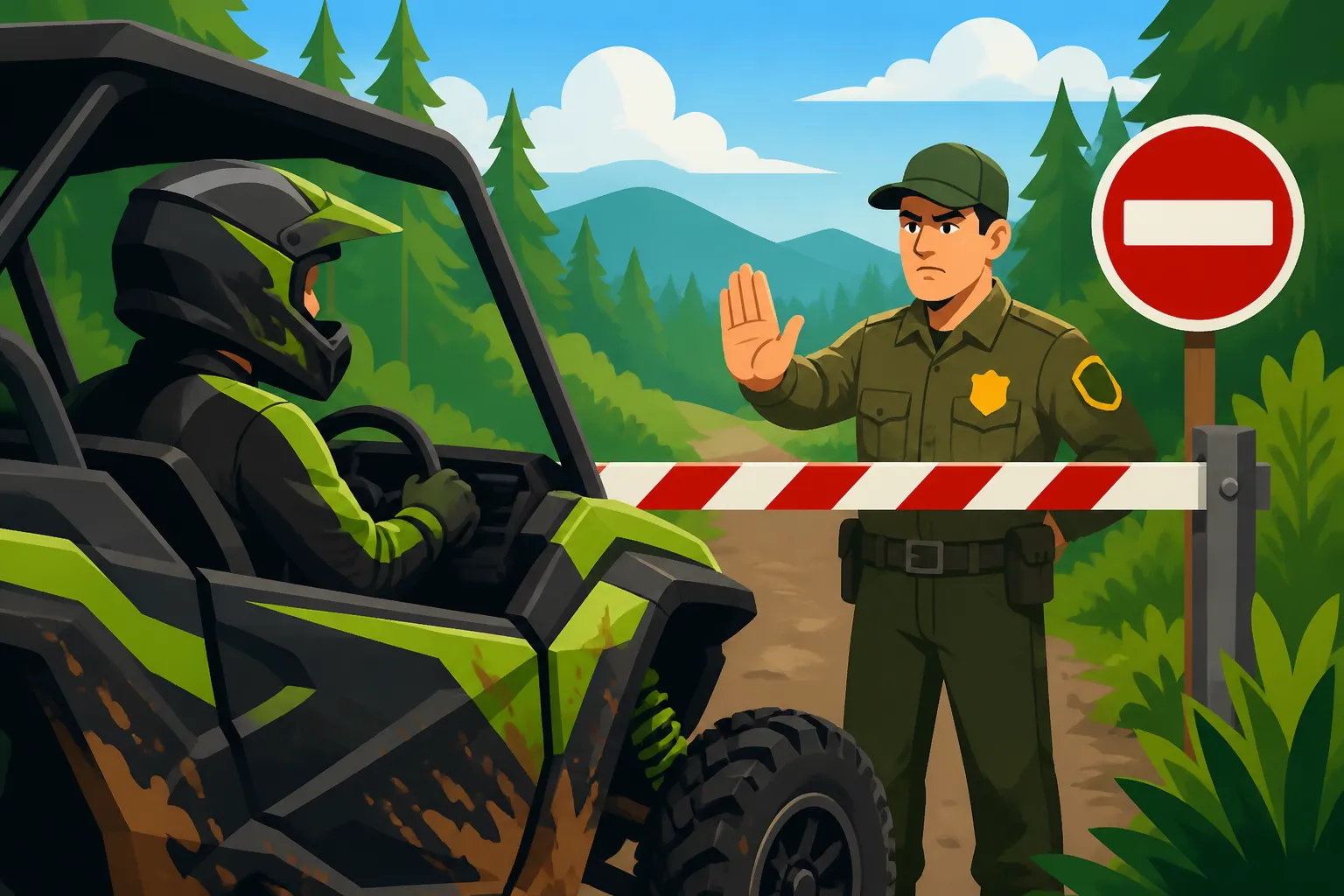
A trailhead turnaround can waste a day, especially after you have trailered your ATV or side-by-side a long way. In Quebec, a valid vehicle registration does not automatically grant access to every trail. The reason may be a missing trail pass, a temporary closure, an eligibility issue, or a problem with your documents. Here’s how to work out what happened and avoid a repeat.
Why a Quebec trailhead may turn you back
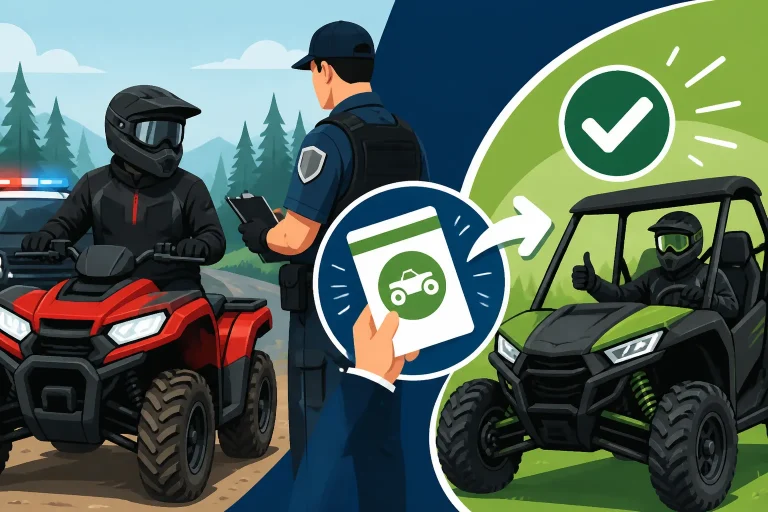
The first distinction to make is between permission to ride the machine and permission to use the trail. Registration, insurance, a trail pass, and permission to enter a particular corridor are separate requirements. Having one does not necessarily satisfy the others.
On a federated trail, a valid FQCQ trail pass is generally required for each machine using the network. A pass for one ATV does not cover a second machine in your group. A visitor should not assume that an out-of-province pass is accepted either: Quebec ended reciprocity with Ontario, and arrangements can change. Check the current requirement before setting out, especially if you are visiting from another province or state. Quebec Visitors Must Buy a Quebec Pass and Quebec Ended Reciprocity With Ontario explain the issue in more detail.
A trail pass also does not override a closure. A route may be closed because of spring thaw, damage, maintenance, hunting-season restrictions, weather, or a land-access issue. Trails can cross private property, and an access arrangement may be limited or withdrawn. If a trailhead sign, an official club update, or a barrier says the route is closed, do not treat a pass as permission to continue. Quebec Passes and the Thaw Period explains why a valid pass is no use during a closure.
Other reasons for being refused entry include:
- The pass is missing or cannot be verified. You may have bought a pass but lack the required sticker or proof when asked. Follow the current instructions for displaying and carrying pass proof.
- The pass is for a different machine or season. Check the machine, pass type, and validity dates rather than assuming a previous season’s pass still works.
- You are at the wrong trailhead. A nearby road, private route, or informal access point may not be part of the federated network.
- Your group includes someone who cannot meet the riding rules. Age, licence, training, passenger, and machine rules can affect whether that person may ride the route.
- The trail is not open to your type of machine. A corridor may have specific access conditions, or it may be intended for another activity.
- You cannot show requested documents. A patrol or other authorized person may ask to see relevant proof. Keep required documents accessible and check what applies to your ride.
Being turned back is not automatically the same as receiving a ticket. It may simply mean you cannot proceed until the problem is resolved. But trying to ride around a barrier or continuing onto a closed or unauthorized route can create a separate problem. Quebec Trail Pass Proof on the Trail covers what to have available during a pass check.
Identify the reason before you change plans
Ask calmly and specifically what is preventing access. “Is the trail closed, or is there an issue with my pass?” is more useful than arguing about whether you have paid for registration or insurance. If the answer is not clear, ask which route or requirement you should check, and whether there is an approved alternate trailhead.
The distinction matters because the fix depends on the problem. If the trail is closed, buying another pass will not open it. If your pass is not valid for that machine, a route change will not solve the paperwork issue. If you are at an unofficial access point, you may be able to reach an open trail from a proper trailhead, but only if local signs and current information confirm that option.
| What you are told | What it may mean | Sensible next step |
|---|---|---|
| “The trail is closed” | A temporary, seasonal, or access-related closure | Do not enter; check the club’s current conditions and choose an open route |
| “You need a Quebec pass” | An out-of-province pass or other proof is not accepted | Confirm the current pass rules and obtain the required pass before riding |
| “That pass is for another machine” | Pass coverage does not match the machine being used | Check the pass record and current rules; do not share one machine’s pass |
| “You are at the wrong entrance” | This access point may not connect to an authorized trail | Use a mapped, authorized trailhead and follow posted signs |
| “We need to see your documents” | Required proof is unavailable or not readily verifiable | Show the relevant documents if you have them; otherwise ask what must be corrected |
| “This route is not for that machine” | The route has a machine-type restriction or different access conditions | Confirm the permitted vehicle type before unloading or proceeding |
If you bought the pass online, check the purchase confirmation and the pass instructions. A confirmation email may help establish what you bought, but do not assume it replaces a required sticker or other display requirement. If a sticker has not arrived or has been lost, find out the proper replacement or interim procedure before going to the trailhead. Waiting for a Trail Pass Bought Online to Arrive and [Quebec Trail Pass Replacement If Lost] address those situations.
If a closure is the issue, use current information rather than an old map screenshot or a post from an earlier season. Maps help with route planning, but they do not necessarily show same-day changes. Check the relevant club’s updates and look for signs at the access point. Quebec Trail Conditions Before You Go and Using the iQuad App to Follow a Circuit can help you check your planned route, but posted closure information takes priority over a saved route.
What to do after you are turned back
Start by avoiding a rushed workaround. Do not unload at a different spot just because it appears to lead in the right direction. An unmarked access may cross private land, connect to a closed route, or put you on a corridor where your pass is not valid. A short drive to an authorized trailhead is a better option than risking a second refusal or a violation.
Use this sequence to decide whether you can still ride that day:
- Clarify the exact reason. Ask whether the issue concerns the trail, the pass, the machine, your documents, or the group.
- Check the route’s current status. Look for an official closure notice or club update. If the information is contradictory, do not assume the route is open.
- Match the pass to the ride. Confirm that it is valid for the machine and the relevant season, and that you have the required proof or display.
- Review the documents and rider eligibility. Make sure the machine’s registration and insurance are in order, and that each rider meets the applicable rules.
- Choose only a confirmed alternative. Verify that the alternative trailhead and corridor are open and allow your machine.
- If the problem cannot be fixed, stop for the day. Keep the pass and other records for a follow-up, but do not ride an unauthorized route to salvage the trip.
If you believe the refusal was based on a misunderstanding, keep the conversation factual. Note the trailhead, approximate time, route name, and what explanation you received. Keep your purchase confirmation or relevant documents. Then contact the appropriate club or pass provider through its regular channels to ask for clarification. A record of the details is more useful than trying to settle a complicated rules question beside a busy trail entrance.
If you receive a formal ticket or notice rather than just being told not to proceed, read it carefully and follow the instructions on it. A trail access refusal and a citation are different situations. Do not ignore a notice because you think the trailhead decision was unfair. Contesting a Trail Ticket explains why it is important to handle a formal citation through the proper process.
Remember, a trail pass is not vehicle registration, insurance, or a guarantee that every trail is open. Before a ride, check the machine’s paperwork separately from the route’s access status. Quebec Registration Before Your First Ride is useful for the registration side, while Quebec Passes Cover Every Federated Club explains the reach of the pass across federated clubs.
Prevent a repeat at the next trailhead
A little preparation before loading can prevent most avoidable turnarounds. Start with the trail, not just the destination: confirm that your intended route is open, that the access point is authorized, and that your type of machine is allowed. Then check each machine and rider against the requirements for the trip.
A practical pre-departure check includes:
- A current Quebec trail pass for each machine that needs one, with the required sticker or proof available.
- Current vehicle registration and the insurance proof required for the machine.
- Any licence, training certificate, or other rider qualification that applies to the people in your group.
- A route plan with a confirmed trailhead, an alternate route, and a way to check for updates.
- A phone with the relevant confirmation or map saved for offline use, rather than relying entirely on cellular service.
- Enough time to change plans if the club reports a closure or the trailhead is inaccessible.
Keep the paperwork organized so you can find it without emptying a gear bag beside the trail. A printed confirmation can be a useful backup where digital access is unreliable, but it does not replace a required pass sticker or other mandatory proof. Make sure that what you carry is legible and matches the machine you are riding.
Groups should check every rider and machine, not just the lead rider’s paperwork. A single missing pass or ineligible rider can affect the group’s plan. Before leaving home, confirm who is responsible for checking the pass, who has the route information, and what the group will do if a trail is closed. Agreeing to turn around rather than split up or seek an unverified shortcut makes the decision easier at the trailhead.
Finally, treat local signs and club updates as current operating information, not as a minor detail after you have already planned the ride. A route that was open on a previous trip may be closed today. A pass bought in another jurisdiction may not work in Quebec. A machine that is registered may still lack the separate access permission needed for a federated trail. Keeping these distinctions clear is the simplest way to avoid being turned back—and to know when turning back is the right call.
Disclaimer
This article is for general informational purposes only and does not constitute professional advice. Laws, prices and regulations vary by location and change over time. Consult a qualified professional for guidance on your specific situation.