What Happens If You Refuse
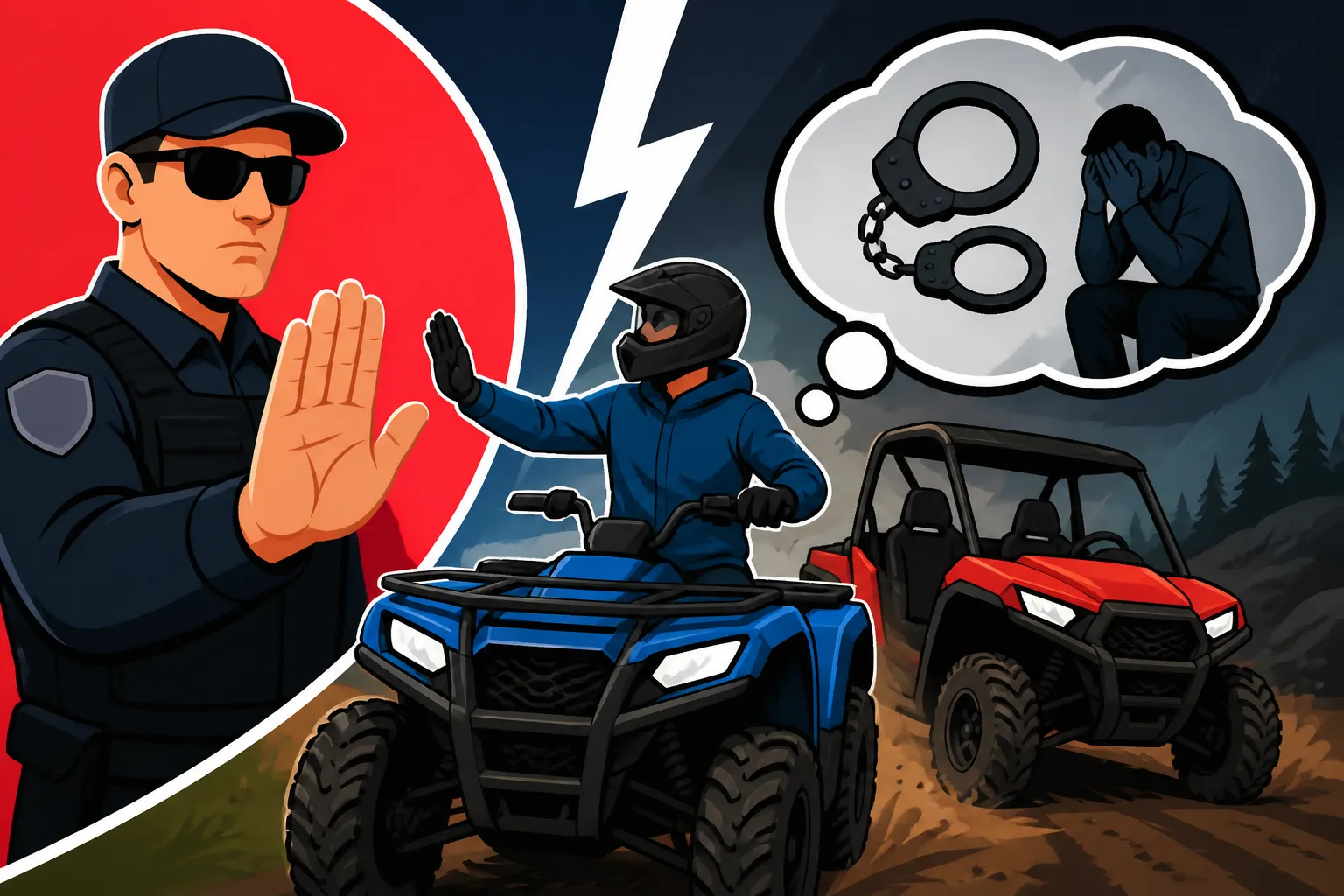
It's a familiar feeling for many of us who love hitting the trails in Quebec: you're out there, enjoying the freedom of your quad or side-by-side, and suddenly, you see those flashing lights or a patrol uniform. Your heart might do a little skip, and that thought, "What if I just… don't?" might briefly cross your mind. This guide isn't about encouraging that thought, but rather to give you a clear, empathetic look at exactly what happens if you decide to refuse certain requests or directives from authorities or trail patrols in Quebec, helping you understand the real-world consequences so you can ride confidently and safely within the rules.
The Initial Encounter: Why You Might Be Stopped on Quebec Trails or Roads
Getting stopped by an authority figure while you're out enjoying your ATV or UTV can be a jarring experience, even if you know you haven't done anything wrong. It disrupts your ride, and sometimes, the sheer presence of officialdom can make anyone feel a little on edge. But understanding why you might be stopped, and who has the right to stop you, is the first step in navigating these interactions smoothly.
Who Has the Authority to Stop You?
In Quebec, it's not just the provincial police, the Sûreté du Québec, who might signal you to pull over. There's a whole network of authorized individuals and groups dedicated to ensuring safety and compliance on and off the trails.
First, of course, you have police officers. This includes the Sûreté du Québec, but also municipal police forces within their jurisdictions. They have the broadest powers and can stop you for any suspected infraction of the law, whether it's related to the Off-Highway Vehicle Act (LVHR) or general criminal code matters.
Then there are the SAAQ agents. The Société de l'assurance automobile du Québec (SAAQ) is the government body responsible for vehicle registration and insurance in Quebec, and their authorized agents have the power to stop you to verify your [Quebec ATV Registration With the SAAQ] and proof of insurance. They are serious about ensuring every machine on public land is properly accounted for.
And let's not forget the FQCQ trail patrollers. These dedicated volunteers, part of the Fédération Québécoise des Clubs Quads (FQCQ), are the eyes and ears of the federated trail network. While they aren't police officers, they are authorized to verify your [Quebec Trail Pass Proof on the Trail] and ensure you're adhering to trail rules, like speed limits and age restrictions. They have the power to issue warnings, turn you back, or report serious infractions to the police. While they can't technically "arrest" you, they can certainly make your day quite a bit worse if you refuse to cooperate or are found to be in violation.
Common Reasons for Being Signalled to Stop
Why would any of these authorities want to interrupt your ride? There's a range of reasons, some obvious, some less so.
Often, it's a routine check. They might be looking to verify that you have your valid driver's licence, that your ATV registration is current, that you carry the mandatory liability insurance, and if you're on a federated trail, that you have a valid trail pass. These are fundamental requirements for anyone riding an off-highway vehicle in Quebec, and checks are commonplace, especially during peak riding seasons or on popular circuits like the [Le Summum and Who It Suits].
Another frequent reason is related to equipment compliance. Officers and patrollers are often checking for things like proper helmet use, working headlights and taillights, functional brake lights, mirrors, and mufflers that aren't excessively loud. If your machine sounds like a jet engine or is missing essential safety gear, you're practically inviting a stop. They might also be checking for illegal modifications that compromise safety or environmental standards, even impressive aftermarket upgrades from companies like SuperATV that might not meet local noise limits.
Speeding and unsafe riding practices are also high on the list. If you're tearing through a residential area, riding aggressively, or exceeding the [Quebec ATV Speed Limit on Trails], you can bet you'll catch attention. Sadly, suspected impaired operation is another significant concern. If an officer observes erratic driving, or if there's a general checkpoint, they may suspect you've been drinking or using drugs and stop you for further investigation. Finally, sometimes it's simply a random check to maintain visibility and ensure overall compliance on the trails or designated road sections.
Refusing to Stop or Identify: Immediate Consequences
When an authorized person signals you to stop, whether it's with flashing lights, a hand signal, or a verbal command, the expectation is that you will pull over safely and promptly. Refusing to do so, or refusing to identify yourself, can quickly turn a routine check into a far more serious situation. It's a natural human reaction to feel defensive or annoyed when stopped, but understanding the legal framework around these interactions can help you make better decisions in the moment.
When You Don't Pull Over for Law Enforcement
This is perhaps the most serious type of refusal. If a police officer signals you to stop, and you deliberately ignore them and continue riding, you're not just looking at a minor infraction – you're facing significant legal trouble. This can quickly escalate into a police pursuit, which is inherently dangerous for everyone involved, including yourself, other riders, and innocent bystanders.
The immediate consequences of refusing to stop for law enforcement can include:
- Increased Fines: What might have been a small fine for a minor infraction could balloon into a much larger one.
- Charges of Evading Police: This is a serious offense that can carry substantial fines, demerit points, and even licence suspension.
- Machine Impoundment: Your ATV or UTV could be seized on the spot, and you'll be responsible for towing and storage fees, which can quickly add up.
- Arrest: Depending on the circumstances and the officer's discretion, you could be arrested, especially if your refusal to stop is deemed dangerous or there's suspicion of other criminal activity.
- Further Charges: If the pursuit causes any damage or puts others at risk, additional charges could be laid.
Even if you manage to elude them in the moment, police often have ways to track you down later using witness descriptions, trail cameras, or even following tracks. It's simply not worth the risk. A short conversation is always better than a lengthy legal battle.
Declining to Provide Your Documents
Once you've safely pulled over, the next common request is for your identification and vehicle documents. This usually includes your driver's licence, [Quebec ATV Registration and Proof of Ownership], [Quebec Insurance Proof on the Machine], and your [Quebec Annual FQCQ Trail Pass] if you're on federated trails. You might feel like it's an invasion of privacy, or perhaps you're just having a bad day and don't want to deal with it, but refusing to provide these documents when lawfully requested has immediate repercussions.
Here's what can happen:
- Fines for Non-Compliance: There are specific fines in the Off-Highway Vehicle Act for failing to produce required documents. These can be hefty.
- Machine Impoundment: If you can't prove ownership, registration, or insurance, the authority may have grounds to impound your machine until proper documentation can be produced. This is particularly true if they suspect the machine is stolen or illegally operated.
- Detention: You may be detained while the officer attempts to verify your identity and the legality of your machine through other means. This can involve calling dispatch, running VINs, and generally prolonging the entire encounter.
- Warrant for Arrest: In more extreme cases, if you refuse to identify yourself and there's no other way for authorities to determine who you are, a warrant could be issued for your arrest.
Remember, authorities are just doing their job to keep the trails and roads safe for everyone. Providing your documents promptly and politely can often de-escalate a situation and get you back on your way much faster.
The Ramifications of Giving False Information
It might seem like a clever idea in a pinch to give a fake name, an incorrect address, or misleading information about your machine or its ownership. Maybe you think it'll save you a fine or help you avoid revealing an overdue registration. However, this is a very bad idea, and the consequences are far more severe than simply getting a ticket.
Giving false information to a peace officer or an authorized agent is considered obstruction of justice or making a false declaration. These are serious offenses that can lead to:
- Criminal Charges: You could be charged under the Criminal Code, not just the provincial Off-Highway Vehicle Act. A criminal record has long-lasting implications for your employment, travel, and personal life.
- Significantly Higher Fines: The fines for obstruction are typically much higher than those for the original infraction you were trying to avoid.
- Arrest and Detention: You will almost certainly be arrested and taken to the police station for processing.
- Lengthy Legal Process: You'll face court appearances, potentially legal fees, and a great deal of stress.
It's always better to be honest, even if it means facing a fine for an infraction. Acknowledging a mistake is far less damaging than committing a secondary, more serious offense.
Refusing a Search or Inspection: Equipment and Machine Checks
Part of ensuring safety on Quebec's trails and designated road sections involves authorities being able to confirm that your machine is in proper working order and meets all legal requirements. This often includes checks on your equipment and the machine itself. Refusing these reasonable checks can lead to further complications, and it's important to know your rights and the authority of those stopping you.
Denying an Equipment Inspection
Imagine you're stopped, and the officer or patroller asks to check your helmet, mirrors, or exhaust. You might think, "They can't just go through my gear!" But for safety equipment specifically, their authority is often quite broad. They are looking to ensure compliance with the [Quebec Helmet and Visor Rules], lighting requirements, and noise regulations.
If you refuse to allow an inspection of your safety equipment, here's what might happen:
- Fines for Equipment Violations: If they can clearly see a missing mirror or an unapproved helmet, they can still issue a fine based on their observation, even without a physical "inspection" you allowed.
- Order to Remedy: They might issue an order for you to fix the issue immediately or face further penalties. For instance, if your muffler is clearly aftermarket and excessively loud, even if it's a performance part from SuperATV, it might be deemed non-compliant.
- Machine Deemed Unsafe/Impoundment: In more serious cases, if your machine is obviously lacking critical safety equipment or has modifications that make it unsafe (e.g., non-functional brakes, no lights for night riding), the machine could be deemed unsafe for operation. This can lead to impoundment until it meets standards.
- Escalation of the Interaction: Your refusal can be seen as non-cooperation, potentially leading to a more thorough and less pleasant interaction, or even the involvement of more senior officers.
It's generally in your best interest to cooperate with reasonable requests for equipment checks. It shows good faith and can often lead to a quicker resolution.
Refusing to Allow a Machine Inspection
Beyond your personal gear, authorities can also request to inspect your ATV or UTV itself. This could involve checking the Vehicle Identification Number (VIN) to ensure it matches your registration, looking for illegal modifications, or assessing the overall mechanical condition of the machine. They want to make sure your machine isn't a hazard on the trails or roads.
Refusing a machine inspection can have similar, and sometimes more severe, consequences:
- Fines for Non-Compliance: Many regulations stipulate that a machine must be in good working order. If you refuse an inspection, and there's a reasonable suspicion of an issue (e.g., excessive smoke, visible damage, extremely loud exhaust), you could still be fined.
- Machine Deemed Unsafe: If a peace officer has reasonable grounds to believe your machine is unsafe or non-compliant, they can declare it "unsafe for the road" or "unfit for use." This is a significant issue.
- Prohibition from Riding: You might be prohibited from continuing your ride. This means you'd have to arrange for your machine to be trailered off the trail or road, often at your own expense.
- Impoundment: As with other refusals, the machine could be impounded, especially if it's deemed a safety hazard or there's suspicion of a more serious offense, like operating a stolen vehicle. The costs associated with impoundment can be substantial, including towing, storage, and administrative fees.
- Search Warrant: In cases where there is strong suspicion of a crime or major infraction but you refuse an inspection, authorities might seek a search warrant to legally inspect your machine, which will only delay things further and add to your legal woes.
Cooperating with a machine inspection is usually the path of least resistance. If your machine is in good order, you'll be on your way quickly. If there are minor issues, you might get a warning or a fix-it ticket.
What Happens When Your Machine is Deemed Unsafe
This is the ultimate consequence of equipment or machine inspection issues, whether you've refused an inspection or not. If your ATV or UTV is deemed unsafe by a peace officer, it's not just a minor inconvenience; it's a serious matter with immediate and costly implications.
When your machine is declared unsafe:
- Immediate Cessation of Use: You will not be allowed to continue riding your machine. Period. This could mean being stranded far from home or your truck.
- Impoundment: The machine will almost certainly be impounded. This involves a tow truck coming to collect it. The tow fees alone can be significant, especially if you're in a remote area.
- Storage Fees: Your machine will be stored at an impound lot, and daily storage fees will quickly accrue. These can be surprisingly high.
- Repair Requirements: To get your machine back, you'll typically have to prove that the necessary repairs have been made to bring it up to safety standards. This might involve an inspection by a certified mechanic or even the SAAQ.
- Fines and Penalties: On top of all the costs, you'll face fines for operating an unsafe vehicle.
- Inconvenience and Stress: The whole process is incredibly inconvenient and stressful. You'll spend valuable time and money dealing with logistics, repairs, and administrative hurdles, all while your machine is out of commission.
This is why maintaining your ATV or UTV, including any aftermarket parts you've added (like those from SuperATV), is so crucial. Don't give authorities a reason to deem your machine unsafe.
Impaired Operation Refusals: Alcohol and Drug Testing
Riding an ATV or UTV while impaired by alcohol or drugs is not only illegal but incredibly dangerous. Quebec, like all other jurisdictions, takes impaired driving very seriously, and the laws extend to off-highway vehicles. Refusing a demand for a sobriety test when suspected of impaired operation carries severe and immediate consequences, often more severe than if you had simply failed the test.
Refusing a Demand for a Roadside Test
If a police officer suspects you are impaired while operating your ATV or UTV, they have the authority to demand a roadside sobriety test. This could be an Alcohol Screening Device (ASD) test (a breathalyzer) or a Standardized Field Sobriety Test (SFST) for drug impairment. Refusing to comply with this lawful demand is a criminal offense in itself, regardless of whether you were actually impaired.
Here's what happens if you refuse a roadside test:
- Immediate Licence Suspension: Your driver's licence (all classes, including your regular car licence) will be immediately suspended for a significant period, usually 90 days or more, right at the roadside.
- Machine Impoundment: Your ATV or UTV will be immediately seized and impounded. You'll face towing and storage fees.
- Criminal Charges: You will be charged with a criminal offense for "refusing to comply with a demand" under the Criminal Code. This charge carries the same penalties as a "driving while impaired" conviction.
- Arrest: You will be arrested and taken to the police station for further processing.
This is not a situation where you can "wait for your lawyer." The demand for a roadside test is immediate, and refusal has statutory consequences. The penalties for refusal are designed to be a deterrent, making it clear that non-cooperation is not an escape route.
What Happens at the Police Station
If you are arrested for suspected impaired operation or for refusing a roadside test, the process continues at the police station. Here, you will be given the opportunity to speak with a lawyer. After that, police will likely demand further tests, which could include a more precise breathalyzer test (intoxilyzer) or a demand for bodily fluid samples (blood, urine, or saliva) for drug analysis.
Refusing these further tests at the station also constitutes a criminal offense and carries the same severe penalties as refusing the roadside test or being convicted of impaired operation. The logic is that you cannot obstruct the investigation by refusing to provide evidence.
The Long-Term Impact on Your Driving Privileges
A conviction for refusing a demand for a sobriety test, or for impaired operation itself, has profound and lasting effects on your driving privileges and your life. This isn't just about your ATV licence; it affects all your driving privileges, including your car.
Here's what you can expect:
- Mandatory Minimum Penalties: For a first offense, this typically includes a significant fine, a mandatory minimum one-year driving prohibition (meaning no driving of any kind), and often participation in an impaired driving program. Subsequent offenses carry even harsher penalties, including jail time.
- Criminal Record: A conviction results in a criminal record, which can impact your employment opportunities, ability to travel to certain countries, and general reputation.
- Licence Reinstatement Costs: Reinstating your licence after the prohibition period involves significant fees, completing mandatory education programs, and potentially having an ignition interlock device installed in your vehicle for a period, all at your own expense.
- Insurance Ramifications: Your vehicle insurance rates (for all vehicles) will skyrocket, if you can even find an insurer willing to cover you. The increased premiums can last for many years.
- Social and Personal Impact: Beyond the legal and financial penalties, there's the social stigma and the personal impact on your freedom and mobility.
It's a stark reminder that responsible riding means staying sober and clear-headed. Never operate an ATV or UTV if you've consumed alcohol or drugs.
Here's a quick summary of common refusal scenarios and their general immediate consequences:
| Type of Refusal | Authority Involved | Potential Immediate Consequences |
|---|---|---|
| Refusing to Stop for a Signaled Command | Police, SAAQ, FQCQ Patrol | Pursuit, increased fines, charges (e.g., evading police), machine impoundment, arrest. |
| Declining to Provide Documents (ID, Reg, Ins.) | Police, SAAQ, FQCQ Patrol | Fines for non-compliance, machine impoundment, detention, potential warrant for arrest. |
| Giving False Information | Police, SAAQ, FQCQ Patrol | Criminal charges (obstruction of justice), significantly higher fines, arrest, criminal record. |
| Denying Equipment Inspection | Police, SAAQ, FQCQ Patrol | Fines for violations, order to remedy, machine deemed unsafe/impoundment, escalation of interaction. |
| Refusing Machine Inspection | Police, SAAQ, FQCQ Patrol | Fines for non-compliance, machine deemed unsafe, prohibition from riding, impoundment, potential search warrant. |
| Refusing Roadside Impairment Test | Police | Immediate licence suspension, machine impoundment, criminal charges (same as impaired driving conviction), arrest. |
| Refusing Station Impairment Test | Police | Same as refusing roadside test: continued licence suspension, machine impoundment, criminal charges, long-term impact on driving privileges. |
In Quebec, interacting with authorities or trail patrols requires a clear understanding of your obligations. While it's easy to feel frustrated or challenged when stopped, cooperation is almost always the best path forward. Understanding the rules, having your [Quebec Registration Paperwork Checklist] in order, and ensuring your machine is compliant can save you a lot of grief. Remember, these rules are in place to keep everyone safe and preserve the fantastic riding opportunities we have in Quebec.
Disclaimer
This article is for general informational purposes only and does not constitute professional advice. Laws, prices and regulations vary by location and change over time. Consult a qualified professional for guidance on your specific situation.