What a 17-Year-Old Shows a Trail Patrol
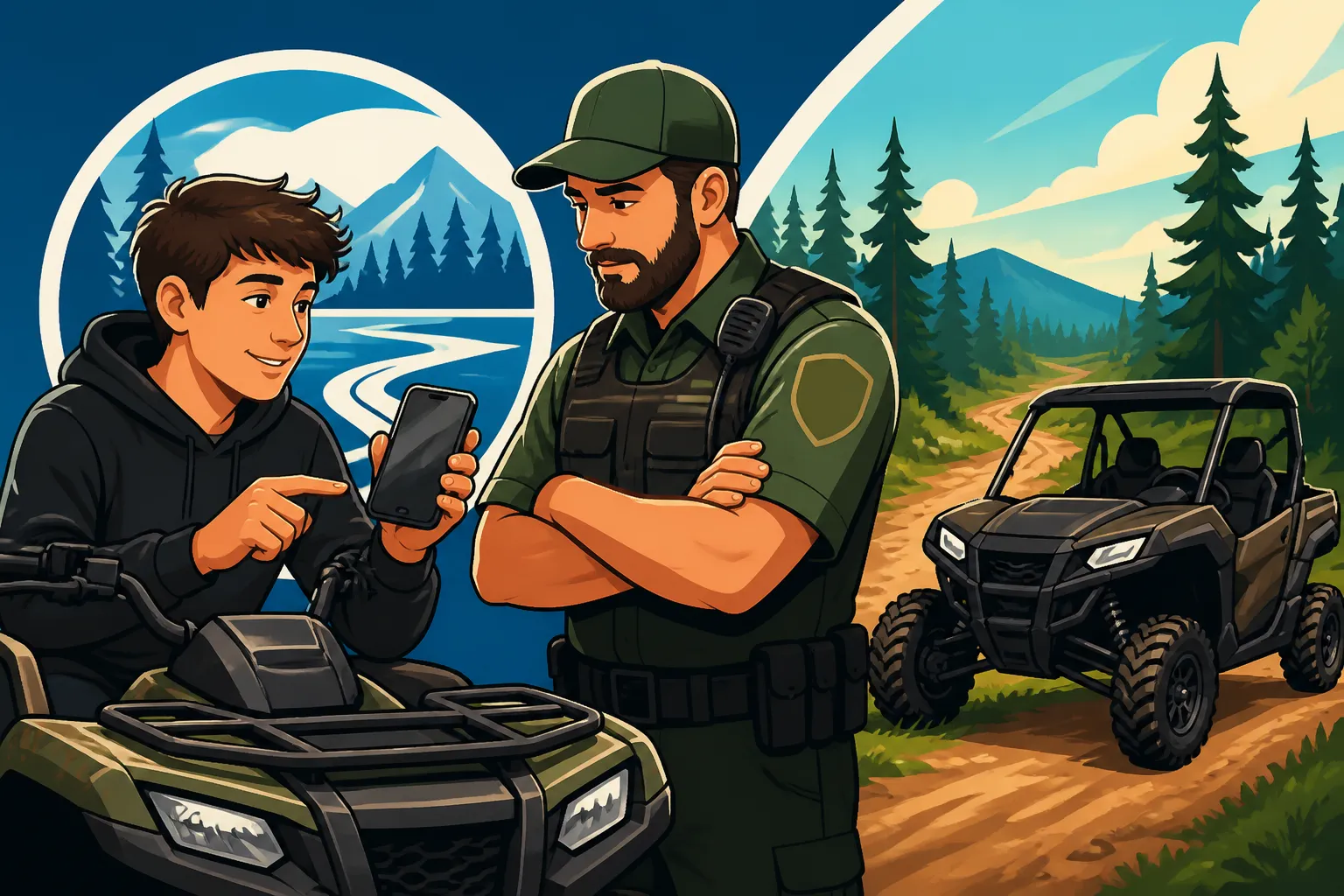
It's an experience no young rider wants to face: being out on the beautiful Quebec trails, enjoying the freedom, only to see a trail patrol officer waving you down. For 17-year-olds, that moment can be extra nerve-wracking because the rules surrounding off-highway vehicles (OHVs) in Quebec, especially since the big changes in 2021, can feel like a maze. This guide is here to cut through the confusion and clearly outline exactly what a 17-year-old needs to show a trail patrol to ensure a smooth, compliant, and uninterrupted ride.
The Essential Documents for a 17-Year-Old Rider on Quebec Trails
When you're out on a federated ATV or side-by-side trail in Quebec, you're not just riding for fun; you're operating a registered vehicle within a regulated network. For a 17-year-old, this means carrying specific documentation that proves you're allowed to be there, that you know how to ride safely, and that your machine is properly registered. It's not about spoiling the fun; it's about ensuring safety for everyone and the sustainability of the trails we all love.
Valid Driver's Licence or Learner's Permit
First and foremost, a 17-year-old operating an ATV or side-by-side on a federated trail in Quebec must possess a valid driver's licence. This isn't some special "quad licence"—it's your regular provincial driver's licence. If you have a full Class 5 driver's licence (the one for cars), you're good to go. This allows you to operate an OHV unsupervised on the trails.
However, many 17-year-olds might only have a Class 5 learner's permit. If this is your situation, you can still ride, but with a critical caveat: you must be accompanied and supervised by a licensed adult who meets the provincial requirements for supervising a learner driver. This adult must be sitting on the same machine as you if it's designed for two, or on a separate machine if it's a single-rider quad. Imagine you're riding with your dad, who has his full licence, and you're both on your own quads. If you only have a learner's permit, he must be supervising you, and you should be riding responsibly under his guidance. The patrol officer will want to see both your learner's permit and your supervisor's full licence. Getting pulled over with just a learner's permit and no supervisor can lead to significant fines, as it's considered operating a vehicle without a proper licence. For a more detailed look, check out [Do You Need a Licence for an ATV in Quebec?].
The FQCQ Training Certificate
This is a specific requirement that often catches younger riders off guard. For anyone aged 16 or 17 years old, if you plan on riding on the vast network of federated trails maintained by the Fédération Québécoise des Clubs Quads (FQCQ), you absolutely must have completed an FQCQ-approved training course and carry the certificate as proof. This isn't just a suggestion; it's a legal obligation under Quebec's Off-Highway Vehicle Act.
The course is designed to teach essential safety practices, responsible riding techniques, and an understanding of the rules of the trail. It’s an investment in your safety and the safety of others. Imagine a scenario where you're navigating a tricky section of trail, perhaps where the terrain shifts or visibility is limited. The skills learned in that FQCQ course, like proper braking or obstacle negotiation, could be the difference between a minor scare and a serious accident. A trail patrol officer will likely ask to see this certificate, especially from younger riders, to verify compliance. Without it, even if you have your driver's licence, you could face fines for not meeting the age-specific requirements for trail access. You can find more information about this at [Quebec FQCQ Training Certificates for Teens].
A Valid FQCQ Trail Pass
The federated trail network in Quebec is a marvel, offering thousands of kilometers of managed riding opportunities. These trails don't maintain themselves; they rely on funding, primarily from the sale of trail passes. As a 17-year-old rider, if you're on a federated trail, you need a valid FQCQ trail pass for your machine. This pass needs to be prominently affixed to your ATV or side-by-side where a patrol officer can easily see it, typically on the front fender or side panel.
There are different types of passes: annual, summer, daily, or three-day. Most regular riders opt for an annual or summer pass. Make sure the pass is current and hasn't expired. It's not enough for a parent or guardian to have a pass for their machine if you're riding a separate one; each machine on the trail requires its own valid pass. If you're on a trail and your machine lacks the sticker, a patrol will certainly stop you. They'll ask for proof of purchase, and if you can't provide it, or the pass is invalid, you'll be riding out of there with a fine. For details on how to get yours, see [How to Buy a Quebec Trail Pass].
Proof of Off-Highway Vehicle Registration and Insurance
Every ATV and side-by-side in Quebec that operates on public land or federated trails must be registered with the Société de l'assurance automobile du Québec (SAAQ) and carry the distinctive VHR plate. This registration comes bundled with mandatory minimum liability insurance, which currently stands at $1 million. When a trail patrol stops you, they'll want to see your SAAQ registration certificate.
This document serves multiple purposes: it confirms the machine is legally registered to an owner, it identifies the vehicle, and critically, it acts as your proof of the mandatory $1 million liability insurance. Even if the machine is registered in a parent's name, the 17-year-old rider needs to have this document on hand. Many riders keep a laminated copy in a waterproof pouch attached to their machine, ensuring it’s always available and protected from the elements. This is vital because if you're involved in an accident, proof of insurance is paramount. Without it, you could face massive personal liability. Keep this document safe alongside your licence and training certificate. For more context, check out [Quebec ATV Registration With the SAAQ] and [The $1 Million Liability Floor Every Owner Carries].
Why These Requirements Are in Place for Young Riders
It might seem like a lot of hoops to jump through, but every single one of these requirements for 17-year-olds is rooted in ensuring safety, promoting responsible riding, and sustaining the future of off-highway vehicle recreation in Quebec. These aren't arbitrary rules; they are carefully considered measures designed to protect riders, the environment, and the trail system itself.
Prioritizing Safety and Skill Development
The emphasis on a driver's licence and especially the FQCQ training certificate for younger riders directly addresses the inherent risks associated with ATVs and side-by-sides. These machines are powerful, weigh a considerable amount, and can be challenging to handle, particularly on varied terrain. A 17-year-old, while perhaps experienced in other areas, might not have the judgment or specific skills needed to react safely in all off-road situations.
The FQCQ training certificate ensures that young riders receive formal instruction in critical areas like hazard perception, braking techniques, proper body positioning, and emergency maneuvers. This structured learning reduces the likelihood of accidents caused by inexperience. Even experienced riders can benefit from a refresher, but for those still developing their skills, it's non-negotiable. It's about building a foundation of knowledge and practical ability. While enhancing your machine with quality parts, like heavy-duty axles or A-arms from SuperATV, can improve durability and performance, no aftermarket upgrade can replace proper training when it comes to rider safety. It's the human element that truly makes the difference, and that's where the training certificate comes in.
Legal Compliance and Trail Network Sustainability
Beyond individual safety, these requirements underpin the entire legal framework and financial stability of Quebec's OHV trails. The SAAQ registration and the mandatory liability insurance ensure that every machine on the trail is identifiable and that there's a safety net in place in case of an accident. This protects not only the rider but also other trail users and landowners whose properties the trails often cross.
The FQCQ trail pass is the lifeblood of the federated network. The fees collected from these passes go directly towards trail maintenance, signage, grooming, bridge repairs, and yes, even funding the trail patrols themselves. These dedicated volunteers and paid staff work tirelessly to keep the trails safe, accessible, and enjoyable. When a 17-year-old pays for and displays a valid trail pass, they are directly contributing to the preservation of the riding opportunities they enjoy. Without these funds, the trails would quickly fall into disrepair, leading to closures and a diminished riding experience for everyone. The [Quebec's Off-Highway Vehicle Act and Your Papers] outlines the legal framework that makes all this possible, and compliance by every rider, especially young ones, is essential for the future of the sport.
Potential Consequences for Non-Compliance
It's easy to think of these rules as minor inconveniences, but failing to meet the requirements for a 17-year-old rider in Quebec can lead to some pretty significant headaches – from emptying your wallet to potentially losing your riding privileges, and even affecting your parents. It's far better to be prepared than to face the repercussions of non-compliance.
Fines and Machine Impoundment
Being caught on a federated trail without the necessary documents or failing to meet age-specific requirements can result in substantial fines. For instance, riding without a valid driver's licence or a learner's permit with an appropriate supervisor can lead to fines ranging from several hundred dollars, plus demerit points on your driving record. Similarly, not having that FQCQ training certificate as a 16 or 17-year-old on a federated trail will also result in a fine. Forgetting to display your FQCQ trail pass, or having an expired one, is another surefire way to get a ticket. You can learn more about specific costs at [Quebec Fines for Riding Without a Trail Pass].
In more serious cases, or for repeated infractions, a trail patrol or police officer has the authority to impound your machine. Imagine being out in a remote part of the Laurentians, and suddenly your ATV is being loaded onto a tow truck because you didn't have your papers. Not only do you face the initial fine, but you'll also be on the hook for towing fees, storage fees, and administrative charges to get your machine back. These costs can quickly add up to well over a thousand dollars, turning a fun day into a very expensive lesson.
Parental Responsibility and Insurance Implications
It's crucial to remember that for riders under 18, parents or legal guardians often bear direct responsibility for their child's actions on the trails. If a 17-year-old is fined, the parent could ultimately be responsible for paying that fine. This extends beyond just tickets; if a rider without proper documentation causes damage or is involved in an accident, the financial implications can be severe.
This brings us to the most critical consequence: insurance. Your SAAQ registration provides $1 million in third-party liability coverage. However, insurance policies, including those linked to your SAAQ registration, can have clauses that invalidate coverage if the operator is not legally permitted to drive the vehicle. For example, if a 17-year-old rider, who is legally required to have an FQCQ training certificate to be on a federated trail, gets into an accident without one, the insurance provider might argue that the terms of coverage were violated. This could mean they deny a claim, leaving the parents (as the registered owners or guardians) personally liable for any damages or injuries caused, which could amount to hundreds of thousands of dollars. The few hundred dollars saved by skipping a training course or ignoring a rule pales in comparison to the financial ruin a denied insurance claim could bring. Therefore, ensuring full compliance isn't just about avoiding fines; it's about protecting your family's financial well-being.
Practical Tips for 17-Year-Olds and Their Parents
Navigating the rules for ATV and UTV riding in Quebec as a 17-year-old might seem daunting, but with a bit of proactive planning, you can ensure every ride is not only thrilling but also completely compliant. It’s all about preparation, staying informed, and making smart choices about your gear and machine.
Creating a Pre-Ride Checklist and Document Pouch
Before you even load up the machine, create a habit of going through a simple checklist. This isn't just for pilots; it's for smart riders too! Have a dedicated, waterproof document pouch that you always keep on your ATV or side-by-side. Inside this pouch, you should have:
- Your valid Class 5 driver's licence (or learner's permit and your supervisor's licence).
- Your FQCQ training certificate.
- The SAAQ registration certificate for your machine (which includes insurance proof).
- Proof of your FQCQ trail pass purchase (even though the sticker should be on the machine, having the receipt can be helpful if there's any doubt about the sticker's validity or visibility).
- (Optional, but recommended for specific scenarios) A written parental authorization, especially if riding on private land that isn't family-owned, as some landowners might request it.
While having digital photos of these documents on your phone can be a backup, trail patrols generally prefer to see the physical documents. A dead phone battery or poor cell signal can render digital proof useless. Before each ride, glance at your machine to make sure the FQCQ trail pass sticker is still firmly attached and clearly visible. Also, take a moment to check your machine's general condition – are the tires properly inflated? Is your throttle working smoothly? Even checking on the condition of your SuperATV skid plates or winches can become part of your routine. These small habits significantly reduce stress and improve safety.
Here’s a handy checklist you can use:
| Document/Requirement | What it is | Where to keep it | Why it's needed |
|---|---|---|---|
| Driver's Licence | Class 5 (or learner's with supervisor) | Wallet/waterproof pouch | Legal requirement for trail access |
| FQCQ Training Cert. | Proof of completion of approved course | Wallet/waterproof pouch | Mandatory for 16 & 17-year-olds on federated trails |
| FQCQ Trail Pass | Annual, Summer, Daily, or 3-Day pass sticker | Affixed to machine (visible) & proof in pouch | Access to federated trails, funds maintenance |
| Registration Cert. | SAAQ VHR registration document | Waterproof pouch on machine | Proof of ownership, vehicle ID, includes SAAQ insurance |
| Parental Authorization | (If applicable, for specific private land scenarios) | Waterproof pouch with other documents | Required for certain supervised riding scenarios |
| Helmet & Gear | CSA/DOT approved helmet, protective clothing | Worn by rider | Safety, legal requirement |
Staying Informed About Rule Changes
Quebec's Off-Highway Vehicle Act has seen significant changes in recent years, and it's not impossible for further adjustments to occur. As a 17-year-old, it’s vital that you (and your parents) stay up-to-date with any amendments to the rules. The FQCQ website and the SAAQ website are your best sources for current information. Many local quad clubs also disseminate important updates to their members.
Beyond provincial regulations, some municipalities have their own specific bylaws regarding OHV use, especially concerning access to certain roads or hours of operation. While provincial law generally overrides, knowing local nuances can prevent an unexpected ticket. A good practice is to periodically review the official sources, especially before planning a trip to a new region. Reading your club's newsletters or following their social media channels can be an easy way to stay in the loop. Understanding [What Quebec's Off-Highway Vehicle Act Changed for Owners] is a great starting point to grasp the foundation of current regulations.
Choosing the Right Machine and Equipment
While the paperwork is critical, the machine itself and the gear you wear are equally important for a safe and legal ride. Ensure the ATV or side-by-side you're operating is appropriate for your age, size, and skill level. Trying to handle an oversized or excessively powerful machine before you're ready can lead to loss of control and accidents, regardless of how many papers you have.
Always wear a helmet that meets current safety standards (CSA or DOT approved) and any other necessary protective gear like goggles, gloves, long pants, and sturdy boots. Some riders also opt for chest protectors, especially in rougher terrain. Maintaining your machine properly is also part of being a responsible rider. Regularly inspect brakes, tires, lights, and steering. If you've upgraded parts, like a robust SuperATV suspension kit or heavy-duty axles, ensure they are installed correctly and maintained. While quality aftermarket parts certainly enhance the machine's capabilities and durability, they don't replace the need for a skilled and legally compliant operator. Remember, a machine in peak condition, coupled with a well-prepared and legal rider, is the recipe for an enjoyable and safe Quebec quad experience.
Disclaimer
This article is for general informational purposes only and does not constitute professional advice. Laws, prices and regulations vary by location and change over time. Consult a qualified professional for guidance on your specific situation.