What Changed on September 10, 2021
Many Quebec quad and side-by-side owners still scratch their heads when they think about the profound shift that happened in our riding world on September 10, 2021. For years, we had a certain understanding of how things worked out on the trails and even on those short stretches of road, and then, almost overnight, many of those norms changed. It could feel a bit disorienting, even frustrating, to suddenly have to re-learn rules that directly impacted how and where you could ride your machine. This comprehensive guide is here to untangle the specifics of those pivotal changes, explaining exactly what came into effect on that date and what it means for every off-highway vehicle enthusiast in Quebec.
The New Legal Framework: Why September 10, 2021, Matters
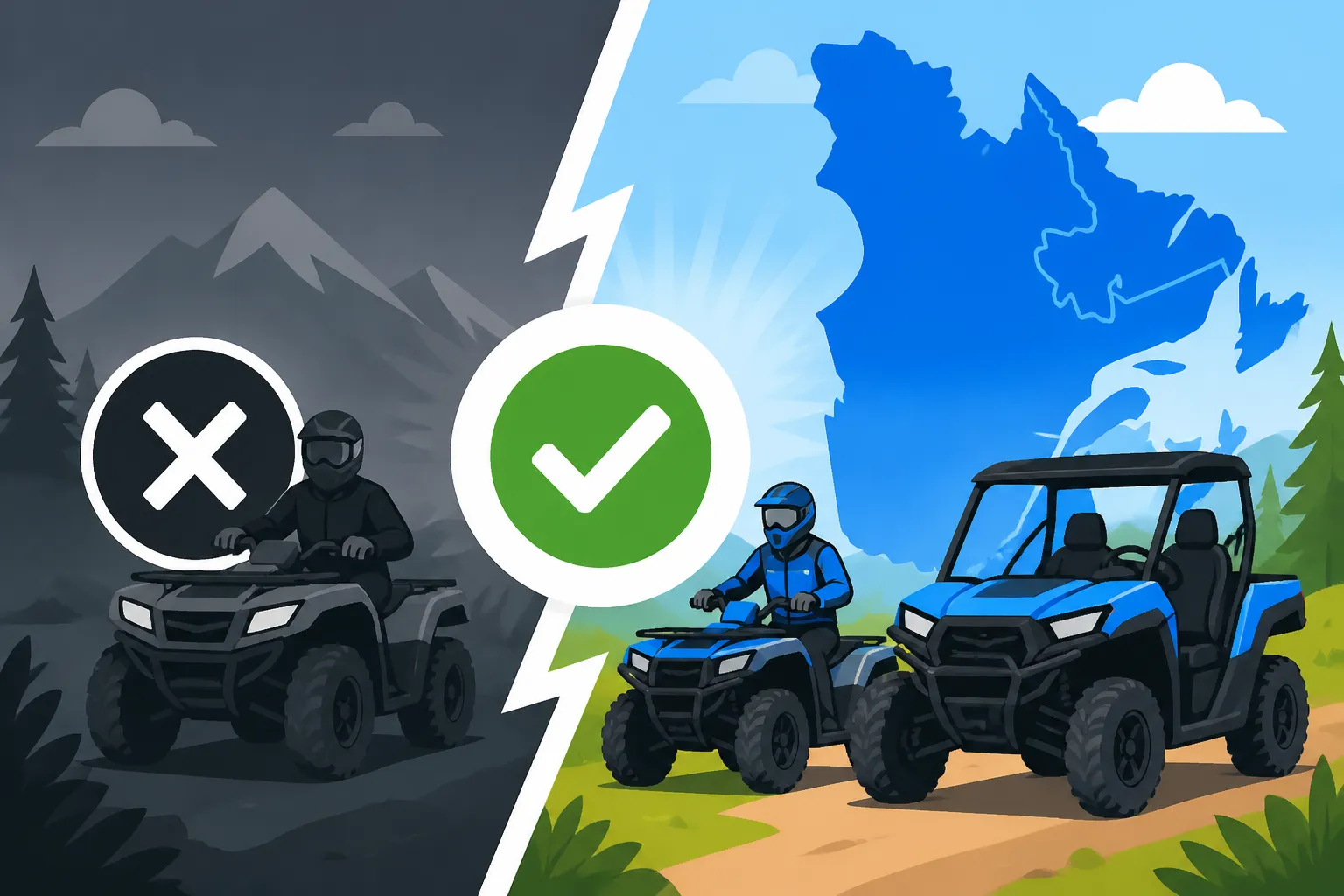
That specific date isn't just a random calendar entry for Quebec off-highway vehicle owners; it marked the official coming into force of a brand new legal structure that governs everything from registration to trail access. Before this, the rules felt a bit like a patchwork quilt, with different bits and pieces scattered across various regulations and acts. This often led to confusion, especially for new riders or those visiting from out of province. The provincial government recognized this issue, and the changes were designed to bring clarity, consistency, and, in some cases, enhanced safety measures to our vibrant riding community.
Consolidating the Rules: The New Off-Highway Vehicle Act
The most significant change on September 10, 2021, was the implementation of the Act respecting off-highway vehicles, or the LVHR (Loi sur les véhicules hors route). This wasn't just a minor tweak; it was a complete overhaul, replacing older, more fragmented legislation. Previously, you might have had to consult several different sources to understand all your obligations, which was honestly a bit of a pain. Imagine trying to plan a weekend ride, only to spend hours digging through obscure legal texts just to make sure you weren't breaking any rules. It took a lot of the fun out of it.
This new act consolidated all the essential regulations under one umbrella, making it much easier for riders, law enforcement, and even trail clubs to understand and enforce the rules. It provided a clearer, more defined framework for everything from vehicle registration and insurance requirements to how trails are managed and how riders are expected to behave. For long-time riders, it felt like a significant shift, as some long-standing practices were either formalized or, in some cases, completely changed. While the initial adaptation period certainly had its bumps, the intention was to create a more consistent and safer environment for everyone. If you're curious about the specific legal document, a quick search for [Quebec's Off-Highway Vehicle Act and Your Papers] will give you a good starting point.
Clarifying Definitions and Responsibilities
Another key aspect of the September 10, 2021, changes was the clarification of definitions for different types of off-highway vehicles, particularly ATVs and side-by-sides. For years, there could be some ambiguity, but the new act made it crystal clear what constituted a "VTT" (véhicule tout-terrain) – our Quebec term for an ATV – and how side-by-sides (sometimes referred to as UTVs or côte-à-côte) fit into the legal landscape. This was important because different vehicle types can sometimes have slightly different rules regarding passengers, age requirements, and even where they can be ridden.
The act also explicitly outlined the responsibilities of various stakeholders. Owners now had clearer obligations regarding registration, insurance, and the condition of their machines. Riders, whether owners or not, were given unambiguous rules of conduct, including age limits, helmet use, and speed. Even the FQCQ (Fédération québécoise des clubs de quads) and its member clubs, who maintain our vast trail network, had their roles and responsibilities further defined, particularly concerning trail signage, maintenance, and enforcement. Understanding [What VTT Means on a Sign] became more critical than ever, as did recognizing the expanded role that [What the SAAQ Actually Does for Quad Owners] plays in ensuring compliance and safety on our trails.
Major Rule Changes Affecting Riders and Machines
The changes introduced on September 10, 2021, weren't just about consolidating old rules; they brought in several new regulations that directly impacted who could ride, where they could ride, and what equipment was required. These were the changes that really got people talking, sometimes with a fair bit of head-shaking and exasperation, but ultimately designed to enhance safety for everyone on the trails.
Age Requirements and Training Certificates
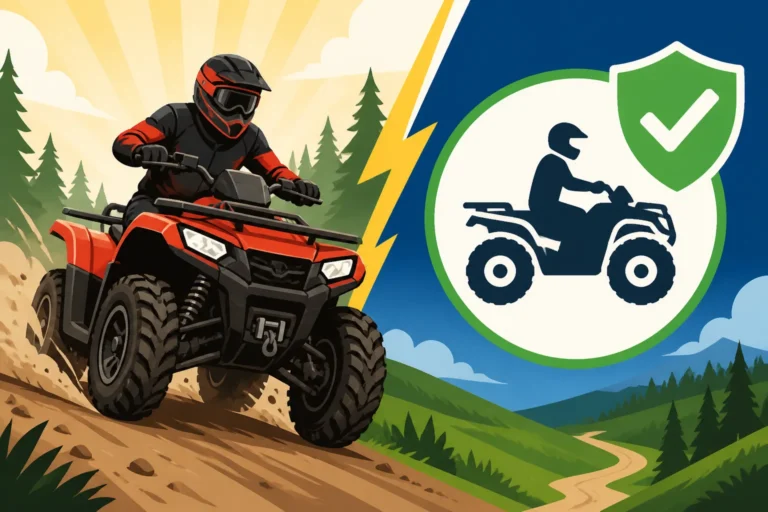
One of the most talked-about changes concerned the age requirements for riders, particularly teenagers, and the introduction of mandatory training certificates. Before this date, the rules for younger riders could sometimes feel a little grey, especially on private land. The new act tightened things up considerably, making it mandatory for all riders aged 16 and 17 to hold a valid driver's licence and complete an approved off-highway vehicle safety training course. Without that certificate, they simply couldn't ride on federated trails.
This meant a significant adjustment for many families. If your 16-year-old had been riding for years without formal training, they suddenly needed to pass a course before they could legally hit the club trails. While some saw this as an extra hoop to jump through, the intent was to ensure that even experienced young riders had a standardized understanding of safety practices and the new regulations. It added an extra layer of responsibility for parents to ensure their kids were compliant. You can dive deeper into these specifics by looking at [Quebec ATV Age Requirements] and the details surrounding [Quebec Training Certificate Requirements] and [Quebec FQCQ Training Certificates for Teens].
Here’s a quick overview of the age and training requirements that came into effect:
| Rider Age Group | Driver's Licence Required | Training Certificate Required | Where They Can Ride | Special Conditions |
|---|---|---|---|---|
| Under 16 | No | No | Private land only | Parental supervision; specific machine size limits. Cannot ride on federated trails. |
| 16 & 17 | Yes | Yes (FQCQ Approved) | Federated trails & authorized roads | Must carry certificate & licence; cannot drive a side-by-side. |
| 18 and Over | Yes | No | Federated trails & authorized roads | Must carry licence. Can drive side-by-sides. |
Road Access and Setback Rules
Another area that saw substantial modification was how and where off-highway vehicles could access public roads and the crucial setback distances from dwellings. Historically, some municipalities had more lenient approaches to allowing quads on short stretches of road, perhaps to connect trails or access services. The September 10, 2021, changes standardized this, generally limiting road access to a maximum of one kilometre to cross a public road or to access a trail, gas station, or lodging, provided the municipality had posted appropriate signage. This meant that if your usual route involved a longer stretch of road or an unsigned municipal road, it was likely no longer legal.
The "100-metre rule" from dwellings also became a significant point of contention for many riders. The new act stipulated that off-highway vehicles generally cannot operate within 100 metres of a dwelling, business, or public infrastructure unless on a specifically authorized trail or road. This meant that many informal tracks or even older trails that ran close to homes suddenly became problematic. It required riders to be much more mindful of their proximity to inhabited areas, and clubs had to re-evaluate sections of their trails. Many riders found themselves having to update their machines, perhaps looking at new SuperATV mirrors or turn signals to ensure they were fully compliant for even those short road stretches. For more on these rules, check out [Quebec Municipal Road Access Up to 1 Kilometre] and [Quebec's 100 Metre Rule Near Homes].
Helmet, Passengers, and Speed Limits
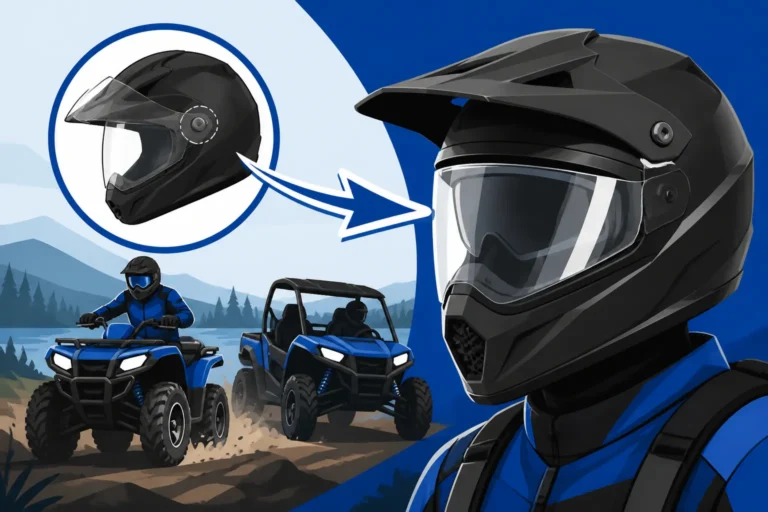
The new act also reinforced and clarified rules around safety gear, passengers, and speed limits, putting a stronger emphasis on rider safety. While helmets were always mandatory, the updated regulations made it very clear that helmets must be worn at all times, along with a visor or goggles. This detail might seem minor, but it closed any loopholes or ambiguities, ensuring riders had adequate eye protection. For side-by-side owners, ensuring your machine met factory passenger capacity, perhaps even with upgrades like additional SuperATV seating or cargo solutions for those family rides, became even more important. The rule became strict: no more passengers than the manufacturer designed the machine for, and every passenger needed to be properly seated and belted if applicable.
When it came to speed, the act set a universal maximum speed limit of 50 km/h on federated trails for ATVs and side-by-sides. While many riders already rode at or below this speed, it became a hard limit, enforced by patrols. There are specific exceptions, such as a 30 km/h limit when crossing specific areas or near certain types of infrastructure. These changes aimed to reduce accidents and enhance safety for all trail users. If you're curious about these specific equipment and riding rules, take a look at [Quebec ATV Helmet Rules], [Quebec Passenger Rules on an ATV], and [Quebec ATV Speed Limit on Trails].
Practical Implications for Quebec ATV Owners
Beyond the legal text and specific rule changes, the shift on September 10, 2021, had very real, day-to-day implications for every ATV and side-by-side owner in Quebec. It wasn't just about reading a new law; it was about changing habits, making adjustments to machines, and becoming more aware of the broader riding environment. For some, it meant a learning curve, for others, an investment in new accessories or training.
Enforcement and Penalties
With the new act came a renewed focus on enforcement. Trail patrols, including those from the FQCQ, as well as local police and Sûreté du Québec officers, became more vigilant in ensuring compliance with the updated rules. The penalties for non-compliance also became clearer and, in many cases, more substantial. Riding an unregistered machine, operating without the required training certificate (for eligible age groups), exceeding speed limits, or riding in prohibited areas could all lead to significant fines. This meant that simply "not knowing" the rules was no longer an excuse.
It became paramount for every rider to carry their valid driver's licence, their registration papers (proof of [Quebec ATV Registration With the SAAQ]), and, if applicable, their training certificate. Being stopped on a trail and not having the proper documentation could quickly turn a fun ride into a costly headache. The emphasis shifted from a more relaxed interpretation to a stricter adherence, underscoring the importance of staying informed and prepared. To understand the potential financial impact, you might want to review [Quebec Penalties for Riding Unregistered] and [Quebec Equipment Checks by Patrols].
Adapting to the New Reality
For many Quebec ATV owners, adapting to the new reality involved a multi-faceted approach. First, it meant taking the time to truly understand the new legislation. This often involved reviewing information from the SAAQ, the FQCQ, and reputable online sources. For some, it meant making practical adjustments to their machines. This could range from ensuring proper lighting and mirrors for the limited road access, to checking that their tires and other components met safety standards. Making sure your machine was up to snuff, from having proper lighting to reinforced suspension for rough Quebec trails, was key. Many riders invested in reliable aftermarket parts, perhaps from SuperATV, to enhance their machine's compliance and durability.
It also meant a shift in riding habits. Riders had to become more conscious of speed limits, especially around sensitive areas. They had to plan their routes more carefully, ensuring they only used authorized trails and respected setback distances from private properties. This often required checking updated trail maps and paying close attention to signage. For clubs, it meant working with landowners to ensure trails remained viable under the new rules, sometimes requiring re-routing or new agreements. Staying on top of [Quebec Trail Conditions Before You Go] became an essential part of ride planning.
Ongoing Evolution of Regulations
It's important to remember that while September 10, 2021, marked a major legislative milestone, the regulatory landscape for off-highway vehicles isn't static. Laws and regulations can continue to evolve, often in response to changing conditions, safety concerns, or community feedback. What was true on that date might see further refinements or adjustments down the line. We've seen this with things like [Quebec SAAQ Rate Changes for 2025 to 2027], which show that aspects of our riding world are always in motion.
Therefore, continuous education and staying informed are crucial for all Quebec ATV and side-by-side owners. The FQCQ website, the SAAQ, and local club communications are excellent resources for keeping abreast of any new developments. Whether you're looking for heavy-duty winches for those tough recoveries or robust skid plates to protect your undercarriage on rocky trails, SuperATV offers a wide range of accessories to keep your machine compliant and capable. Regularly reviewing the latest information, like revisiting [Quebec's Off-Highway Vehicle Act and Your Papers], ensures you're always riding legally and safely, contributing to a responsible and enjoyable off-highway vehicle community in Quebec.
Here’s a summary of the key changes from September 10, 2021:
| Category | Before September 10, 2021 | After September 10, 2021 |
|---|---|---|
| Legal Framework | Fragmented rules across various acts. | Consolidated under the new Act respecting off-highway vehicles (LVHR). |
| Age 16-17 Riders | Varied rules, often less stringent on training. | Mandatory driver's licence AND FQCQ-approved training certificate required for trails. |
| Side-by-Sides (UTVs) | Less distinct regulatory treatment. | Clear definitions; drivers must be 18+ on trails. |
| Road Access | Some municipal roads and longer stretches allowed by local discretion. | Generally limited to 1 km with municipal signage for crossings/access. |
| Setback from Dwellings | Less defined, often open to interpretation. | Strict 100-metre rule from dwellings (with specific exceptions). |
| Helmet Requirement | Generally mandatory. | Mandatory helmet with visor or goggles at all times. |
| Passenger Rules | Sometimes more lenient. | Passengers limited to manufacturer's seating capacity, properly seated. |
| Trail Speed Limit | Varied, sometimes higher or less strictly enforced. | Maximum 50 km/h on federated trails (30 km/h in certain zones). |
| Enforcement | Varied, less standardized penalties. | Clearer penalties and increased enforcement by patrols and police. |
| Required Documents | Driver's Licence, Registration (Proof of Ownership). | Driver's Licence, Registration, and Training Certificate (if applicable) must be carried. |
Disclaimer
This article is for general informational purposes only and does not constitute professional advice. Laws, prices and regulations vary by location and change over time. Consult a qualified professional for guidance on your specific situation.