Quebec Rules That Changed in 2021
If you're a long-time ATV or side-by-side enthusiast in Quebec, you probably remember the widespread confusion and frustration that swept through the riding community when the provincial government overhauled its off-highway vehicle laws. It felt like overnight, the rules we'd grown accustomed to completely shifted beneath our tires. This comprehensive guide is here to untangle the complexities of Quebec's 2021 legislative changes, helping you understand precisely what was updated and how it impacts your passion for exploring Quebec's vast network of trails and wilderness.
The Off-Highway Vehicle Landscape Before September 2021
Before the big changes rolled out on September 10, 2021, the world of off-highway vehicles (OHVs) in Quebec, encompassing everything from quads (VTTs) to side-by-sides (SxS), operated under a different set of expectations and regulations. For many veteran riders, it was a time marked by a certain degree of local interpretation and, at times, ambiguity, especially concerning road access and who could actually be behind the handlebars.
A More Lenient Era for Road Access and Age Limits
In the years leading up to 2021, while there were always restrictions, the rules around riding OHVs on public roads were often perceived as having more grey areas. Some municipalities had local bylaws that permitted limited road usage, while in other areas, riders might have taken a chance on short stretches to connect trails or access services like gas stations, sometimes without clear official signage or explicit permission. This patchwork of rules, or lack thereof, meant that what was acceptable in one region might land you a fine in another, leading to a lot of guesswork.
Regarding age limits, the landscape was also less stringent. While there were recommendations and some training available, the specific requirements for younger riders, particularly those between 16 and 18, weren't as universally mandatory or as strictly enforced across all contexts. It wasn't uncommon for a 16-year-old, perhaps with parental supervision or a basic understanding of safe operation, to be riding a machine that today would require a full driver's licence and a specialized training certificate. The financial protection in place was also significantly different; the minimum liability insurance required for OHVs was often set at $500,000, which, while substantial, proved insufficient in the eyes of new legislation. [Quebec Club Pages Still Cite $500,000]
The Drive for Safer and More Regulated Riding
The push for legislative changes didn't come out of nowhere. As the popularity of ATVs and side-by-sides surged, so too did the number of incidents and serious accidents on Quebec's trails and roads. Public safety became a growing concern, not just for riders themselves but also for other road users and residents living near popular trail networks. There was a clear need to modernize the existing framework, clarify ambiguities, and bring OHV operation more in line with the safety standards applied to other vehicles.
Organizations like the Société de l'assurance automobile du Québec (SAAQ), which registers and insures off-highway vehicles, and the Fédération Québécoise des Clubs Quads (FQCQ), which oversees the vast trail network, played significant roles in advocating for these changes. They recognized that a clearer, more uniform set of rules was essential for rider safety, public perception, and the long-term sustainability of the sport. The goal was to reduce accidents, ensure proper training, and provide adequate financial protection in case of an incident, leading to a much more structured and regulated environment for everyone enjoying Quebec's outdoors on their machines.
Quebec's 2021 Law: Key Changes and What They Mean for You
The legislative changes introduced in Quebec on September 10, 2021, often referred to as amendments to the Act respecting off-highway vehicles, marked a significant turning point for riders across the province. These weren't minor tweaks; they were fundamental shifts designed to enhance safety, clarify responsibilities, and bring consistency to OHV operation. If you've been riding for a while, these are the changes that likely prompted you to re-evaluate your habits and ensure your full compliance.
The Age and Licence Revolution for ATV and Side-by-Side Operators
Perhaps the most impactful changes revolved around who can legally operate an off-highway vehicle and what credentials they must possess. Gone are many of the grey areas that allowed for various interpretations of age and licensing. Now, the rules are clear:
- Minimum Age Requirements: For ATVs (VTTs), the minimum age to operate on federated trails or public land is now 16 years old. However, it's not just about age. For 16 and 17-year-olds, a crucial additional step is required: they must successfully complete a mandatory training course and obtain an FQCQ certificate. This ensures that younger riders entering the sport have received formal instruction on safe riding practices. For those eager to drive side-by-sides (SxS), the bar is set even higher, requiring operators to be at least 18 years old. This distinction acknowledges the differing characteristics and potential risks associated with these larger, often more powerful machines. [Quebec Side-by-Side Age Rule of 18]
- Mandatory Driver's Licence: This is a big one. As of the 2021 changes, every single operator of an off-highway vehicle on a federated trail or any public land must possess a valid driver's licence. This means no more riding without one, even if you're on a private club trail. This new rule aims to ensure that anyone operating an OHV has demonstrated a basic level of driving competence and understands road rules, even when off-road. It's a critical safety measure that brings OHV operation closer to the standards of road vehicle driving. [Quebec Requires a Driver's Licence Since 2021]
These changes underscore a commitment to ensuring that all riders, especially those new to the activity, are adequately prepared and legally qualified to operate these machines safely. The days of casual, unregulated riding, particularly for younger individuals, are definitively over in Quebec.
Redefined Road Access and the "1 Kilometre Rule"
One of the most contentious and widely discussed changes concerned the use of public roads by off-highway vehicles. Historically, OHV access to roads was a patchwork of local regulations and informal practices. The 2021 law sought to standardize this, making the default position very clear:
- Default Prohibition: Off-highway vehicles are now, by default, prohibited from riding on public roads in Quebec. This blanket ban aims to reduce conflicts with traditional road traffic and enhance safety for all. However, the law does provide specific, limited exceptions for very short distances, primarily to connect trail sections or access essential services.
- The 1 Kilometre Exception: The most notable exception is the "1 kilometre rule." This allows OHVs to travel on the shoulder or, if there's no shoulder, on the far right of the paved portion of a public road, but only for a maximum distance of one kilometre. This is strictly for the purpose of reaching a trail, a service (like a gas station or restaurant), or a lodging facility. But here's the catch: these stretches must be specifically identified by official signage approved by the Ministère des Transports et de la Mobilité durable, indicating that OHV use is permitted. Without this signage, even a short hop onto the road is illegal. Furthermore, when using these authorized stretches, riders must cross roads at a right angle and only where sightlines are sufficient for safe passage, generally 50 to 200 metres depending on speed limits. [Quebec Municipal Road Access Up to 1 Kilometre]
- Municipal By-Laws: While the 1 km rule is the provincial standard, municipalities retain the power to adopt specific bylaws that may allow OHV use on longer stretches of road within their territory. However, these longer segments also require clear signage and must adhere to strict safety guidelines. Riders cannot simply assume extended road access; they must actively check local municipal regulations and look for official signage. This means that if you're traveling a long circuit, what's legal in one town might not be in the next, requiring careful planning and awareness.
These stringent rules reflect a provincial effort to minimize OHV presence on public roads, directing riders primarily to the dedicated trail networks maintained by the clubs.
Passenger Rules and Increased Liability Insurance
Beyond who can drive and where, the 2021 amendments also brought significant updates to passenger regulations and the mandatory financial protection every OHV owner must carry. These changes directly impact how you can ride and the security you have in place.
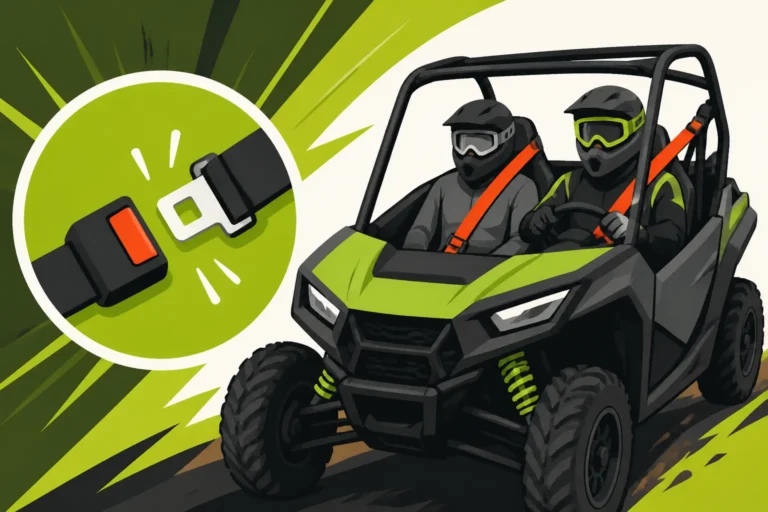
- Strict Passenger Rules: The new law is very clear about carrying passengers on an ATV or side-by-side. Passengers are only permitted if the machine is specifically designed by the manufacturer to carry more than one person and if the passenger is seated on a factory-designed seat intended for that purpose. This means no more riding two-up on a single-seat ATV, or having extra riders piled into a side-by-side beyond its designated seating capacity. This rule aims to prevent serious injuries that can occur when passengers are improperly seated or exceed the machine's design limits. It's a fundamental shift towards ensuring every rider has a secure and safe position. [Quebec Passenger Rules on an ATV]
- Enhanced Liability Insurance: One of the most critical financial implications of the 2021 changes was the doubling of the minimum mandatory liability insurance. Before the law, the minimum was $500,000. Now, every registered off-highway vehicle in Quebec must be covered by a minimum of $1,000,000 in third-party liability insurance. This increase reflects the higher costs associated with serious accidents, including medical expenses, property damage, and potential lawsuits. It's a vital safety net for both the OHV operator and any third parties involved in an incident. This insurance is automatically included when you register your machine with the SAAQ, but it’s crucial to understand that you are now covered for a much higher amount. [Quebec Liability Minimum Rose to $1 Million] [The $1 Million Liability Floor Every Owner Carries]
This significant increase in liability coverage ensures that the financial consequences of an accident are better managed, providing greater protection for everyone. When looking at ways to make your machine safer, or just more capable for the varied Quebec terrain, accessories from companies like SuperATV can offer enhanced protection. While not directly mandated by law, opting for robust bumpers, brush guards, or skid plates can provide an extra layer of peace of mind, protecting your investment and reducing the risk of damage in unforeseen circumstances.
Adapting to the New Reality: Practical Steps for Quebec Riders
The 2021 law isn't just a list of prohibitions; it's a call to action for every Quebec rider to adopt safer, more responsible habits. Understanding the nuances and taking proactive steps ensures you stay compliant, avoid hefty fines, and, most importantly, have a safer and more enjoyable riding experience. The days of "just hopping on" are largely behind us; now, it's about being prepared and informed.
Checking Your Papers and Your Machine for Compliance
Being a responsible rider in Quebec means more than just owning a machine and a trail pass. It involves diligently ensuring all your documentation is in order and that your machine itself meets current legal standards. This can feel like a bit of a checklist, but it's essential.
Firstly, always carry your valid driver's licence. This is non-negotiable for operating on federated trails or public land. Alongside it, you must have your machine's SAAQ registration certificate and proof of the mandatory $1,000,000 liability insurance. Many riders also carry their FQCQ trail pass, especially during patrol checks. It's wise to have physical copies of these documents, or at least clear, accessible digital photos on your phone. [Carrying Papers on a Long Ride] A good practice is to keep these documents in a waterproof bag or container stored securely on your machine, so they are always with you. For a comprehensive list, consult the [Quebec Registration Paperwork Checklist].
Secondly, your machine itself needs to be compliant. Ensure your ATV or side-by-side is equipped with functional headlights, taillights, brake lights, and a proper muffler that meets noise regulations. Mirrors are also often required, especially if you're venturing onto any road sections. Aftermarket parts from companies like SuperATV can help ensure your machine meets these specs, offering robust mirror kits or brighter LED lights that not only comply with regulations but also enhance your visibility and safety on the trails. Regularly inspecting these components before each ride can prevent issues down the line and ensure you're ready for any patrol stop.
Understanding Trail Access and Municipal Regulations
Navigating Quebec's extensive trail system responsibly requires a clear understanding of where you can and cannot ride, especially when it comes to public roads and private land. The rules are designed to protect both riders and landowners.
Always remember that riding on public roads is generally prohibited, with the strict 1-kilometre exception requiring official signage. Never assume a road is open to OHVs unless you see explicit provincial or municipal signs. Ignoring this rule can quickly lead to fines. Most of your riding should occur on the extensive network of federated trails, which are maintained by local clubs under the FQCQ. These trails often cross private land, and it's imperative to stay on the marked path. Veering off a federated trail onto unmarked private property is considered trespassing and can lead to significant penalties, not to mention jeopardizing the access agreements that clubs have painstakingly established with landowners. [Quebec Trespass Rules for Riders]
Furthermore, always be aware of seasonal closures, particularly during the spring thaw period, when trails are extremely vulnerable to damage. [Quebec Thaw Dates by Club] Riding on closed trails not only risks damage but also incurs fines and harms the efforts of volunteers who work tirelessly to maintain the network. Before any ride, it's always best practice to check the FQCQ website or your local club's information for current trail conditions and any specific municipal bylaws that might affect your route.
Educating Yourself and Your Riding Buddies
The best way to stay compliant and safe is to stay informed. The rules for OHVs are dynamic and can sometimes be updated, so continuous education is key.
Make it a point to regularly review the official information provided by the SAAQ and the FQCQ. Their websites are the authoritative sources for current regulations, registration details, and safety guidelines. If you have specific questions, don't hesitate to contact them directly or reach out to your local ATV club. These clubs are an invaluable resource, often having the most up-to-date local information and volunteers who can clarify complex rules.
For riders aged 16 and 17, completing the mandatory FQCQ training certificate is not just a legal requirement but a crucial step towards becoming a responsible and skilled rider. [Quebec Training Certificate Requirements] Encourage any younger riders in your group to take this course seriously, as it equips them with essential knowledge and practical skills that can prevent accidents. Even for experienced adult riders, refresher courses or advanced training can be beneficial, helping to sharpen skills and reinforce safe riding practices. Make it a group effort: discuss the rules with your riding buddies, share new information, and hold each other accountable for safe and legal riding.
Enforcement, Penalties, and Staying Ahead of the Curve
Quebec's 2021 off-highway vehicle laws weren't just put on paper; they come with real teeth in terms of enforcement and penalties. It’s crucial for every rider to understand the consequences of non-compliance, not just for their wallet, but for their safety and the future of the sport in Quebec. Staying informed and compliant is the best defence against a costly and potentially dangerous encounter with the law.
What Happens When You're Stopped by Patrol
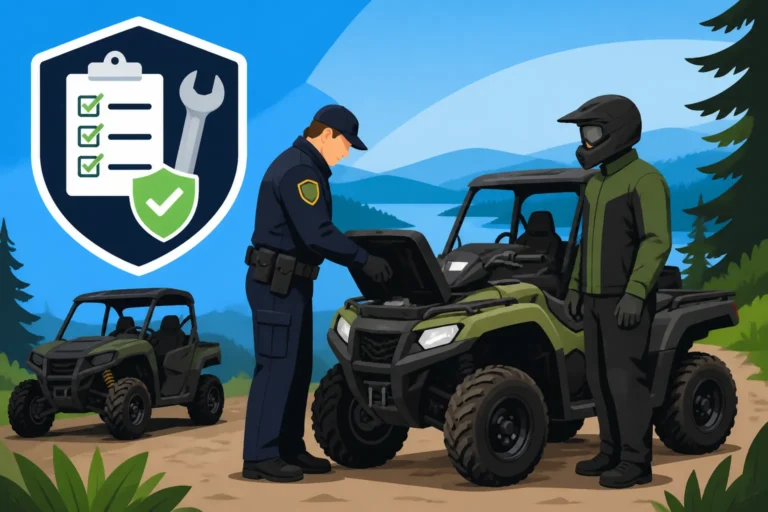
It's an experience many riders hope to avoid, but being stopped by a patrol officer or a trail warden is a possibility whenever you're out riding. These individuals are empowered to enforce the Act respecting off-highway vehicles and ensure everyone is adhering to the rules. So, what can you expect?
When stopped, you'll typically be asked to present your valid driver's licence, your SAAQ registration certificate, and proof of your mandatory $1,000,000 liability insurance. If you're riding on a federated trail, they will also likely ask to see your FQCQ trail pass. For riders aged 16 or 17, proving completion of the mandatory FQCQ training certificate is also a requirement. [Being Stopped on a Trail] Common violations that patrols look for include riding without a valid licence, operating underage, not having a trail pass, riding on prohibited public roads, or carrying passengers improperly. These stops are not meant to harass riders, but to ensure everyone's safety and maintain the integrity of the trail system and public spaces. Cooperation and having your documents readily available will always make the process smoother.
Fines and Legal Consequences
The penalties for violating Quebec's OHV laws can be substantial, reflecting the seriousness with which the province views safety and compliance. These aren't just minor inconveniences; they can significantly impact your finances and your ability to continue riding.
For example, riding without a valid driver's licence or the appropriate training certificate (if you're 16 or 17) can result in significant fines. [Quebec Fines for Riding Without a Licence] Likewise, riding an unregistered machine or one without the required liability insurance can lead to even more severe penalties, including potential machine seizure. [Quebec Penalties for Riding Unregistered] Fines for speeding on trails, improper road access, or riding during prohibited hours (like after midnight) can also range from substantial to very high, with repeat offenses leading to escalated penalties. [Quebec Speeding Fines From $90] In some extreme cases, particularly involving impaired riding or gross negligence, charges can extend beyond simple fines to more serious legal consequences. Beyond the legal requirements, equipping your machine with protective accessories, like heavy-duty bumpers or skid plates from SuperATV, can provide peace of mind and help prevent damage that might incur further costs, not to mention enhance your safety should an unfortunate incident occur.
Remaining a Responsible Rider in Quebec
Ultimately, navigating the world of Quebec ATV and UTV riding successfully post-2021 comes down to embracing a philosophy of continuous learning and responsible participation. The laws are designed to make the sport safer for everyone, and adhering to them benefits the entire riding community.
This means more than just avoiding fines. It means actively engaging with the riding community, perhaps by joining your local ATV club, which plays a vital role in maintaining trails, advocating for riders, and keeping members informed. It also means consistently checking for updates to regulations and trail conditions, especially before embarking on a long trip. Respecting private landowners who grant access to their property for trails, adhering to environmental guidelines, and always prioritizing safety for yourself and others on the trail are paramount. By staying informed, investing in your safety, and being a good ambassador for the sport, you help ensure that Quebec's incredible off-highway vehicle opportunities remain vibrant and accessible for years to come.
Here's a quick comparison of some of the major rule changes:
| Rule Category | Before September 10, 2021 | After September 10, 2021 |
|---|---|---|
| Minimum Age (ATV) | Varies; often 16 with supervision or basic training | 16 years old with valid driver's licence and FQCQ training (for 16-17) |
| Minimum Age (Side-by-Side) | Varies; often 16 with supervision or basic training | 18 years old with valid driver's licence |
| Driver's Licence Required | Not always explicitly mandated for all OHV operation | Mandatory for all operators on federated trails/public land |
| Road Access | Generally prohibited, some local discretion/grey areas | Prohibited by default, strict 1 km exception (with conditions & signage) |
| Passenger Rule | Often allowed if seat designed, less strict enforcement | Only on factory-designed seats, up to manufacturer capacity |
| Minimum Liability Insurance | $500,000 | $1,000,000 |
| Training (16-17 year olds) | Often recommended, not always mandatory | Mandatory FQCQ certificate |
Disclaimer
This article is for general informational purposes only and does not constitute professional advice. Laws, prices and regulations vary by location and change over time. Consult a qualified professional for guidance on your specific situation.