Quebec Trespass Rules for Riders
Many of us have been there: you're out on your quad or side-by-side, enjoying the vast Quebec landscape, when you suddenly find yourself wondering, "Am I actually allowed to be here?" The lines between public trails, private property, and acceptable shortcuts can feel incredibly blurry, leading to stress and the fear of getting into trouble. This guide is here to untangle the often-confusing world of Quebec's trespass rules for ATV and UTV riders, giving you the clear answers and practical advice you need to ride with confidence and respect.
Understanding "Private Land" in Quebec's ATV Context
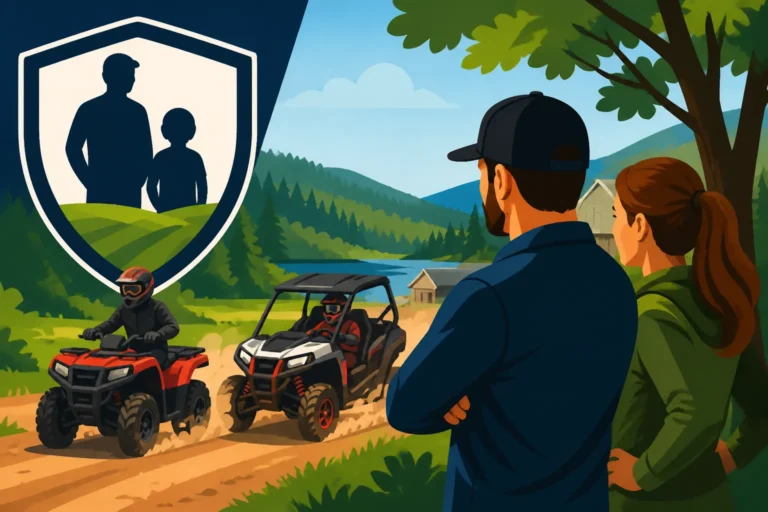
Navigating the diverse terrain of Quebec on an ATV or UTV is an exhilarating experience, but it comes with the fundamental responsibility of knowing where you're allowed to ride. A core misunderstanding for many riders is what actually constitutes "private land" and the implications of riding on it without proper authorization. It's not always about fences and "No Trespassing" signs; in Quebec, the rules lean heavily towards assuming land is private until proven otherwise.
The Core Principle: Permission is Key
It might sound obvious, but the absolute bedrock principle of riding an ATV or UTV in Quebec, particularly off the designated public network, is that you must have permission to be on private land. This isn't just a polite suggestion; it's the law. Unlike some jurisdictions where a 'no trespass' sign is required to prevent entry, in Quebec, the default is that land is private and access is restricted unless explicitly granted. This includes everything from vast stretches of forest and agricultural fields to smaller woodlots, cottage properties, and even those seemingly abandoned gravel pits. We've all seen riders who just assume 'if there's no fence, it's fair game,' and that's exactly the kind of thinking that leads to serious issues.
Think of it this way: if you wouldn't walk into someone's backyard without asking, you certainly shouldn't ride a noisy, powerful machine across their acreage without a clear go-ahead. Respect for private property is paramount, and it's the foundation upon which all other rules are built when you're riding outside of the official trail network. Ignoring this basic truth not only puts you at risk of fines but also erodes the goodwill between landowners and the ATV community, which is something we all rely on for continued trail access.
What Constitutes Valid Permission?
So, if permission is the name of the game, what kind of permission do you actually need? Ideally, and most formally, permission should be in writing. This provides a clear, undeniable record if there's ever a misunderstanding or a dispute. Imagine a scenario where you've been given verbal permission by a landowner you know well, only for a new neighbour or even a family member of the original owner to confront you. Without something tangible, your word against theirs can quickly become a legal headache. A simple signed note outlining the dates, areas, and conditions of your access can save a lot of grief.
However, we live in the real world, and sometimes it's not always so formal. Many riders have long-standing, informal agreements with landowners, especially in rural areas where relationships are built on trust. While a friendly nod from the farmer you know might feel like permission, it's always wise to clarify the scope: where exactly can you ride? Are there any specific times? Are you allowed to bring friends? These are the kinds of questions that can prevent future awkward encounters. Posted signs, like 'ATV Access Permitted' or 'Chasseurs Seulement' (Hunters Only), can also indicate permission, but always make sure they are current and apply to ATV use specifically. Remember, getting permission isn't a one-time thing; it can change with land ownership or even the season. A polite check-in annually can maintain those crucial relationships. For more on this, check out [Quebec Private Land Permission].
The Risks of Riding Without Permission
The temptation to explore an enticing-looking path or cut across what seems like unowned land can be strong, but the risks of riding without permission are simply not worth it. First and foremost, you're looking at potential legal trouble. Quebec's off-highway vehicle laws are clear: riding on private property without consent can lead to significant fines. We're not talking about a slap on the wrist here; these penalties can quickly add up, and in some cases, your machine could even be impounded. But beyond the immediate financial hit, there's a deeper, more pervasive risk: eroding the already delicate relationship between landowners and the ATV community.
Every instance of trespass, whether intentional or not, chips away at the trust that allows federated trails to exist. When landowners feel their property rights are being ignored, they are far more likely to withdraw their consent for club trails to cross their land, leading to reroutes, closures, and a shrinking network for everyone. This is why respecting private property isn't just about your own legal standing; it's about protecting the future of riding for all of us in Quebec. An accidental trespass can lead to a formal complaint, which can trigger a patrol visit. It's a lose-lose situation that often stems from a simple lack of respect or knowledge. Don't be that rider who makes it harder for everyone else.
Common Trespass Scenarios and How to Avoid Them
Even the most well-intentioned rider can find themselves in a trespass situation due to unclear boundaries or a misunderstanding of local land use. Knowing these common scenarios can help you ride smarter and avoid unnecessary complications.
Accidental Trespass: Unmarked Boundaries and Misunderstandings
Let's be honest, not every property line is neatly marked with a fence or a 'No Trespassing' sign. In Quebec's vast forested and agricultural regions, it's incredibly easy to stray from a public access point or a federated trail onto private land without even realizing it. You might be following what looks like a well-used path, only for it to veer off an official corridor onto a woodlot owned by a private individual. This is where accidental trespass often occurs, and while the intent might not be malicious, the legal consequences can still be very real.
To combat this, having good navigation tools is essential. Relying solely on memory or 'following the leader' can lead you astray. Apps with updated trail maps, coupled with a keen eye for signage, are your best friends. Even with GPS, boundaries can be tricky in dense bush. If you're ever in doubt, the safest bet is always to turn back. Don't push your luck. It's better to miss a potential shortcut than to face the wrath of an upset landowner or a hefty fine. When planning your ride, especially in new areas, consider using a GPS system that can overlay property lines, if available, or stick rigorously to marked [Quebec ATV Trails: The FQCQ Network]. For those times when you might need to recover from a tight spot, having a reliable winch or recovery gear, perhaps from a brand like SuperATV, can help you turn around safely without further encroaching.
Riding on Agricultural Land and Forests
Agricultural lands and private forests are particularly sensitive areas where ATV and UTV trespass can cause significant damage and frustration. Imagine a farmer who has spent months cultivating their crops, only to find ATV tracks tearing through a field. This isn't just an inconvenience; it can mean direct financial loss. The same goes for livestock; a noisy machine can startle animals, leading to injuries or stress that impacts their health or productivity.
For private forest owners, riding through newly planted areas or active logging sites can be disruptive and dangerous. Young trees can be easily damaged, and active forestry operations pose serious safety risks to unauthorized riders. These landowners rely on their land for their livelihood, and unauthorized recreational use can undermine their ability to conduct their business. It's a stark reminder that what might seem like 'just an open field' to a rider is someone's workspace and income. Always assume these areas are off-limits unless you have explicit, clear permission. Even if a field appears fallow, there might be delicate soil preparation or drainage systems that can be damaged by heavy machines. Showing respect for these working landscapes is crucial for maintaining positive relationships in rural Quebec.
Crossing Residential or Commercial Properties
Riding near residential or commercial properties presents its own set of trespass challenges, often amplified by noise and proximity. While a remote forest trespass might go unnoticed for a while, riding through someone's backyard or across a business's parking lot is immediately obvious and almost guaranteed to cause irritation. Homeowners value their peace and quiet, and the sound of an ATV or UTV can be highly disruptive, especially early in the morning or late at night. There are specific [Quebec Rules for Riding Near Houses] that dictate minimum distances from dwellings, even on authorized routes. Straying from these rules, or simply using private land as a shortcut, instantly breaks that peace.
For businesses, unauthorized riding can damage landscaping, create safety hazards for customers or employees, and even disrupt operations. A construction site, for example, might seem like an open playground, but it's a dangerous work zone with heavy equipment and potential liabilities. Never assume that because an area looks unkempt or undeveloped, it's fair game. This kind of trespass is often the quickest way to draw unwanted attention from authorities and property owners, leading to fines and negative publicity for the entire riding community. A respectful distance, adherence to posted signs, and sticking to legal routes are your best defense here.
The Role of Federated Trails and Club Lands
Quebec's extensive federated trail system is a jewel for ATV and UTV enthusiasts, but its existence is intricately linked to the willingness of private landowners to allow access. Understanding this relationship is vital for preserving the trails we all love.
How Club Trails Navigate Private Property
Quebec's incredible network of federated ATV trails, managed by the FQCQ (Fédération Québécoise des Clubs Quads), is largely possible thanks to thousands of individual agreements with private landowners. It's a massive undertaking, and it's built entirely on trust and cooperation. These agreements grant clubs the right to establish and maintain trails across private property, connecting various regions and offering us those amazing long-distance circuits. When you purchase your [Quebec's Annual FQCQ Trail Pass], you're not just buying access; you're contributing to the maintenance of these agreements and the trails themselves.
The clubs work tirelessly, often with volunteer efforts, to negotiate with landowners, mark routes, build bridges, and ensure that riders adhere to the rules. It's a symbiotic relationship: landowners allow access, and clubs ensure responsible use and liability coverage (which is automatically included with your SAAQ registration, as detailed in [The $1 Million Liability Floor Every Owner Carries]). Understanding this system is crucial because it means that even when you're on a clearly marked federated trail, you are, in many cases, still technically on private land – land that has been graciously made available for recreational use under specific terms. This privilege should never be taken for granted.
Respecting the Agreements: Why Landowners Withdraw Permission
The continued existence of our beloved trail network hinges on every rider's respect for the agreements forged between clubs and landowners. Unfortunately, when riders fail to uphold their end of the bargain, landowners have every right to, and often do, withdraw their permission. This is precisely [Why a Quebec Landowner Withdraws Permission]. Common culprits include riding off-trail, leaving garbage, damaging property (like fences or gates), riding at excessive speeds, making excessive noise, or simply showing a general lack of courtesy.
Imagine being a farmer who has allowed a trail to cross your back forty, only to find riders veering into your fields, disturbing your animals, or leaving litter. Or a woodlot owner who discovers unauthorized trails being cut through their property, damaging young growth. Each incident can be the straw that breaks the camel's back. When permission is revoked, the club has to reroute the trail, which can be a costly, time-consuming, and sometimes impossible task, potentially leading to permanent closures of entire sections. We all have a collective responsibility to be good stewards of the land and respect the privilege of access. Remember, one bad apple can spoil the bunch for everyone, threatening the very trails we cherish.
Reporting Trespass and Trail Issues
If you witness someone trespassing, riding off-trail, or engaging in other irresponsible behavior on or near a federated trail, it's important to know how to react appropriately. Confronting individuals directly can sometimes escalate a situation, so it's generally best to report the incident to the local ATV club or the FQCQ directly. Provide as much detail as possible: date, time, location (GPS coordinates are ideal), a description of the machines and riders, and if possible, any plate numbers. Clubs have their own trail patrols and can often address these issues effectively, or they can involve local authorities if necessary.
Similarly, if you come across trail damage, downed trees, or any other issue that affects safety or access, report it to your club promptly. These reports help clubs maintain the trails and address problems before they become bigger headaches. By being proactive and responsible, you're not just complaining; you're actively participating in the upkeep and protection of our riding privileges. Being a member of your local club often provides direct channels for this kind of communication, fostering a sense of community and shared responsibility. Organizations like SuperATV also offer various UTV and ATV accessories, such as trail cameras or GPS mounts, which can be useful tools for documenting incidents or navigating trails more effectively if you need to report something.
Legal Consequences and How to Protect Yourself
Understanding the potential repercussions of trespassing is a powerful motivator for responsible riding. While the thrill of exploration is undeniable, the legal and financial risks simply aren't worth it.
Penalties for Trespassing in Quebec
Getting caught trespassing on an ATV or UTV in Quebec isn't a minor inconvenience; it carries real legal penalties that can hit your wallet and your freedom to ride. Under Quebec's Off-Highway Vehicle Act (LVHR), riding on private property without the owner's consent is a clear violation. Fines for such infractions can be substantial, often starting in the hundreds of dollars, and they can increase significantly depending on the severity of the trespass, any damage caused, or if it's a repeat offense. It's not just about monetary fines either; in serious cases, authorities have the power to seize and impound your machine.
Imagine the hassle and expense of recovering your ATV or UTV from an impound lot, not to mention the potential storage fees on top of your fine. This isn't just a theoretical threat; it happens regularly. Law enforcement, including Sûreté du Québec and club patrols (who can report violations), are out there, especially in areas known for problems. These penalties are designed to deter irresponsible riding and protect landowners' rights. It’s a sobering reminder that a moment of impulsive exploration can lead to lasting financial and legal headaches, making that unauthorized shortcut incredibly expensive in the long run. If you're riding an older machine, make sure all your paperwork is in order to avoid compounding issues; even a basic [Quebec Registration and Proof of Ownership] is vital.
Damage, Liability, and Insurance Implications
Beyond the direct fines and impoundment, trespassing can open a Pandora's Box of civil liability. If you cause any damage to private property while trespassing—whether it's tearing up a field, breaking a fence, or disturbing property—you could be held financially responsible for those damages. This means the landowner could pursue you for compensation, which can be far more costly than any initial fine. What's more, your own liability insurance, which is mandatory for all off-highway vehicles in Quebec through your SAAQ registration, as explained in [Quebec's SAAQ Is Registrar and Insurer], might not cover you in situations where you are actively breaking the law.
Most insurance policies have clauses that exclude coverage for illegal activities. So, if you're involved in an accident or cause damage while trespassing, you could find yourself personally on the hook for thousands of dollars in repairs or medical expenses, with your insurance company refusing to pay. This is a crucial point many riders overlook. That $1 million liability floor you carry might not protect you if you're operating outside the law. Always remember that riding legally and with permission is your best defense against catastrophic financial repercussions and ensures your insurance actually works for you when you need it.
Best Practices for Responsible Riding
To truly enjoy the incredible riding opportunities Quebec offers, it's essential to adopt best practices that keep you legal, safe, and respectful of others. Firstly, always carry your valid driver's licence, proof of SAAQ registration, and your FQCQ trail pass (if applicable) with you. This makes any encounter with authorities straightforward. Secondly, invest in reliable GPS technology and up-to-date trail maps, like those available through the iQuad app, and know how to use them. These tools are invaluable for sticking to authorized routes and avoiding accidental trespass. Thirdly, when in doubt, turn back. It's far better to err on the side of caution than to risk a fine or confrontation.
Fourthly, be a good ambassador for the sport. This means riding respectfully, keeping noise levels down, packing out what you pack in, and slowing down when you encounter homes, livestock, or other trail users. Consider joining your local ATV club; it's a fantastic way to learn about local trails, meet fellow riders, and contribute to the maintenance of the network. They often have volunteers working on trail upkeep, and you can even find durable parts and accessories like heavy-duty axles or brush guards from SuperATV if you plan to explore tougher, authorized trails. Staying informed about local regulations and being courteous on and off the trail benefits everyone and helps secure the future of our sport in Quebec. For more information on what papers you need to carry, refer to [Quebec Registration Paperwork Checklist].
| Land Type | Permission Required? | How Permission is Granted | Common Issues to Avoid | Legal Basis |
|---|---|---|---|---|
| Private Land (General) | Yes, always | Verbal, Written Agreement, Posted Sign | Riding without asking, damaging property, excessive noise | Quebec Off-Highway Vehicle Act (LVHR) |
| Agricultural Land | Yes, always | Verbal, Written Agreement | Driving over crops, disturbing livestock | LVHR, Property Rights, Civil Code of Quebec |
| Private Forest/Woodlot | Yes, always | Verbal, Written Agreement | Damaging young trees, disrupting logging, unapproved trail cuts | LVHR, Property Rights, Environmental Protection Act |
| Federated Club Trails | Yes (implicitly) | FQCQ/Club-Landowner Agreement | Riding off-trail, littering, excessive speed, noise | LVHR, FQCQ Regulations, Landowner Agreements |
| Public Roads (Authorized) | No (but conditions apply) | Municipal/Provincial Signage | Riding unregistered, exceeding speed limit, no driver's licence | LVHR, Quebec Highway Safety Code |
| Public Crown Land (Non-Trail) | Sometimes (check local rules) | Provincial Regulations | Environmental damage, unapproved access, restricted areas | Quebec Crown Land Act, Environmental Protection Act |
Disclaimer
This article is for general informational purposes only and does not constitute professional advice. Laws, prices and regulations vary by location and change over time. Consult a qualified professional for guidance on your specific situation.