Quebec Rules for Passengers on a Quad
There’s nothing quite like sharing the thrill of a Quebec quad adventure with someone you care about, but before you hit the trails with a passenger, you need to understand the very specific rules that govern who can ride along with you and on what kind of machine. Many riders assume they can just strap any extra seat onto their ATV, or that any child can hop on, but ignoring the regulations can lead to serious fines, not to mention putting your passenger at risk. This guide will walk you through all the ins and outs of Quebec's passenger rules for ATVs and UTVs, ensuring your rides are not just fun, but fully compliant with the law.
The Fundamental Rule: Factory-Designed Seating for Passengers
When it comes to carrying a passenger on your off-highway vehicle in Quebec, the single most critical rule revolves around the seating capacity specified by the manufacturer. This isn't just a suggestion; it's a cornerstone of the [Quebec's Off-Highway Vehicle Act and Your Papers], or LVHR. If your machine isn't designed from the factory to carry more than one person, you simply cannot legally bring a passenger along. It's a clear-cut rule that often surprises new riders or those visiting from other provinces.
The reasoning behind this regulation is pure safety. Off-highway vehicles, especially ATVs, are built with a specific weight distribution and handling characteristic in mind. Adding an unauthorized passenger significantly alters these dynamics, making the machine less stable, harder to control, and increasing the risk of rollovers or accidents. The manufacturer has engineered the machine's suspension, frame, and power to handle a certain load and number of occupants safely. Deviating from that design can have severe consequences.
Think of it like this: your quad's suspension is tuned for a certain amount of weight. When you add an extra person without the manufacturer's blessing, you're not just adding their body weight; you're shifting the center of gravity, affecting braking distances, and stressing components beyond their intended limits. Even if you're a seasoned rider, an unexpected bump or sudden turn can become exponentially more dangerous with an overloaded or improperly seated machine. This is why Quebec takes such a firm stance on factory specifications for passengers.
Understanding Quebec's Off-Highway Vehicle Act (LVHR)
The Loi sur les véhicules hors route (LVHR), or Off-Highway Vehicle Act, is the legislative backbone that governs all aspects of ATV and UTV use in Quebec. This act was significantly updated in 2021, bringing in a host of new rules, including stricter regulations around passengers and age limits. Understanding these changes is crucial for every quad owner in the province. Before the 2021 updates, there was a bit more leeway or, perhaps, ambiguity in how passengers were addressed. However, the intent of the updated law was to enhance safety for everyone on the trails.
The LVHR explicitly states that an off-highway vehicle cannot transport more passengers than the number of seats for which it was specifically designed by the manufacturer. This means you need to consult your machine's owner's manual or the manufacturer's specifications to determine its official passenger capacity. It's not about how many people you can squeeze on, but how many the vehicle was built to safely carry. This information is usually clearly stated and should be the first place you look if you're unsure.
This particular aspect of the law serves as a vital safety measure, aiming to reduce accidents caused by improper loading and instability. When a trail patrol officer stops you, one of the first things they'll likely check, beyond your [Quebec Requires a Driver's Licence Since 2021] and [Quebec's Off-Highway Vehicle Act and Your Papers], is whether your quad is carrying more people than it's designed for. If you're caught breaking this rule, the fines can be significant, and your ride might even be cut short. It's a clear reminder that these aren't just arbitrary rules; they are there to protect you and your passengers.
The 'One Per Designed Seat' Principle
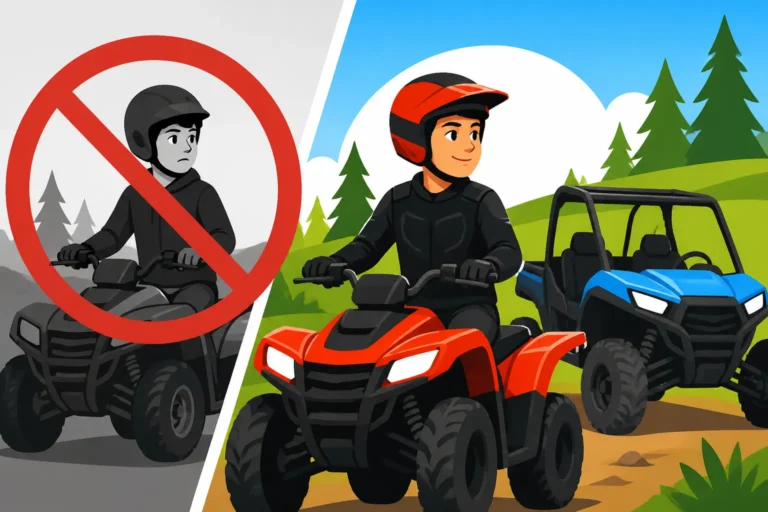
The "one per designed seat" principle is straightforward: if your ATV or side-by-side (VTT or VHR, as Quebec calls them) has two distinct, factory-installed seats, then it can carry two people—the driver and one passenger. If it has a single seat designed only for the operator, then it can only carry one person, period. This is where the distinction between a traditional single-rider ATV and a two-up ATV, or a multi-passenger side-by-side, becomes critically important.
Many standard ATVs are designed solely for a single operator. While they might have a long seat, that entire seat is intended for the movement and positioning of the single driver as they navigate challenging terrain. Adding a passenger to such a machine, even if there appears to be "room," is both illegal and incredibly dangerous. These machines are not balanced or equipped to handle the shifting weight of a second person. The risk of a rollover, especially on turns or uneven ground, increases dramatically.
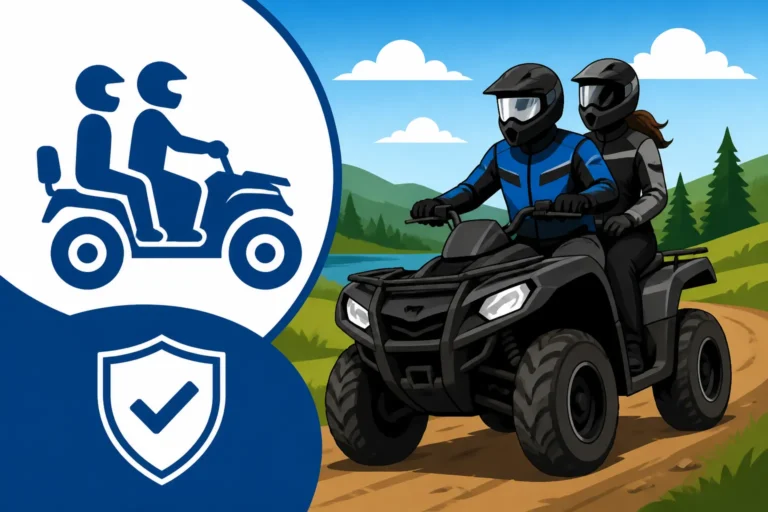
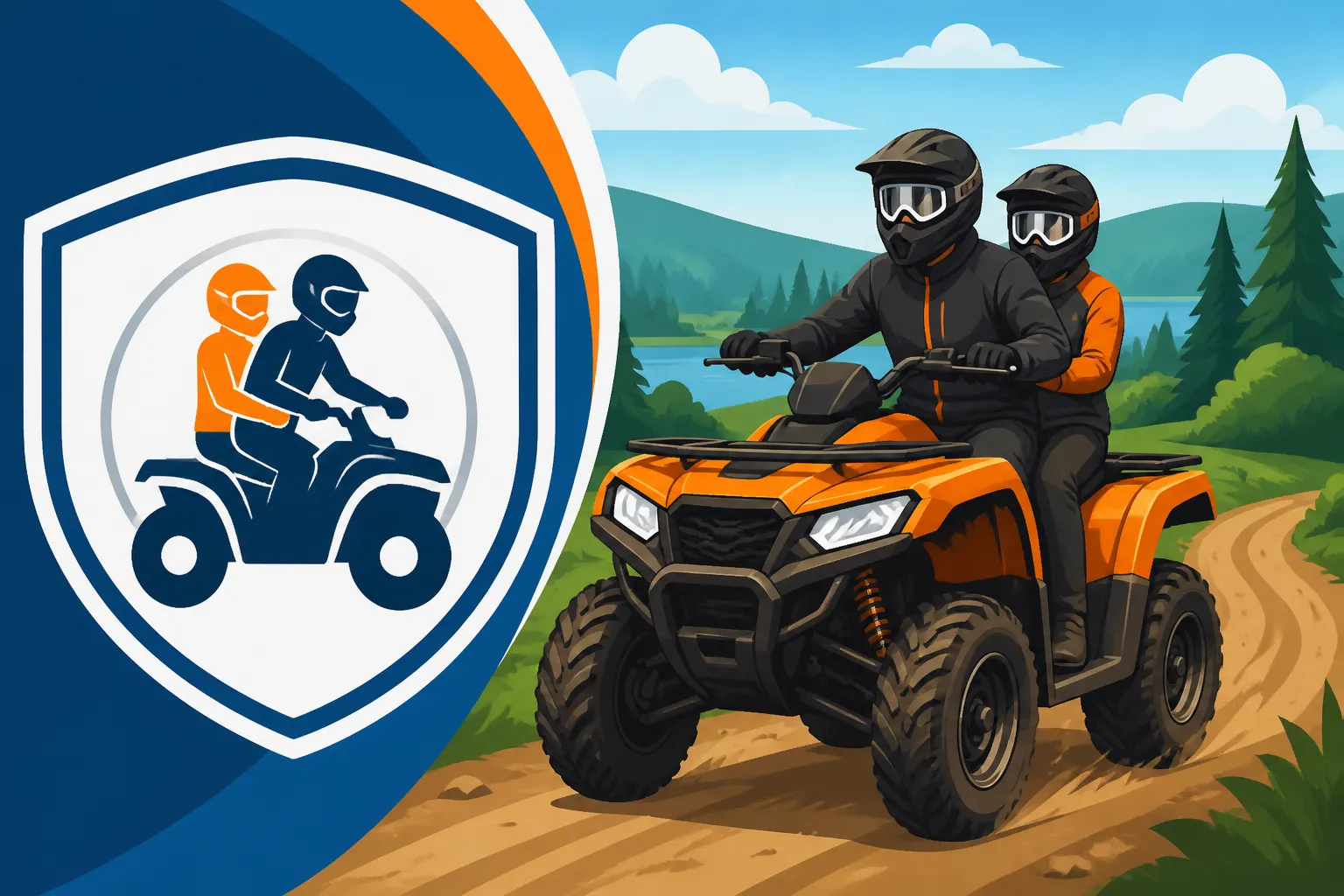
For ATVs specifically designed to carry two people (often referred to as "two-up" models), you'll notice a longer, more contoured seat, sometimes with a raised backrest or handholds specifically for the passenger. These machines are built with a longer wheelbase, heavier-duty suspension, and often a more powerful engine to safely accommodate the additional weight. If your ATV is a two-up model, then you can legally carry one passenger. Always check the manufacturer's label or manual to confirm your machine's designed capacity, especially if you bought it used and aren't entirely sure of its original configuration.
Why Aftermarket Seats Are a No-Go
It's common to see advertisements for bolt-on or aftermarket "passenger seats" for ATVs. While these might seem like a convenient way to bring a friend or child along, they are explicitly prohibited by Quebec's LVHR if your machine wasn't originally designed for a passenger. The law is very specific: "more passengers than the number of seats for which it was designed by the manufacturer." An aftermarket addition, no matter how sturdy it looks or how popular it might be in other regions, does not change the manufacturer's original design specifications.
Imagine you have a single-rider ATV and you purchase a fancy, padded aftermarket seat that attaches to the rear rack. While it might feel comfortable, it hasn't altered the fundamental engineering of your ATV. The suspension, braking, and steering are still calibrated for one person. The center of gravity remains optimized for a single rider. The moment you add a passenger to that aftermarket seat, you're not only breaking the law but putting both yourselves at significant risk. The machine will handle differently, often unpredictably, especially in emergency maneuvers or on rough terrain.
Even if you're looking to enhance your machine with other accessories from reputable brands like SuperATV – perhaps new control arms, a lift kit, or heavy-duty winches – remember that these modifications don't grant permission to add an unauthorized passenger seat. Modifications to improve performance or durability are one thing, but altering the fundamental passenger capacity as defined by the manufacturer and the law is another entirely. Stick to your machine's original design for passenger seating to remain safe and legal on Quebec trails. This also applies to any utility vehicles; if it's not a designated seat, it's not for a passenger.
Age Requirements and Supervision for Quad Passengers
Beyond the crucial rule of factory-designed seating, Quebec has specific age requirements for passengers, particularly for children. These rules are in place to protect younger riders, recognizing their vulnerability and the need for maturity and physical capability when riding as a passenger on an off-highway vehicle. The regulations differentiate between standard ATVs and side-by-sides, and also consider whether riding is on private land versus a federated trail.
It’s easy to assume that if there’s a seat, anyone can fill it, but the law considers the passenger’s age and capacity to safely ride along. A young child, for instance, might not have the strength to hold on properly or the judgment to react safely to bumps and turns, even if they are in a legal passenger seat. This is why the LVHR includes provisions that specify minimum ages, often requiring additional training or supervision depending on the circumstances. Familiarizing yourself with these age stipulations is just as important as knowing your machine's seating capacity.
Breaking these age rules can result in fines for the driver, and more importantly, can expose a child to unnecessary danger. The rules aren't designed to prevent families from enjoying the outdoors, but rather to ensure that those experiences are as safe as possible. Whether you're planning a casual ride on your own property or an extended journey on a club trail, understanding who can legally ride shotgun is non-negotiable.
The Minimum Age for Passengers on a Quad
For a standard ATV (VTT) that is factory-designed to carry a passenger, there is a minimum age requirement. Generally, a passenger must be at least 16 years old to ride on a two-up ATV on a federated trail or public land where ATVs are permitted. This rule reflects the understanding that ATV riding can be physically demanding and requires a certain level of maturity and physical development to be a safe passenger. They need to be able to hold on, keep their feet on the footrests, and react to the movements of the vehicle.
However, there's a specific exception for private land. On private property, with the owner's permission, a passenger younger than 16 may ride on a two-up ATV, provided they are under the constant supervision of an adult. This flexibility allows families to introduce younger children to quad riding in a controlled environment, where speeds are often lower and terrain is familiar. It’s a common scenario at a family camp or a friend's cottage, where a parent might take their child for a short, slow ride. Even in these situations, safety remains paramount, and the vehicle must still be a factory-designed two-up model.
It’s crucial to distinguish between riding as a passenger and operating the machine. The [Quebec Rules for a 16-Year-Old Rider] for operating an ATV, for example, are distinct and often require a training certificate and a valid driver's license. For passengers, the focus is on their ability to ride safely in the designated seat. The 16-year age minimum for public trails is a protective measure, ensuring that anyone riding along has a baseline level of physical and cognitive readiness for the dynamic environment of a quad trail.
Rules for Children on Private Land vs. Federated Trails
As mentioned, the rules for children riding as passengers vary significantly depending on where you are. On private land, with explicit permission from the landowner, children under 16 can be passengers on a factory-designed two-up ATV, provided they are actively supervised by an adult. This distinction is vital for families who enjoy recreational riding on their own property or at a private camp. The supervision must be constant, meaning the adult is present and overseeing the activity, ready to intervene if needed. This allows for a gentle introduction to the sport without the more stringent requirements of public trails.
However, the moment you transition to a federated trail—part of Quebec's extensive FQCQ network—or any other public land where ATVs are allowed, the rules become much stricter. Here, the minimum age of 16 for an ATV passenger applies without exception. This means a 12-year-old, even on a factory two-up ATV with their parent driving, cannot legally be a passenger on a federated trail. Trail patrols are vigilant about enforcing this rule, and hefty fines can be issued to drivers found in violation. This rule extends to [Quebec Rules for a Child Passenger], ensuring that only riders with sufficient maturity and physical capability are exposed to the more varied conditions and potential speeds of public trails.
The logic behind this stricter rule for public trails is multifaceted. Public trails often present greater challenges, including higher speeds, varied terrain, and interactions with other riders. The legal and liability implications are also different. The intention is to ensure that all individuals on these trails, whether drivers or passengers, meet a minimum standard of safety and awareness. If you have younger children who love quads, focus their passenger experiences on controlled private land until they meet the age requirements for public trails. Remember, even with aftermarket add-ons from a company like SuperATV for comfort, the age rules still apply.
Side-by-Side Specific Passenger Age Rules
Side-by-sides (UTVs or VHRs in Quebec) are generally seen as more stable and car-like than traditional ATVs, and their passenger rules reflect this to some extent, though specific age limits still apply. For side-by-sides, the minimum age for a passenger is 18 years old if the driver is under 18 themselves. However, if the driver is 18 years or older, then the passenger can be 16 years old or older. This is a subtle but important distinction that reflects the [Quebec Side-by-Side Age Rule of 18] for drivers and the overall maturity level required for operating or riding in these machines.
Side-by-sides are designed with multiple factory seats, often with seatbelts and sometimes even roll cages, making them inherently safer for multiple occupants than a single-rider ATV. The rule about passenger age ensures that even in these more robust vehicles, there's a consideration for the passenger's maturity and ability to follow instructions and remain safe. A driver who is 18 or older is considered to have the experience and judgment to safely transport a 16- or 17-year-old passenger. However, a driver who is 16 or 17, while legally allowed to drive some ATVs (with specific training and permits), is not permitted to carry any passenger on a side-by-side.
Just like with ATVs, these age rules for side-by-sides apply to public trails and public land. On private land, the same flexibility applies: younger passengers can ride in a side-by-side with an adult driver, provided there is constant adult supervision and the vehicle is designed for multiple passengers. Always ensure that everyone, regardless of age, is properly secured with seatbelts if the side-by-side is equipped with them, which most are. The key is always to refer to the manufacturer's specified capacity and Quebec's age regulations to avoid any legal issues or safety hazards. For more details, refer to [Seat Belts and Factory Capacity].
Essential Safety Equipment and Best Practices for Passengers
Having the right machine and the right age passenger is only part of the equation. Ensuring your passenger's safety also involves providing them with appropriate personal protective equipment (PPE) and educating them on best riding practices. A passenger isn't just dead weight; they play an active role in maintaining the balance and stability of the machine, especially on challenging terrain. Overlooking these crucial safety aspects can turn a fun ride into a dangerous situation very quickly.
It's common for drivers to focus on their own gear and riding technique, sometimes forgetting that their passenger is equally exposed to risks. A passenger who isn't properly dressed or doesn't know how to react to the machine's movements can easily be injured, even in a minor incident. Quebec's regulations, as well as common sense, dictate that certain safety measures are non-negotiable for anyone riding on an off-highway vehicle. These practices are not just about avoiding fines; they are about preserving health and ensuring everyone can enjoy the adventure responsibly.
Consider the entire experience from your passenger's perspective. Are they comfortable? Can they see adequately? Do they understand how to hold on and when to lean? These factors contribute significantly to their safety and overall enjoyment of the ride. By proactively addressing these points, you elevate the safety standard for all your off-road excursions. Even if you've added some comfort features from SuperATV, safety gear and good habits are always the priority.
Helmets, Eye Protection, and Proper Attire
Just like the driver, every passenger on a quad in Quebec must wear an approved safety helmet. This isn't optional; it's a legal requirement under [Quebec Helmet and Visor Rules]. The helmet must be properly fitted, securely fastened, and meet recognized safety standards (such as DOT, Snell, ECE, or CSA). A helmet is the single most important piece of safety gear, protecting against head injuries in the event of a fall or collision. There are no exceptions to this rule for passengers, regardless of age or the type of land you're riding on.
In addition to a helmet, eye protection is also mandatory. This can be in the form of a helmet visor or separate goggles. Flying debris, dust, insects, and even low-hanging branches can pose a serious threat to vision, leading to distraction and potential accidents. Clear vision is crucial for both driver and passenger to anticipate terrain changes and maintain situational awareness. Passengers need to be able to see where they are going, even if they aren't steering.
Beyond the helmet and eye protection, proper attire is essential for passenger safety and comfort. This includes:
- Long pants: To protect legs from scrapes, branches, and exhaust heat.
- Long-sleeved shirt or jacket: Provides arm protection and can offer warmth or sun protection.
- Gloves: To protect hands from blisters, impacts, and provide a better grip.
- Over-the-ankle boots: Crucial for protecting feet and ankles from impacts and preventing them from slipping off footrests.
Avoid loose clothing that could get caught in moving parts. Layering is often a good idea, as trail conditions and temperatures can change rapidly. Remember, a passenger is just as exposed to the elements and potential hazards as the driver.
Maintaining Rider and Passenger Communication and Balance
Effective communication and synchronized movements between the driver and passenger are vital for safe quad riding, particularly on challenging terrain. A passenger who simply sits passively can inadvertently disrupt the machine's balance and handling. Before you even set off, establish clear signals or verbal cues. For instance, a tap on the shoulder could mean "slow down" or "prepare for a bump." A hand signal might indicate "stop."
The passenger's role in maintaining balance is to actively lean with the driver. When the driver leans into a turn, the passenger should lean with them. When the machine goes over a bump, the passenger should brace themselves, lifting slightly off the seat to absorb the impact through their legs, much like the driver does. This reduces the shock to their spine and prevents their weight from pitching the machine unpredictably. Explain to your passenger that they need to be an active participant in the ride, not just a passive observer.
Here are some tips for maintaining balance and communication:
- Hold on securely: Passengers should hold onto the designated grab handles, the driver's waist, or the machine's frame, depending on the seating design.
- Keep feet on footrests: Feet should never dangle or be placed near the wheels.
- Look ahead: Encouraging the passenger to look over the driver's shoulder helps them anticipate movements and react accordingly.
- Avoid sudden movements: Passengers should try not to shift their weight abruptly without warning, as this can throw off the driver's control.
- Verbalize concerns: Encourage the passenger to speak up if they are uncomfortable, tired, or need a break.
Practicing these techniques on easy terrain first can build confidence and synergy between driver and passenger, making for a much safer and more enjoyable experience on all types of trails. Always remember that [Riding Two Up on a Single Seat] is never an option, even with perfect communication.
Carrying Children Safely and Responsibly
When carrying children as passengers, especially on private land where younger ages are permitted, safety and responsibility become even more paramount. Even if the child meets the minimum age requirement for that specific riding environment, special considerations are needed to ensure their well-being. The principles of proper gear, communication, and balance are magnified when dealing with a smaller, potentially less experienced passenger. [Children and Machine Size] is a critical consideration here; ensure the child is large enough to comfortably reach footrests and hold on securely.
Start by ensuring their safety gear fits perfectly. A child's helmet should be snug but comfortable, without wobbling or obstructing vision. Their boots, gloves, and protective clothing should also be appropriately sized. Ill-fitting gear can be uncomfortable, reduce protection, and even become a hazard. Remember, younger children might not have the strength or endurance to hold on for extended periods, so plan shorter rides with frequent breaks.
Consider the child's temperament and experience level. A first-time rider, or a child prone to motion sickness, might not enjoy a fast or bumpy ride. Adjust your speed and choice of terrain to match their comfort level. Explain the rules of riding clearly and calmly, emphasizing the importance of holding on, keeping feet on the footrests, and leaning with the turns. You might even demonstrate how to do it while stationary.
Here’s a table summarizing key passenger rules:
| Feature/Rule | Standard ATV (Single Rider) | Two-Up ATV (Designed for 2) | Side-by-Side (VHR) |
|---|---|---|---|
| Factory-Designed Seat | No passenger seat | Yes, 1 passenger seat | Yes, multiple passenger seats |
| Aftermarket Seats | Illegal to add a passenger | N/A (already has a seat) | N/A (already has seats) |
| Helmet Required | N/A (no passenger) | Yes, for passenger | Yes, for all occupants |
| Eye Protection | N/A (no passenger) | Yes, for passenger | Yes, for all occupants |
| Passenger Age (Public Trail) | N/A (no passenger) | 16 years old + | Driver 18+: Passenger 16+ Driver <18: No Passenger Allowed |
| Passenger Age (Private Land) | N/A (no passenger) | Under 16 OK with adult supervision | Under 16 OK with adult supervision |
| Seatbelts (if equipped) | N/A | N/A | Mandatory for all occupants if equipped |
Always carry a written [Parental Authorization in Writing] if you are supervising a minor who is not your child on private land, even if the law doesn't explicitly mandate it for passengers. It’s a good practice for liability and peace of mind. Ultimately, the responsibility for a child's safety rests squarely on the driver's shoulders. Choose your routes, speed, and overall riding style with their well-being at the forefront.
How Different Machine Types Impact Passenger Rules
The world of off-highway vehicles is diverse, encompassing everything from nimble sport quads to robust utility side-by-sides. This variety means that passenger rules aren't a one-size-fits-all situation; they are heavily influenced by the type of machine you're operating. While the general principle of factory-designed seating remains constant, how that principle applies differs between a traditional ATV and a multi-passenger side-by-side. Understanding these distinctions is crucial for compliance and safety.
It's a common misconception that all "quads" are the same when it comes to carrying people. However, the engineering and design intent behind a single-rider ATV versus a family-friendly side-by-side are vastly different. These differences directly inform how many people can legally and safely ride in or on them. The [Quebec's 2021 Law and What Changed] specifically addressed these types of vehicles and refined the rules to match their capabilities and inherent risks.
Navigating these nuances will ensure you select the right vehicle for your needs if carrying passengers is a priority, or that you're using your existing machine within legal boundaries. From the physical construction of the seats to the presence of seatbelts and roll cages, each vehicle type presents its own set of considerations for passenger transport.
Standard ATVs: One Rider, Sometimes One Passenger
Most traditional ATVs, particularly the sport or utility models designed for a single operator, are strictly single-rider vehicles. As we've discussed, these machines are balanced for one person, and adding a second person, even a small child, is both illegal and dangerous. The long, bench-like seat might seem to offer space, but it's intended for the driver to shift their weight during riding, not for an additional passenger. This is why you'll often see signs on trails explicitly stating "One Rider Per ATV."
Then there are "two-up" or "tandem" ATVs. These are distinct models specifically designed by the manufacturer to carry a driver and one passenger. They feature a longer wheelbase, a passenger seat that is often elevated or clearly defined with a backrest and handholds, and a more robust suspension system to handle the additional weight. If your ATV is a two-up model, then carrying one passenger is perfectly legal, provided the passenger meets the age requirements for the specific riding area. These are the only ATVs that can legally carry a passenger in Quebec.
It’s important not to confuse a single-rider ATV with an added aftermarket "passenger seat" with a genuine two-up model. The latter is factory-engineered for two, while the former is an illegal modification that compromises safety. When considering a ride with a passenger on an ATV, always verify that your machine is officially a two-up model, as specified by the manufacturer. If it's not, you're limited to solo adventures.
Side-by-Sides: Built for Multiple Occupants
Side-by-sides, also known as Utility Terrain Vehicles (UTVs) or VHRs (Véhicules Hors Route) in Quebec, are fundamentally different from ATVs in their design philosophy. They are built with multiple factory-installed seats, often arranged side-by-side (hence the name) or in rows, much like a car. Most side-by-sides come equipped with seatbelts for all occupants and often feature a roll cage, providing a higher level of occupant protection compared to an open ATV. This design makes them inherently more suitable for carrying multiple passengers.
The passenger capacity of a side-by-side is determined by the number of factory-installed seats and seatbelts it possesses. If your side-by-side has two seats, it can carry a driver and one passenger. If it has four seats, it can carry a driver and three passengers. The key is that each occupant must occupy a designated, factory-installed seat and, if available, wear the corresponding seatbelt. This adheres to the [Seat Belts and Factory Capacity] rule.
The age rules for side-by-side passengers, as previously discussed, are also slightly different. While an 18-year-old is required to drive a side-by-side on public trails, passengers can be 16 or older if the driver is over 18. This demonstrates the recognition that these vehicles, while still off-road, offer a more secure environment for passengers due to their design. However, all occupants must still wear approved helmets and eye protection, regardless of the vehicle type or whether they have a roll cage.
The Importance of Manufacturer Specifications
Ultimately, when in doubt about passenger capacity, the manufacturer's specifications are your definitive guide. Every legitimate off-highway vehicle comes with an owner's manual or a clear set of decals that indicate its designed occupant capacity. This information is a legal requirement and is provided for your safety. It details everything from maximum weight limits to the number of passengers your particular model can safely carry.
Ignoring these specifications can lead to several problems. First and foremost, it’s a direct violation of Quebec's LVHR, which can result in significant fines if you're caught by trail patrols or law enforcement. Secondly, and far more critically, it compromises safety. Overloading a machine or carrying passengers in non-designated areas dramatically increases the risk of accidents, equipment failure, and severe injuries. The vehicle simply isn't engineered to handle it, regardless of how stable it might feel at low speeds.
Before you plan any ride involving passengers, take a moment to review your machine's documentation. Ensure that it is indeed a multi-passenger model if you intend to bring someone along. If you’ve purchased any accessories, even robust items from SuperATV, always prioritize adherence to the manufacturer's original design and capacity for safety and legal compliance. Whether it's a quad or a side-by-side, the manufacturer's word, backed by Quebec law, is final when it comes to carrying passengers.
Disclaimer
This article is for general informational purposes only and does not constitute professional advice. Laws, prices and regulations vary by location and change over time. Consult a qualified professional for guidance on your specific situation.