Quebec ATV Age Requirements
Navigating the world of Quebec ATV and UTV riding can feel like a maze, especially when it comes to understanding who can legally ride what, and at what age. It’s a common frustration to want to get out on the trails with family, only to be unsure if everyone meets the latest requirements. This guide will cut through the confusion, clearly explaining Quebec’s age requirements for ATVs and side-by-sides so you can ride safely and legally.
The Core Age Rules for ATV and Side-by-Side Riders in Quebec
Quebec's regulations are pretty clear-cut when it comes to the minimum age for operating off-highway vehicles, but there are important distinctions between ATVs (known locally as VTTs or véhicules tout-terrain) and side-by-sides (often called côte-à-côtes). These rules are in place for everyone's safety, protecting riders, passengers, and other trail users. Understanding them is the first step to enjoying Quebec's vast trail network without running into trouble.
Minimum Age for ATVs (VTTs): 16 Years Old
For most riding scenarios in Quebec, if you're planning to operate an ATV, you need to be at least 16 years old. This isn't just a suggestion; it's a legal requirement that governs access to federated trails, public lands where riding is permitted, and any road sections where ATVs are allowed to travel (usually for short distances and with proper signage). It's a fundamental rule that all ATV enthusiasts in the province must adhere to.
On top of the age requirement, riders also need to possess a valid driver's licence. This means having at least a Class 5 probationary licence, or any other class of driver's licence that allows you to operate a motor vehicle. This requirement, in place since 2021, underscores the provincial government's commitment to ensuring that anyone operating a powerful machine like an ATV has demonstrated basic road safety knowledge and driving competence. It's a significant change that has impacted many riders, especially younger ones. For more details on this, check out [Quebec Requires a Driver's Licence Since 2021].
For those who are 16 or 17 years old, there's an additional step to complete before hitting the trails. Not only do you need your driver's licence, but you also need to hold a specific training certificate issued by the Fédération Québécoise des Clubs Quads (FQCQ). This certificate proves you've received specialized instruction in ATV operation and safety, helping to ensure that these younger riders have the skills and awareness needed to navigate trails safely. It's a proactive measure to prevent accidents and promote responsible riding habits from a young age.
When considering a machine for a 16 or 17-year-old, it's also important to make sure the ATV itself is suitable. While there aren't specific displacement limits tied to age in the law, common sense dictates that a smaller, less powerful machine might be more appropriate for a newer, younger rider. Ensuring the machine is well-maintained and outfitted with appropriate safety accessories, even if you're looking at aftermarket upgrades from brands like SuperATV for protection or performance, is part of responsible ownership. This careful approach helps build confidence and skill in young riders.
Minimum Age for Side-by-Sides (Côte-à-Côtes): 18 Years Old
Side-by-sides, also known as UTVs or utility terrain vehicles, are generally larger, heavier, and often more powerful than traditional ATVs. Because of these characteristics, Quebec law sets a higher minimum age for operating them: you must be at least 18 years old. This rule recognizes the increased size and capacity of these machines, which often carry multiple passengers and can be used for heavier work or more challenging terrain.
Just like with ATVs, an 18-year-old side-by-side operator must also hold a valid driver's licence. This reinforces the idea that operating any off-highway vehicle requires a fundamental understanding of driving principles and safety. The move to a higher age limit for side-by-sides aligns with the idea that these machines, with their car-like controls and often higher speeds, demand a greater level of maturity and experience from their drivers. It’s important to remember that this 18-year-old rule applies universally to public trails and areas where side-by-sides are permitted. You can find more specific rules regarding this on [Quebec Requires 18 for a Side-by-Side].
The distinction between ATVs and side-by-sides in terms of age limits often catches new riders or those transitioning between machine types by surprise. It’s not uncommon for someone who has been riding an ATV since 16 to assume they can immediately jump into a side-by-side at the same age. However, the law is clear, and it's essential to respect this difference to avoid fines or other legal complications. Always double-check the regulations for the specific type of machine you plan to operate.
For those considering a side-by-side, it's worth noting that many models are designed with features like roll-over protection structures (ROPS) and seatbelts, akin to passenger vehicles. While these add layers of safety, they don't negate the need for an experienced and mature driver. The added stability of a side-by-side can sometimes lead to a false sense of security, so adherence to the 18-year age limit, along with a valid driver's licence, is crucial for safe operation.
Passengers and Age Considerations
The age of the driver isn't the only factor; passenger rules also come into play, especially when children or younger individuals are involved. On both ATVs and side-by-sides, passengers are only permitted if the machine is specifically designed by the manufacturer to carry more than one person. This means having a factory-installed, designated passenger seat and footrests. You can't just throw a cushion on the rear rack of a single-seater ATV and call it a day.
For ATVs, this typically means a "two-up" or "tandem" model, which has an extended seat and separate footpegs for a passenger. Side-by-sides are often designed with multiple seats (two, three, or even four), making them more accommodating for groups. However, even with multi-passenger machines, the total number of occupants cannot exceed the manufacturer's specified seating capacity. Overloading a machine is not only illegal but extremely dangerous, affecting handling, braking, and overall stability.
When it comes to the age of passengers, Quebec law states that no one under the age of 7 may be carried as a passenger on an off-highway vehicle, regardless of whether it's an ATV or a side-by-side. This minimum age is critical for ensuring that young children have the physical development and cognitive ability to safely withstand the bumps, turns, and forces associated with off-road riding. Even for children aged 7 and above, parents and guardians must use their best judgment to ensure the child is able to maintain proper posture, hold on securely, and wear appropriate safety gear. [Quebec Rules for a Child Passenger] provides further insights into these specific regulations.
It's also essential that all passengers, regardless of age, wear an approved helmet. Just like drivers, passengers need the full complement of protective gear to minimize injury risks. While the driver is ultimately responsible for ensuring all rules are followed, passengers also have a role in their own safety by complying with instructions and wearing the required equipment. Understanding these passenger rules is vital for group rides and family outings, ensuring everyone gets to enjoy the experience safely.
Exceptions and Special Cases: When the Rules Bend (a Little)
While Quebec's age requirements for ATV and side-by-side riding are quite stringent for public lands and federated trails, there are a few specific circumstances where the rules might apply differently. These exceptions are important to understand, as misinterpreting them can lead to serious legal consequences. It's crucial to always err on the side of caution and ensure you're fully compliant with the law.
Riding on Private Land (Family Property)
One of the most significant exceptions to Quebec's general age requirements for ATVs and side-by-sides concerns riding on private land. If the land is entirely private, meaning it's not publicly accessible, not part of a federated trail, and not a public road or shoulder, then the provincial age limits for licensed drivers may not apply in the same way. This primarily refers to family-owned property, such as a large rural lot, a farm, or a woodlot.
On such private property, and with the explicit authorization of the landowner (which, in a family context, usually means parents or legal guardians), a person younger than 16 or 18 might be permitted to operate an ATV or side-by-side. This often applies to teenagers learning to ride or assisting with chores on a farm. However, this exception comes with a massive caveat: the moment that machine touches a federated trail, a public road, or even a section of land that is publicly accessible (like crossing a neighbour's field without permission), the provincial age and licence rules immediately apply. There is no grey area here. You can learn more about [Quebec Rules for a 15-Year-Old on Family Land].
It's imperative for parents and guardians to understand the immense responsibility that comes with allowing younger riders on private land. While the letter of the law might be relaxed in this specific scenario, the risks remain the same. Supervision is paramount, and the rider should still be trained and equipped with all necessary safety gear, including a helmet. The idea is to provide a controlled environment for learning, not to bypass safety altogether. For more on this, look into [Quebec Parental Authorization on Private Land].
Even on private land, if an accident were to occur involving a younger, unlicensed rider, the liability could be substantial, potentially falling squarely on the landowner or supervising adult. Insurance policies might also be voided if the circumstances of the accident violate typical safety standards or negligent supervision is proven. So, while the provincial age rules might "bend" on private property, the need for extreme caution, diligent supervision, and comprehensive training does not.
The Importance of a Training Certificate for Younger Riders
For 16 and 17-year-olds who wish to ride an ATV on Quebec's federated trail network or other public areas where ATVs are permitted, simply having a driver's licence isn't enough. The law mandates that these younger riders must also obtain an FQCQ-issued training certificate. This certificate is not optional; it's a critical component of their legal ability to ride. It acts as an additional layer of safety and responsibility, acknowledging that while they have a driver's licence, specific off-road skills and awareness are still required.
The training course covers a comprehensive range of topics essential for safe ATV operation. This includes everything from pre-ride inspections and basic maintenance to proper riding techniques for various terrains, navigating obstacles, and understanding trail etiquette. It also emphasizes environmental responsibility and the legal framework governing off-road vehicle use in Quebec. The goal is to equip young riders with practical skills and a deep understanding of safe practices, far beyond what a standard driver's licence typically covers. [Quebec Training Certificate Requirements] outlines what's expected.
Completing this training isn't just about fulfilling a legal obligation; it genuinely enhances a young rider's safety and confidence. Learning from certified instructors in a controlled environment can prevent bad habits from forming and instill a respect for the power and potential hazards of an ATV. For parents, it offers peace of mind knowing their teenager has received professional instruction tailored specifically to off-road riding. You can find more information about the duration and content of these courses by looking up [Quebec Training Course Length].
Without this training certificate, a 16 or 17-year-old rider, even with a valid driver's licence, is considered to be riding illegally on federated trails. This can lead to fines and other penalties. The certificate is part of the required paperwork that a trail patrol officer might ask to see, alongside the driver's licence and the machine's registration. So, if you have a young rider in this age bracket, make sure they get their FQCQ training certificate before heading out on the trails.
Commercial or Farm Use and Age
While the general age requirements apply broadly, there can be specific considerations for individuals operating ATVs or side-by-sides in a commercial capacity or for farm work. However, it's crucial to understand that these are not blanket exemptions from the age rules, particularly when the machine is operated on public roads or federated trails. The primary purpose of these vehicles might be work, but the safety regulations still govern who can operate them.
For instance, a farmer's teenager might use an ATV or side-by-side on their private farm property to assist with chores, and under strict parental supervision, the general age rules might be less rigid, as discussed in the private land exception. However, if that same teenager needs to move the machine from one part of the farm to another by briefly crossing a municipal road, or if the farm's operations require trail access, then the provincial age and licence requirements for public operation would immediately apply. The "work" aspect doesn't override the "public access" rules.
In commercial settings, such as outfitters or tour operators, any employee operating an ATV or side-by-side must still meet the minimum age requirements and possess the appropriate driver's licence. The employer has a responsibility to ensure their staff are legally qualified to operate the machinery. This is fundamental for workplace safety and compliance with all provincial regulations. Even if a machine is heavily modified for utility, perhaps with heavy-duty components from SuperATV, the operator's qualifications remain paramount.
The core principle remains: if the machine is on a public trail, a public road, or any land where the general public has access, the standard age and licence requirements (16 for ATVs, 18 for side-by-sides, plus the FQCQ certificate for 16/17-year-old ATV riders) must be met. The specific use for work might influence other regulations, like equipment standards or permitted cargo, but it rarely exempts operators from fundamental age and licensing laws. Always check the specific nuances for [Quebec Rules for a Worker on a Quad] or [Quebec Rules for a Farmer on a Quad] for any particular context.
The Consequences of Ignoring Quebec's Age Requirements
Riding an ATV or side-by-side in Quebec is a privilege, not a right, and it comes with serious responsibilities. Ignoring the age requirements isn't just a minor oversight; it can lead to a cascade of negative consequences, ranging from hefty fines to significant legal and financial liabilities. It's essential for both riders and vehicle owners to understand the potential repercussions of non-compliance.
Fines and Penalties for Underage Riding
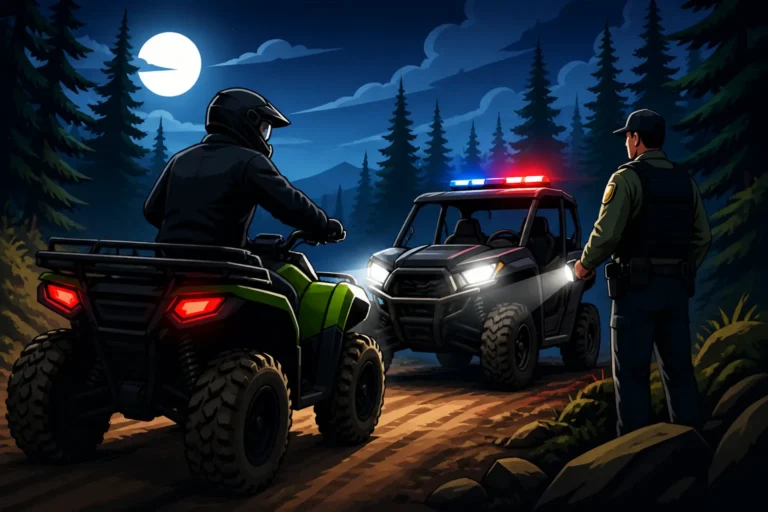
The most immediate consequence of riding an ATV or side-by-side without meeting Quebec's age requirements (or without the necessary driver's licence and training certificate) is the imposition of fines. These aren't just slaps on the wrist; they can be substantial, designed to act as a serious deterrent. A patrol officer, whether from the Sûreté du Québec or a federated club, is authorized to issue citations for violations of the Act respecting off-highway vehicles.
For a rider who is underage, or who lacks the required driver's licence or FQCQ training certificate, the fines can quickly add up. For example, if a 16-year-old is caught riding an ATV without the mandatory FQCQ certificate, they could face significant penalties. If a 17-year-old is operating a side-by-side, which requires a minimum age of 18, the fines would apply for riding an unauthorized vehicle for their age. These fines are often accompanied by administrative fees and can escalate with repeat offenses. You can learn more about specific fine amounts by checking [Quebec Fines for Riding Without a Licence].
Beyond the individual rider, vehicle owners can also face penalties if they knowingly allow an unqualified individual to operate their machine. Parents, for example, could be held responsible if their underage child is found riding illegally on public land. This adds another layer of responsibility for anyone who owns an ATV or side-by-side, emphasizing the need to ensure that anyone borrowing or operating their machine is fully compliant with all provincial laws. These penalties serve as a stark reminder of the importance of respecting the regulations designed to keep everyone safe on the trails.
Insurance Implications and Liability
Perhaps one of the most financially devastating consequences of ignoring age requirements is the impact on insurance coverage and personal liability. In Quebec, every off-highway vehicle owner must carry minimum liability insurance, often integrated with the [Quebec ATV Registration With the SAAQ]. This coverage is designed to protect you financially in case you cause an accident that results in injury or damage to another person or their property. Currently, [The $1 Million Liability Floor Every Owner Carries] is the standard.
However, insurance policies come with strict terms and conditions. If an accident occurs while the machine is being operated by someone who does not meet the legal age requirements, or lacks the necessary licence or certificate, your insurance policy could be immediately voided. This means that if an underage rider causes an accident, your insurance company might refuse to cover any damages or injuries. Suddenly, you, as the owner, or the rider (if they are of legal age to be held responsible), could be personally liable for potentially millions of dollars in medical costs, property damage, and legal fees.
This scenario is a nightmare for any off-road enthusiast. Imagine the financial burden if an underage rider, without proper authorization, causes a severe accident involving another rider or even a pedestrian. The legal costs alone, let alone compensation for injuries, could bankrupt a family. This risk underscores why adherence to age rules is not just about avoiding a ticket, but about protecting your financial future and ensuring that anyone operating your machine is fully covered under the law. Always ensure everyone riding your machine is compliant; otherwise, you're exposing yourself to immense personal risk.
Loss of Privilege and Machine Seizure
Beyond fines and insurance nightmares, persistent or egregious violations of Quebec's off-highway vehicle laws, including age requirements, can lead to more severe actions. In some cases, authorities have the power to seize the off-highway vehicle itself. This is particularly true if the machine is being operated repeatedly by an unqualified individual, or if the operation constitutes a significant danger to public safety.
Imagine your ATV or side-by-side being impounded. Not only would you be without your machine, but you would also incur towing and storage fees on top of any fines. Retrieving the vehicle could be a costly and time-consuming process, and there might be conditions attached, such as proving future compliance with regulations. This measure is typically reserved for serious offenses but highlights the authority that enforcement officials have to maintain safety on Quebec's trails and roads. [Quebec Penalties for Riding Unregistered] gives an idea of other infractions that can lead to such severe consequences.
Furthermore, individuals who repeatedly flout the rules, especially those related to age and licensing, could face a temporary or even permanent loss of their riding privileges. While there isn't a specific "off-highway vehicle licence" to suspend in the same way as a driver's licence, persistent violations could lead to an accumulation of demerit points on their driving record (if the offense involves a driver's licence), impacting their ability to operate any motor vehicle. This means that a passion for off-roading could lead to losing the privilege to drive a car on public roads. These consequences are a stark reminder that respecting Quebec's age requirements is fundamental to enjoying the sport responsibly and legally for years to come.
Navigating the Rules: Practical Advice for Riders and Parents
Understanding the rules is one thing, but practically navigating them, especially when you have younger family members eager to ride, is another. It requires proactive planning, consistent education, and a commitment to safety that goes beyond just the legal minimums. As a seasoned blogger and rider, I've seen firsthand how confusion can lead to problems, so here's some advice to keep you on the right side of the law and, more importantly, safe on the trails.
Where to Find Official Information and Courses
The first and best step for anyone looking to understand Quebec's ATV and UTV age requirements, or any other regulation, is to go straight to the official sources. The Société de l'assurance automobile du Québec (SAAQ) is the provincial body responsible for vehicle registration, licensing, and enforcing the Act respecting off-highway vehicles. Their website is the definitive resource for the legal framework. You'll find detailed explanations of age limits, licence requirements, and the consequences of non-compliance.
For information specifically pertaining to federated trails and the FQCQ training certificate for 16 and 17-year-olds, the Fédération Québécoise des Clubs Quads (FQCQ) website is invaluable. They outline their training programs, course availability, and the importance of the certificate. This is where you'll find details on how to enroll in a certified safety course, which is essential for younger riders. Look for information on [Quebec Training Certificate Cost] and course schedules. These courses aren't just a hoop to jump through; they offer crucial hands-on training that can make a real difference in a rider's safety and confidence.
Don't rely solely on word-of-mouth or outdated information from forums. Laws change, and what was true a few years ago might not be accurate today. Make it a habit to check the SAAQ and FQCQ websites periodically for updates, especially before the start of a new riding season. Many local clubs, which are members of the FQCQ, also have websites that can offer region-specific details or direct you to local training opportunities. Being informed is your best defense against accidental violations and ensures a safer experience for everyone involved.
Gear Up: Safety Beyond Age
While age and licensing are critical legal requirements, they are just one piece of the safety puzzle. Proper protective gear is non-negotiable for all riders and passengers, regardless of their age or experience level. A helmet is the absolute foundation of ATV safety in Quebec; it's legally mandated and designed to protect the most vulnerable part of your body. Ensure it's approved for off-road use, fits snugly, and is in good condition. You can delve into [Quebec Helmet and Visor Rules] for detailed specifications.
Beyond the helmet, think head-to-toe protection. Goggles are essential for eye protection, shielding against dust, debris, and insects, especially if your helmet doesn't have a built-in visor. Long pants, a long-sleeved shirt or jacket, sturdy boots that cover the ankles, and gloves are all crucial. They provide protection against abrasions, impacts, and the elements. Even on a hot summer day, a lightweight, breathable long-sleeved jersey is far safer than a t-shirt. The goal is to minimize exposed skin and maximize impact absorption. When choosing gear, prioritize quality and fit, as ill-fitting gear can be as hazardous as no gear at all.
Investing in durable skid plates, winches, or other protective accessories from trusted brands like SuperATV can also contribute to a safer riding experience. While these are machine upgrades rather than personal protective equipment, they protect the vehicle and can prevent breakdowns in remote areas, indirectly contributing to rider safety. Think of it as a holistic approach: a well-protected rider on a well-protected machine. Equipping yourself and your machine properly demonstrates a serious commitment to safety and significantly reduces the risk of injury in the event of an unforeseen incident on the trail.
Planning a Ride: Club Rules and Local Bylaws
When planning a ride, especially with younger family members, it’s not enough to just know the provincial age rules. You also need to consider the specific rules of the trail network you intend to use and any local municipal bylaws that might be in effect. Quebec's federated trails are managed by local clubs, and while they adhere to provincial law, they can sometimes implement additional safety guidelines or restrictions that go beyond the basic legal requirements.
For example, a specific club might have rules about riding hours or designated areas for different skill levels. While the province sets general rules, municipalities also have the power to create bylaws concerning off-highway vehicles within their territory. These could pertain to noise restrictions, speed limits on municipal road sections, or even specific access points. It’s always a good idea to check the website of the local FQCQ club for the region you plan to visit, as well as the municipal website for any town or village you might be passing through. A quick search for [Quebec Municipal By-Laws on Riding Hours] can give you an idea of how varied these local rules can be.
If you're riding with a 16 or 17-year-old who has their FQCQ certificate, ensure they carry it with them, along with their driver's licence and the machine's registration. Club patrollers, who work in conjunction with provincial authorities, have the right to ask for this documentation. Being prepared and respectful of their role ensures a smooth experience for everyone. Good planning and adherence to all layers of regulation – provincial, club, and municipal – will ensure your ride is not only legal but also enjoyable and safe for every member of your group.
Disclaimer
This article is for general informational purposes only and does not constitute professional advice. Laws, prices and regulations vary by location and change over time. Consult a qualified professional for guidance on your specific situation.