Quebec Side-by-Side Age Rule of 18
Navigating the rules for riding off-highway vehicles in Quebec can feel like a maze, especially when you're trying to figure out who can drive what, and where. One of the most common points of confusion and frustration, particularly for families or groups, revolves around the age requirements for side-by-sides. It's not uncommon to hear stories of a hopeful young adult, excited to get behind the wheel of a UTV, only to find out at the last minute that they don't meet the specific age criteria in Quebec. This guide is here to untangle those complexities, specifically addressing the Quebec side-by-side age rule of 18, so you can hit the trails confidently and legally, avoiding any unwelcome surprises or fines.
Why Quebec Has Specific Age Rules for Side-by-Sides
The rules and regulations governing off-highway vehicles in Quebec aren't arbitrary; they're rooted deeply in public safety, machine capabilities, and a commitment to preserving the integrity of our incredible trail networks. When it comes to side-by-sides, there's a distinct set of considerations that led to specific age requirements, differentiating them from their ATV counterparts.
The Rationale Behind the Regulations
Imagine a powerful, multi-passenger machine, capable of speeds that demand quick reflexes and sound judgment. That's essentially what a side-by-side is. The SAAQ (Société de l'assurance automobile du Québec), which oversees these regulations, views these machines through a lens of risk assessment. The rationale for setting a higher age limit, specifically 18, boils down to several key factors: increased weight, higher carrying capacity for passengers, greater power output, and the different driving dynamics compared to a traditional ATV. A side-by-side often feels more like a small car, which can give drivers a false sense of security, making them potentially more reckless, especially if they lack maturity or extensive driving experience. The law aims to ensure that operators possess a certain level of cognitive development, experience, and the ability to make split-second decisions that can affect not just their own safety, but that of their passengers and other trail users. It’s about ensuring responsibility aligns with capability.
Evolution of Quebec's Off-Highway Vehicle Act
Quebec's regulations for off-highway vehicles, including side-by-sides, haven't been static. They've evolved significantly over the years, with a major overhaul coming into effect on September 10, 2021, when the new Off-Highway Vehicle Act (LVHR) was fully implemented. Before this date, some of the age rules and specific requirements were less stringent or simply didn't exist in their current form. The 2021 changes were a direct response to a rise in accidents, a desire to standardize safety practices, and to better integrate these powerful machines into the existing regulatory framework. For instance, the requirement for a valid driver's licence became universal for operating any off-highway vehicle on a federated trail, regardless of age, which was a big shift. These changes tightened up various aspects of riding, from mandatory helmets to specific age limits for different types of machines, all with the goal of making our trails safer for everyone. Understanding [What Changed on September 10, 2021] is crucial for any rider in Quebec.
Comparing Side-by-Sides to Traditional ATVs
At first glance, an ATV and a side-by-side (often called a UTV) might seem similar – both are off-road machines designed for adventure. However, beneath the surface, there are crucial differences that justify their distinct age regulations.
- Seating and Passengers: Traditional ATVs are generally designed for a single rider, or sometimes two (tandem ATVs), with the rider straddling the seat. Side-by-sides, on the other hand, feature bucket or bench seats, similar to a car, and can comfortably accommodate two, three, or even four passengers side-by-side. This multi-passenger capacity instantly raises the stakes for safety, as the driver is responsible for more lives.
- Controls: While both have handlebars or a steering wheel, side-by-sides typically use a steering wheel and foot pedals for acceleration and braking, mimicking a car. ATVs use handlebars, a thumb throttle, and hand/foot brakes, which require different coordination and muscle memory. The car-like controls of a side-by-side can be deceptively familiar, potentially leading less experienced or mature drivers to underestimate the vehicle's off-road capabilities and handling challenges.
- Weight and Stability: Side-by-sides are generally heavier, wider, and have a longer wheelbase than most ATVs. This weight can contribute to a different dynamic when navigating challenging terrain, requiring more force to correct a slide or maintain control. While their wider stance can offer a perception of greater stability on flat ground, their higher center of gravity when loaded with passengers can also present unique rollover risks in uneven terrain.
- Intended Use: While both are used recreationally, side-by-sides are increasingly used for utility tasks, carrying cargo, and accessing remote work sites, in addition to recreational trail riding. Their versatility and capacity often mean they are built to be more robust and powerful.
This table summarizes some key differences that underscore the rationale for differing age rules:
| Feature | Traditional ATV (VTT) | Side-by-Side (VHR) |
|---|---|---|
| Seating | Straddle seat, 1-2 riders | Bench or bucket seats, 2-6 riders |
| Controls | Handlebars, thumb throttle, hand/foot brake | Steering wheel, foot pedals |
| Primary Driver Age (Quebec) | 16 with FQCQ certificate | 18 with valid driver's licence |
| Passenger Rule | Limited to factory-designed tandem seating | Accommodates multiple passengers in seats |
| Weight | Generally lighter | Heavier and more substantial |
| Stability | Rider body english crucial for balance | Wider stance, but higher centre of gravity when loaded; seatbelts essential |
| Common Perception | More "sporty" or "individual adventure" | More "utility" or "group adventure" |
These distinctions highlight why Quebec's regulations stipulate that a driver of a side-by-side must be 18 years old, reflecting the increased responsibility and different skill set required to operate these machines safely.
The Core Rule: 18 Years Old for Side-by-Sides
When it comes to operating a side-by-side (UTV) in Quebec, there’s one non-negotiable rule that stands out: the driver absolutely must be 18 years old. This isn't just a suggestion; it's a legal requirement that carries significant weight. It’s part of the broader framework of [Quebec's Off-Highway Vehicle Act and Your Papers].
Who Is Affected by This Rule?
This age rule is pretty straightforward in its application: it applies to anyone operating a side-by-side on Quebec's federated trails, designated off-highway vehicle roads, or any public land where off-highway vehicles are permitted.
- Drivers: If you're behind the wheel of a side-by-side, you must be 18 years of age or older. There are no exceptions for parental consent, FQCQ training certificates, or specific types of machines once they fall into the side-by-side category for public use.
- Passengers: While the driver must be 18, the rules for passengers are a little different. Quebec's law generally states that passengers must be able to sit with their feet flat on the floorboards and hold onto a handhold. There isn't a strict minimum age for passengers in a side-by-side, but common sense and the manufacturer's recommendations for seatbelt fit and machine capacity should always prevail. You can read more about [Quebec Rules for Passengers on a Quad] which often apply similarly to side-by-sides in terms of general safety.
- Exceptions (or lack thereof): Unlike ATVs, where a 16 or 17-year-old can ride with a specific training certificate, there is no such provision for side-by-sides. This means a 16-year-old, even with a valid driver's licence and FQCQ training for an ATV, cannot legally drive a side-by-side on public trails in Quebec. This is a critical distinction that many people miss.
Consequences of Non-Compliance
Ignoring the age rule for side-by-sides in Quebec isn't just a slap on the wrist; it can lead to serious consequences, both financially and legally.
- Fines: If you, or someone you allow to drive your side-by-side, is under 18 and caught operating the machine, prepare for a hefty fine. These penalties are designed to be deterrents, and they can easily run into the hundreds of dollars. The exact amount can vary depending on the specific infraction and the discretion of the enforcing officer, but expect it to be a significant hit to your wallet. [Quebec Fines for Riding Without a Licence] can give you an idea of the penalties associated with similar infractions.
- Insurance Implications: This is where things can get really complicated and costly. Most insurance policies have clauses that state coverage is void if the machine is operated illegally. If an underage driver (under 18) causes an accident while driving your side-by-side, your insurance company could refuse to cover damages, leaving you personally liable for potentially tens of thousands, or even hundreds of thousands, of dollars in medical bills, property damage, or legal fees. Remember that [Quebec's SAAQ Is Registrar and Insurer] and they have strict rules for coverage.
- Machine Seizure: In severe cases or for repeat offenses, authorities have the power to seize the off-highway vehicle itself. This is a rare but very real possibility, especially if other serious infractions (like impaired driving) are involved.
- Legal Ramifications: Beyond fines, there could be other legal implications, particularly if an accident results in injury or death. Allowing an underage person to operate a powerful machine illegally could open you up to civil lawsuits and even criminal charges, depending on the severity of the incident.
It’s simply not worth the risk to allow someone under 18 to drive a side-by-side on Quebec trails.
Verifying Age and Licensing on the Trail
When you're out enjoying Quebec's beautiful trail network, whether it's the Laurentians or Mauricie, there's always a chance you might encounter a trail patrol officer. These officers, often members of a local club or law enforcement, are authorized to verify that riders are complying with the Off-Highway Vehicle Act.
- What Patrols Check For: Expect to be asked for your valid driver's licence, proof of registration (your SAAQ card), and your trail pass. For side-by-side operators, the focus will be keenly on that driver's licence to confirm you are indeed 18 years or older. They'll also check for mandatory safety equipment like helmets. You should always be prepared to show [Quebec Insurance Proof on the Machine] and your driver's licence.
- Accepted Identification: A valid, government-issued driver's licence is the primary document used to verify age and driving privilege. This means your provincial or state driver's licence.
- Consequences of Being Caught Underage: If a patrol determines the driver of a side-by-side is under 18, they will issue a fine. If you are a passenger and you allowed an underage person to drive your machine, you could also face fines and the aforementioned insurance problems. It’s always best to have all your [Quebec Registration Paperwork Checklist] items in order.
The takeaway here is simple: if you plan to drive a side-by-side in Quebec, ensure you are at least 18 years old and carry your valid driver's licence at all times.
Practical Implications for Young Riders and Families
The 18-year-old rule for side-by-sides can throw a wrench into family outing plans, especially when you have enthusiastic teenagers eager to take the wheel. It's vital for families and young riders to understand these distinctions to avoid disappointment and legal trouble.
Navigating the Rules for Teenagers
This is where the distinction between ATVs (VTTs) and side-by-sides (VHRs) becomes paramount.
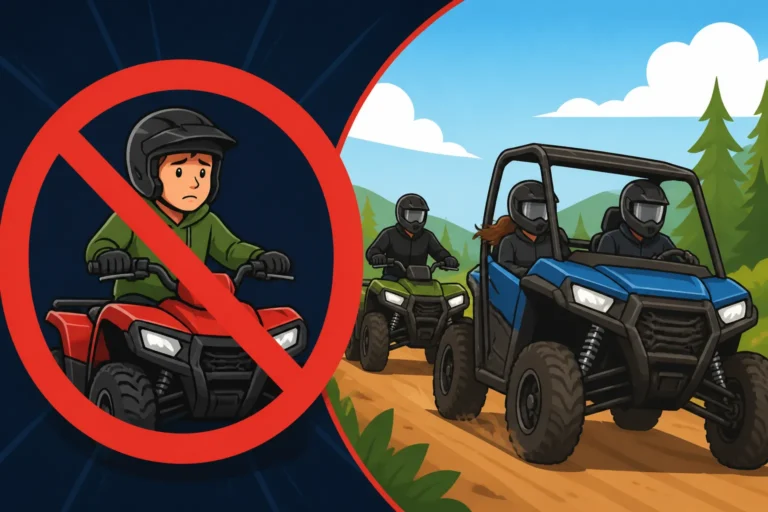
- 16 and 17-Year-Olds: If you have a 16 or 17-year-old in your family who is keen on riding, they can legally operate a traditional ATV (VTT) on federated trails in Quebec, provided they meet specific criteria. This includes holding a valid driver's licence (Class 5 for cars, or a Class 6R for mopeds/scooters, or a Class 6A for motorcycles), and, crucially, possessing an FQCQ (Fédération Québécoise des Clubs Quads) training certificate. This certificate demonstrates they've completed an approved safety course. However, even with all these qualifications, a 16 or 17-year-old may not drive a side-by-side. This is a common point of confusion. The rule is clear: [Quebec's Minimum Age of 16 for ATV Riders] specifically applies to ATVs, not side-by-sides.
- Under 16: Children under 16 are generally prohibited from operating any off-highway vehicle on federated trails, regardless of whether it's an ATV or a side-by-side. The only exception usually involves riding on private land with parental authorization and under supervision. [Quebec Rules for a 15-Year-Old on Family Land] would be the reference for this.
So, if your teenager is 16 or 17 and wants to ride, steer them towards a single-seater or approved tandem ATV and ensure they get that FQCQ training certificate. The side-by-side will have to wait until they turn 18.
Family Rides and Passenger Rules
Family rides are one of the joys of owning a side-by-side, offering a shared experience on the trails. However, even as passengers, there are rules to consider.
- Driver's Age is Key: First and foremost, the driver must be 18 years or older. This sets the foundation for any family outing involving a side-by-side.
- Passenger Capacity: Only carry as many passengers as the side-by-side was designed for by the manufacturer. Overloading is not only illegal but extremely dangerous, compromising the vehicle's handling and stability. Always refer to your machine's manual for its passenger capacity.
- Seatbelts are Mandatory: Just like in a car, everyone in a side-by-side must wear a seatbelt. Ensure all passengers, especially younger ones, are properly secured and that the seatbelt fits snugly across their chest and lap.
- Foot Rests and Handholds: Passengers must be able to keep their feet flat on the floorboards and hold onto a handhold for the duration of the ride. This is to ensure they can maintain their balance and stability during bumps, turns, and sudden stops. For very young children, ensure they are tall enough for the seatbelts to fit correctly and to reach the floorboards. Some parents might use booster seats for optimal seatbelt fit, but this should be done with extreme caution, ensuring it doesn't interfere with the vehicle's safety systems or occupant containment. Always adhere to [Quebec Rules for Passengers on a Quad] for general safety advice applicable to multi-passenger vehicles.
Private Land vs. Federated Trails
One of the most frequently asked questions about off-highway vehicle rules revolves around whether the same regulations apply everywhere. The short answer is: no, not always, but you must be very clear about the distinctions.
- Federated Trails and Public Land: On Quebec's extensive network of federated trails (those maintained by FQCQ clubs) and any other public land where off-highway vehicles are permitted, the 18-year-old rule for side-by-side drivers is strictly enforced. There are no exceptions. These are the trails your FQCQ trail pass grants you access to, and they are regularly patrolled. This also includes designated off-highway vehicle roads or municipal roads that permit quad access for specific distances, where all the standard road rules and off-highway vehicle rules apply.
- Private Land: If you own private land, or have explicit, written permission from a landowner to ride on their property, the rules can be slightly more relaxed regarding some aspects of the Off-Highway Vehicle Act. Specifically, on private land, parental authorization can allow a minor (under 16) to operate an off-highway vehicle under supervision. However, even on private land, there are still responsibilities. You cannot, for example, ride impaired, and you are still liable for any damages or injuries that occur. For side-by-sides, while the provincial age rule for public trails might not apply in the same strict enforcement sense on your own private property, it is still highly advisable to only allow drivers 18 years or older due to the machine's power and the inherent risks. You are responsible for ensuring the safety of anyone on your property. [Quebec Parental Authorization on Private Land] explains this concept further for ATVs. Always prioritize safety, even when not under direct SAAQ or FQCQ jurisdiction.
Gear and Machine Modifications: Do They Influence Age Rules?
It's natural to want to personalize your side-by-side, adding accessories for comfort, utility, or performance. But can these modifications, or even the type of safety gear you choose, change the fundamental age rules in Quebec? Generally, the answer is no, but let's break down the nuances.
Stock vs. Modified Machines
The core age rule for operating a side-by-side in Quebec is tied to the class of vehicle (VHR for Véhicule Hors Route) and its inherent characteristics, not necessarily to specific modifications you might make.
- No Age Exception for Modifications: Adding performance parts, a lift kit, or even robust protection like A-arm guards from a brand like SuperATV will not alter the fact that the driver must still be 18 years old. The legislative intent behind the age rule focuses on the general capabilities and responsibilities associated with driving a side-by-side, regardless of how it's equipped. A highly modified, powerful side-by-side might even demand more maturity and experience, reinforcing the 18-year minimum.
- Safety Enhancements are Always Good: While modifications don't change the age rule, certain enhancements can significantly improve safety. Upgraded harnesses, robust bumpers, or reinforced cages can provide better protection in the event of an accident. These are highly recommended for any rider, regardless of age, but they don't serve as a loophole for younger drivers. Adding practical accessories from SuperATV, like windshields or roofs, can also enhance the riding experience, but again, don't impact the age requirement.
- Legal Compliance of Modifications: It's also worth noting that any modification must comply with safety standards and the Off-Highway Vehicle Act itself. Excessive noise, illegal lighting, or changes that compromise the vehicle's structural integrity could lead to fines.
Safety Equipment and Training for Young Riders
While the 18-year-old rule for side-by-sides is fixed, ensuring proper safety equipment and, where applicable, training is paramount for all riders, especially younger ones who might be passengers or operating other types of off-highway vehicles.
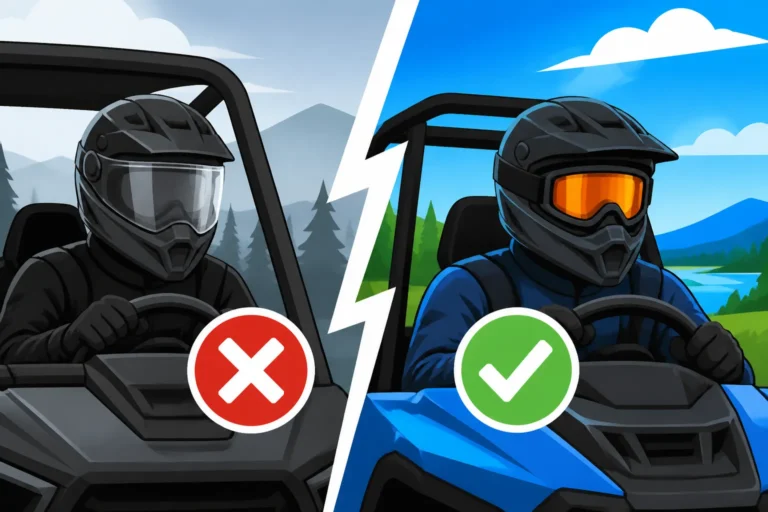
- Mandatory Helmet Use: In Quebec, every person (driver and passenger) on an off-highway vehicle, including a side-by-side, must wear an approved helmet that meets current safety standards (DOT, Snell, ECE). This isn't optional, and it's strictly enforced. The helmet must also be accompanied by an attached visor or a pair of goggles. [Quebec Helmet and Visor Rules] are very clear on this. There are almost no exceptions, even for trappers or farm workers, unless they are traveling at very low speeds for specific tasks.
- Eye Protection: As mentioned, a visor or goggles are also mandatory. This protects your eyes from dust, debris, insects, and branches, which are common hazards on Quebec's trails.
- Driver's Licence (for 18+ side-by-side drivers): For anyone 18 or older driving a side-by-side, carrying a valid driver's licence is a non-negotiable requirement. This proves both age and legal driving privilege. [Quebec Requires a Driver's Licence Since 2021] applies to all off-highway vehicle drivers.
- FQCQ Training Certificate (for 16-17 year old ATV riders): While not applicable for side-by-side drivers under 18, it's crucial for 16 and 17-year-olds who wish to ride a traditional ATV on federated trails. This certificate is proof of completing a specialized safety course. It’s part of the comprehensive effort to ensure younger, less experienced ATV riders have foundational safety knowledge.
It's important to remember that safety equipment and training are about mitigating risks, not about bypassing age regulations.
Specific Machine Classes and Age Exceptions
Quebec's Off-Highway Vehicle Act categorizes machines, and sometimes these categories have slightly different rules, but the side-by-side (VHR) age rule remains quite rigid.
- Youth Machines: There are specific categories for "youth ATVs" with smaller engines and lower speeds. These are designed for younger riders (often under 16) but are generally restricted to private land with supervision and explicit parental consent. Crucially, these youth machines are almost exclusively smaller, single-seat ATVs, not side-by-sides. You won't find a "youth side-by-side" that would bypass the 18-year rule for public trails. [Quebec Registration for a Youth Machine] focuses on these specific smaller ATVs.
- Farm Machines / Trapper's Machines: While there might be some minor exemptions for certain equipment or registration aspects for machines used exclusively for agricultural or trapping purposes, the fundamental age requirement for the operator typically remains. If a farm-use side-by-side is being operated on a public trail or road (even a short segment), the driver must still meet the provincial age and licensing requirements. The utility nature of a side-by-side from brands like SuperATV doesn't change the driver's age rule when used on public paths.
- Modified Side-by-Sides for Specific Needs: Some individuals might modify side-by-sides for accessibility reasons. While the SAAQ and clubs generally strive for inclusivity, any modification must still comply with the intent of the law and not undermine safety or create an unfair advantage. The 18-year-old rule for the driver is highly unlikely to be waived for such modifications, as it pertains to the driver's maturity and legal responsibility.
In summary, when it comes to the Quebec side-by-side age rule of 18, the message is clear: the driver needs to be 18, regardless of machine modifications, specialized gear, or the machine's intended use for work. Safety first, and always within the bounds of the law.
What Visitors Need to Know
Quebec is a fantastic destination for off-highway vehicle enthusiasts, drawing riders from across Canada and the United States. However, our rules can differ significantly from those in other provinces or states, and understanding these differences is critical for a smooth and enjoyable visit.
Out-of-Province Riders and the Quebec Rule
Many visitors assume that if they are legal to drive a side-by-side in their home province or state, those same rules will apply in Quebec. This is a common and potentially costly misconception.
- Quebec Law Prevails: When you are riding in Quebec, you are subject to Quebec's laws and regulations. It doesn't matter if your 17-year-old can legally drive a side-by-side in Vermont or Ontario; in Quebec, they cannot. This applies to all aspects of the Off-Highway Vehicle Act, from age limits to helmet requirements and trail passes. You must always adhere to [Quebec Rules for a Visiting Ontario Rider], [Quebec Rules for a Visiting New Brunswick Rider], or [Quebec Rules for a Visiting Vermont Rider], which all emphasize adherence to Quebec's specific laws.
- Driver's Licence Requirement: Just like Quebec residents, out-of-province visitors driving a side-by-side must possess a valid driver's licence from their home jurisdiction and be at least 18 years old. This licence must be presented upon request by a patrol officer.
- Trail Pass is Mandatory: Don't forget that if you plan to ride on Quebec's federated trails, you will need a valid FQCQ trail pass. Quebec ended reciprocity agreements with other provinces, so even if you have a trail pass from Ontario or New Brunswick, you'll still need a Quebec pass.
The bottom line for visitors is to do your homework. Check the FQCQ website and the SAAQ regulations before you cross the border, especially if you have younger family members who plan to drive.
Renting a Side-by-Side in Quebec
Many visitors choose to rent a side-by-side for a guided tour or a self-guided adventure in Quebec. Rental companies are typically very strict about adhering to the rules, as their business depends on it.
- Strict Age Enforcement: Quebec side-by-side rental operators are legally obligated to ensure their renters comply with the Off-Highway Vehicle Act. This means they will absolutely require the driver to be 18 years old or older and possess a valid driver's licence. Do not expect any exceptions. This is clearly stated in [Quebec Rental Minimum Age of 18].
- Paperwork and Waivers: Be prepared to show your driver's licence, sign waivers, and possibly provide a significant security deposit. These waivers will usually outline your responsibilities and the consequences of violating rules, including age restrictions.
- Insurance and Inclusions: Many rental packages include a trail pass and liability insurance, but always confirm what's covered. While the rental company's insurance might cover basic liability, it will almost certainly be void if an underage person operates the vehicle.
- Guided Tours: Even on a guided tour, if you are the one operating the side-by-side, you must meet the 18-year age requirement. Guides will usually do a thorough briefing and check credentials before setting out.
If you're planning to rent, contact the rental operator well in advance to clarify all their requirements and ensure your group meets all the provincial regulations. Popular outfitters like Nord Expé or Aventures Plein Air are very clear about their requirements.
Planning a Trip Across Borders
If your quad adventure involves riding across provincial or international borders, you'll need to be especially diligent about understanding varying laws.
- Jurisdictional Changes: As soon as you cross into another province or state, the laws of that new jurisdiction apply. This means age rules, helmet laws, and trail pass requirements can change instantly. For example, if you start your trip in Quebec and ride into Ontario, your 17-year-old passenger might be fine, but they still can't drive the side-by-side in Quebec, and you'd need to be aware of Ontario's specific rules.
- Federal vs. Provincial Rules: While most off-highway vehicle laws are provincial or state-level, there can be federal regulations, especially concerning imports or border crossings. Always ensure your machine is legally imported if coming from outside Canada. [Federal Import Requirements for a Quebec ATV] will touch on this.
- Consult All Relevant Authorities: For cross-border trips, it's not enough to check just Quebec's rules. You need to consult the off-highway vehicle federations or government agencies of all the jurisdictions you plan to ride in. This includes reviewing driver's licence requirements, passenger rules, mandatory safety equipment, and any reciprocal agreements (or lack thereof) for trail passes and insurance.
Planning ahead and being thoroughly informed about all applicable rules will ensure your multi-jurisdictional side-by-side adventure is safe, legal, and truly enjoyable for everyone involved. Don't let a lack of knowledge about age rules or other regulations derail your trip.
Disclaimer
This article is for general informational purposes only and does not constitute professional advice. Laws, prices and regulations vary by location and change over time. Consult a qualified professional for guidance on your specific situation.