Quebec Helmet and Visor Rules
Riding an ATV or a side-by-side in Quebec brings incredible freedom, but let's be honest, figuring out all the rules and regulations can feel like trying to navigate a dense forest without a map. One area that often causes a lot of head-scratching is what exactly you need to wear on your head – specifically, the helmet and visor rules. It's not just about what feels comfortable, it's about what the law demands to keep you safe and legal on Quebec's beautiful trails. This guide will cut through the confusion and explain everything you need to know about helmet and visor requirements in La Belle Province.
The Foundation: Quebec's Off-Highway Vehicle Act and Helmets
Alright, let's get down to brass tacks. The fundamental reason we're even talking about helmets isn't just common sense safety – it's the law. In Quebec, the legal framework governing off-highway vehicles, which includes your trusty ATV or side-by-side, is primarily the Act respecting off-highway vehicles, often referred to simply as the LVHR. This piece of legislation lays out a clear expectation: if you're riding one of these machines, you're wearing a helmet. Period.
This isn't just some suggestion; it's a mandatory requirement designed to protect riders from serious injury. We all know how unpredictable trail riding can be. One minute you're cruising, the next you hit an unexpected rut, a loose rock, or perhaps another rider makes an error. A helmet is your first line of defense against head trauma, and Quebec's lawmakers have made it non-negotiable for good reason. It’s part of a broader push to enhance rider safety across the province, as outlined in [Quebec's Off-Highway Vehicle Act and Your Papers].
The Universal Helmet Mandate
Think of it this way: almost every single time you put a wheel on a trail, or even when you're just moving your machine around on a specified route, you need a helmet. This applies whether you’re the driver or a passenger. There's no "just going a short distance" or "I'm only on a private road" exemption that most people encounter in their day-to-day riding. The law is quite encompassing because accidents don't discriminate based on distance or perceived safety.
For many years, off-road enthusiasts have understood the inherent risks. However, the formal legal requirement simplifies it: if you're operating an off-highway vehicle, your head needs to be protected. This consistency is actually a good thing, as it removes ambiguity and ensures that safety remains paramount for everyone enjoying the Quebec outdoors. Whether you're navigating rocky climbs or simply cruising a smooth section of the [Quebec ATV Trails: The FQCQ Network], that helmet needs to be strapped on properly.
Why Helmets Are Mandatory
It's easy to sometimes feel like regulations are just red tape, but in the case of helmets, the "why" is profoundly simple: injury prevention. The forces involved in an off-road accident can be immense, even at relatively low speeds. A fall from an ATV or side-by-side, or a collision with an obstacle, can result in severe head injuries if unprotected. Helmets are specifically designed to absorb impact energy, distributing forces over a larger area and protecting the skull and brain from direct trauma.
Beyond personal injury, there are also broader societal implications. Serious injuries lead to significant healthcare costs, lost productivity, and immense personal suffering for riders and their families. By making helmets mandatory, Quebec aims to reduce the severity and frequency of these outcomes. It's a proactive measure that prioritizes public health and safety, ensuring that the thrill of off-road riding doesn't come at an unnecessarily high cost. This kind of legislation is often a response to accident data and a commitment to safer recreational activities.
Specifics of Helmet Requirements for ATVs and Side-by-Sides
When it comes to helmets, it's not just any old hat you pull out of the closet. The Quebec law, like most safety regulations, specifies what kind of helmet you need to wear. We're talking about certified, purpose-built head protection here. This means a helmet designed for motorsports, not a cycling helmet or a construction hard hat. There are particular standards these helmets must meet to be considered legal and effective.
The type of off-highway vehicle you’re riding doesn't fundamentally change the helmet requirement. Whether it’s a single-rider ATV, a two-up quad, or a multi-passenger side-by-side, every occupant needs to be properly helmeted. This consistency ensures universal protection across the diverse range of machines on Quebec trails. So, before you even think about firing up that engine, make sure everyone in your group has the right headgear.
Approved Helmet Standards
So, what makes a helmet "approved" in Quebec? The law requires that your helmet meet certain recognized safety standards. These standards are typically international or national benchmarks that ensure the helmet has been rigorously tested for impact absorption, penetration resistance, and retention system strength. Common certifications you'll see include:
- DOT (Department of Transportation): This is a U.S. standard, but widely accepted and respected.
- Snell: A more stringent independent testing standard, often preferred by racers.
- ECE (Economic Commission for Europe): A European standard, also very common.
When you purchase a helmet, look for a sticker on the back or inside indicating one of these certifications. Without it, even if a helmet looks robust, it might not be legally compliant in Quebec. Always err on the side of caution and invest in a helmet that clearly displays one of these approved safety marks. It's not just about passing a potential [Quebec Equipment Checks by Patrols]; it's about real, tangible protection.
Full-Face, Open-Face, or Modular?
This is where personal preference can come into play, within the bounds of safety. Generally, the Quebec law doesn't explicitly mandate which style of approved helmet you must wear, as long as it meets the safety standards. However, each style offers different levels of protection:
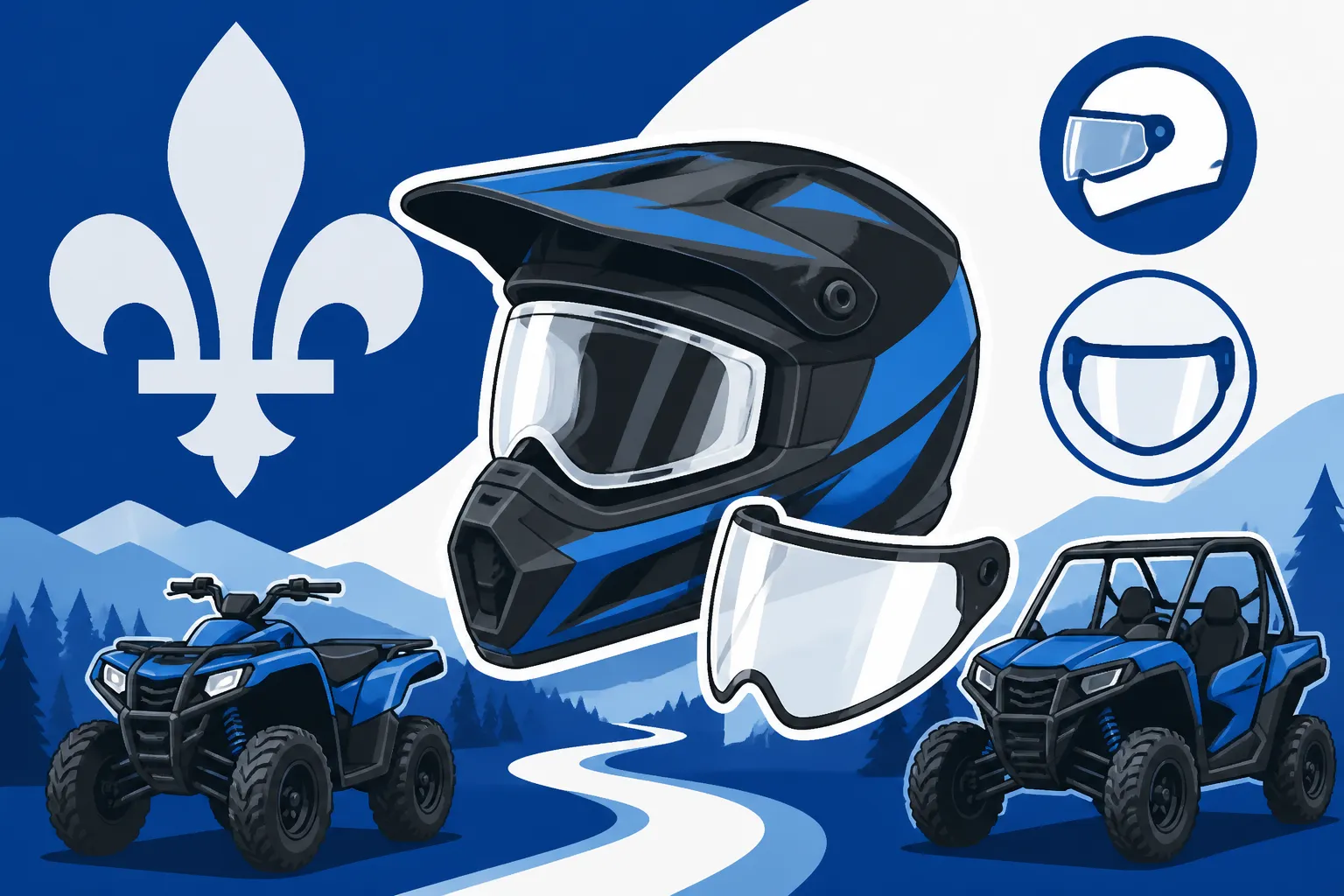
- Full-Face Helmets: These offer the most comprehensive protection, covering the entire head, including the chin and jaw area. They're excellent for trail riding, providing protection from branches, roost from other vehicles, and maximum impact absorption. Many come with integrated visors.
- Open-Face (3/4) Helmets: These cover the top, back, and sides of the head, but leave the face exposed. If you choose this style, you absolutely need separate eye protection like goggles or a face shield, which we'll delve into next. They offer more airflow but less facial protection.
- Modular (Flip-Up) Helmets: A hybrid that can function as a full-face or, with the chin bar flipped up, an open-face. When riding, the chin bar should generally be in the down, locked position for maximum protection, especially at speed.
Ultimately, the best helmet is one that fits well, is comfortable, and meets the required safety standards. While open-face helmets are permitted, many seasoned riders prefer full-face options for the added security and protection against the elements and trail debris.
Understanding Visor and Eye Protection Mandates
So, you've got your certified helmet. Great! But what about your eyes? Just like your skull, your eyes are vulnerable on the trail, and Quebec's regulations address this directly. The Act respecting off-highway vehicles specifies that if your helmet doesn't come with an integrated visor, or if you're using an open-face helmet, you must have appropriate eye protection. This isn't just about comfort; it's about maintaining clear vision and protecting your eyes from hazards.
Imagine kicking up dust, encountering low-hanging branches, or having an insect fly directly at your face at 50 km/h. Without proper eye protection, these seemingly minor events can become serious safety hazards, impairing your vision and potentially leading to an accident. The goal is to ensure your eyes are shielded from debris, wind, sun, and anything else the trail might throw at you.
When Visors Are Required
If your helmet is a full-face model, chances are it comes with a built-in visor. When you're riding, this visor needs to be down and providing adequate protection. The key is "adequate protection." If your visor is scratched, cracked, or excessively dirty, it can impair your vision, negating its protective purpose. Keep it clean and in good condition! [Does Your Helmet Need a Visor or Goggles?] delves deeper into this choice.
Some helmets also come with tinted visors. These are fantastic for sunny days, but be mindful of riding conditions. If you're out late in the day or heading into low-light conditions, a clear visor is essential for optimal visibility. You might even consider carrying a clear spare if your primary visor is tinted. The rule of thumb is always to ensure your vision is unimpeded.
Goggles as an Alternative
For those who prefer open-face helmets or find that their full-face helmet's visor fogs up too easily, goggles are a perfectly acceptable and often superior alternative for off-road riding. In fact, many dedicated ATV riders choose goggles even with full-face helmets for their superior seal against dust, better airflow, and easy lens swapping for different light conditions.
When choosing goggles, look for features like:
- Anti-fog coating: A must-have for Quebec's humid conditions or when you're exerting yourself.
- Good fit with your helmet: No gaps where dust or debris can get in.
- UV protection: To shield your eyes from the sun's harmful rays.
- Shatter-resistant lenses: Another layer of protection.
Brands like SuperATV offer a range of accessories, including durable goggles designed to withstand the rigors of off-road riding, ensuring you have clear vision and robust eye protection. Remember, if you're wearing an open-face helmet, goggles aren't optional; they're a requirement to meet the spirit of the law for eye protection.
Exceptions and Special Circumstances
While the helmet mandate is pretty universal, Quebec's Act respecting off-highway vehicles does acknowledge a few very specific, limited exceptions, primarily related to very low speeds or certain types of work. However, these are exceptions to the rule and should not be misinterpreted as a general waiver for helmet use. For the vast majority of recreational riders, the helmet rule remains firmly in place.
It's crucial to understand these nuances. Falling into an exception often means meeting very specific criteria, and if you don't meet those criteria, you're back to the standard helmet-on rule. Always assume you need a helmet unless you are absolutely certain your situation qualifies for an exemption. It’s always better to be over-prepared for safety than to be caught off guard.
Low-Speed Trapping or Working Conditions
One of the most commonly cited exceptions involves operating an off-highway vehicle under 30 km/h in the context of trapping or certain types of work (like farm work), particularly if you're making frequent stops or dismounting. [Trapping Under 30 km/h Without a Helmet] highlights this specific scenario. The logic here is that at such low speeds, and with constant stops and starts, the practical application of wearing and removing a helmet repeatedly can become cumbersome and even impede the work itself.
However, this is not a carte blanche. If you're on your way to or from your trapline at speeds exceeding 30 km/h, or if you're engaged in recreational riding even on private land, the helmet rule applies. It's a very narrow exemption tied to specific, low-speed, work-related activities where the risk profile is considered different. Don't assume this applies to you unless you are genuinely engaged in these specific activities and maintaining the low speed.
Farm and Forest Operations
Similar to trapping, individuals operating off-highway vehicles as part of genuine farm or forestry operations might find specific clauses that allow for some flexibility, again, often tied to speed and the nature of the work. For example, if you're using your ATV or side-by-side to check fences on your private farm property, frequently dismounting to open gates or inspect livestock, and doing so at very low speeds, there might be provisions.
The key here is "genuine operation" and "very low speeds." If you're using your ATV for transportation across fields to get to another part of your farm at a higher speed, or if you're simply riding recreationally on farm property, the helmet rule still applies. These exemptions are carefully crafted to facilitate essential work without imposing undue burdens, but they are not intended to create loopholes for casual riding. Always check the specific wording of the act or consult with the SAAQ if you believe your work circumstances might qualify.
Consequences of Non-Compliance
Let’s be blunt: riding without a proper helmet or eye protection in Quebec is a bad idea, both for your personal safety and your wallet. The province takes these safety regulations seriously, and patrols are out there ensuring compliance. If you're caught breaking the rules, you're not just risking a bump on the head; you're facing financial penalties and potentially more severe consequences. Nobody wants their fun day on the trails to end with a hefty fine or, worse, a trip to the emergency room.
It’s easy to think "it won't happen to me," but accidents are, by definition, unexpected. The fines are designed to be a deterrent, a clear message that these rules are in place for a reason. Ignoring them isn't just a personal risk; it's a disregard for public safety standards that protect everyone sharing the trails.
Fines and Penalties
If a provincial police officer (Sûreté du Québec) or a trail patrol officer from a federated club (who often have enforcement powers, as covered in [What a Patrol Can Ask to See]) stops you and you’re not wearing an approved helmet, or if you lack proper eye protection when required, you can expect a fine. These aren't minor tickets; they can put a significant dent in your budget.
Here’s a general idea of what you might face (remembering that exact amounts can change):
| Violation | Potential Fine Range (Example) | Notes |
|---|---|---|
| No approved helmet | $250 – $500 | Plus administrative fees and potential demerit points. |
| No appropriate eye protection | $150 – $300 | If helmet lacks integrated visor. |
| Incorrect helmet type | $150 – $300 | E.g., not meeting certified standards. |
| Minor helmet infraction (e.g., loose strap) | $50 – $100 | Less common, but possible depending on officer discretion. |
Note: These are illustrative figures. Always check the SAAQ's current regulations for precise amounts, as fines can be adjusted regularly.
These fines add up quickly, especially if you're also riding without a valid driver's license ([Quebec Fines for Riding Without a Licence]) or an FQCQ trail pass. The financial hit is meant to underscore the importance of these safety requirements.
Safety Risks and Insurance Implications
Beyond the fines, the most significant consequence of not wearing a helmet is the increased risk of severe injury or death. Helmets are proven life-savers, dramatically reducing the risk of head trauma in an accident. Without one, even a minor fall can have catastrophic results. No amount of fun on the trail is worth a traumatic brain injury.
Furthermore, consider the insurance implications. While Quebec's basic liability insurance is provided through your SAAQ registration ([Quebec's SAAQ Is Registrar and Insurer]), if you're found to be in violation of a safety regulation like the helmet rule at the time of an accident, your ability to claim damages or receive benefits could be impacted. Your own private insurance policy (if you have one for collision or comprehensive coverage) might also have clauses that could deny or reduce payouts if you weren't compliant with local laws. This means you could be left with enormous medical bills and repair costs out of pocket, on top of your injuries. It’s a gamble that simply isn't worth taking.
Choosing the Right Gear: Beyond the Minimum
Okay, so we know what's mandatory. But meeting the bare minimum isn't always the best approach when it comes to safety and comfort. Investing in good quality gear, especially your helmet and eye protection, can significantly enhance your riding experience and provide superior protection. Think of it as investing in your enjoyment and well-being on the trails.
The market is flooded with options, which can be overwhelming. But by focusing on a few key factors – fit, certification, and features – you can make an informed choice that goes beyond just ticking a box for the law. Remember, this gear is your personal protection, so it's worth getting right.
Fit, Comfort, and Features
A helmet that doesn't fit properly offers significantly less protection. If it's too loose, it can shift during an impact; if it's too tight, it will be uncomfortable and distracting. When trying on a helmet:
- Snug but not painful: It should feel tight all around your head, with no pressure points.
- No rocking: It shouldn't move side-to-side or front-to-back easily.
- Cheek pads: Should press firmly against your cheeks.
- Retention system: The chin strap should be securely fastened, with minimal slack.
Look for features that enhance comfort and practicality, such as good ventilation systems to prevent overheating, removable and washable liners (a godsend after a dusty or sweaty ride), and compatibility with communication systems if you ride in a group. For visors and goggles, prioritize anti-fog properties and scratch resistance. Brands focusing on off-road specific gear, like SuperATV, often consider these practical aspects in their designs.
Importance of Certification
We talked about DOT, Snell, and ECE earlier. These certifications are your assurance that a helmet has passed rigorous safety tests. Never compromise on this. A helmet without one of these stamps is essentially unproven protection, and legally non-compliant in Quebec. When shopping, always double-check for the certification label.
While all certified helmets meet a certain safety threshold, some riders, especially those pushing their limits, might opt for higher-rated Snell helmets for an extra layer of confidence. The key is to understand that these certifications aren't just arbitrary letters; they represent hundreds of hours of testing and development aimed at protecting you in the worst-case scenario.
When to Replace Your Helmet
Helmets don't last forever, and they're designed for a single major impact. If your helmet has been in an accident, even if it looks fine on the outside, its structural integrity may be compromised, and it should be replaced immediately. Many manufacturers also recommend replacing helmets every 3-5 years, even without an impact, due to material degradation from UV exposure, sweat, and general wear and tear.
Always inspect your helmet regularly for cracks, frayed straps, or signs of wear. Replacing a helmet might seem like an added expense, but it's a small price to pay for continued, reliable head protection. Your brain is worth it.
Key Changes and What Riders Need to Know Post-2021
Quebec's off-highway vehicle laws saw some significant updates on September 10, 2021. This date is crucial because it brought in changes that every rider, new or seasoned, needs to be aware of, including clarifications and reinforcements regarding safety equipment. Understanding [What the LVHR Replaced] and [Why September 10, 2021 Matters] is key to staying compliant.
These changes were part of an ongoing effort by the SAAQ and the government to modernize regulations, improve safety, and ensure responsible riding practices across the province. For helmets and visors, the changes mostly solidified existing best practices into clearer legal mandates and removed any lingering ambiguities.
The Impact of the 2021 Revisions
The 2021 revisions to the Act respecting off-highway vehicles reinforced the existing helmet requirements, making it abundantly clear that properly certified head protection and adequate eye protection are non-negotiable for all riders and passengers. While the fundamental requirement for a helmet was already there, the updated act closed any minor loopholes and emphasized the importance of compliance.
For instance, the revisions strengthened the hand of enforcement officers and ensured consistency across various riding scenarios, from federally managed trails to regional paths. The message was clear: if you're on an off-highway vehicle, your head needs to be protected, and your vision needs to be clear. This included further clarification on [Does Your Helmet Need a Visor or Goggles?] as part of a complete safety system.
Clarification on Visor and Goggle Use
One of the areas that received further clarification post-2021 was the specific requirement for eye protection. The updated act made it unequivocally clear that if your helmet doesn't have a functional, clear visor, then separate goggles or a face shield are mandatory. This removed any ambiguity about relying solely on an open-face helmet without additional eye protection.
This clarification is particularly important for those who might have previously thought a helmet was sufficient on its own, regardless of style. Now, the comprehensive nature of head and eye protection is fully enshrined in the law, meaning riders need to make a conscious choice: either a helmet with an integrated visor or a helmet paired with appropriate goggles. It's about ensuring your field of vision is always protected from hazards that can impair your riding judgment.
Practical Tips for Riding Safely and Legally
Knowing the rules is one thing, but consistently applying them every time you hit the trails is another. It requires a bit of discipline and routine, but it's all part of being a responsible and prepared off-road enthusiast. These practical tips will help ensure you're always legal, safe, and ready to enjoy Quebec's incredible quad and side-by-side opportunities without a hitch.
Remember, safety isn't just about avoiding fines; it's about making sure you can keep enjoying this amazing pastime for years to come. A little preparation goes a long way in preventing headaches, both literal and figurative.
Pre-Ride Gear Check
Before every single ride, make it a habit to do a quick gear check:
- Helmet Inspection: Is it free of cracks or damage? Is the chin strap secure and adjusted correctly? Is the liner clean and comfortable?
- Visor/Goggle Check: Is your visor clean and scratch-free? If using goggles, are the lenses clear and is the strap secure? Do you have the right tint for the conditions? [Choosing a Helmet That Comes With a Visor] or [Goggles Instead of a Visor] are both valid options, but both need to be checked.
- Other Safety Gear: Don't forget other essentials like riding gloves, sturdy boots, and appropriate riding apparel. While not explicitly mandated like helmets, they contribute significantly to your overall safety and comfort.
This quick routine takes only a minute or two but can prevent serious issues down the line. It's like checking your oil before a long road trip – a small step that yields big peace of mind.
Dealing with Trail Patrols
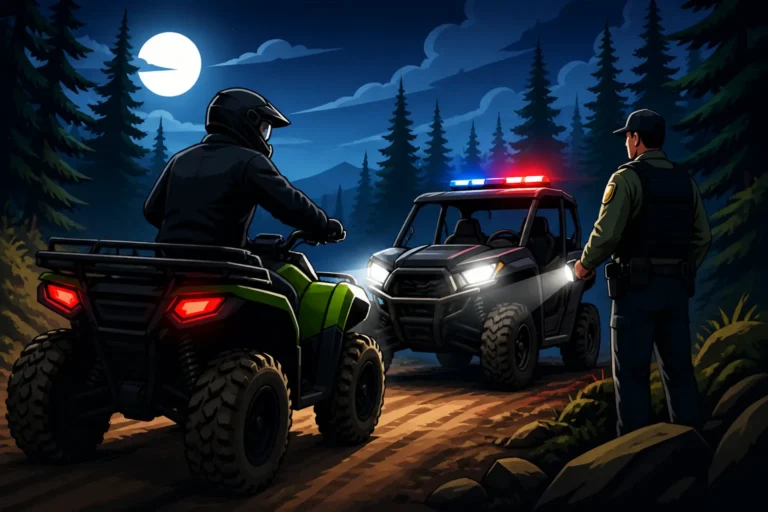
Encountering a trail patrol officer is part of riding in Quebec. They're there to ensure everyone's safety and enforce the rules, not to spoil your fun. When approached by a patrol officer (whether Sûreté du Québec or a federated club patrol), remain courteous and cooperative. They'll likely ask to see your registration, driver's license ([Quebec Requires a Driver's Licence Since 2021]), and proof of your FQCQ trail pass. They'll also be visually checking your helmet and eye protection.
Ensure your helmet is on and correctly fastened, and your eye protection is in place. If they ask about your gear, you can confidently show them the certification sticker inside your helmet. Being prepared and respectful makes the interaction quick and hassle-free, allowing you to get back to enjoying your ride.
Educate Your Passengers and Riding Buddies
If you're riding with passengers, especially on a side-by-side, ensure they understand and comply with all safety rules, including helmet and eye protection. It's your responsibility as the driver to ensure everyone in your machine is safely equipped. Similarly, encourage your riding buddies to adhere to these rules. A group that rides safely together, stays together.
Education also extends to younger riders. While [Quebec's Minimum Age of 16 for ATV Riders] applies to drivers on federated trails, younger individuals riding on private land under specific conditions still need to be properly helmeted and supervised. Fostering a culture of safety among all riders, regardless of age or experience, is crucial for the longevity and enjoyment of off-highway vehicle recreation in Quebec.
Disclaimer
This article is for general informational purposes only and does not constitute professional advice. Laws, prices and regulations vary by location and change over time. Consult a qualified professional for guidance on your specific situation.