Quebec Pass Checks by Patrols
A patrol stop on a Quebec ATV or side-by-side trail can be quick, but it is easier when your pass and riding documents are in order. The key is knowing what patrols may check, where your proof should be, and what to do if a sticker or document is missing. These practical steps help you prepare without confusing a trail pass with registration or insurance.
What patrols are checking
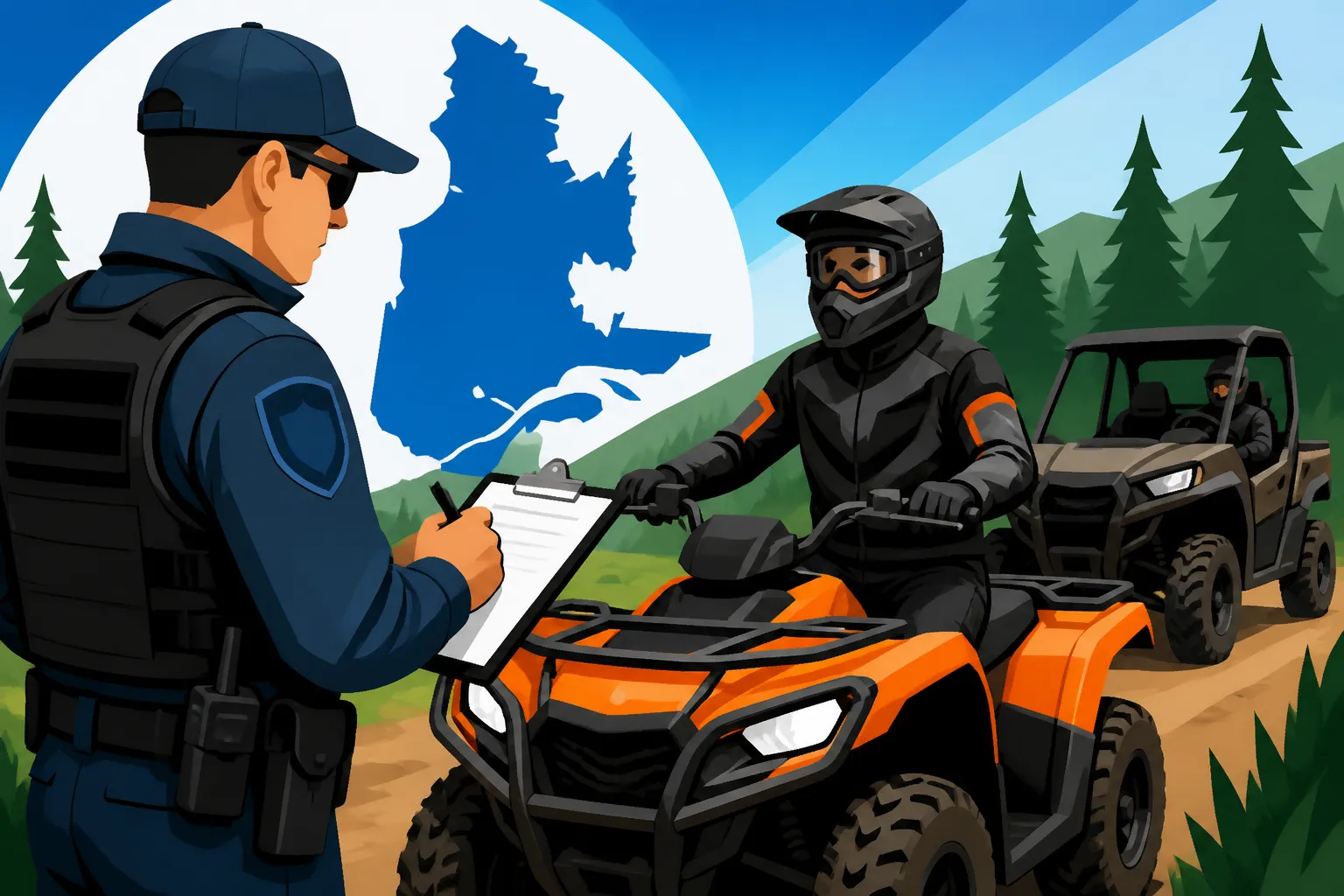
On a federated trail, patrols may check whether each machine has a valid trail pass for the route and season. They may also check that the pass is attached where it can be seen and that the rider has documents required for the ride. A trail pass gives access to the trail network under the applicable conditions; it is not a replacement for vehicle registration, liability insurance, a driver’s licence or any required training certificate.
A patrol may be a club trail patroller rather than a police officer. Their role, authority and responsibilities can differ, so it is worth understanding who is conducting the check. Still, a stop is not a good time to assume the person is only making a casual request. Be courteous, ask what they need to see, and follow lawful instructions. If you are unsure about the patrol’s role or a request, calmly ask for clarification rather than arguing on the trail.
Patrol checks can help clubs identify machines that do not have valid access to a federated corridor. They may also be concerned with safety or trail conditions. A pass does not authorize riding on a closed trail, ignoring posted restrictions, or using land outside the trail network. Check Quebec Passes Cover Every Federated Club for how the pass relates to club trails, and remember that local closures and conditions still apply.
A pass check is also not a complete roadworthiness inspection. A patrol may notice an equipment or safety issue, but do not assume that passing a check means every aspect of your machine and ride has been approved. You remain responsible for following current rules and for carrying the documents that apply to you.
| Item a patrol may ask about | What to prepare | Common point of confusion |
|---|---|---|
| Trail pass | Valid pass for the machine and applicable season, displayed as required | A pass is not vehicle registration |
| Machine registration | Current registration documents, where required | Registration does not provide trail access by itself |
| Liability insurance | Proof of the required coverage | A trail-pass insurance option is not automatically a substitute for your own required coverage |
| Rider’s licence | The licence required for the rider and machine | A trail pass does not make an unlicensed ride lawful |
| Training certificate | Certificate where the rider’s age or situation requires one | A pass does not replace required training |
| Trail status | Confirmation that the route is open and permitted | A valid pass does not override a closure |
The exact documents that apply can depend on the rider, machine and circumstances. For background on proof carried during a ride, see Quebec Pass Proof on the Trail and Showing Your Licence and Pass. For a fuller overview of the documents owners may need, Quebec Registration Paperwork Checklist is a useful companion.
Make your pass and documents easy to show
Before leaving, check that the pass is valid for the machine you are riding and for the season or pass type you bought. If you are riding a rental, do not assume that the machine automatically has a pass just because it came from an outfitter. Ask the operator whether trail access is included and how the pass is displayed. If you are riding your own machine, confirm that you have the right pass before reaching the trailhead.
The pass should be placed as instructed by the pass provider, where it is readily visible. Do not cover it with a bag, mud flap, cargo box or other accessory. A sticker that is missing, damaged, obscured or attached to a different machine can turn a straightforward check into a longer conversation. Check the provider’s current placement instructions rather than relying on what worked for another model or season.
Keep paper documents in a protected but accessible place. A small waterproof pouch can help prevent registration papers or an insurance certificate from becoming wet or unreadable. If you use a phone to store copies, keep the device charged and make sure you can open the documents without relying on a weak signal. A photo or screenshot may be useful as a backup, but do not assume it satisfies every requirement for physical proof or pass display. Confirm what is accepted before riding.
A simple pre-ride routine can prevent most avoidable delays:
- Confirm the trail is open and that your intended route is part of the authorized network.
- Check that the pass is valid for the machine and period of use.
- Make sure the pass is attached in the required visible location.
- Put registration and insurance documents somewhere you can reach without unloading the machine.
- Carry your driver’s licence and any required training certificate.
- Tell passengers where the documents are and ask them not to handle or remove the pass.
- Recheck the pass after washing, repair work or moving equipment that could cover it.
For details on what can count as proof during a ride, see Does a Phone Photo Count as Proof on Trail?. The safest approach is to meet the physical display requirement and carry supporting documents, rather than depend on a digital image to resolve a missing or unreadable sticker.
If you ride with a group, each machine should be ready for its own check. One person carrying a folder of documents for several riders may slow everyone down and may not provide the proof required for each machine. Before departure, agree on a place to stop if the group is checked, keep machines out of the patrol’s way, and avoid blocking a narrow trail while searching through luggage.
How to respond during a patrol stop
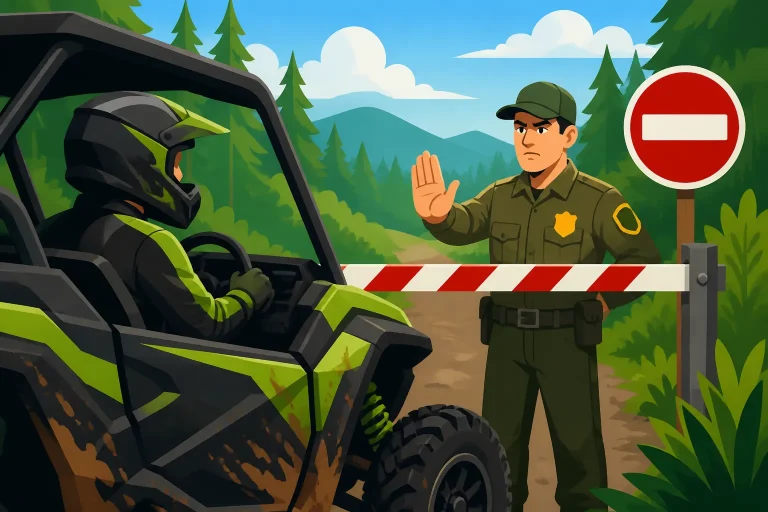
When a patrol signals you to stop, slow down safely and pull over only where there is room to do so. Avoid stopping around a blind bend, at the top of a steep grade or in a place where another rider cannot see you. If you are with a group, leave enough space for everyone to stop without blocking the corridor. Turn off the machine if asked or if doing so makes the stop safer.
Stay calm and make the interaction straightforward. A helpful sequence is:
- Acknowledge the signal and stop in a safe place.
- Keep your hands visible and avoid reaching suddenly into a pocket or storage compartment.
- Ask what the patrol needs to check if the request is not clear.
- Show the pass and documents requested, one at a time.
- Answer questions directly and respectfully.
- If something appears wrong, ask what the issue is and what step is expected next.
- Move only when it is safe and you understand the instruction.
Do not peel off a sticker, alter a document, or try to move past a patrol to avoid a check. That is likely to make the situation more difficult and may create a safety issue for other trail users. If you believe a request is mistaken, ask for the patrol member’s name or organization and make a note of what happened afterward. A trail stop is usually not the right place to settle a disagreement.
Keep the machine stopped while documents are being checked. Passengers should remain seated or stand in a safe area as directed, rather than walking into the trail corridor. If the patrol is dealing with several machines, wait your turn and avoid interrupting another rider’s check. On a shared or narrow route, be especially careful to leave enough space for oncoming machines.
A check can take longer if your pass is hard to see, a document is buried, or the details do not appear to match the machine or rider. If you have a legitimate explanation—for example, you are on a rental machine or have recently replaced a damaged sticker—explain it plainly and show any supporting confirmation you have. A receipt or order confirmation may help explain a situation, but it should not be treated as guaranteed authorization to continue. Ask the patrol what you should do next and confirm requirements with the pass provider or club when needed.
For more on the role and limits of trail patrols, see What a Club Trail Patroller Can Make You Do and Being Stopped on a Trail. Those questions matter because a volunteer patrol and a police officer are not necessarily the same thing. Do not assume that every patrol member has identical powers, but do take the stop seriously and avoid escalating the encounter.
If your pass is missing, unclear or not accepted
If you discover that your pass is missing before you ride, do not treat the purchase receipt as an automatic substitute. Contact the pass provider or the relevant club to confirm whether you can obtain a replacement or what proof is accepted. If you are already on a trail when the problem is discovered, stop somewhere safe and ask the patrol what options are available. Do not continue farther into the network while hoping the issue will go unnoticed.
If the sticker is unreadable or has come loose, take clear photos of the problem and keep any purchase confirmation. Then ask the pass provider how to replace it and whether the machine may be used while the replacement is being arranged. A patrol may not be able to decide a replacement request on the spot, so get instructions from the organization that issued the pass. Information about replacement steps is available in How to Order a Replacement FQCQ Trail Sticker.
If a patrol says the pass is invalid, ask what appears to be wrong: the season, the machine, the sticker’s visibility or the pass category. A clear explanation can reveal a simple mix-up, such as a pass assigned to another machine or a pass that does not cover the intended period. Keep the conversation factual. If you disagree with the decision, note the details and follow the appropriate process later rather than continuing on a route after being told not to.
Visitors should check the current Quebec pass requirements before crossing into the province. A pass from another jurisdiction should not be assumed to provide access to Quebec’s federated trails. Reciprocity arrangements can change, and a pass accepted in one province may not be valid in another. Confirm the current rule with the relevant trail-pass provider before setting out; Quebec Ended Reciprocity With Ontario explains why cross-border riders should verify rather than rely on an old arrangement.
The same caution applies if you are renting. Ask the rental operator whether the trail pass is included, whether it is attached to the specific machine, and what documents the renter must carry. If the pass is bundled into the rental, confirm how that is shown during a check. Do not leave the counter without knowing which items are your responsibility and which are supplied with the machine.
A patrol check is easiest when the basics are settled before the ride: a valid pass, visible display, required documents and an open authorized route. If something goes wrong, stop safely, ask clear questions and verify the next step with the organization responsible for the pass or trail. That approach protects your ride and reduces avoidable conflict on a shared corridor.
Disclaimer
This article is for general informational purposes only and does not constitute professional advice. Laws, prices and regulations vary by location and change over time. Consult a qualified professional for guidance on your specific situation.