Riding a Closed Trail Anyway
A closed trail can look passable, especially when the surface is dry or other riders have left tracks. In Quebec, though, a trail pass is not permission to ignore a closure. Learn why closures matter, what risks riding past a sign can create, and how to check conditions or reroute without turning a day out into a bigger problem.
What a Quebec trail closure means
A closure means riders are not authorized to use that trail section under the conditions in place. It may be temporary, seasonal or tied to a specific access agreement. A visible track, an open-looking gate or a route shown on an older map does not cancel the closure.
Quebec’s federated trail network depends on access across land that may be privately owned or otherwise subject to conditions. A club can need to close a section because the surface is vulnerable, a landowner has withdrawn permission, or a hazard makes travel unsafe. Closures can also affect only part of a route, leaving nearby trails open.
The reason matters for planning, but it does not make a posted closure optional. A rider who sees a closure notice should treat that section as unavailable unless the club or authorized trail operator confirms it has reopened. Do not assume that a sign is outdated because no one is standing nearby, or that another rider’s tracks prove access is allowed.
Common reasons a trail is closed
Spring thaw is a familiar example. Wet soil can rut easily under a heavy machine, and damage may take time and work to repair. Clubs may close trails during this period to protect the surface. Conditions and reopening dates can differ from one area to another, so a date that applies to one club is not a reliable guide to another. See Quebec’s Spring Thaw Closure and Quebec Thaw Dates by Club when planning a seasonal ride.
Other closures may follow heavy rain, flooding, washouts, fallen trees, unsafe bridges or trail maintenance. A club may also close a corridor during hunting season or after a landowner changes the access permission. A route can therefore be open in one stretch and closed a short distance later.
A trail closure is different from a general trail-pass requirement. A pass may be needed to use authorized federated trails, but it does not grant access to a section that is closed. The same principle applies if your pass is current and your machine is properly registered: those documents do not replace permission to ride a closed trail. Why a Trail Pass Cannot Override a Closure explains the distinction.
| What you see | What it means for your ride |
|---|---|
| A closure sign or barrier | Do not enter; check with the club or authorized operator for current status |
| A route marked open on an old map | Confirm conditions before setting out; the map may not reflect a recent closure |
| Tracks past the barrier | Tracks are not proof that riding is authorized |
| A current trail pass | It does not override a closure or grant access where permission has ended |
| A detour sign | Follow the marked route only if it is open and appropriate for your machine |
A closure can affect a route even when most of it is open
Before departure, check the status of the specific section you plan to use, not only the broader region or circuit name. A closure near a bridge, village or trail junction can make an otherwise straightforward ride unusable. It may also leave you without a safe turnaround point or a practical way to reach fuel, lodging or your vehicle.
For current planning, consult the trail club’s updates and the relevant mapping tools. Quebec Trail Conditions Before You Go covers the checks to make before riding, while Quebec Trails Closed for Hunting Season is useful when planning around seasonal access restrictions. If a map and a sign disagree, do not ride through the closure to investigate. Ask the club or operator to clarify the status.
Why riding past a closure can cause trouble
The immediate risk is not limited to a ticket. Riding past a closure can damage a trail, put you on unsafe ground or lead you onto land where access is no longer authorized. The consequences depend on why the section is closed, where it is, and which rules or agreements apply.
You may damage the trail or create a hazard
A surface that looks firm from the trailhead can be soft underneath. Tires can cut deep ruts, widen a muddy section or damage drainage. On a bridge or washed-out stretch, the hazard may not be visible until a rider is close. A closure may also be in place while crews are working, leaving equipment or people in the corridor.
The impact can extend beyond your own machine. Ruts and erosion take time to repair and may prompt a longer closure. If the trail crosses land by agreement, visible damage or repeated disregard for signs can make a landowner less willing to allow future access. That can affect every rider who relies on the route.
You may lose access or face enforcement
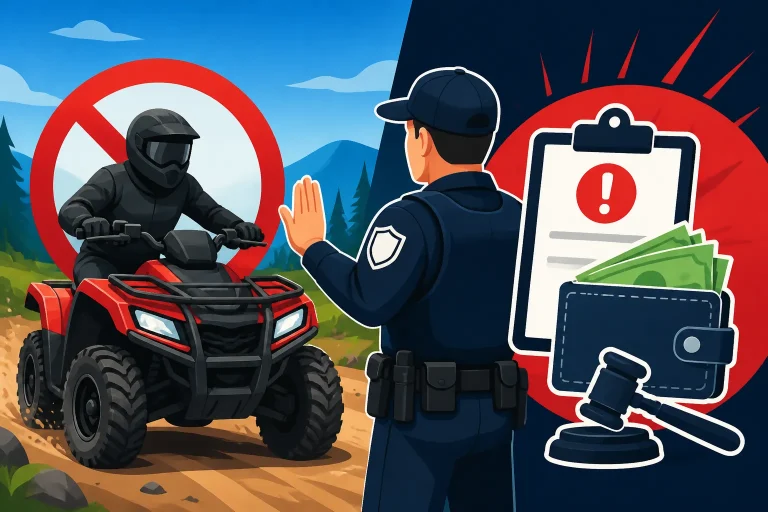
A patrol or other authorized person may stop a rider to check compliance on a trail. Depending on the circumstances, riding through a closure may lead to a ticket or other consequences under the rules that apply to that location. It may also involve a trespass issue if the route crosses property where permission is absent or has been withdrawn. The exact outcome is not identical for every closure, so avoid assuming that a warning sign has no legal significance.
A trail pass, registration and insurance paperwork are important for riding where access is authorized. They do not excuse entering a closed section. Quebec Passes and the Thaw Period explains why a valid pass does not make a closed trail rideable, and Being Stopped on a Trail describes the practical value of staying calm and being ready to show required documents if patrol staff stop you.
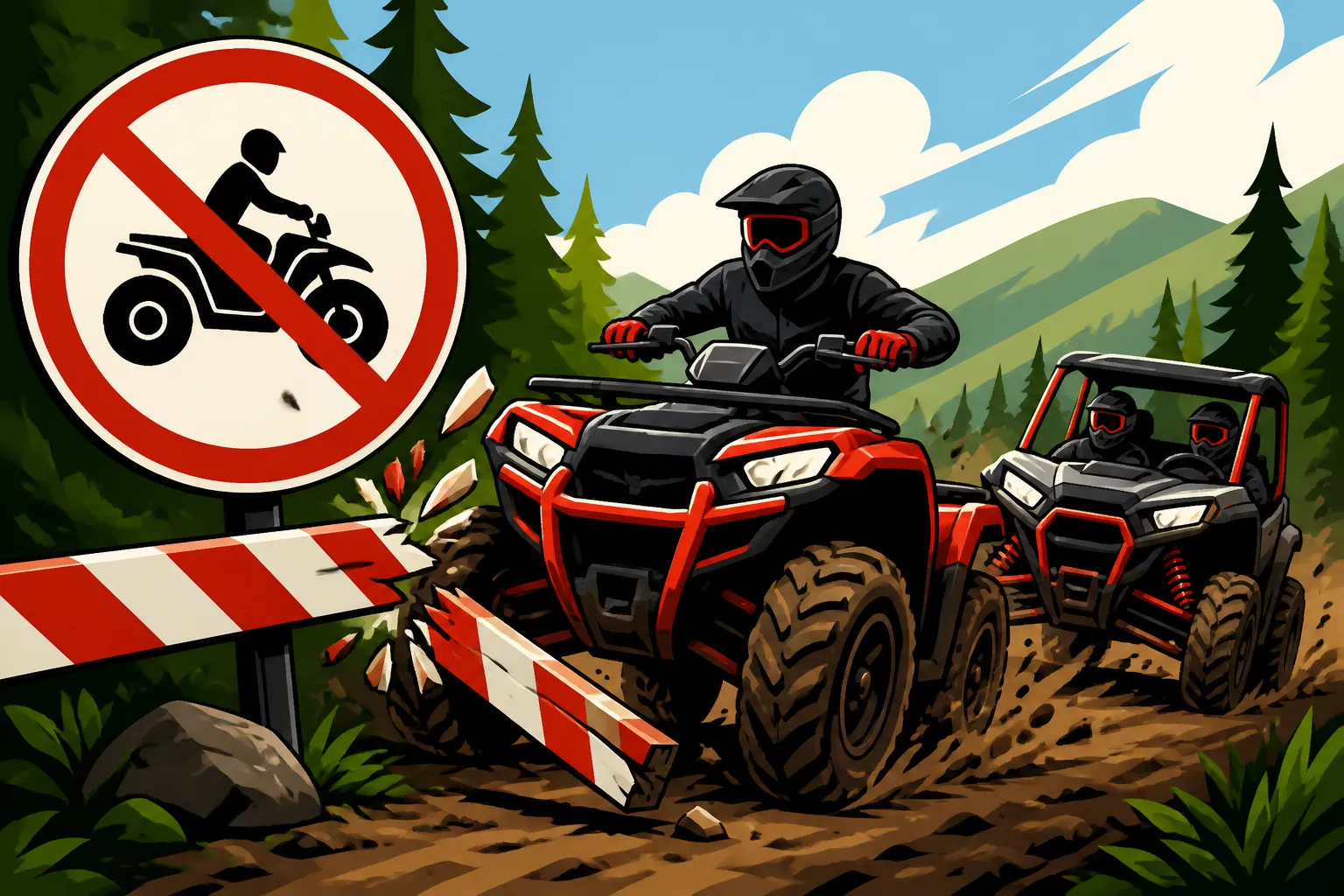
If a closure notice is unclear, ask the club or operator rather than arguing with a patrol or moving a barrier. Do not remove signs, shift a gate or take a side route around a barricade. That can make a bad decision worse and may put you into an area that is not part of the authorized trail at all.
Private land access is not permanent
Some trails cross private property under an agreement with the owner. That access is conditional, not a permanent right that comes with a trail pass. An owner may restrict use or withdraw permission, and the club may close the section in response.
Riding around a closure can still put you on private land, even if the bypass is only a few metres long. A ditch, farm track or opening in the trees is not automatically an authorized detour. Read Quebec Trails That Cross Private Land and Quebec Private Land Permission before treating an unmarked route as an alternative.
What to do when you encounter a closed trail
The safest response is simple: stop before the closure, keep the machine on the authorized trail, and confirm whether a marked detour is available. If there is no clear detour, turn back to the last safe junction and choose another route.
- Stop before the sign or barrier. Do not pass it to look for a way through. If you are riding with a group, make sure the riders behind you stop too.
- Check the notice. Look for the affected section, reason for closure, detour information and any contact details. Do not remove or cross a barrier.
- Confirm current status. Use the club or operator’s current updates, rather than relying only on a paper map, a saved route or a post from an earlier day.
- Reroute on an authorized trail. If you cannot confirm a safe, open connection, turn back. Do not follow unmarked tracks or private roads as a shortcut.
- Tell your group and update your plan. Recalculate fuel, daylight, distance and the return route. A closure can make the original trip impractical, even if another trail remains open.
- Report a problem if needed. If the closure sign is damaged, the trail is blocked by a hazard, or the map appears inconsistent, contact the relevant club or operator. Give the location and a clear description without entering the closed section.
When travelling with others, agree in advance that any rider can call for a stop at a closure. Group pressure can make people more likely to take a chance, especially after a long ride or when the detour seems inconvenient. Treat a closure as a route-planning change, not as a challenge to get past.
If you reach the sign after entering from another direction, do not continue farther to see where the trail leads. Turn around if it is safe to do so. If conditions make turning around unsafe, choose the safest way to leave the area without riding deeper into the closed section, and contact the appropriate club or emergency service if someone is in immediate danger.
How to avoid a closure disrupting your ride
Check conditions shortly before departure, especially in spring, after storms and during hunting season. Trail status can change after you have saved a route or loaded a map to your phone. Carry a backup plan, allow time for a detour and avoid building a long ride around a single trail connection with no alternative.
Confirm that your group has the information and documents it needs for the trails it intends to use. Quebec Trail Pass Proof on the Trail covers pass checks, while Quebec’s Off-Highway Vehicle Act and Your Papers is a useful starting point for understanding required paperwork. Having everything in order helps you ride on an open, authorized trail; it does not change the status of a closed section.
For a longer trip, identify likely turnarounds and fuel options before leaving. A detour may add distance, and a closed corridor can make a planned stop unreachable. Make sure the route is suitable for the machines in the group, and let someone know your plan if you are heading into a remote area.
Respecting a closure helps protect the trail and the access agreements that keep routes available. If you cannot confirm that a section is open, choose another route and check again later. Waiting for an official reopening is less costly than damaging a trail, getting into a hazardous area or putting future access at risk.
Disclaimer
This article is for general informational purposes only and does not constitute professional advice. Laws, prices and regulations vary by location and change over time. Consult a qualified professional for guidance on your specific situation.