Quebec Riding Season Month by Month
Quebec riding plans can unravel quickly when a trail is closed for spring thaw, a summer storm softens the ground, or hunting season changes access. This month-by-month guide explains what ATV and UTV riders can generally expect, how conditions shift by region, and what to check before loading up or heading out.
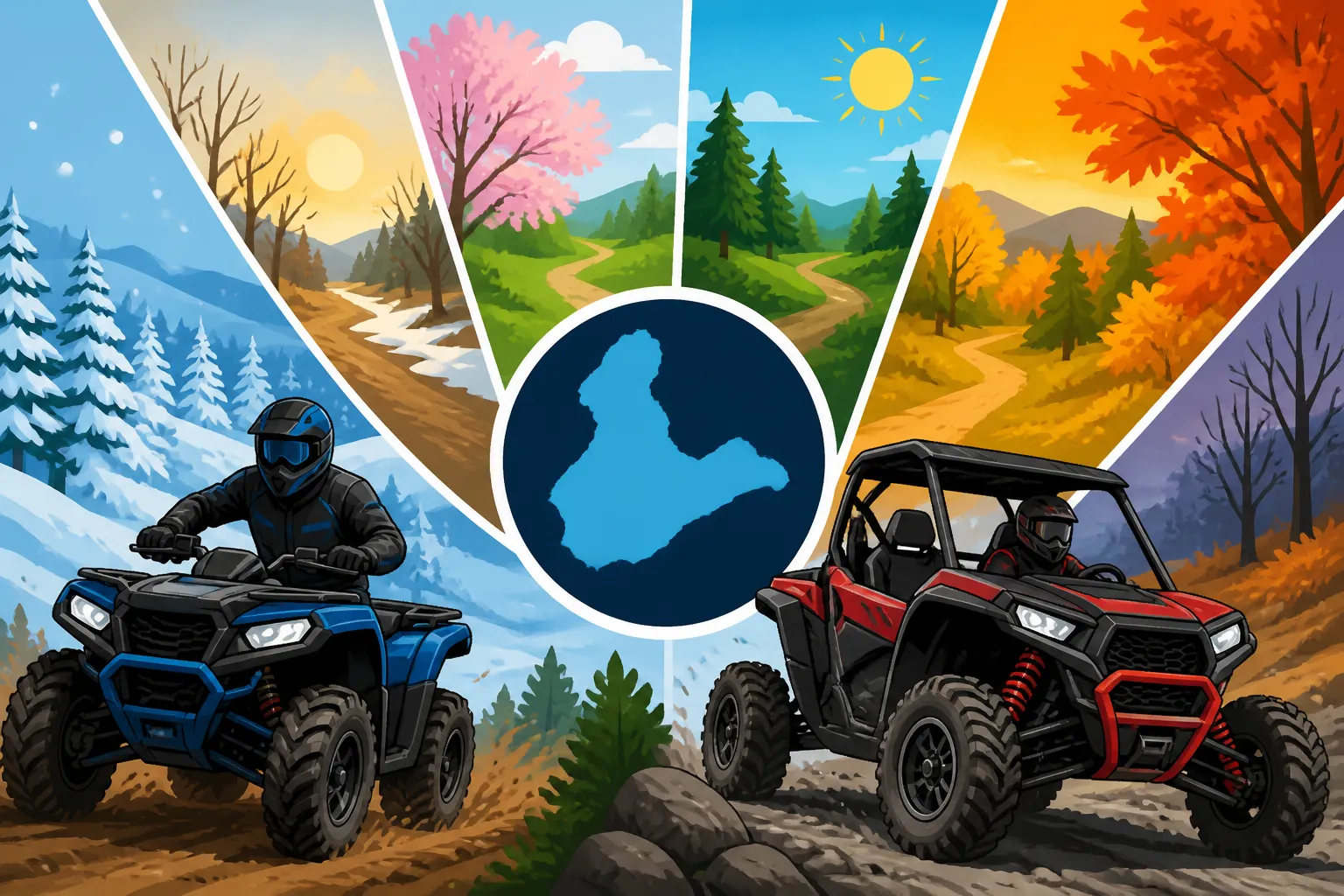
Quebec ATV and UTV riding season at a glance
Quebec does not have one province-wide riding calendar. A trail near the St. Lawrence Valley may dry out weeks before a route at higher elevation, while northern regions can hold snow or thaw later. Even nearby trails can differ because of shade, drainage, soil, and how much traffic they receive.
The calendar below is a planning guide, not a promise that any particular trail will be open. Before every ride, confirm access and current conditions with the local club or trail authority. For federated trails, check the applicable trail-pass requirements as well as closures. A pass does not override a closure or grant access to a route that is not authorized.
| Month | Typical riding outlook | Main planning concern |
|---|---|---|
| January | Limited and route-specific | Shared winter trails, snow, and cold |
| February | Limited and route-specific | Snow conditions and winter access |
| March | Often uncertain | Late snow, ice, and early thaw |
| April | Frequently restricted | Spring thaw closures |
| May | Gradual, uneven reopening | Mud, soft ground, and changing notices |
| June | Stronger summer riding window | Bugs, rain, and local trail status |
| July | Often a busy riding month | Heat, storms, traffic, and dust |
| August | Good potential, with variation | Dry spells, storms, and maintenance |
| September | Cooler and often comfortable | Hunting-season access and shorter days |
| October | Highly variable | Fall closures, frost, and wet leaves |
| November | Usually limited | Freeze-thaw, snow, and seasonal shutdowns |
| December | Limited and route-specific | Early winter conditions and shared use |
Why conditions vary across Quebec
The riding season is shaped by more than the date. Low-lying trails can stay wet after rain, while gravel or rocky sections may become rideable sooner. Forest canopy slows drying, and shaded north-facing slopes can retain snow and ice. In parts of the Laurentians, Charlevoix, Mauricie, and the Saguenay region, elevation and local weather can make a noticeable difference from one route to another.
That is why checking a regional update matters more than relying on a general statement such as “the trails are open in June.” For a wider overview of seasonal changes, see [Quebec Riding Season Month by Month]. Local clubs may also post conditions, temporary closures, and reopening information through their own channels. Check those updates on the day of your ride, especially after heavy rain or a rapid temperature swing.
Mapping tools can help you organize a route, mark fuel stops, and keep track of options. Some riders use onX Offroad to plan and save route information, but a map should not be treated as proof that a trail is currently open or that public access is allowed. Pair any route planning with official local updates; [Quebec Trail Conditions Before You Go] is a useful companion when you are deciding whether to ride.
A simple pre-ride check for any month
Before leaving home, confirm three things: whether the route is open, whether your machine and required pass or documents are in order, and whether the weather or ground conditions make the ride sensible. A trail that is technically open may still be unpleasant or damaging to ride after prolonged rain.
For a long outing, identify a shorter alternative and a safe place to turn around. That matters if a trail is unexpectedly blocked, the group is moving more slowly than planned, or the weather changes. If you are riding unfamiliar terrain, keep your planned route realistic and tell someone where you expect to be.
Winter and spring riding from January through May
Winter riding can be possible in some areas, but it is not simply the summer trail network with snow on top. Some routes are shared with snowmobiles, some are not open to ATVs or UTVs, and access can depend on local arrangements. In spring, the bigger issue becomes thaw: a route that looked firm the day before can soften quickly when temperatures rise.
January and February
In January and February, expect a limited, region-specific riding picture. Snow cover, freezing temperatures, and shared trail use can shape what is accessible. Do not assume that a snowmobile trail is automatically open to ATVs, or that a familiar summer corridor remains available in winter. Confirm the route’s intended use and current status with the local club.
Cold changes the practical demands of the ride, too. Battery performance, cold starts, visibility, and the time needed to warm up become more important. Dress for wind and long stops, not just the temperature when you leave the truck. Carry basic recovery gear and a charged phone, and plan conservatively if the route has limited services.
If you use onX Offroad to keep a route plan handy, save the information before you head into an area with poor reception. Still, do not rely on an app alone for winter access, closures, or shared-trail rules. See [Quebec Winter Quad Riding on Shared Trails] and [Quebec Winter Trails Shared With Snowmobiles] for more on planning around winter use.
March and April
March often brings a frustrating mix of late winter and early spring. Snow, ice, mud, and hard-packed ground can all appear on the same ride, particularly when the route crosses shaded or higher terrain. A sunny afternoon can soften a trail that was firm in the morning, so avoid assuming that conditions will stay consistent through the day.
April is commonly a difficult month for trail access because the ground may be thawing while the surface still looks passable. Riding on saturated soil can leave deep ruts and damage a route that takes substantial work to repair. Clubs may close trails during this period to protect the surface. Respect posted closures even if another vehicle has already left tracks.
Spring thaw timing differs by club and region. Check [Quebec's Spring Thaw Closure] and [Quebec Thaw Dates by Club] before making plans, then confirm the specific route with the club. A seasonal estimate is not a substitute for a current closure notice.
May
May is a transition month, not a dependable province-wide opening date. Some routes may reopen as conditions improve; others may remain closed because the ground is still soft, drainage is poor, or maintenance is underway. The first warm weekend can tempt riders to head out, but a calendar date alone does not establish that a trail is ready.
If a route reopens, ride gently and avoid spinning tires or forcing your way around wet spots. A small detour can quickly widen into damage if every rider makes one. If the route is muddy enough that you are leaving deep ruts, turn around and choose a different plan. Local updates are especially useful in May because conditions can change from one week to the next.
Keep a backup route in mind and make sure it is actually authorized and open. A map line is not permission to ride across private land or onto a closed trail. Use onX Offroad or another planning tool to organize possible routes, then check access and status through official local information before setting out.
Summer riding from June through August
Summer is often the most reliable period for planning longer rides, but it is not a guarantee of dry, easy conditions. Rain can quickly make clay or low sections slippery, while dry weather can bring dust and harder surfaces. Insects, heat, trail traffic, and local maintenance all affect how enjoyable a route feels.
June
June often brings a broader set of riding options as spring closures ease, but reopening is still local. Check the trail status shortly before departure, especially if there has been heavy rain. Routes that pass through shaded woods, low ground, or areas with poor drainage can stay wet after nearby roads have dried.
Bugs can be intense in wooded and damp areas, particularly during a still, warm ride. Bring repellent, water, and clothing that works for both moving and stopping. If you are planning a full day, look at fuel availability and the distance between services rather than assuming a village or station will be conveniently placed along the route. [Quebec Riding in June] can help you think through the early summer conditions.
July
July is a popular time to ride, and that can mean more traffic on well-known corridors. Keep a steady pace, leave space between machines, and be ready to meet other trail users around blind corners. Dust can reduce visibility during dry spells; slowing down and increasing following distance makes a real difference.
Heat can turn an ambitious route into a tiring one. Build in breaks, drink regularly, and consider shortening the day if someone in the group is new to riding or uncomfortable in hot weather. After thunderstorms, check for washouts, fallen branches, and temporary closures rather than assuming the route is unchanged.
For a longer trip, plan fuel and rest stops ahead of time. A saved route can help keep your group oriented, and onX Offroad may be useful for organizing waypoints. But use current club information to confirm that the trail is open and that the route remains appropriate for your machine. See [Quebec Riding in July] for month-specific planning.
August
August can offer excellent riding, but conditions depend on the weather and the region. A dry stretch may mean more dust and firmer surfaces; repeated rain can leave low sections muddy and affect small bridges or drainage areas. Check conditions after major storms, and be prepared to turn around if a section looks unsafe or damaged.
Long weekends and popular destinations can bring busier trailheads and more mixed groups. Agree on a pace before starting, establish a regrouping point, and make sure everyone knows what to do if the group gets separated. If you are planning a multi-day route, build in time for slower travel and unexpected stops instead of treating map distance as a guaranteed schedule.
Riders who prefer a quieter day can consider less familiar regions, but should not assume a less-traveled route is easier or better maintained. Confirm that the trail is authorized, open, and suitable for your vehicle. For broader seasonal ideas, see [Quebec Riding in August] and [Quebec Trail Etiquette Locals Expect].
Fall and early winter from September through December
Fall can be one of the most appealing times to ride: cooler air, fewer insects, and changing leaves make a day outside feel different from midsummer. It is also a period when access can change for reasons beyond weather. Hunting activity, seasonal trail arrangements, frost, and the start of winter use all deserve attention.
September and October
September often brings comfortable temperatures and good visibility, though shorter days begin to matter. Start early enough to finish before dark, especially on a route with limited cell coverage or a long return to the trailhead. Pack a warm layer, since the temperature can fall quickly once the sun drops or the group stops.
October is more unpredictable. Rain, frost, wet leaves, and early snow can make a familiar trail slippery. Leaves can hide rocks, roots, ruts, and drainage channels, so reduce speed and leave room to react. Hunting-season rules or club closures may also affect access in particular areas. Check local notices rather than assuming the route is open because it was available in September.
If you are riding near private land or through a corridor with seasonal restrictions, stay on the authorized route and follow posted signs. [Quebec Trails Closed for Hunting Season] and [Quebec Riding in October] are useful starting points for fall planning. A route-planning app, including onX Offroad, can help you keep a planned route organized, but it cannot replace confirmation of seasonal access.
November and December
November is often a shoulder month with uncertain conditions. Some trails may still be rideable, while others become too wet, icy, or snow-covered for safe travel. Freeze-thaw cycles can create slick sections, and a route that was manageable in the morning may change as temperatures shift. Check conditions close to departure and be ready to cancel.
December tends to be limited and route-specific. Where winter access is available, shared use and snow conditions affect the experience. Avoid carrying summer assumptions into winter: route markings may be harder to see, stopping distances can increase, and services may be less accessible. Check what type of vehicle the route is open to and whether local restrictions apply.
If your machine will be stored for the season, use the downtime to inspect tires, brakes, lights, belts, and recovery gear. Clean mud and debris from the machine, follow the manufacturer’s storage guidance, and note any repairs before the next ride. For additional planning, see [Quebec Machines Stored Over Winter].
A practical month-by-month routine
The safest way to use a riding calendar is to treat it as a starting point, then make a fresh decision for each trip. In late winter and spring, prioritize closure notices and ground protection. In summer, watch rain, heat, bugs, and traffic. In fall and early winter, check hunting access, daylight, frost, and shared use.
A quick routine helps avoid the most common disappointment: driving hours to discover that a route is closed or unsuitable. Confirm the trail status with the local club, check the forecast, verify any pass or access requirements, and tell your group what the backup plan is. If conditions do not look right when you arrive, changing the plan is part of responsible riding, not a wasted trip.
Disclaimer
This article is for general informational purposes only and does not constitute professional advice. Laws, prices and regulations vary by location and change over time. Consult a qualified professional for guidance on your specific situation.