Quebec Plate Placement on a Quad
It’s a scenario many quad owners in Quebec dread: you’ve just invested in a new machine, or perhaps you’re a seasoned rider, and you’re faced with the seemingly simple task of putting on that little registration plate. But where exactly does it go? And how do you ensure it stays put, stays visible, and keeps you compliant with the SAAQ’s rules when you’re out on the trails, tearing through mud, or navigating rough terrain? This guide is here to walk you through the ins and outs of proper plate placement on your quad in Quebec, helping you avoid unnecessary fines and keep your machine legal and safe.
Understanding Quebec's VHR Plate Requirements
When you register your off-road vehicle with the SAAQ in Quebec, you're given a specific Vehicle Hors Route (VHR) plate. This isn't just a suggestion; it's a legal requirement, and its proper placement is key to enjoying Quebec's vast network of trails without hassle. The SAAQ, which handles both registration and insurance for your quad, has clear expectations.
Why Plate Placement Matters
Let's be honest, nobody wants a ticket when they're out having fun. Improper plate placement is one of those easy-to-miss details that can quickly turn a great ride into a costly one. Visibility is paramount for enforcement. When trail patrols or local authorities need to identify a machine, whether for a routine check, an incident, or just ensuring everyone on the trail is registered, that plate needs to be easily seen. If it's obscured by mud, tucked away, or simply missing, it raises immediate red flags.
Beyond avoiding fines, proper placement is also about safety and accountability. In the event of an accident, an easily identifiable plate helps authorities quickly link the machine to its owner and necessary information, especially concerning [Quebec Insurance Proof on the Machine]. Imagine a situation where your machine is involved in an incident on a remote trail. If your plate isn't visible, it can significantly delay assistance or complicate investigations. The regulations around [Quebec's Off-Highway Vehicle Act and Your Papers] are designed to ensure responsible riding, and plate visibility is a big part of that.
The SAAQ's Specific Directives for Quads
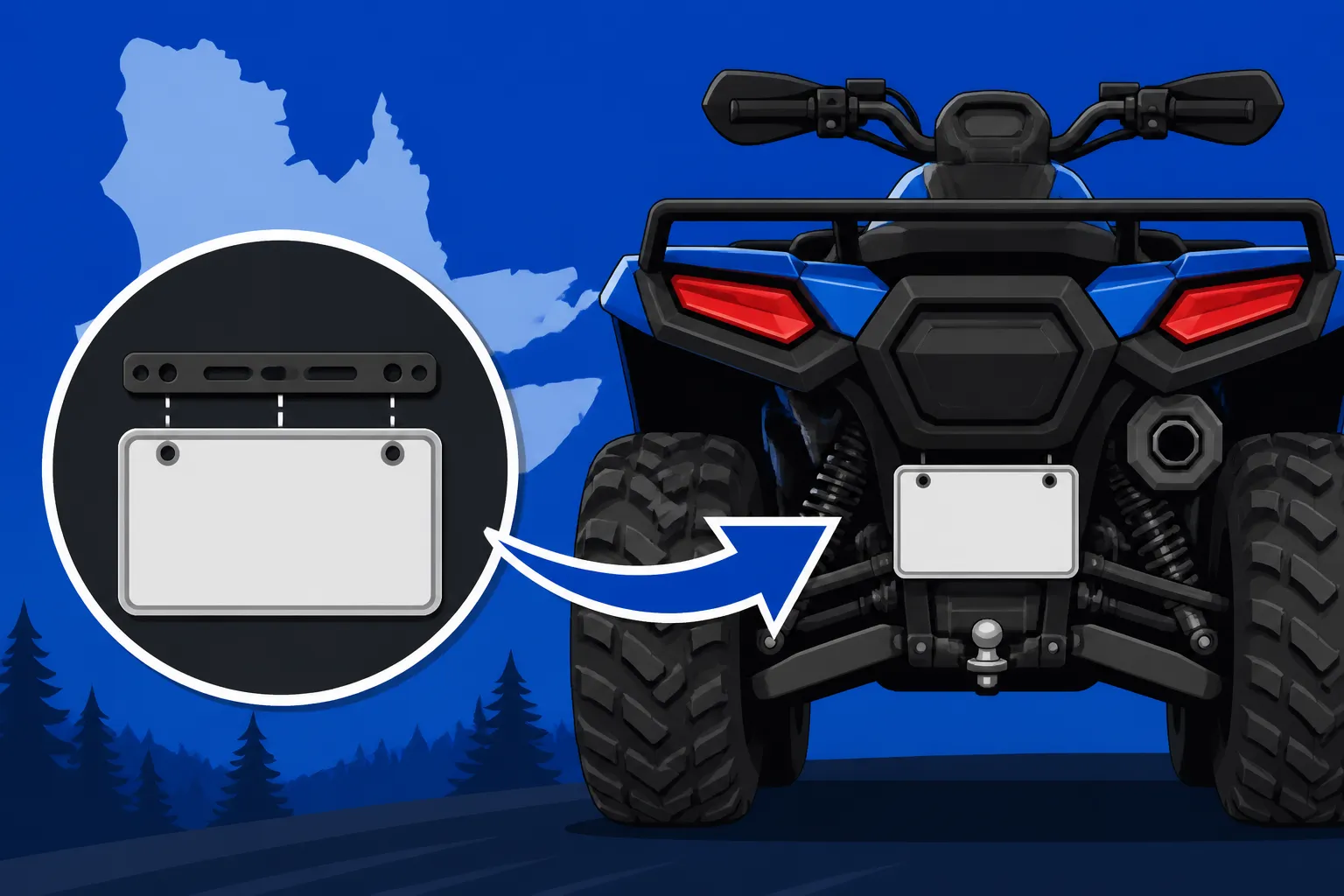
The general rule from the SAAQ is that your VHR plate must be affixed to the rear of your off-road vehicle and be clearly visible. It’s not enough for it to simply be on the machine; it needs to be positioned so that it can be read without obstruction. For most quads, this means mounting it securely on the rear fender.
The plate itself is specifically sized for off-road machines, designed to fit on a fender without being overly cumbersome. You can learn more about its dimensions in [Quebec Plate Size on an Off-Road Machine]. Crucially, the plate must be illuminated when you're riding between sunset and sunrise. This isn't just a nicety; it's a legal requirement to ensure your machine is visible to others and identifiable in low-light conditions. Many modern quads come with a small light built into the rear taillight assembly specifically for this purpose. If yours doesn't, or if it's damaged, you'll need to consider an aftermarket solution to meet [Quebec Lighting Requirements at Night].
For multi-passenger quads or side-by-sides, the principle remains the same: the plate must be at the rear and visible. While side-by-sides might offer a bit more surface area, the challenge often lies in avoiding obstructions from cargo boxes, aftermarket accessories, or even the machine’s own roll cage or exhaust system. The key takeaway here is: if a patrol officer can't easily see and read your plate, you're at risk of a citation. For more on the basic expectations, you can check out [Where a VHR Plate Mounts on a Quad].
Practical Considerations for Mounting Your Plate
Mounting your VHR plate isn't just about drilling a couple of holes; it's about choosing the right spot and securing it in a way that withstands the rigors of off-road riding. This involves a bit of thought to ensure both compliance and durability.
Choosing the Right Location on Your ATV
For the vast majority of traditional ATVs (often called VTTs in Quebec), the ideal and most common place for your plate is centered on the rear fender. This spot usually offers the best balance of visibility, protection, and available surface area. When scouting your exact mounting point, consider the following:
- Obstructions: Does your quad have an aftermarket rear rack, cargo box, or a passenger seat that might obscure the plate? If so, you'll need to adjust its position slightly, perhaps mounting it lower on the fender or using a specialized bracket to extend it past the obstruction. Remember, "clearly visible" means from a reasonable distance and angle.
- Exhaust Heat: Some exhaust systems vent quite close to the rear fender. Mounting your plate directly in the path of hot exhaust gases can warp or damage it over time. Choose a spot that allows for adequate clearance from any heat sources.
- Mud and Debris: While it's impossible to avoid all mud on a quad, try to pick a spot that's somewhat protected from the worst of the spray from your own tires. A plate constantly caked in mud will quickly become illegible, leading to the same issues as an obscured plate. You'll still need to clean it regularly, but a strategic placement can help.
- Existing Mount Points: Some quad manufacturers include pre-drilled holes or designated areas on the fender for plate mounting. If yours does, these are often the best places to start, as they're usually designed with visibility and protection in mind.
Ensuring Visibility and Legibility
Beyond just picking a spot, how you actually affix the plate makes a huge difference. An improperly mounted plate can quickly become unreadable or fall off entirely.
- Angle and Orientation: The plate should be mounted as perpendicular to the ground as possible. Avoid tilting it upwards or downwards significantly, as this can reduce visibility, especially from a distance or if viewed from a different height (e.g., a patrol officer on foot). It must be right-side up, of course!
- Cleanliness: This sounds obvious, but it's often overlooked. After a muddy ride, make it a habit to quickly wipe down your plate. A thick layer of mud or dirt renders your plate unreadable, which is just as bad as not having one in the eyes of the law.
- Illumination: As mentioned, if you ride after dark, your plate needs to be lit. If your machine doesn't have a built-in light, consider purchasing a small LED license plate light kit. These are usually easy to wire into your quad's existing taillight circuit. Make sure it's bright enough to clearly illuminate the plate numbers and letters without dazzling anyone behind you.
- Reinforcement: The thin aluminum of a VHR plate can bend, crack, or even tear off due to vibrations, impacts from branches, or aggressive cleaning. Consider using a sturdy license plate frame or a backing plate made of metal or rigid plastic. This not only adds protection but can also help distribute the mounting pressure, preventing the plate from bending where it's bolted. When drafting documents for your machine, like a bill of sale or any modifications you've made, a service like LawDepot can help ensure everything is legally sound. Similarly, you want your plate mounting to be structurally sound!
Tools, Techniques, and Common Pitfalls
Mounting your VHR plate properly requires a few basic tools and a careful approach. Skipping steps or using the wrong hardware can lead to frustration and potential problems down the trail.
Step-by-Step Installation Guide
Assuming your quad doesn't have existing, perfectly placed holes, here's a general process for mounting your VHR plate:
- Gather Your Tools: You'll typically need a drill with bits appropriate for plastic and metal (if drilling through a frame), a measuring tape or ruler, a marker, small bolts (stainless steel is best for rust prevention), washers, lock washers, and nuts. If you're adding an illumination light, you'll also need wire strippers, electrical tape or heat-shrink tubing, and perhaps a soldering iron.
- Position and Mark: Hold the plate in your chosen spot on the rear fender. Ensure it's level, centered, and unobstructed. Use a marker to carefully mark the two (or four, if using a frame) drilling points for the mounting bolts. Double-check your measurements to make sure the plate will sit straight.
- Drill Pilot Holes: Start with a smaller drill bit to create pilot holes. This helps prevent cracking the plastic fender and ensures your main drill bit goes exactly where you want it. Then, switch to a drill bit that matches the diameter of your mounting bolts and carefully drill the final holes. Take your time and apply steady pressure.
- Secure the Plate:
- Place a washer on the bolt head.
- Push the bolt through the plate (and any backing plate/frame).
- Push the bolt through the fender from the top.
- From underneath the fender, place another washer, then a lock washer (to prevent loosening from vibration), and finally tighten the nut.
- Repeat for all mounting points. Don't overtighten, as you can crack plastic or strip threads, but make sure it's snug and secure.
- Install Illumination (if needed): If you're adding an aftermarket light, follow the manufacturer's instructions. This usually involves drilling a small hole for the wire, running the wire neatly along the frame, and tapping into your quad's taillight circuit (power and ground wires). Ensure all electrical connections are secure and protected from the elements using waterproof connectors or heat-shrink tubing.
Remember, a service like LawDepot helps you create legally binding documents, and while they don't help you with a wrench, the principle of doing things right and securely applies to both legal paperwork and physical attachments on your machine. You want documentation like [Quebec SAAQ Forms for a Private Sale] to be flawless, just as you want your plate to be flawlessly mounted.
Avoiding Fines and Ensuring Compliance
The simple truth is, if your plate isn't clearly visible and properly illuminated when required, you're opening yourself up to fines. Trail patrols and SAAQ enforcement officers are trained to look for these details. They understand that off-road riding is tough on equipment, but that doesn't excuse non-compliance.
Here’s what they’re looking for and how to ensure you pass muster:
- Visibility at a Glance: Can someone standing behind your quad easily read the plate number without having to bend down, move an obstruction, or squint? If not, you might have an issue.
- Legibility: Is the plate itself clean and undamaged? A bent, cracked, or excessively muddy plate is as bad as an invisible one.
- Illumination Check: If you're riding at night, ask a friend to stand behind your quad and confirm the plate is clearly lit. A burnt-out bulb is a common reason for a nighttime ticket.
The penalties for riding with an unregistered machine or an improperly displayed plate can be significant. For a rundown on what kind of trouble you could get into, check out [Quebec Penalties for Riding Unregistered]. It's far better to spend a bit of time ensuring your plate is correctly mounted than to face a fine that could easily pay for multiple sets of proper mounting hardware. During [Quebec Equipment Checks by Patrols], the plate is one of the first things they'll verify.
Special Cases and FAQs
Even with all the guidelines, quad owners often run into unique situations that require a bit of extra thought for plate placement. Let's tackle some common questions and scenarios.
Modified Machines and Aftermarket Accessories
One of the joys of owning a quad is customizing it, but modifications can sometimes complicate plate placement.
- Rear Racks and Cargo Boxes: These are prime culprits for obscuring VHR plates. If you've added a large rear rack or a cargo box, you might find that the standard fender mounting position is now blocked. In such cases, you have a few options:
- Relocation Brackets: Many aftermarket companies sell specific brackets designed to relocate your license plate. These can extend the plate further back or mount it to the rack itself, ensuring it clears the cargo.
- Mounting to the Box/Rack: If your cargo box or rack is sturdy enough, you might be able to mount the plate directly to it. Just ensure the material is thick enough to hold the bolts securely and that the plate remains visible from all necessary angles.
- Vertical Mounts: While less common and often less practical for quads, some riders might explore vertical mounting options on the side of a fender or roll cage if rear space is completely gone. Always double-check local regulations and ensure adequate illumination if considering this, as horizontal is generally the standard expectation.
- Aftermarket Exhaust Systems: Performance exhausts can sometimes be larger or routed differently, potentially interfering with standard plate placement or exposing the plate to excessive heat. Again, assess the clearance and consider using a heat shield or a relocation bracket if necessary.
- Two-Up Seats: If you primarily ride with a passenger and have added a specific two-up seat, ensure the passenger's legs or the seat itself don't block the plate.
The key is to maintain the spirit of the regulation: the plate must be visible and legible. Be creative, but always prioritize compliance.
What to Do If Your Plate Gets Damaged or Lost
Riding off-road means things get battered, and sometimes, a plate can bend, break, or even disappear entirely. It’s frustrating, but there’s a clear process to follow.
- If Your Plate Is Damaged: If your VHR plate is bent, cracked, or simply unreadable due to wear and tear, you need to replace it. Driving with a damaged or illegible plate can still result in a fine.
- If Your Plate Is Lost or Stolen: This is more urgent. Not only can you be fined for not having a plate, but a lost or stolen plate could potentially be misused. Report a stolen plate to the police first, then proceed to the SAAQ.
- The Replacement Process: In either case, you'll need to contact the SAAQ to request a replacement. This typically involves:
- Visiting an SAAQ Service Outlet: This is usually the quickest and most direct way.
- Providing Your Identification: You'll need a valid driver's license or other approved ID.
- Providing Your Quad's Registration Information: Your [Quebec ATV Registration With the SAAQ] document will be crucial.
- Paying a Fee: There is usually a fee for replacement plates.
- Submitting a Declaration (for stolen plates): If your plate was stolen, having a police report or filing a declaration at the SAAQ will be part of the process.
While you're waiting for your new plate, it's generally not advisable to ride your quad on federated trails or public land without a valid plate. Some riders might fashion a temporary paper plate with their registration number, but this is rarely recognized as legal by authorities and should only be considered if strictly necessary for private land travel, and then, only with extreme caution. The safest bet is to wait for your official replacement. For more detailed steps on getting a new plate, check out [Quebec Plate Replacement If Lost]. Just like you'd use a service like LawDepot for important legal documents to avoid missteps, ensure your SAAQ paperwork for a replacement is accurate and complete.
Here's a quick summary of the do's and don'ts for plate placement:
| Aspect | Do's | Don'ts |
|---|---|---|
| Location | Mount securely on the rear fender. | Hide it under racks or seats. |
| Visibility | Ensure it's clearly visible from behind. | Angle it too far up or down. |
| Legibility | Keep it clean and free of mud/debris. | Allow it to become damaged, bent, or obscured. |
| Illumination | Ensure it's illuminated for night riding. | Ride after sunset without a working plate light. |
| Security | Use strong bolts, washers, and lock nuts. | Use weak fasteners or leave it prone to vibration damage. |
| Accessories | Use relocation brackets for aftermarket gear. | Let accessories block the plate. |
| Maintenance | Regularly check for damage and cleanliness. | Ignore a damaged or unreadable plate. |
| Replacement | Contact SAAQ immediately if lost or stolen. | Ride without a valid plate. |
Disclaimer
This article is for general informational purposes only and does not constitute professional advice. Laws, prices and regulations vary by location and change over time. Consult a qualified professional for guidance on your specific situation.