Quebec Passes Valid November to October
A Quebec trail pass can look like a simple seasonal sticker, but its dates matter: buy the wrong type or assume last season’s pass is still valid, and you may arrive at a federated trail without the required authorization. Here’s how the November-to-October pass period works, how it differs from a summer pass, and what to check before you ride.
How Quebec’s November-to-October pass period works
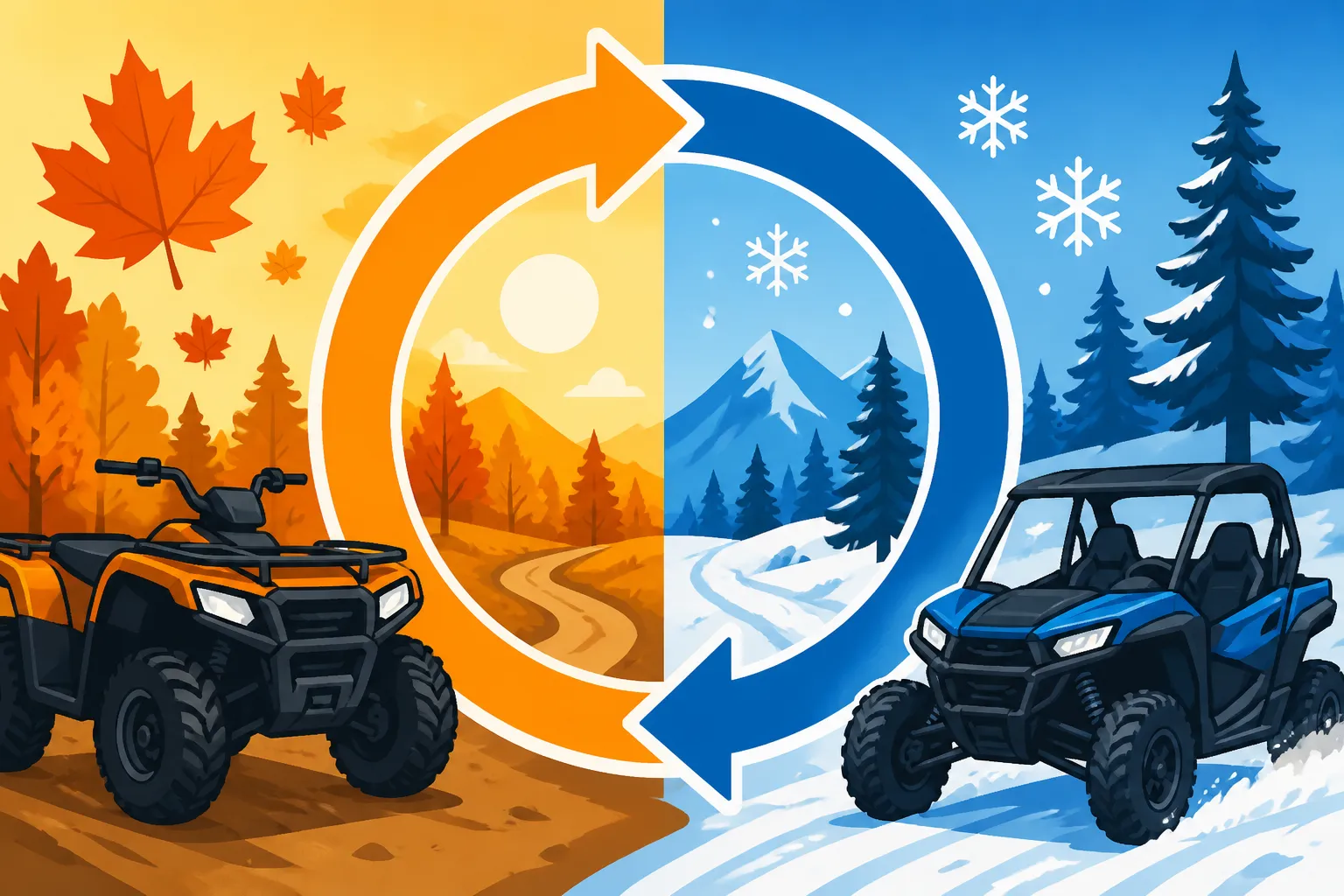
The standard annual FQCQ trail-pass season runs from November 1 through October 31. In practical terms, a pass for one season covers the winter and summer riding periods within that same November-to-October window. It does not follow the calendar year, and it is not an ongoing pass that stays valid for twelve months from the day you buy it.
For example, buying an annual pass partway through its season does not normally create a new twelve-month term. Its expiry remains tied to the season’s end. That can matter if you buy late in the summer and expect the pass to carry through the following autumn: check the dates shown for the specific pass before completing the purchase.
The November start date is useful to remember if you ride in winter. A pass for the new season can apply from the start of November, subject to the trail being open and the pass being valid for your machine. But a valid sticker is not permission to ride everywhere at any time. Clubs can close trails, and spring thaw restrictions or other local closures still apply.
| Question | Practical answer |
|---|---|
| What is the annual pass period? | Generally November 1 through October 31. Confirm the dates for the pass season you are buying. |
| Does the pass start on the date I buy it? | Do not assume so. An annual pass is tied to its season, not necessarily to a rolling twelve-month term. |
| Does an annual pass cover winter and summer? | It is intended for the annual season, but trail access still depends on open trails and the pass category. |
| Does a valid pass let me ride during a closure? | No. A closure remains in effect even if your pass is current. |
| Is the trail pass the same as vehicle registration? | No. Registration and a trail pass serve different purposes. |
| Does a pass from another province automatically work in Quebec? | Do not assume reciprocity. Visitors should check the current Quebec pass requirements. |
The season dates are easy to confuse with the pass’s purchase date, the start of a local riding season, or the date on a vehicle registration document. Keep those separate. A pass bought in July may be valid for the remainder of that pass season, but that does not mean it will necessarily remain valid through the next October. A pass bought before the annual season begins may also have a sale or delivery schedule that differs from its actual validity dates.
The Quebec Trail Pass Start Date explains the date distinction in more detail, while Quebec’s Annual FQCQ Trail Pass is useful if you are deciding whether the annual option fits your plans. Always read the validity dates shown during purchase and keep the confirmation or other proof that identifies the season.
Annual pass and summer pass are different products
Quebec also has a summer pass category. It is generally associated with the May-to-October riding period rather than the full November-to-October annual season. The two passes are not simply the same sticker with different names: their valid periods and intended use differ.
If you ride only in warmer months, a summer pass may seem like the obvious choice. But don’t choose only by looking at the month you expect to start riding. Consider whether you might ride during the winter season, whether your trip dates fall within the summer pass period, and whether a later purchase would leave you with less usable time than you expected. The Quebec’s Summer Trail Pass page can help you compare the seasonal option with the annual one.
Check the official pass information for the exact season dates and conditions before you buy. Pass names, purchase windows, and administrative details can change, and a summary from a prior season may not describe the pass currently offered.
What the trail pass does, and what it does not do
The pass is for access to Quebec’s federated ATV trail network, subject to the conditions that apply to the trail and the pass. It helps support the organized network and is a separate requirement from the documents and coverage associated with operating your ATV or side-by-side.
That distinction is important because riders sometimes treat “the paperwork” as one bundle. It is not. You may have a valid trail pass but still need to meet separate requirements for registration, insurance, rider licensing, equipment, and safe operation. Conversely, having a registered machine and insurance does not by itself authorize you to ride on a federated trail that requires a pass.
Think of the main documents and permissions as separate checks:
- Trail pass: Gives access to the federated trail network for the pass period and category, subject to closures and conditions.
- Vehicle registration: Identifies the machine for road-vehicle or off-highway requirements that apply to it.
- Liability insurance: Provides required coverage where applicable; the trail pass does not automatically replace your own insurance obligations.
- Rider qualifications: Age, licence, training, and other rider rules may apply independently of the pass.
- Trail status and permission: A pass does not open a closed trail or grant permission to ride on land outside the authorized network.
For the distinction between registration and trail access, see Quebec Registration and Trail Pass Together. If you want to understand the separate registration obligation, Do You Need to Register an ATV in Quebec? is a helpful companion. Insurance is another separate issue; Quebec Trail Pass Without Insurance covers why the pass should not be treated as proof that you have all the coverage you need.
A pass also does not override a club’s closure notice. Trails can be unavailable because of seasonal conditions, maintenance, landowner decisions, hunting activity, or other local issues. After heavy rain or during spring thaw, riding on a closed trail can damage the route and create problems for landowners and clubs. Before each ride, check current trail conditions rather than relying on the fact that your pass is still within its dates.
The same rule applies to winter riding. A November-to-October pass may span the winter season, but the network is not necessarily open on every day or on every corridor. Some trails are shared, some have seasonal restrictions, and local conditions can change quickly. A pass is one part of trip planning, not a substitute for checking the route.
Choosing the right pass for your riding dates
The simplest way to choose is to start with your calendar and route. Write down the dates you plan to ride, then compare them with the validity period of each pass option. If you ride in more than one season, account for the full range of dates rather than focusing only on your next trip.
For a rider who expects to use the trails throughout the year, the annual pass is generally the natural option to investigate. A rider planning only summer trips can compare the summer pass. A visitor who is in Quebec for a short trip should look at the available short-term options rather than assume that a full-season pass is the only choice. The exact choices and terms should be checked with the pass provider before purchase.
Here is a practical way to compare:
| Your riding plan | What to check |
|---|---|
| Several trips across winter and summer | Whether the annual pass covers your full riding period and machine category |
| Summer-only rides | Whether the summer pass dates cover every planned ride |
| One short trip | Whether a daily or multi-day option is available for your dates |
| Trip near the start or end of a season | Exact first and last valid dates, not just the pass name |
| Ride in multiple provinces | Whether each province requires its own pass or authorization |
| Unsure whether you will ride after October | Whether an annual pass gives you useful coverage into the next riding season |
There are a few common traps to avoid.
Buying by the season name alone. “Annual” sounds like twelve months from the purchase date, but that is not a safe assumption. Check the actual start and end dates on the pass information.
Assuming a summer pass begins when local weather improves. The pass period is defined by its published dates, not by when a particular trail dries out or a club opens it.
Buying late without comparing options. A pass bought near the end of its period may offer fewer usable riding days. Compare the current pass choices and dates before paying.
Forgetting about closures. A pass can be valid while a trail is not. Confirm conditions shortly before departure and again if weather changes.
Confusing pass validity with vehicle validity. The trail pass’s season does not set the expiry date for registration or insurance. Check those documents separately.
If you ride only occasionally, make a quick trip calendar before choosing. Note whether you expect a winter ride, a summer weekend, or a longer multi-day route, and whether any dates fall close to a season boundary. That small check can prevent buying a pass that does not fit the trip you actually have planned.
Pass rules can also differ depending on whether you own the machine, rent it, or are visiting from outside Quebec. A rental operator may explain what is included in the rental arrangement, but do not assume every rental price includes trail access. Ask directly whether the machine has the required pass for the dates and route you plan to ride. For a rented machine, see Quebec Trail Pass for a Rented Machine.
Visitors and reciprocity: don’t assume another pass carries over
If you are bringing an ATV from outside Quebec, the pass you use at home may not give you access to Quebec’s federated trails. Reciprocity arrangements have changed, and visitors should confirm the current requirement rather than relying on an old sticker, a club website saved from a past trip, or advice from someone who rode several seasons ago.
Ontario riders in particular should check the current Quebec rules before travelling. Quebec ended its interprovincial arrangement with Ontario, so an Ontario pass should not be treated as a substitute for the required Quebec pass. The practical visitor guidance is to verify what you need for your machine, dates, and planned trails before you leave home. See Quebec Ended Reciprocity With Ontario and Quebec Visitors Must Buy a Quebec Pass for more detail.
Visitors from other provinces or the United States should also check the requirements that apply to them. A pass from another jurisdiction may have no effect on Quebec trail access. If your trip crosses a provincial or international border, plan for the requirements in each place rather than assuming one pass will cover the whole route.
Before a cross-border ride, confirm:
- Which pass or authorization is required for the Quebec trails on your route.
- Which dates that pass covers.
- Whether you need one pass for each machine.
- How and when the pass will be issued or delivered.
- What proof you must carry or display.
- Whether registration and insurance documents meet the requirements for the machine and route.
- Whether the trails you intend to use are open on your travel dates.
The timing of purchase and delivery deserves extra attention. If a sticker is mailed, do not assume that an online order confirmation is a substitute for the required sticker or proof on the trail. Check the provider’s instructions on what to display and what to carry while you wait. If the pass is digital or the process has changed, follow the current instructions rather than relying on a previous season’s routine.
This is particularly important for visitors making a short trip. A delayed pass can disrupt a weekend plan, while a pass bought too early or for the wrong period may not solve the problem. Confirm the dates and delivery process before you commit to lodging, transportation, or a guided route.
Carrying proof and checking your pass before every ride
Once you have the right pass, take a moment to make sure it is correctly associated with your machine and ready to show. Follow the current instructions for where the sticker goes, whether an online confirmation must be retained, and what information should be available during a trail check. Requirements can vary by pass process, so rely on the instructions that come with your purchase.
Do not wait until you are at a trailhead to discover that the sticker is missing, damaged, or attached to a different machine. If you replace a machine, buy a second ATV, or switch vehicles for a trip, check whether the pass can be transferred or whether a separate pass is needed. The [Quebec Trail Pass for a Second Machine] and [Quebec Trail Pass Replacement If Lost] address situations that can catch owners off guard.
A sensible pre-ride check takes only a few minutes:
- Confirm the pass dates cover the day you will ride.
- Check that the pass is associated with the machine you are taking.
- Make sure the sticker or required proof is present and readable.
- Carry the registration and insurance documents required for your ride.
- Check trail status, closures, and any local conditions.
- If you are travelling from outside Quebec, confirm you have the Quebec pass required for that trip.
For documents, keep the original papers secure and dry. Some riders use a waterproof document pouch attached to their riding gear or stored in a protected compartment. If you are comparing pouches on Amazon, check the dimensions, closure style, and whether it can protect paper from water and mud; a phone screenshot alone may not meet every proof requirement. A small pouch is a practical way to keep papers together, but it does not replace required originals or displayed proof.
You can also keep a digital backup of relevant information, such as a purchase confirmation or a photo of a document, where permitted. Treat that backup as a convenience, not as proof that every patrol or service counter must accept a photo. A second copy can help if a paper is damaged, but follow the official instructions about what must be carried or displayed. Amazon sells a range of waterproof organizers, but choose one that fits your documents without making them hard to retrieve during a check.
If your machine is frequently exposed to rain or mud, inspect the pouch and its contents after rides. A cheap-looking seal that has opened in the storage compartment is not useful protection. Some riders use a small waterproof folder from Amazon for the papers and keep a separate backup in a secure location at home. Whatever you use, make sure the pass sticker itself remains visible and follows the placement directions.
When in doubt, separate the questions. Ask whether your pass is valid for the date, whether the trail is open, and whether your machine and rider meet the other rules. A “yes” to one does not answer the others. That habit is especially useful at season boundaries, when a machine is borrowed or rented, and when visitors are crossing into Quebec.
If your dates fall near October 31 or November 1, pause before ordering. Verify which pass season you are buying and exactly when its validity begins. Then check that those dates line up with the trip, the machine, and the trails you intend to use. That is the simplest way to avoid arriving with a pass that looks right but does not cover the ride.
Disclaimer
This article is for general informational purposes only and does not constitute professional advice. Laws, prices and regulations vary by location and change over time. Consult a qualified professional for guidance on your specific situation.