Quebec Fines for Riding Without a Trail Pass
Riding a Quebec quad trail without the required pass can turn a planned outing into a costly interruption. The hard part is knowing which trails require a pass, what patrols may ask you to show, and how a pass differs from registration and insurance. This guide explains the practical rules, what to do if you are stopped, and how to avoid riding with the wrong paperwork.
What a trail pass is for
A trail pass is permission to use a network of federated ATV trails under the applicable trail system’s rules. In Quebec, many organized quad routes are maintained or managed by clubs affiliated with the Fédération Québécoise des Clubs Quads, commonly known as the FQCQ. If you plan to ride one of these trails, you need to confirm that the machine has the appropriate pass for the type of riding and period involved.
The pass is not the same thing as a vehicle registration certificate, a licence plate, insurance, or a club membership card. Those items can matter on a ride, but they do different jobs. Having a registered ATV does not automatically give you access to a federated trail, and buying a trail pass does not take care of every other legal requirement.
A useful way to think about it is:
- Registration identifies the machine for road and vehicle-administration purposes.
- Insurance provides coverage subject to the policy’s terms and the rules that apply to the machine.
- A trail pass grants access to a particular organized trail network, subject to its conditions.
- A club membership may be bundled with a pass or offered separately, depending on the current arrangement.
For the registration side of the picture, see Quebec Registration and Trail Pass Together. For an overview of the annual pass, Quebec’s Annual FQCQ Trail Pass explains what it is designed to cover.
A pass is not a general licence to ride anywhere. It does not override a closure, a landowner’s restriction, a municipal by-law, or a rule that prohibits access to a particular stretch. A route can appear on a map and still be closed temporarily or unavailable to riders in a given season. Before leaving, check the current trail status and any local notices.
Where a pass is usually relevant
The key question is not simply whether you are riding an ATV in Quebec. It is whether you are using a trail that belongs to a network requiring a pass.
A pass may be required on federated trails even if you enter from private property, a campground, or a local road. Starting your ride somewhere other than an official trailhead does not necessarily change the status of the trail itself. Likewise, a short ride on a marked corridor can still bring you onto a pass-required route.
By contrast, a ride that stays entirely on private land with the owner’s permission may not involve use of a federated trail. That does not mean every other rule disappears. Registration, insurance, safety requirements, land-use restrictions, and rules for riders or passengers may still apply. For a closer look at the private-land distinction, see Quebec Private Land Permission and Registering a Quad Ridden Only on Family Land.
Some routes connect different types of land or infrastructure. A trail may pass near a road, cross private property under an agreement, or share a corridor with another kind of trail user. Each section can have its own access conditions. Don’t assume that a pass for one network authorizes travel on every nearby route.
The pass does not replace other documents
Riders sometimes carry a pass and assume that is all they need. That is a risky shortcut. You may also need to meet registration and insurance requirements and be able to show relevant documents during a ride. The exact paperwork depends on the machine, the rider, and where the route goes.
If you are unsure whether your insurance proof is adequate for a trail ride, review [Quebec Insurance Proof on the Trail]. A pass-related insurance option, where offered, should not be assumed to replace the owner’s required insurance. Read the current terms carefully and ask the provider what is covered.
What can happen if you ride without a pass
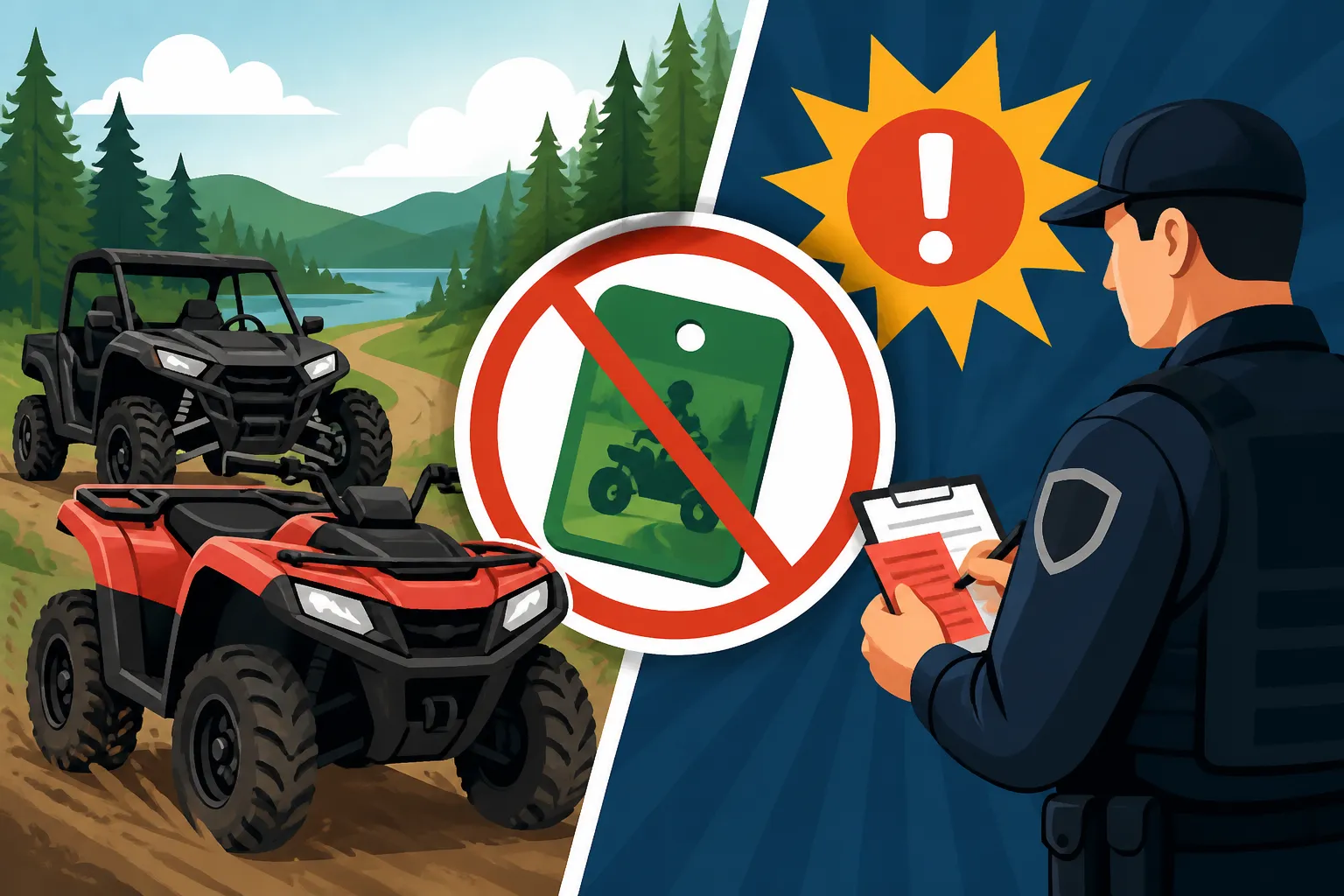
There is no safe way to treat a missing pass as a minor technicality. If you are checked on a pass-required trail and cannot show valid proof for the machine, you may face enforcement consequences under the rules that apply. Depending on the circumstances, that can mean a ticket or other penalty, being told to leave the trail, or an interruption to the rest of your ride. The specific outcome depends on the current rules and the facts of the stop.
Fine amounts and enforcement procedures can change. They may also depend on the kind of violation, where it happened, and whether there are other issues, such as riding on a closed trail or failing to meet a separate requirement. Confirm current penalties through an official source rather than relying on an old forum post, a saved screenshot, or a number someone remembers from a previous season.
For details focused specifically on penalty questions, see Quebec Penalties for Riding Without a Pass. This article’s practical point is straightforward: if a pass is required for the trail, riding without one can expose you to more than an inconvenient conversation.
Likely consequences at the trail level
Even before a penalty is settled, a check can disrupt the outing. You may have to stop, explain where you started and where you intend to go, and show the documents or proof requested. If the issue cannot be resolved on the spot, the patrol or enforcement officer may direct you not to continue on that section.
That can create knock-on problems for a group. A rider without a pass may need to turn back, while the rest of the group waits or changes its route. A missed connection can affect fuel plans, meal stops, lodging, or daylight. On a remote trail, a forced change can be a safety concern as well as an inconvenience.
Do not count on being able to purchase a pass after a patrol has stopped you and have the original problem disappear. Whether a pass can be bought at that moment, whether proof arrives immediately, and how a patrol treats a later purchase are not things to assume. Buy and verify the correct pass before entering the network.
Other violations can make a stop more serious
A missing pass may not be the only issue. A machine could also have an expired or unsuitable registration, inadequate insurance, an improper plate, or a rider who does not meet the applicable requirements. Riding during a closure, taking an unauthorized road connection, or ignoring a posted restriction can create separate problems.
A pass never cures those issues. Nor should a pass be treated as permission to ride outside the marked route or beyond the access granted by the landowner or trail organization. If an officer or patrol asks about another requirement, the fact that you bought a pass is not a complete answer.
The sensible approach is to treat trail access as one item on a broader pre-ride checklist. Confirm the pass, machine paperwork, insurance, rider eligibility, route status, and any local restrictions separately.
Pass, registration, insurance, and membership compared
When riders get into trouble, it is often because they have one valid item and assume it covers the others. Use this comparison to keep the different requirements straight.
| Item | What it generally does | What it does not do | What to check before riding |
|---|---|---|---|
| Trail pass | Provides access to a covered organized trail network for the applicable period and machine | Does not register the ATV or authorize access to every trail or closed route | The pass type, validity period, machine details, proof requirements, and trail coverage |
| Vehicle registration | Records the vehicle with the appropriate authority and relates to its legal use and identification | Does not grant access to a club trail network | Validity, plate, registration papers, and whether the machine’s use is properly covered |
| Liability insurance | Provides coverage subject to the policy and legal requirements | Does not function as a trail pass or guarantee coverage for every activity | Required proof, policy limits and exclusions, covered operators, and permitted uses |
| Club membership | Supports or connects a rider with a club, depending on the arrangement | Does not necessarily serve as proof of trail access on its own | Whether membership is included with the pass and what documentation proves access |
| Trail map or app | Helps with navigation and route planning | Does not prove that the rider has permission or that a trail is open | Current conditions, closures, route boundaries, and whether a separate pass is required |
For more on the paperwork that may be checked during a ride, see What a Patrol Can Ask to See. For the specific question of how to carry pass evidence, Quebec Pass Proof on the Trail is also useful.
The pass is tied to the machine and the conditions
Before buying, check that the pass is suitable for the machine you intend to use. Do not assume a pass on one ATV transfers to another, or that a pass for one rider automatically covers every machine in a group. A family or group travelling together should make sure each machine meets the trail network’s current requirements.
Also confirm the dates. A pass may apply to a particular season or a defined period rather than any day you choose. The start and end dates matter if you buy early, travel near the start of a season, or plan to ride across a seasonal transition. A pass that was valid last year is not proof of current access.
Insurance is a separate check
Trail-pass materials may include or offer an insurance-related option. That does not make it wise to treat the pass as a substitute for your own insurance review. The policy attached to the machine, the kind of use permitted, and the people who may operate it can all matter. Check the actual insurance documents and ask the insurer about any unclear exclusions.
A rider can have a valid pass but still be unprepared if the required insurance proof is missing or the policy does not cover the intended use. Conversely, valid insurance does not give access to a pass-required trail. Keep both questions on the checklist.
How to avoid a pass problem before the ride
The most reliable way to avoid a trail-pass fine is to verify access before the machine reaches the trail. Do not wait until you are at a junction, a club boundary, or a patrol checkpoint to figure out which pass applies.
1. Identify the route you intend to ride
Use current trail information to identify the route and the network responsible for it. Look for notes about seasonal closures, temporary detours, hunting-season restrictions, maintenance, or other access limits. A route shown in an older map or saved on a phone may not reflect current conditions.
If the plan includes a long circuit or a connection between regions, check every section rather than just the first trailhead. A group can cross into a different club area without realizing it, and route conditions can change along the way. The fact that one section was open when you last rode it does not establish that it is open now.
2. Confirm the correct pass
Check the current pass options through the appropriate official seller or trail organization. Annual, seasonal, daily, or multi-day options may be available, but the names, dates, conditions, and purchase process can change. Make sure the option fits the dates of your ride and the machine you are using.
A one-day outing and a longer visit may call for different choices. For short trips, compare the available options rather than assuming an annual pass is required or that a pass from another province will be accepted. For a brief ride, see Quebec Trail Pass for One Day; for a longer short-term visit, [Quebec Trail Pass for a Three-Day Trip] may help frame the decision. Confirm current terms before buying.
Quebec’s acceptance of passes from elsewhere should never be assumed. Reciprocity arrangements can change, and an out-of-province sticker may not provide access to Quebec trails. Visitors should verify the rule for their home province or state and purchase the required Quebec pass when necessary.
3. Check the details on the pass
Before heading out, check that the pass information matches the machine and the intended period of use. If the pass has a sticker or other physical proof, follow the current instructions about where it belongs and how it should be displayed. If the purchase gives you a digital confirmation, keep that confirmation accessible and follow the organization’s rules on whether it is sufficient proof.
Take a moment to check spelling, machine details, dates, and any order information. A typo or mismatch can be harder to sort out once you are already on the trail. If something looks wrong, contact the seller or club before riding rather than hoping a patrol will accept an explanation.
4. Carry proof in a usable form
Keep the required proof where you can reach it without unpacking the whole machine or leaving your group waiting. If you carry paper documents, protect them from water, mud, and abrasion. A small waterproof document pouch can help; if you shop on Amazon, compare the size, closure, and water-resistance claims carefully, and test the pouch before relying on it outdoors.
A phone can be useful for storing a confirmation, but it should not be your only plan unless the current rules explicitly accept that form of proof. Batteries fail, screens crack, and remote areas may have no cell coverage. Keep a backup where practical, and review Does a Phone Photo Count as Proof on Trail? for the specific issue of electronic copies.
Whatever method you choose, make sure the proof is legible and available. A screenshot that cuts off the dates or machine information may not answer the questions a patrol is asking.
5. Confirm the status again on the day
Conditions can change after you plan the trip. Recheck the trail network’s current notices before leaving and again if your route crosses multiple areas. Heavy rain, spring thaw, maintenance, or a local restriction may close a trail even if your pass is valid.
A trail pass does not override a closure. Riding a closed trail can create consequences separate from the pass issue, and it can damage the route or put riders at risk. If a closure forces a detour, use a route that is clearly authorized instead of improvising across private land or onto an unmarked road.
6. Give every rider in the group a clear role
The person who bought the pass may not be the person driving the machine when a patrol stops the group. Make sure each operator knows where the proof is and can explain which machine it covers. If one person manages all the paperwork, they should remain available and keep the group together during checks.
Before departing, agree on a simple plan: who carries the documents, who checks trail status, and what the group will do if a route is closed or a machine has a paperwork problem. That small conversation is much easier at the trailhead than after the group has spread out.
What to do if a patrol stops you
A stop can feel stressful, particularly if you are unsure which document is being requested. Stay calm, stop safely, and listen to the question. A clear, respectful response is usually more useful than arguing over a rule you have not checked.
A patrol may ask to see evidence of trail access and may also ask about other requirements relevant to the ride. Keep your licence and machine documents available as required. Avoid reaching suddenly into a bag or moving the ATV before you understand what is being asked. If you need to retrieve paperwork, say what you are doing.
If you have a valid pass
Show the proof in the form accepted under the current rules. If the sticker or document is hard to see, explain where it is and allow the patrol to inspect it. If there is a mismatch, such as a different machine description or unclear date, provide the supporting information without becoming confrontational.
If the patrol says the proof is not adequate, ask politely what part is missing or unclear. You can make a note of the explanation after the stop. Do not assume that a purchase receipt alone settles every question; the receipt, sticker, pass record, or other accepted evidence may have different roles.
If you do not have the required pass
Be honest. Do not claim that a pass is attached to the machine if it is not, or try to use another rider’s pass without confirming that the transfer is allowed. Ask what you need to do next and follow any instruction to stop or leave the trail.
If you believe you have a valid pass but cannot access the proof, explain the situation and show what you can. A purchase confirmation might help clarify the facts, but do not assume it automatically satisfies the proof requirement. The patrol’s instructions and the current rules govern what happens next.
Do not try to continue farther down the trail to find better service or to buy a pass unless the person conducting the stop tells you that is permitted. If you are directed to leave, ask for a safe route back and whether there is a designated place to resolve the issue.
If you receive a ticket or notice
Read the document carefully before setting it aside. Check the issuing authority, alleged conduct, location, response instructions, and any deadline stated on the notice. Keep the ticket and related documents together, and write down your recollection while details are fresh: the time, location, trail name, what was requested, what you showed, and what was said.
If you think the ticket is wrong, use the formal process described on the notice. Do not ignore it because you believe a pass was purchased, and do not rely on an informal conversation to replace the procedure. Keep receipts, emails, screenshots, proof of payment, and photographs of the machine or pass if relevant. If the issue is complex or the consequences matter to you, seek qualified legal advice.
For current penalty information, consult the appropriate official source or contact the issuing authority. The process and available options may vary, so check the instructions attached to your particular notice rather than following advice from someone with a different ticket.
Special situations for visitors, groups, and unusual rides
Visitors from outside Quebec
A visitor should verify pass requirements before travelling, not at the border or trailhead. Do not assume that a home-province pass, club card, or registration document is accepted in Quebec. The rules for reciprocity can change, and the type of trail matters.
If you are bringing a machine from another jurisdiction, check both trail access and vehicle paperwork. Registration and insurance arrangements for a visiting machine are separate from the pass question. A visitor may be properly registered at home and still need a Quebec pass for a federated trail.
For a short visit, decide whether the trip will stay on private property, use a rental operator’s route, or include federated trails. Each plan can have different requirements. If an outfitter or rental company says a pass is included, ask what that means for the specific machine and route, and confirm whether you need to carry proof yourself.
Groups riding several machines
A pass for one ATV should not be treated as a group pass. Check each machine individually, including borrowed, rented, or newly purchased machines. If riders are changing machines during the day, verify that the pass terms allow the change.
For a large group, keep a simple record of each machine and its proof. One person can check the list before departure, but each operator should know how to show the relevant documentation. If someone joins the group late, confirm their pass before the group enters the trail network.
Rental machines and guided tours
A rental package may include a pass, but ask the operator instead of assuming. Find out whether the pass is already attached to the machine, whether the renter needs to carry a receipt or confirmation, and what happens if the group changes machines. Also ask about the route: a rental on private land or a guided loop may not use the same trail network as a self-guided trip.
Do not buy a separate pass without checking if the operator has already arranged access, but do not rely on a vague statement such as “everything is included.” Ask which requirements are included and what you are expected to bring.
Second machines and seasonal storage
If you own more than one ATV, confirm whether each machine needs its own pass. A pass intended for one machine may not transfer when you take a second machine out of storage. Check the current terms before the first ride of the season.
A machine stored over winter may also need separate attention. A previous pass can expire, a trail can remain closed during thaw, and insurance or registration details may need review. Treat the first outing as a fresh check rather than assuming last season’s paperwork is still current.
A practical pre-ride checklist
Use this checklist before every ride on an organized Quebec trail network:
- Map the route. Confirm which sections are federated, where the trail begins and ends, and whether any connections use roads or other land.
- Check current conditions. Look for closures, detours, seasonal restrictions, and local notices.
- Confirm the pass requirement. Verify the appropriate pass for the machine and the planned dates.
- Check the pass details. Make sure the machine information, validity period, and proof are correct.
- Review registration. Confirm the vehicle documents and plate are valid for the machine’s use.
- Review insurance. Carry the required proof and check that the policy fits the intended activity.
- Check the riders. Confirm that every operator and passenger meets the rules that apply to the machine and route.
- Make proof accessible. Keep the pass evidence and other documents protected but easy to show.
- Brief the group. Tell each rider who has the documents and what to do if a patrol stops the group or a trail is closed.
- Recheck before departure. Conditions and notices can change after the trip was planned.
For a broader list of documents to prepare, see Quebec Registration Paperwork Checklist. If you want to understand what patrols may request during a stop, Carrying Papers on a Long Ride provides another useful planning perspective.
It is also worth keeping a simple digital and paper record of the purchase. A printed confirmation can be useful if a phone battery dies, while a photo of the pass or sticker can help you remember which machine it belongs to. A small document pouch from Amazon may keep paper proof dry, but it is only a storage aid; it does not replace the form of proof the trail organization accepts. For a second vehicle, consider a separate labeled sleeve or folder rather than mixing all the paperwork together.
The strongest habit is to check the pass at the same time you check fuel, route conditions, and machine readiness. That keeps trail access from becoming an afterthought. You can also review current purchase and replacement information through the trail organization before setting out, especially if a sticker has been damaged, lost, or transferred.
A pass is a small part of the ride plan, but it protects more than your chance of avoiding a ticket. Federated trail access depends on agreements, maintenance, and cooperation among clubs, riders, and landowners. Paying for and displaying the required pass helps support that system, while following closures and local directions helps preserve access for the next ride.
If you remember only a few points, remember these: a pass is distinct from registration and insurance; it applies only under its own terms; and a valid pass does not authorize riding on a closed or unauthorized trail. Check the route and pass before leaving, carry proof that can be shown, and verify current penalty information through an official source if you receive a notice.
Disclaimer
This article is for general informational purposes only and does not constitute professional advice. Laws, prices and regulations vary by location and change over time. Consult a qualified professional for guidance on your specific situation.