Quebec Insurance Minimum for an Owner
It's a common head-scratcher for anyone owning an all-terrain vehicle (ATV) or side-by-side in Quebec: what exactly are the insurance requirements, and how does the SAAQ fit into it all? It's easy to assume your registration covers everything, but the truth is, while the SAAQ does provide a crucial layer of protection, it's essential to understand its limits and what you, as an owner, are legally obliged to carry. This guide will demystify the mandatory liability insurance for off-road vehicles in Quebec, helping you navigate the rules and ensure you're fully covered.
The SAAQ's Unique Role in Quebec Off-Road Vehicle Insurance
When you first get into the world of quads or side-by-sides in Quebec, you quickly realize that our system for registering and insuring these machines is a bit different than what you might find for cars or even in other provinces. The Société de l'assurance automobile du Québec (SAAQ) plays a dual role that can often confuse new and even seasoned riders. They're not just about getting your plate; they're also your initial insurer, which is pretty unique.
The SAAQ as Both Registrar and Insurer
For most folks, the SAAQ is primarily known as the place you go to get your driver's license or register your car. But for off-road vehicles, their mandate extends a bit further. When you register your ATV or side-by-side, you're not just paying for the right to ride on designated trails and approved paths; you're also automatically enrolled in a basic liability insurance scheme managed by the SAAQ. This means that a portion of the registration fee you pay each year goes directly towards funding this mandatory coverage. It's an integrated system, designed to ensure a baseline level of protection for everyone involved in an off-road incident. This can be a relief for many, knowing that a fundamental safety net is in place right from the moment their machine is legally on the "road" (or rather, the trail). For more on their role, check out [What the SAAQ Actually Does for Quad Owners].
Why Your Registration Fee Includes Basic Liability
The inclusion of liability insurance within your SAAQ registration fee is a foundational element of Quebec's approach to off-road vehicle safety. The provincial government, through the SAAQ, wants to ensure that if an incident occurs involving an off-road vehicle, there's a minimum level of financial protection available to cover damages or injuries caused to others. This prevents innocent third parties from being left in a lurch if the at-fault rider doesn't have private insurance or the means to cover costs out of pocket. Think of it as a collective responsibility; by paying your registration, you contribute to a fund that protects everyone on the trails. It simplifies the process for owners, too, as you don't have to seek out a separate basic liability policy just to get your machine registered. This mandatory coverage is part of [Quebec ATV Registration Costs Explained] and ensures that whether you're a seasoned rider or just starting, a basic level of financial responsibility is always met.
Unpacking Quebec's Mandatory $1 Million Liability Coverage
The amount of liability coverage that comes bundled with your SAAQ registration isn't just a random figure. It's a carefully considered minimum, designed to offer substantial protection in the event of an accident. For off-road vehicles in Quebec, the mandatory liability floor is set at $1 million. This figure might seem high to some, but it reflects the potential costs associated with serious accidents involving personal injury or extensive property damage.
What the Minimum Liability Protects Against
So, what exactly does this $1 million SAAQ-provided liability coverage protect? In simplest terms, it covers damages you might cause to other people or their property while operating your ATV or side-by-side. This is absolutely critical. Imagine you accidentally veer off a trail and damage someone's fence, or, much more seriously, cause an accident that results in injuries to another rider or pedestrian. The SAAQ's liability coverage is there to step in and help cover the financial repercussions up to that $1 million limit.
It's important to understand what it doesn't cover, too. This basic SAAQ liability does not cover:
- Damage to your own ATV or side-by-side.
- Injuries to yourself.
- Theft of your machine.
- Damage to your machine from fire, vandalism, or natural events.
These are aspects typically covered by additional private insurance policies, which we'll discuss a bit later. The SAAQ's primary focus here is third-party liability – protecting others from your potential actions. For more specific details on this, you can refer to [The $1 Million Liability Floor Every Owner Carries].
How This Compares to Past Requirements
The $1 million minimum liability coverage wasn't always the standard. Not too long ago, the mandatory minimum for off-road vehicles in Quebec was $500,000. This change to a higher threshold reflects an acknowledgment of increasing costs associated with legal claims, medical expenses, and property repairs. In today's economic climate, $500,000 might barely scratch the surface in a severe accident, leaving the at-fault party personally exposed to significant financial risk. The shift to $1 million provides a much more robust safety net, better aligning with the realities of modern claims and offering greater peace of mind for both riders and the public. This evolution in requirements demonstrates a commitment to improving safety and financial security within the off-road community. It's part of why [Why a Million Became the Floor] is such a crucial piece of our current system.
Real-World Scenarios and Your Financial Protection
Let's paint a picture with a couple of scenarios to really drive home the importance of this $1 million liability floor.
Scenario 1: Property Damage
Imagine you're out riding on a federated trail, enjoying the scenic beauty of the Laurentians. You come around a blind corner a little too fast and lose control, sliding off the trail and into an adjacent field. Unfortunately, your side-by-side collides with and destroys a section of a farmer's fence line. The cost to repair and replace the fence, along with any potential crop damage, could easily run into several thousands of dollars. Your SAAQ liability coverage would be activated to cover these repair costs to the farmer's property. Without it, you'd be personally responsible for footing that bill.
Scenario 2: Personal Injury
This is where the $1 million coverage truly shows its value. Suppose, while navigating a trail in Lanaudière, another rider suddenly swerves into your path, causing a collision. In the resulting confusion, a passenger on their machine is ejected and suffers serious injuries requiring extensive medical treatment, rehabilitation, and time off work. The costs for medical care alone can quickly escalate into hundreds of thousands of dollars, not to mention potential claims for lost income, pain, and suffering. In this unfortunate event, if you were deemed at fault for any reason, your SAAQ-provided $1 million liability would be the first line of defense, helping to cover those massive costs for the injured party. It prevents a single mistake from completely ruining someone's financial future. This kind of protection is the backbone of [Quebec's Liability Insurance Rule].
Beyond the SAAQ: Exploring Additional ATV Insurance Options
While the SAAQ's mandatory $1 million liability coverage is a fundamental and reassuring safety net, it's really just the bare minimum. For many off-road vehicle owners, relying solely on this basic coverage leaves significant gaps in protection, particularly concerning their own machine and personal well-being. This is where private insurance companies step in, offering a range of policies designed to fill these voids.
When the Basic SAAQ Coverage Isn't Enough
Let's be blunt: if you only have the SAAQ's mandatory liability coverage, you're financially exposed to many common risks. Your SAAQ registration protects others from your actions, but it does absolutely nothing for you or your machine.
Consider these common situations where SAAQ coverage falls short:
- Damage to Your Own Machine: You hit a hidden rock, roll your ATV, or collide with a tree. Your machine is heavily damaged. Without additional coverage, the entire cost of repairs or replacement comes straight out of your pocket.
- Theft: Your brand-new side-by-side gets stolen from your garage or campsite. The SAAQ won't replace it.
- Fire or Vandalism: Your quad catches fire due to an electrical issue, or someone vandalizes it while parked. Again, the SAAQ doesn't cover these incidents.
- Personal Injury to Yourself: You get into an accident and suffer serious injuries. While Quebec has a public healthcare system, there can still be out-of-pocket expenses, lost wages not fully covered by other programs, or rehabilitation costs that private injury coverage could assist with.
- Medical Payments: If you need emergency transport or specialized care that isn't fully covered by your provincial health insurance, a private policy might have provisions for medical payments.
These are significant risks that most riders want to mitigate. The value of your machine, the cost of repairs, and the potential impact of personal injury can be substantial. For many, investing in additional private insurance is simply a wise financial decision. When considering a purchase, knowing these different layers of protection helps you understand the true [Quebec ATV Registration Cost].
Private Insurance Policies and What They Offer
This is where private insurers, like Intact, Desjardins, or Promutuel, offer a range of options tailored to off-road vehicles. These policies are designed to complement the SAAQ's basic liability, providing comprehensive protection.
Here's a breakdown of typical private insurance components:
- Collision Coverage: This is paramount if you want your own machine repaired or replaced after an accident where you are at fault, or if the other party isn't insured. If you hit a tree, or another machine (and it's your fault), this coverage pays for the damage to your ATV.
- Comprehensive Coverage: This protects your machine from damages not related to collisions. Think theft, fire, vandalism, falling objects, or even natural disasters like floods. If your quad is stored in a shed and the shed burns down, comprehensive coverage would typically kick in.
- Additional Liability: While the SAAQ provides $1 million, some riders opt for even higher liability limits through their private insurer, sometimes up to $2 million or more. This provides an extra layer of protection for those extremely rare, catastrophic events where damages could exceed the SAAQ's floor.
- Uninsured/Underinsured Motorist Coverage: This protects you if you're involved in an accident with another rider who doesn't have adequate insurance to cover your damages or injuries.
- Accident Benefits/Personal Injury Protection (PIP): This can cover medical expenses, rehabilitation, and even lost income for you and your passengers, regardless of who was at fault in an accident.
It's crucial to shop around and compare different quotes to find a policy that fits your needs and budget. The specifics of [Quebec Insurance Quotes for a Quad] can vary widely based on the machine's value, your riding history, and where you live.
Understanding Deductibles, Collision, and Comprehensive Coverage
When talking to private insurance companies, you'll hear terms like "deductible," "collision," and "comprehensive." Let's break them down clearly:
- Deductible: This is the amount of money you, the policyholder, must pay out of pocket before your insurance company starts to pay for a claim. For example, if you have a $500 deductible on your collision coverage and your ATV incurs $3,000 worth of damage in an accident, you would pay the first $500, and your insurance company would cover the remaining $2,500. Higher deductibles typically mean lower monthly or annual premiums, and vice versa. It's a balance between upfront costs and potential out-of-pocket expenses in an accident.
- Collision Coverage: As mentioned, this specifically covers damage to your ATV or side-by-side if it collides with another object (another vehicle, a tree, a rock, a fence) or if it rolls over. It applies whether you're at fault or not (though if another insured party is at fault, their liability would typically pay first).
- Comprehensive Coverage: This is your protection against almost everything else that could damage your machine. This includes theft, fire, vandalism, natural disasters (like floods or hail), falling objects, or impacts with animals. If your ATV is stolen, comprehensive coverage is what would help you replace it.
When choosing a private policy, it's wise to consider the value of your machine, how often you ride, where you store it, and your personal risk tolerance. For a valuable machine, collision and comprehensive are almost always a good idea. Even when buying from a private seller, having your own insurance lined up before the transfer is a smart move. Using a reputable platform like LawDepot to draft a clear bill of sale can also help protect both parties by formally documenting the transaction, which might influence insurance considerations after the sale.
Staying Compliant: Proof, Penalties, and Best Practices
Understanding Quebec's insurance rules is one thing; actively demonstrating compliance and managing your coverage effectively is another. There are specific requirements for proof, serious consequences for non-compliance, and general best practices that every off-road enthusiast should adopt to ensure they're always ready for the trail.
What to Carry on the Trail for Proof of Insurance
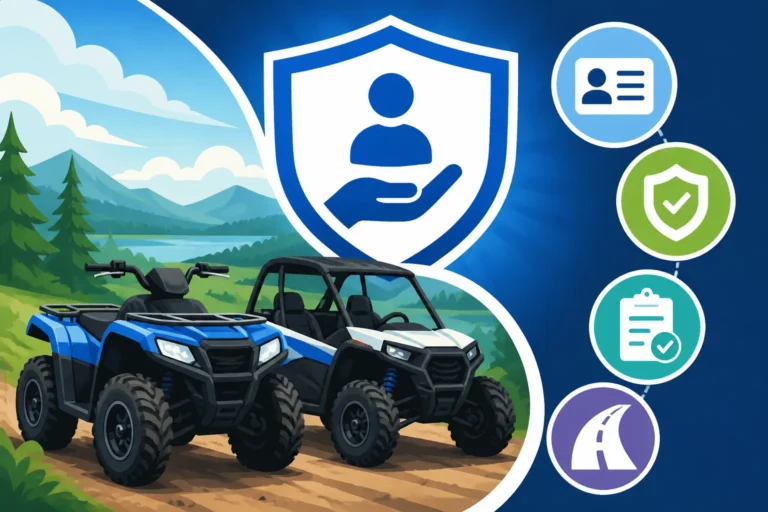
It's not enough to simply have the mandatory SAAQ liability insurance and any additional private coverage. You must be able to prove it when requested by authorities. When you're out on the trails, whether it's a federated club trail or a designated path, you should always carry valid proof of your ATV's registration, which doubles as proof of your SAAQ liability coverage.
The official SAAQ registration certificate for your off-road vehicle is the primary document you need. This paper document confirms your registration is active and, by extension, that your basic liability coverage is in force. It's also a good idea to carry your driver's license, as it's required to operate an ATV or side-by-side in Quebec.
If you have supplementary private insurance, you should also carry your insurance card or a copy of your policy documents. While the SAAQ portion is mandatory and inherently linked to your registration, a trail patrol officer might ask to see proof of any additional coverage, especially in the event of an incident. [Quebec Insurance Proof on the Machine] is not just a suggestion; it's a requirement to ensure you can quickly and easily demonstrate compliance.
Consequences of Riding Without Proper Insurance
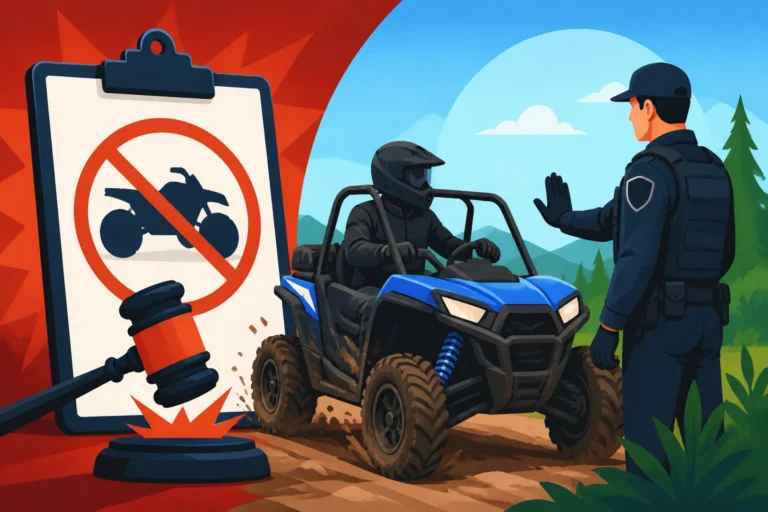
Riding an off-road vehicle in Quebec without the mandatory SAAQ registration and its included liability insurance is a serious offense, and the penalties can be steep. You are essentially operating an unregistered and uninsured vehicle, which carries significant legal and financial risks.
Here are some potential consequences:
- Fines: You can face substantial fines for riding an unregistered machine. These fines can quickly add up, turning an enjoyable ride into a very costly outing. [Quebec Penalties for Riding Unregistered] outlines these risks in detail.
- Seizure of Vehicle: In some cases, authorities have the power to seize your ATV or side-by-side if it's found to be unregistered or uninsured. Getting it back can be a lengthy and expensive process, involving additional fines, storage fees, and proof of proper registration before release.
- Personal Financial Liability: This is perhaps the most devastating consequence. If you cause an accident while riding without the mandatory SAAQ liability coverage, you are personally and entirely responsible for all damages and injuries you cause to others. This could mean paying hundreds of thousands or even millions of dollars out of your own pocket. Your house, your savings, your future earnings – everything could be at risk.
- Legal Charges: Beyond civil liability, you could face legal charges for operating a vehicle illegally.
- Invalidation of Private Insurance: If you have private insurance but your SAAQ registration (and thus your mandatory liability) has lapsed, your private policy might also be invalidated, as it often requires the vehicle to be legally registered and operated.
These consequences underscore the critical importance of keeping your SAAQ registration current and ensuring you always carry proof.
General Best Practices for Managing Your ATV Insurance
To avoid headaches and ensure you're always protected, adopting these best practices is key:
- Renew Annually: Mark your calendar for your SAAQ registration renewal. This is usually an annual process, and forgetting it can have severe repercussions. Many people choose to renew online Versus in Person for convenience.
- Keep Documents Accessible: Always carry your physical SAAQ registration certificate and your driver's license when riding. If you prefer to keep the originals safe at home, a clear, legible photocopy (or even a high-quality photo on your phone, though physical copies are preferred by some patrols) is better than nothing.
- Review Private Policies Regularly: If you have additional private insurance, review your policy annually with your broker or insurer. Ensure the coverage still meets your needs, especially if you've made modifications to your machine or its value has changed.
- Understand Exclusions: Be clear about what your private policy doesn't cover. For instance, some policies might have exclusions for racing or commercial use.
- Document Sales Properly: When buying or selling an ATV privately, ensure all paperwork is in order. A comprehensive bill of sale, perhaps drafted using a template from a service like LawDepot, clearly stating the date of sale, buyer and seller information, and machine details, is crucial for liability transfer. This helps prevent disputes and clarifies who is responsible for insurance at what point. For more on this, see [Quebec SAAQ Forms for a Private Sale].
- Report Accidents Promptly: If you're involved in an accident, even a minor one, report it to your insurance provider (both SAAQ and your private insurer if applicable) as soon as safely possible.
- Stay Informed: Laws and regulations can change. Keep an eye on official SAAQ communications or follow reputable off-road associations like the FQCQ (Fédération québécoise des clubs quads) for updates on rules and requirements.
By understanding the unique system in Quebec, embracing the mandatory coverage, considering additional protections, and following these best practices, you can enjoy your ATV or side-by-side adventures with confidence and peace of mind.
Disclaimer
This article is for general informational purposes only and does not constitute professional advice. Laws, prices and regulations vary by location and change over time. Consult a qualified professional for guidance on your specific situation.