Booking Lodging on a Long Route
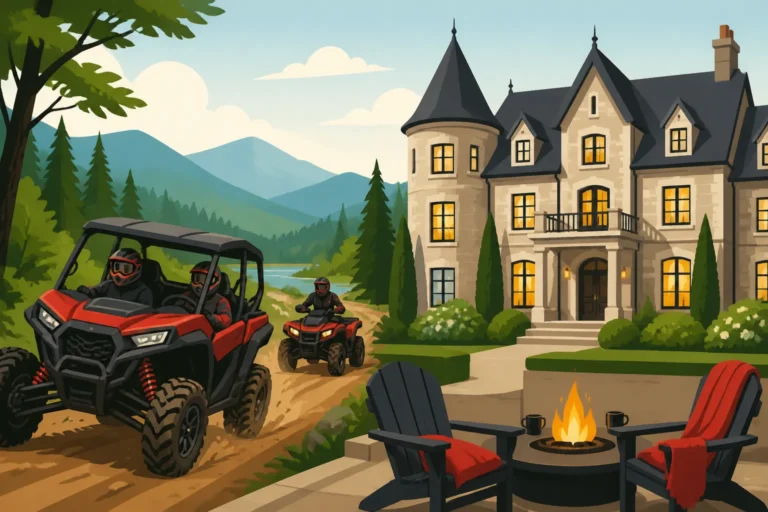
A multi-day ATV ride can unravel quickly when the day’s route is longer than expected, a trail is closed, or the lodge you booked is farther from the trail than it looked on a map. This guide explains how to plan overnight stops on a Quebec quad route, choose lodging that works for your machine, and build enough flexibility into the trip to enjoy the ride.
Plan Each Riding Day Around a Realistic Overnight Stop
Estimate the ride before choosing the lodging
Start with the route, not the hotel search. Mark your likely start and finish points for each day, then look for places to stay within a practical distance of the trail. A town that looks close on a road map may be a long detour by ATV, and a lodging address near a trail does not necessarily mean the trail provides legal access to its driveway.
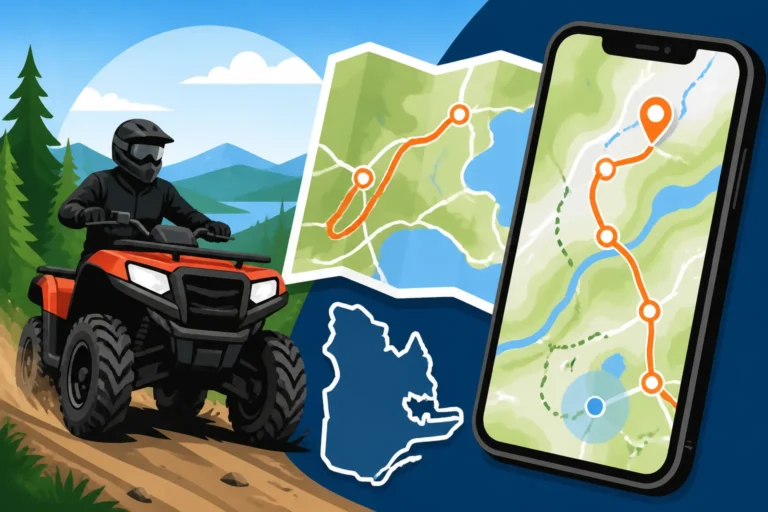
Use a route map and current trail information to estimate the day’s riding. The distance alone does not tell you how long a leg will take. Mud, rough terrain, stops for fuel, meals, photos, or mechanical checks can turn a short-looking section into most of a day. When you’re planning a route through areas such as Charlevoix, the Laurentians, or Lanaudière, avoid booking every night around an optimistic mileage target.
Tools such as the iQuad app and onX Offroad can help you review and organize route ideas, but confirm the trail status and access details with the relevant club or official trail information before committing to an overnight plan. For more background on planning a route, see Planning a Route on the Interactive Map and Quebec Trail Maps and the iQuad App.
Build the itinerary in sections, not one long line
Break the trip into manageable daily legs. For each one, identify where you expect to stop, where you could stop if you fall behind, and how you’ll reach lodging if the trail plan changes. A route through the Eastern Townships, for example, may involve different lodging and access options from a more remote ride in Abitibi or on the North Shore. Avoid assuming that every village on a road map has a nearby trail entrance, open fuel stop, or room that welcomes ATVs.
It helps to write down a simple daily plan before booking:
- Choose a likely overnight town or area.
- Confirm the trail route and the approximate riding distance to that area.
- Find a backup stop in case weather, closures, or delays shorten the day.
- Check how your group and machines will reach the lodging from the trail.
- Keep the following morning’s start point in mind before finalizing the reservation.
This approach leaves room for a scenic detour or an unexpectedly slow trail without making you feel as though one late arrival has ruined the whole trip. Guides to Quebec Trails With Lodging Along the Way and Quebec Trails for a Week-Long Trip can also help you think through the relationship between route length and overnight stops.
Leave room for the things maps cannot predict
A map can help you sketch a route, but it can’t promise that every segment will be open, easy, or suitable for your group on the day you ride. Trail conditions change with weather, seasonal closures, and local maintenance. A route that looks straightforward in planning may take longer after heavy rain or during a difficult thaw period.
Build a buffer into the itinerary. Rather than planning to arrive just before check-in, aim to have enough time for a slower ride, a fuel stop, or a minor repair. If you’re travelling with newer riders, children, or a large group, plan a shorter day than the most experienced rider thinks is necessary. That small adjustment can make the evening much less stressful.
Before departure, check Quebec Trail Conditions Before You Go. If a route is closed or changed, don’t treat a nearby private road or property as an automatic substitute. Confirm that any alternative is authorized and open to riders.
Choose Lodging That Can Actually Accommodate ATV Riders
Ask about machine parking and storage
When contacting a hotel, inn, campground, or lodge, be specific: you’re arriving with ATVs or side-by-sides, not just passenger vehicles. Ask where the machines can be parked, whether there is space for a trailer, and whether the area is secure and accessible after you arrive. If you’re travelling with several machines, explain the group size and the number of trailers before booking.
Parking details matter more than they may seem. A small lot can be difficult to navigate with a trailer, and a steep or narrow access road may be uncomfortable for a large machine. Ask whether there is a suitable place to unload and turn around, and whether the machines must be moved or trailered during your stay. Never assume that an open gravel area is available for overnight parking.
If the lodging is near a trail, ask how riders are expected to reach it. A property may be close to a corridor geographically but separated by a road, private land, or a route that is not authorized for ATV travel. If you need to trailer the machines to a trailhead, factor in the extra time and parking arrangements. Quebec Trailheads With Parking is useful background when planning where to stage a ride.
Confirm the practical details before paying
A quick call or written message can prevent a frustrating arrival. Ask whether the property accepts off-road machines and trailers, whether there are restrictions on where they can be parked, and whether you can arrive late if the ride takes longer than planned. Confirm the check-in process and what happens if weather or a trail closure delays the group.
Also ask about everyday needs that can affect a multi-day ride: meals, breakfast hours, nearby fuel, laundry, drying space for wet riding gear, and a place to clean muddy boots. These details are especially helpful when the next day begins early or the group has been riding through rain. A basic motel may be a better fit than a remote cabin if it offers easier access to food, fuel, and a place to park a trailer.
Keep the answers together with your itinerary. If someone else in the group handles the booking, make sure the lead rider has the lodging’s address and contact information saved offline or written down. On a route with weak mobile coverage, relying on a booking email that only one person can access is an avoidable source of stress.
Match the type of lodging to the trip
Different accommodations suit different riding plans. A campground may work well if you have a trailer, camping equipment, and a flexible schedule. An inn or motel may be more convenient if you want a hot shower, a meal nearby, and a quick morning departure. A lodge or outfitter property may be appealing for a remote trip, but confirm exactly what it includes and whether trail access is authorized.
| Lodging option | Often works well for | Details to confirm |
|---|---|---|
| Motel or inn | Riders who want a simple stop near services | Trailer parking, machine storage, late arrival, nearby meals |
| Campground | Groups bringing their own camping and cooking gear | Site access, trailer space, machine rules, washroom facilities |
| Lodge or outfitter property | Riders looking for a more remote base | Trail access, meals, fuel, parking, and what is included |
| Rental cabin | Groups who want shared space for the evening | Road access, parking capacity, check-in instructions, and nearby services |
The right choice depends on the route and the group, not just the room. A remote cabin may sound perfect until you discover it requires a long road detour after a full day of riding. Conversely, staying in town can be convenient but may mean arranging a trailer transfer to the next day’s trailhead.
Make the Route and Reservations Work Together
Check trail access instead of assuming it
A lodging listing that says “near the trails” is a starting point, not proof that you can ride directly from the property. Ask the owner or operator which trail access riders use, then verify that connection through current trail information. Some routes cross private land with specific permissions or conditions; a nearby property owner’s driveway is not a public connector.
This is particularly important when a group is tired and tempted to take the shortest-looking route. Stay on authorized corridors and follow posted signs. If the lodging requires you to ride across a road or use a local connector, check the applicable route rules and signs rather than relying on another guest’s description from a previous season. See Quebec Trails That Cross Private Land and Quebec Trail Etiquette Locals Expect for related planning considerations.
Use onX Offroad as one way to keep your own route notes and potential stops organized, but don’t let a line on a digital map replace confirmation that a trail is open and permitted. Mark the lodging address, the planned connection, and a fallback location. If your phone loses service, have essential details available offline or on paper.
Plan fuel, food, and arrival time together
A lodging stop is only useful if you can reach it with the fuel and daylight your group has. Look at fuel availability along the route, not just near the destination. In a remote section, the next fuel option may be farther away than expected or have hours that don’t match your arrival. Plan conservatively and ask local operators or clubs about practical services along the route. Quebec Fuel Range Between Villages offers more on this part of trip planning.
Think about meals, too. A late arrival in a small community may leave fewer options than a stop in a larger centre. Find out whether dinner is available at the accommodation, whether a nearby restaurant is open when you expect to arrive, or whether the group should carry food. If the lodging has a check-in cutoff, set a realistic turnaround time for the day rather than assuming the whole group will reach the property together.
When planning with onX Offroad, add notes for fuel stops, meal options, and the expected arrival point alongside the route. A separate written itinerary is still useful, especially if different riders are carrying different phones or mapping apps. Make sure everyone knows the backup plan if the group gets separated or has to shorten the route.
Keep the trail pass and local rules in the plan
Lodging does not replace trail requirements. Before riding, check that each machine and rider has what is required for the route and the type of trail being used. Confirm the trail pass arrangements for the machines in your group, and don’t assume a reservation or lodging package includes one. Quebec Trail Passes Cover Every Club explains why pass planning matters across the network.
Check closures and local restrictions again close to departure. Spring thaw, weather damage, hunting-season restrictions, and club updates can affect the route. A trail pass does not give permission to ride a closed trail, and booking a room near a route does not make an alternate corridor legal. If conditions change, contact the lodging provider about arrival options and adjust the route rather than pushing through an unsuitable or closed section.
For a group trip, assign one person to check trail information and another to confirm lodging details. That division of responsibility helps avoid the familiar last-minute scramble where everyone assumes somebody else checked parking, access, and closures.
A Practical Booking Checklist for a Multi-Day Ride
Before making reservations
Begin with the route outline and likely overnight areas. Then compare accommodations based on machine access, not just the room description. Ask questions before making a non-refundable commitment, especially if the route crosses remote sections or your group may arrive late.
Use this checklist for each overnight stop:
- Confirm the property accepts ATVs or side-by-sides.
- Ask about trailer parking, machine parking, and overnight security.
- Verify how riders reach the trail and whether that connection is authorized.
- Check check-in hours and late-arrival instructions.
- Ask about meals, fuel, laundry, and space to dry gear.
- Identify a backup lodging option or a shorter route for the day.
- Save the address, phone number, and directions somewhere accessible offline.
onX Offroad can be part of your planning setup for organizing stops and noting route questions, alongside current trail maps and local club information. Keep the lodging confirmation separate from your route map so another person in the group can find it if the lead rider’s phone is unavailable.
Before leaving each morning
Recheck the trail conditions and confirm that the planned route remains suitable. Look at the day’s fuel options, weather, and expected arrival time. If the group is already behind schedule, adjust the route early rather than racing toward a reservation in the evening.
A useful morning routine is to review the day’s main destination, backup stop, and any trail junctions that could cause confusion. Make sure every rider knows where the group plans to regroup and what to do if someone has a mechanical problem. For route guidance, digital tools such as onX Offroad can help you review saved notes, but riders should understand the route rather than simply following one person’s screen.
If a trail closes or weather makes the planned section a poor choice, call the accommodation and ask about changing the arrival plan. Lodging providers may not be able to rearrange a booking, but an early conversation is usually easier than trying to explain a late arrival after the day has gone sideways.
When plans change on the trail
A good itinerary is a plan, not a promise. If the group has a breakdown, a rider is tired, or a trail is closed, stop and reassess before making a detour. Contact the lodging provider when possible, then choose an authorized route or arrange a trailer pickup if necessary. Don’t improvise across private property to save time.
The most comfortable multi-day Quebec rides usually have a little breathing room: reasonable daily distances, lodging that knows machines are coming, and a backup plan for each leg. Check the trail, confirm access, and book with the practical details in mind. That preparation leaves more energy for the reason you came—to enjoy the route rather than spend the evening solving avoidable logistics.
Disclaimer
This article is for general informational purposes only and does not constitute professional advice. Laws, prices and regulations vary by location and change over time. Consult a qualified professional for guidance on your specific situation.