Skid Plates for Rocky Corridors
Rocky Quebec trails can turn a relaxed ride into a string of sharp clunks beneath your ATV or UTV. A skid plate helps shield vulnerable parts from rocks, ledges, and trail debris, but the right setup depends on your machine, route, and riding style. This guide explains what to protect, how to choose coverage, and how to inspect your guards before and after a ride.
Why rocky trails call for underbody protection
What a skid plate protects
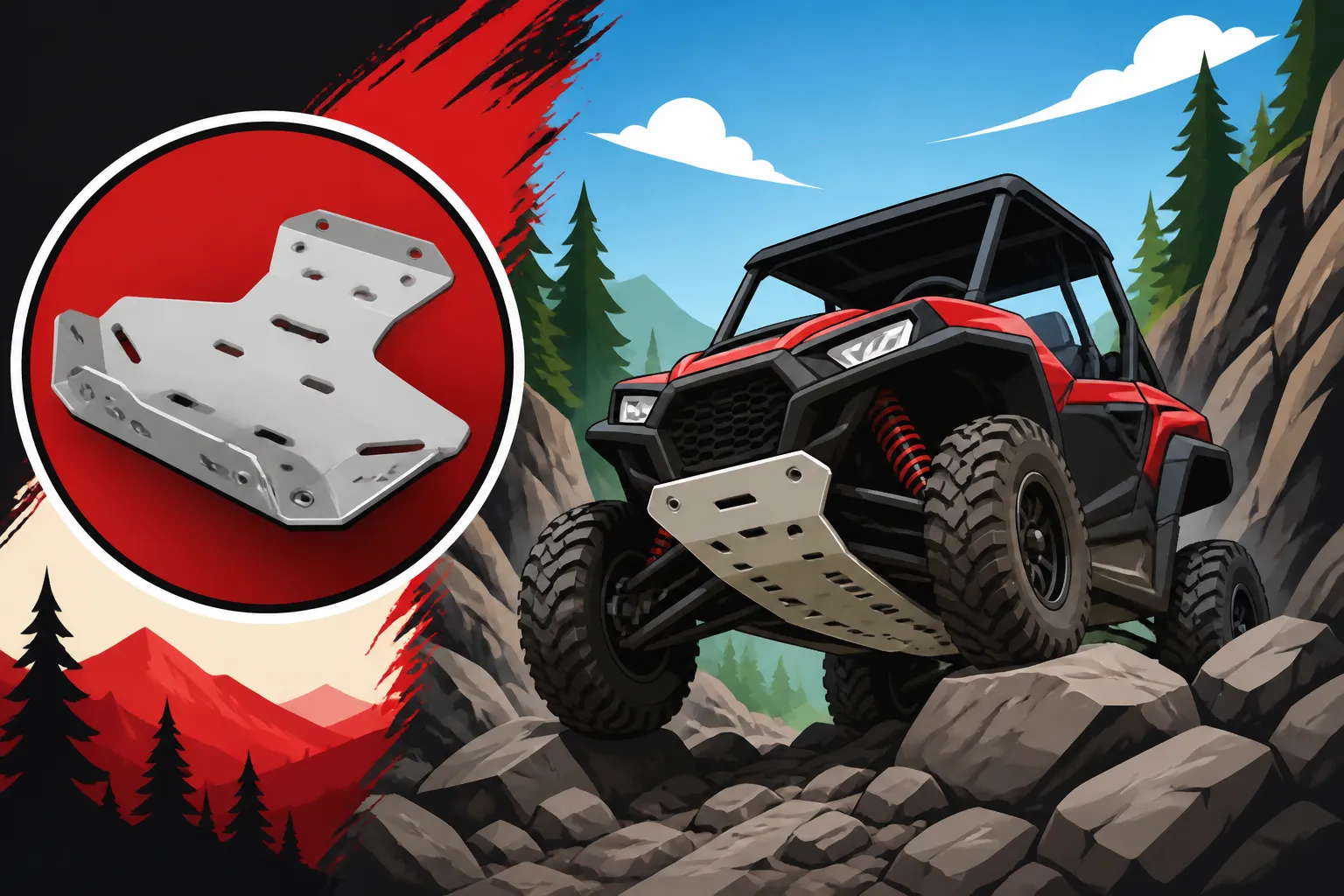
A skid plate is a protective panel mounted beneath an ATV or UTV. Depending on its shape and coverage, it can help guard the frame, engine area, transmission, and other exposed components from impacts and abrasion. Some machines also need separate guards for the A-arms, floorboards, or differential areas, so one centre plate may not protect every vulnerable spot.
The difference becomes clear when a tire drops into a rocky rut. The wheels may climb over an obstacle, but the machine’s underside can still scrape or strike the rock as the chassis follows. A plate takes some of that contact instead of leaving exposed components to meet the obstacle directly. It does not make a machine immune to damage, but it can reduce the chance that a routine scrape becomes a costly repair.
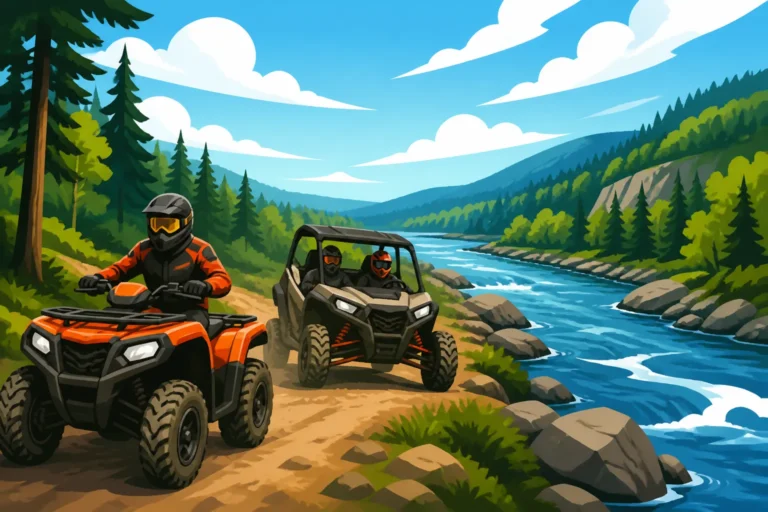
Protection matters on uneven routes around the Laurentians, Charlevoix, and other Quebec regions where trail surfaces can vary from packed earth to exposed rock. Conditions change from one segment to the next, and even familiar routes can be rougher after weather or heavy use. Checking Quebec Trail Conditions Before You Go helps you plan for the surface you may actually encounter rather than relying only on what the route looked like last season.
When a plate is most useful
A skid plate is especially useful if you ride slowly through rocky sections, cross shallow ledges, or travel with a loaded machine. At low speed, a wheel may climb a rock while the underside settles onto it. With cargo, a passenger, or a full-size UTV, extra weight can also reduce clearance, making contact more likely on the same obstacle.
That does not mean every ride requires the heaviest possible guard. A rider who sticks to smoother, well-maintained corridors may prefer lighter coverage, while someone who routinely explores rougher terrain may want more extensive protection. Use local trail descriptions and Quebec Trail Difficulty Ratings as planning aids, then remember that ratings cannot tell you exactly where every rock or rut sits.
A plate also has limits. It cannot prevent damage from every hard impact, protect parts it does not cover, or compensate for poor line choice. If you approach a sharp ledge too quickly, a stronger guard may still bend, shift, or transfer force to a mounting point. Treat protection as a backup, not permission to drive carelessly.
Choosing a skid plate for a Quebec ATV or UTV
Compare the material and coverage
Skid plates commonly use plastic-based materials such as UHMW polyethylene, aluminum, or steel. The best choice depends on the trade-offs you are willing to make: weight, noise, impact resistance, repairability, and how the material moves over rocks. Construction and mounting design vary by manufacturer, so compare plates made for your exact machine rather than assuming that material alone tells the full story.
| Plate material | Potential advantages | Possible trade-offs | Often worth considering when |
|---|---|---|---|
| UHMW polyethylene | Can slide over obstacles and resist corrosion | Can flex or wear, and quality varies by thickness and design | You want a quieter plate that can glide over rocks |
| Aluminum | Rigid protection and often lighter than steel | Can dent, scrape, or develop sharp edges after damage | You want a durable metal guard without choosing the heaviest option |
| Steel | Strong and resistant to deformation in many designs | Adds weight and can corrode if coatings are damaged | Tough impacts are a regular concern and weight is less important |
Coverage matters just as much as material. Check whether the kit protects only the centre of the chassis or includes guards for the A-arms and other exposed areas. On a UTV, look at how the panels meet around the floor and whether the design accounts for the machine’s frame and drivetrain. A gap in a high-contact area can leave an important component exposed even if the plate looks substantial from the side.
Confirm fit before purchasing or installing
Start with the exact make, model, year, and trim of your ATV or UTV. Small differences in engine layout, frame design, or factory equipment can affect fit. Ask whether the plate works with existing accessories such as a winch, frame guard, or factory underbody panel. A kit intended for a similar-looking machine may not line up with the mounting points on yours.
Consider how the plate will affect routine maintenance. Some designs require removing sections to reach service points, while others include access openings. If oil changes, belt checks, or cleaning become frustrating, it is easy to put them off. That matters on a long trip: a plate that protects the underside but traps mud or hides a problem can create its own headaches. Planning tools such as Quebec Trail Maps and the iQuad App can help with route preparation, but they do not replace checking the machine before heading out.
Also inspect the mounting system. Fasteners should be accessible and the plate should sit securely without rattling or pinching hoses, wiring, or moving parts. If the fit is unclear, have a qualified mechanic or experienced powersports technician review the installation. The best plate is not just the one with broad coverage; it is the one that fits correctly and can be maintained.
Preparing for a rocky corridor ride
Plan the route and ride to the terrain
Before leaving, check the trail’s condition, any closures, and the expected distance between convenient stopping points. A route near Mont-Tremblant or Baie-Saint-Paul, for example, may include sections with very different surfaces, so it is unwise to assume the entire ride will be smooth or uniformly rough. Local clubs and official trail information are more useful for current access details than a general mapping layer.
Apps such as onX Offroad can be useful for organizing route information and keeping track of where you intend to ride. Use them as a planning aid, not as proof that a trail is open or that a particular section is suitable for your machine. Cross-check route plans with local trail information and Quebec Trails With Mountain Views when you are choosing a scenic ride, especially if the route description suggests changing elevation or more technical terrain.
On rocky ground, slow down enough to read the path ahead. Choose a line that keeps the wheels moving over obstacles rather than dropping the centre of the machine onto a sharp edge. If you cannot see how a rock or ledge meets the trail, stop and take a look before committing. A passenger can help spot obstacles, but agree on simple, clear signals before setting out.
Pack for the machine, not just the distance
A skid plate cannot prevent a flat tire, a loose fastener, or a belt problem. Pack basic tools suited to your machine, a tire repair kit, and recovery equipment appropriate for the route. On a longer outing, Carrying a Spare Belt on a Long Circuit is worth considering if your machine uses a belt drive and the trip takes you well away from easy support.
Mud, leaves, and debris can collect around the underside and interfere with cooling or inspections. Build in time to clear packed material at safe stops, particularly if the route follows wet ground or brushy sections. Keeping a Radiator Clear on a Long Circuit covers another related maintenance concern: protection and cooling both deserve attention when the ride is long and conditions are messy.
Traveling to a regional trailhead also changes what you need to prepare. Secure the machine properly for transport, and check that added guards do not interfere with tie-down points or loading. If you trailer to a route, Trailering to a Regional Trailhead can help you think through the logistics before the riding day begins.
Inspecting and maintaining skid plates
Check before each ride
Before starting the engine, look over the plate for cracks, deep gouges, loose fasteners, and signs that it has shifted. Pay extra attention around attachment points and seams. A plate that has been pushed upward or bent inward may rub against moving parts or leave a new gap in the area it was meant to protect.
If you hear a new rattle or scraping sound, stop somewhere safe and investigate. A loose fastener can worsen quickly on rough ground. Do not reach under a machine that is unstable, running, or supported only by a jack; park on firm, level ground and follow the manufacturer’s safety instructions before inspecting underneath.
After the inspection, check that the plate has not blocked access to anything you need to confirm before departure. Look for leaks, loose wiring, or debris that might have become trapped. If the plate must be removed to inspect a suspected problem, do not assume that a quick glance from the outside is enough.
Clean and reassess after the ride
After a rocky outing, wash off mud and grit so you can see the plate clearly. Look for fresh impact marks, bent sections, and damaged or missing hardware. Scratches are expected with use; a sharp edge, a plate that no longer sits flush, or a loose mounting point deserves closer attention before the next ride.
Notice where the marks appear. Repeated contact in one area may suggest that the plate’s coverage is incomplete, that the machine is regularly bottoming out, or that your line through that section needs adjustment. If you make changes to the protection, verify that the new setup still allows adequate clearance and access for maintenance.
Finally, keep route etiquette in mind. Stay on authorized corridors, respect closures, and avoid widening a trail to get around an obstacle. Following Quebec Trail Etiquette Locals Expect helps protect access for other riders and the communities that host trail networks. Good protection can help your machine handle incidental contact; careful riding helps reduce the contact in the first place.
Disclaimer
This article is for general informational purposes only and does not constitute professional advice. Laws, prices and regulations vary by location and change over time. Consult a qualified professional for guidance on your specific situation.