500 Metres Where Terrain Forces It
It’s a scenario many of us have faced out on the trails: you’re riding along, enjoying the Quebec wilderness, when suddenly you hit a section that’s completely impassable. Maybe a massive rock slide, a washed-out bridge, or a swampy bog that just swallowed the last rider whole. You look around, and the only way to get to the other side of this natural barricade is a brief, frustrating detour onto a public road. This is where Quebec's specific rules around off-highway vehicle (OHV) access, particularly the rarely understood 500-metre terrain exception, become incredibly important for staying legal and safe.
Understanding Quebec's Default Stance on ATVs and Roads
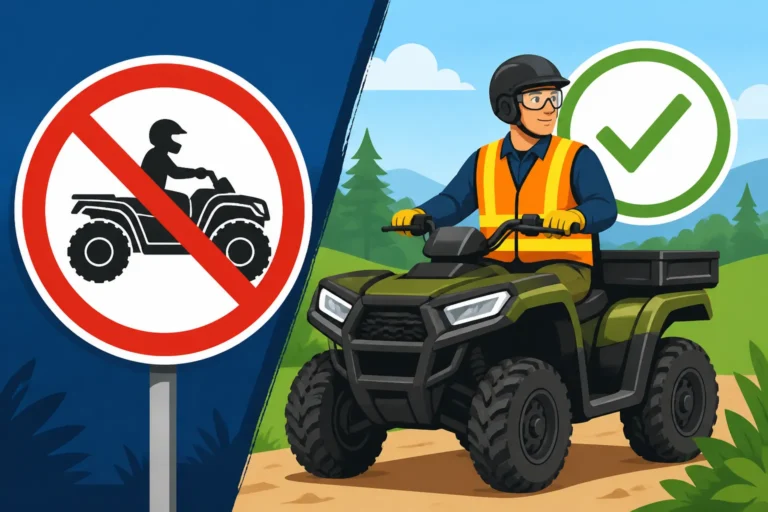
Let's get real for a moment: in Quebec, your ATV or side-by-side isn't generally welcome on public roads. The Act respecting off-highway vehicles, or LVHR, is quite clear on this. For good reason, too – these machines are designed for rugged terrain, not sharing asphalt with cars and trucks at highway speeds. The province wants to keep everyone safe, both riders and other motorists. It’s not about being restrictive just for the sake of it; it's about minimizing risks where our machines simply don't belong.
The default rule is that you generally can't ride your quad or side-by-side on public roads. This isn't just a suggestion; it's a fundamental principle of [Quebec ATV Road Rules Under the LVHR]. You might wonder why, especially if you're just trying to get from one section of a trail to another. But think about the differences in braking distance, turning radius, and visibility between a quad and a car. It's a different beast entirely.
However, the law isn't entirely black and white, and there are situations where you can briefly use a road. The most commonly known exception allows you to travel up to one kilometre on a public road to reach services like a gas station or restaurant, or to connect two authorized trail sections. This is a practical allowance for riders, recognizing that our adventures often need a pit stop or a brief hop to keep going. But what about when nature itself throws a wrench in your plans? That's where the less-discussed 500-metre rule comes in, specifically for those moments when the terrain dictates your path.
The Specifics of the 500-Metre Terrain Exception
This particular rule, often overlooked or misunderstood, is a genuine lifeline for riders facing truly impassable conditions. Quebec's LVHR makes an allowance for using a public road for a distance not exceeding 500 metres "where the characteristics of the terrain or the presence of an obstacle prevent the circulation of off-highway vehicles off the public highway." This isn't a free pass for convenience; it's a clause for necessity.
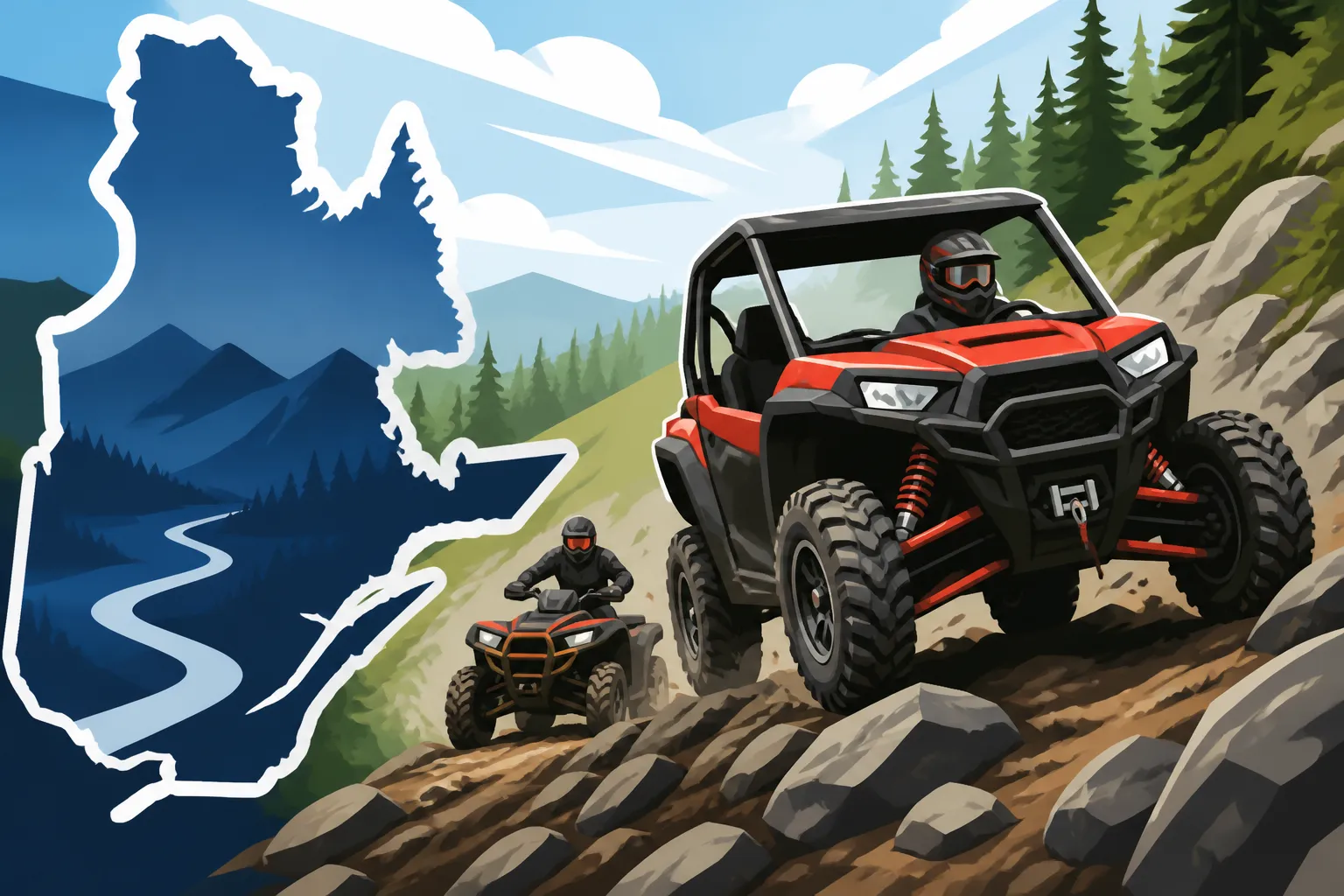
Imagine you're on a marked trail, deep in the Laurentians, and you come across a section where a recent landslide has completely wiped out the path. There's no way around it through the forest – it's too dense, too steep, or there's a river on one side. The only viable option to continue your ride, or even to get back to a safe point, is to hop onto a nearby, low-traffic public road for a short stretch. That's the kind of scenario this 500-metre rule is designed for. It acknowledges that sometimes, the natural environment presents challenges that require a temporary, brief deviation onto a road.
What exactly constitutes "characteristics of the terrain" or "the presence of an obstacle"? Think beyond just a small puddle. We're talking about things like:
- Massive Washouts: A significant portion of the trail has been eroded by heavy rains or a spring thaw, creating a chasm too wide or deep to safely cross.
- Landslides or Rockfalls: Large amounts of debris blocking the trail, making it dangerous or impossible to navigate with an OHV.
- Flooded Sections: An area of the trail that is completely submerged, well beyond what your machine can safely handle, with no clear bypass.
- Structural Damage: A trail bridge is out, or a culvert has collapsed, and the only alternative is a brief road segment.
- Dense, Impenetrable Forest: While you might try to bushwhack around a smaller obstacle, this rule applies when the off-trail terrain is genuinely impassable (e.g., dense, protected wetland; steep, unrideable rock faces; unyielding thicket).
Crucially, this isn't about choosing to use the road because it's slightly faster or less bumpy than the adjacent trail. It's about being forced onto the road because the off-road option is simply not possible. This distinction is vital, especially if you ever have to explain your presence on the road to a patrol officer. They'll want to see evidence of that necessity. You can't just claim the trail was "too muddy" if there was a reasonable, albeit less comfortable, way through. This rule is designed for extreme situations, not mild inconveniences.
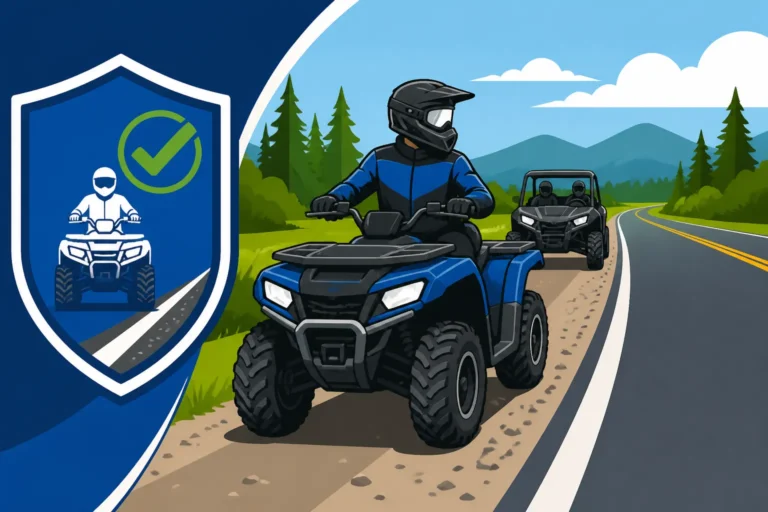
When you do find yourself needing to use this exception, remember that all other road rules still apply. This includes maintaining appropriate speeds – usually 50 km/h for ATVs on any road segment, or lower if posted – and exercising extreme caution. You're still sharing the road with vehicles that are faster and larger. Always ride on the shoulder of the road if one exists, and stay as far to the right as safely possible. You'll want to review [Quebec's 50 km/h Speed Limit for ATVs] and ensure your machine is equipped with all necessary lighting and mirrors for visibility, as per [Quebec Lighting Requirements at Night] and [Quebec Mirror Requirements on a Quad].
Here’s a quick comparison of the two main road access exceptions in Quebec:
| Rule Category | Maximum Distance | Primary Purpose | Conditions | Burden of Proof |
|---|---|---|---|---|
| Standard Road Access (e.g., LVHR Art. 21) | 1 Kilometre | To access services (fuel, food, lodging) or link authorized trail sections. | Road must be designated for OHV use or necessary to complete a route; ride on shoulder. | Proving destination (e.g., gas station) or trail continuity. |
| Terrain Exception (LVHR Art. 22) | 500 Metres | To bypass an impassable obstacle or terrain feature on a trail or private land. | Only when the off-road terrain forces it; no reasonable alternative exists. | Demonstrating the absolute necessity due to specific, impassable terrain/obstacle. |
Practical Considerations and What to Expect on the Trail
So, you're out on the trail, you encounter that unavoidable obstacle, and you make the decision to use the 500-metre terrain exception. What should you keep in mind, and what if you get stopped?
First and foremost, documentation. While you won't have a specific permit for this, having a detailed trail map (or a reliable GPS app like iQuad) that clearly shows the official trail and the nature of the obstacle can be helpful. If you can quickly point to where the trail is blocked and why your temporary road use is necessary, it can go a long way in explaining your situation to a patrol officer. Sometimes, a quick photo on your phone of the impassable section might even be useful, although it's not a legal requirement.
The burden of proof often falls on the rider. This means if you're stopped, you'll need to articulate why you had no other choice but to use the road. It's not enough to say "the trail was bad." You need to be specific: "The trail was completely washed out by the stream at km 42, and there was a sheer rock face preventing an off-trail detour, so I had to use this 300-metre section of road to get back onto the trail at km 42.3." Being clear, calm, and factual can make all the difference. Remember, patrol officers are there to enforce safety and the rules, but they're also human and understand that unforeseen circumstances arise. Just ensure you're genuinely within the spirit of the law. [What a Patrol Can Ask to See] includes your driver's license, proof of registration, and proof of insurance, so always have those handy. For more on what to carry, check out [Carrying Papers on a Long Ride].
Speaking of terrain, preparing your machine for Quebec's varied landscapes is always a good idea. Sometimes, a little extra ground clearance from a lift kit or more aggressive tires can make the difference between needing this 500-metre exception and being able to push through a tough spot off-road. Companies like SuperATV offer a range of aftermarket parts, from heavy-duty skid plates to robust winches, which can be invaluable when navigating particularly challenging terrain. While these accessories won't get you out of a fine if you're abusing the road rules, they can certainly help you stay on the trail in the first place, reducing the likelihood of ever needing this exception. Imagine having SuperATV rock sliders that let you scrape over a difficult section you might otherwise have bypassed on the road!
It’s also important to be aware that abusing this rule can lead to significant fines. [Quebec Fines for Riding a Public Road] can be steep, so treating this exception casually is a risk not worth taking. This is not a loophole; it’s a safety valve for legitimate situations.
Staying Safe and Legal When Using Road Access Exceptions
Whenever you find yourself on a public road, even for a short, legally sanctioned detour, safety has to be your absolute top priority. You're entering an environment where other vehicles are moving much faster, and they may not be expecting an OHV.
Here are some critical points to remember:
- Visibility is Key: Ensure your headlights, taillights, and brake lights are all functioning perfectly. If you have any additional reflective gear or bright colours on your machine or riding apparel, use them. Consider aftermarket lighting options, perhaps from SuperATV, to enhance your presence on the road, especially if it’s an overcast day or dusk.
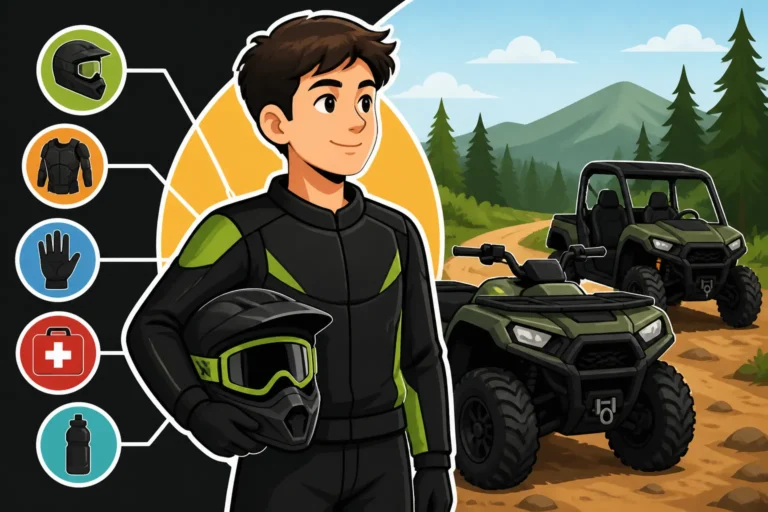
- Helmet and Gear: Your helmet isn't just for trails; it's absolutely mandatory on any public road. Make sure it's properly fastened and that your visor or goggles provide clear vision. Check out [Quebec Helmet and Visor Rules] for full details.
- Stay Alert: Always be vigilant for other traffic, pedestrians, and cyclists. Scan ahead, check your mirrors frequently, and be prepared to react quickly.
- Speed Limits: Adhere strictly to the posted speed limits. Even if the road feels empty, maintaining a safe, controlled speed is essential. For most ATVs, this means a maximum of 50 km/h, but always respect lower posted limits.
- Ride Right: Stay as far to the right side of the road as safely possible, preferably on the shoulder if it's wide enough and stable.
- Check Local Bylaws: While the 500-metre rule is provincial, some municipalities might have specific nuances or additional signage requirements for OHV use on their roads. It's always a good idea to be aware of [Quebec Municipal By-Laws on Riding Hours] or other specific local regulations if you're riding in a new area.
Using a public road for even 500 metres can feel a bit nerve-wracking if you're not used to it. The key is to be prepared, understand the specific circumstances that allow it, and execute the manoeuvre with utmost caution and respect for other road users. This exception is a testament to Quebec's comprehensive approach to off-highway vehicle management, providing necessary flexibility for riders while maintaining a strong emphasis on safety.
Disclaimer
This article is for general informational purposes only and does not constitute professional advice. Laws, prices and regulations vary by location and change over time. Consult a qualified professional for guidance on your specific situation.