Quebec Road Signage for Quad Routes
It can be incredibly confusing and even a bit frustrating to navigate Quebec's road network on your quad or side-by-side, especially when you're trying to figure out where you're actually allowed to be. The rules aren't always immediately obvious, and a wrong turn can quickly lead to a hefty fine. This comprehensive guide is here to cut through the confusion, helping you understand the specific road signage you'll encounter on Quebec's quad routes and what each sign truly means for your adventure.
Deciphering the Basics: What You'll See on Quebec Roads
When you're out exploring the vast network of trails and linking segments in Quebec, understanding the road signs is paramount. They’re not just suggestions; they are the law, and they dictate where your machine can and cannot travel on public roads. Ignoring them can land you in hot water, so let's break down the most common ones.
The 'Autorisé' Sign: Your Green Light for a Kilometre
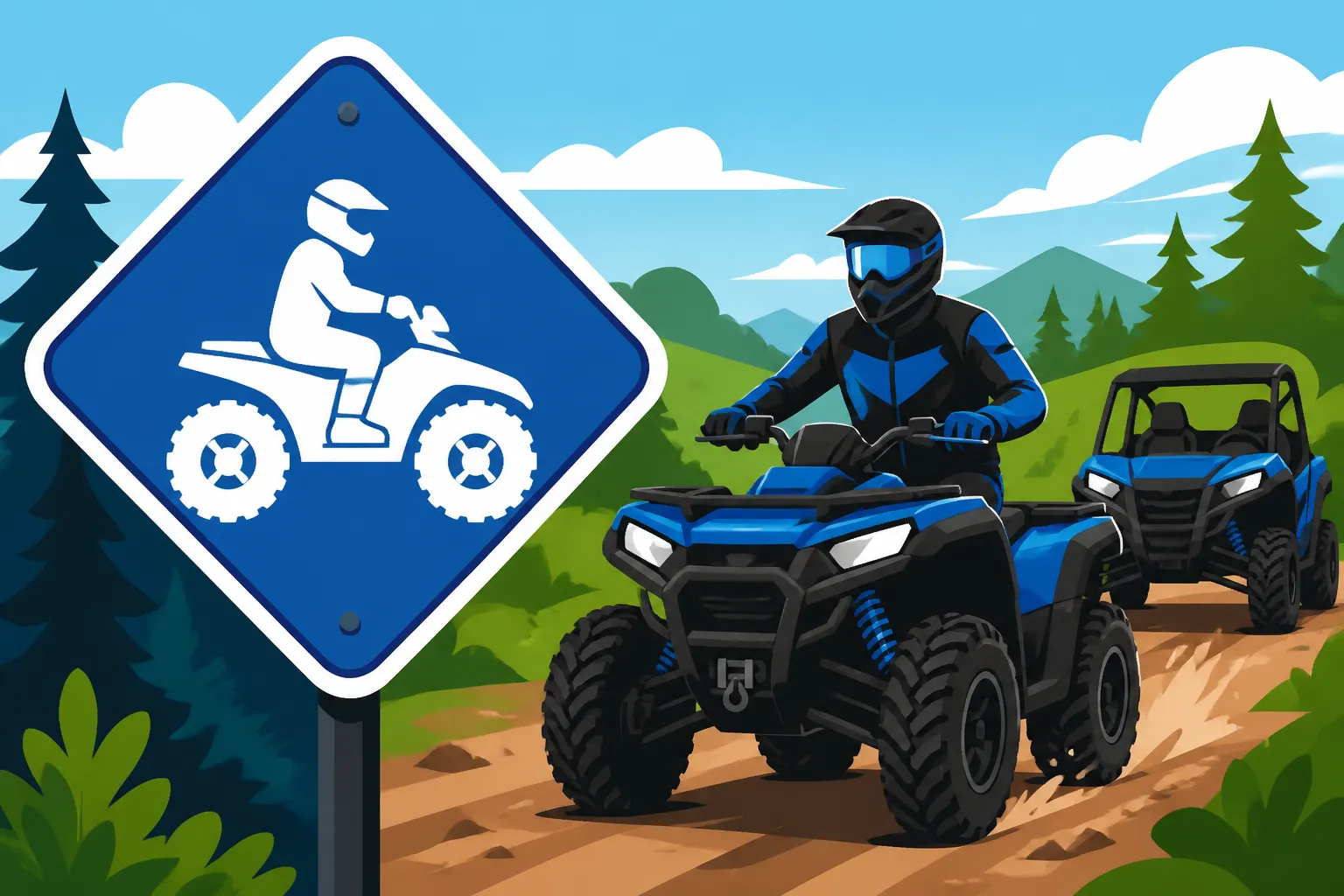
This is arguably the most important sign you'll look for when your trail intersects with a public road. The "Autorisé" sign, often green in colour and typically featuring a stylized quad symbol, is your signal that you are permitted to travel on that specific road segment. However, there's a crucial caveat: this permission is usually limited to connecting trail segments. For most general road access, [Quebec Municipal Road Access Up to 1 Kilometre] is the rule of thumb.
Imagine you're zipping along a beautiful federated trail, and suddenly it ends at a paved road, only to pick up again a short distance down the line. That "Autorisé" sign is telling you, "Okay, you can use this road here." It's designed to help you bridge those gaps, whether it's to reach a gas station, grab a bite at a roadside diner, or simply connect to the next section of your ride. It’s not an open invitation to cruise through town like you’re in your car. It’s a very specific, limited privilege meant to facilitate your off-highway vehicle experience, not replace it with on-road travel. Always keep your eye out for these signs when transitioning from trail to road, and be prepared to get back on the trail quickly.
The 'Interdit' Sign: Knowing Where You Can't Go
Just as important as knowing where you can go is knowing where you cannot. The "Interdit" sign is pretty universal in its meaning: "forbidden" or "prohibited." In the context of quad routes, this sign will often feature a quad symbol within a red circle, crossed by a diagonal line. When you see this, it’s a non-negotiable directive: do not proceed with your off-highway vehicle on that road or street.
These signs are strategically placed to protect public safety, maintain peace in residential areas, and prevent damage to specific road types not designed for off-highway vehicles. You might encounter them on busy highways where quad traffic would be dangerous, or on quiet residential streets where residents don't want the noise or disturbance. Ignoring an "Interdit" sign can lead to significant penalties, including the fines detailed in [Quebec Fines for Riding a Public Road]. It’s easy to think, "Oh, it's just a short stretch," but law enforcement patrols take these restrictions very seriously. Always respect these signs; they're there for a reason, and trying to skirt around them is a surefire way to get a ticket and potentially endanger yourself or others.
Beyond the Basics: Understanding Specific Road Contexts
Quebec's approach to integrating off-highway vehicles into its road network isn't always straightforward. Beyond the basic "authorized" and "forbidden" signs, you'll encounter specific situations and local variations that require your attention.
Crossing Roads: The 'Traversée' and 'Arrêt' Signs
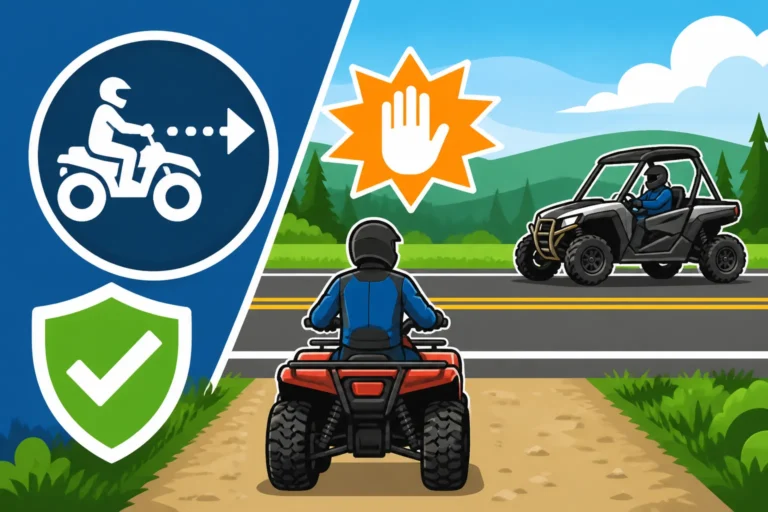
Sometimes, the trail doesn't just run parallel to a road; it crosses it entirely. These crossing points are critical junctures where extra vigilance is needed. You'll often see signs indicating a "Traversée," which simply means "crossing." These signs alert both quad riders and motorists to the presence of an upcoming intersection where off-highway vehicles will be entering or crossing the road.
At these crossings, you’ll almost certainly encounter "Arrêt" (Stop) signs. Just like in a car, you must come to a complete stop, look both ways, and yield to all traffic on the public road before proceeding. This isn't a suggestion; it's a legal requirement designed to prevent accidents. Riders need to be acutely aware of [Quebec Crossing Sightline Distances], ensuring they have a clear view of oncoming traffic, and always aim for [Quebec Crossings at Right Angles] to minimize time spent in the roadway. Even if the trail seems quiet, always assume a vehicle could appear. Safety is paramount at these points, and taking shortcuts or rolling through a stop sign is incredibly dangerous and illegal. Your machine might be sturdy, but it's no match for a speeding truck.
Municipal By-Laws and Local Signage
This is where things can get a little more intricate, and where relying solely on general rules might lead you astray. While the provincial law generally limits road access to one kilometre for connecting trail segments, certain municipalities have adopted specific by-laws that can either expand or further restrict quad access on their local roads. This means you might find specialized local signage indicating longer authorized distances or specific routes designated for off-highway vehicles.
These signs might state "Quad Route" for several kilometres, or specify hours of operation for certain road sections. It's truly a patchwork, and you can't assume that what applies in one town will apply in the next. This is why checking with local clubs or municipal websites is so important, especially if you're exploring a new area. [Quebec Municipalities That Opened Roads] often do so with clear signage, but it's your responsibility as a rider to understand these local nuances. When you're kitting out your machine, consider adding robust mirrors or a sturdy phone mount from a brand like SuperATV. These can be incredibly helpful for quickly checking your GPS or a downloaded map to confirm you're on a legal route, or to make sure you're clearly visible to other road users, whether on a short link or a specially designated municipal stretch. Always be on the lookout for these local variations, as they can significantly impact your ride.
Practical Tips for Navigating Quebec's Signed Routes
Navigating Quebec's mix of trails and road access requires a blend of awareness, preparation, and smart use of available tools. It's not just about seeing a sign; it's about understanding its context and planning your ride accordingly.
Combining Signage with Your GPS and Maps
In today's world, there's no excuse for getting truly lost, especially with the incredible resources available to quad riders. While road signs are your primary real-time guide, they should always be cross-referenced with your GPS unit or a dedicated off-highway vehicle mapping app like iQuad. The [Quebec Trail Maps and the iQuad App] are invaluable tools for pre-planning your route and confirming on the fly that you're staying on designated trails and authorized road segments.
Before you even leave your staging area, take the time to download maps and plan your circuit. Mark potential road crossings and stretches where you expect to encounter "Autorisé" signs. This way, when you see a sign, you'll have context. If a sign seems unclear or is missing, your GPS can often confirm if you're still on a federated route that legitimately uses a road connection. It's like having a co-pilot that knows the rules. Don't rely solely on one or the other; use signs for immediate direction and your GPS/maps for overall route confirmation and backup. This dual approach helps you ride confidently and legally.
What to Do When Signs Are Missing or Confusing
Let's be realistic: not every sign will be perfectly placed, pristine, or even present. Sometimes, signs get vandalized, knocked down by weather, or are simply unclear. It's a frustrating scenario that every rider eventually faces. When you're confronted with missing or confusing signage, your best course of action is to err on the side of caution.
If you're unsure about the legality of a road segment, your safest bet is to turn back and find an alternative route, or consult a local trail map or app. If you have cell service, try to reach out to the local club responsible for that section of trail – their contact info is often on the federated trail maps. Never assume that the absence of a "No Quads" sign means you're allowed to proceed. The general rule is that roads are interdit unless specifically marked otherwise, or unless you are using them for a permitted [Quebec Municipal Road Access Up to 1 Kilometre] connection. Trail patrols, who know the routes intimately, will still enforce the rules even if a sign is temporarily out of place. Investing in reliable and visible safety equipment, like a bright LED light bar or robust mirrors from SuperATV, can also contribute to your safety and compliance when you do find yourself on a permitted road segment, ensuring other traffic sees you clearly. Remember, it's better to be safe, turn around, and potentially miss a short section than to risk a fine or, worse, an accident.
The Legal Implications of Ignoring Road Signage
Riding off-highway vehicles in Quebec is a privilege that comes with significant responsibilities, especially when interacting with the public road network. Disregarding signage isn't just a minor oversight; it carries real, tangible consequences.
Penalties for Non-Compliance
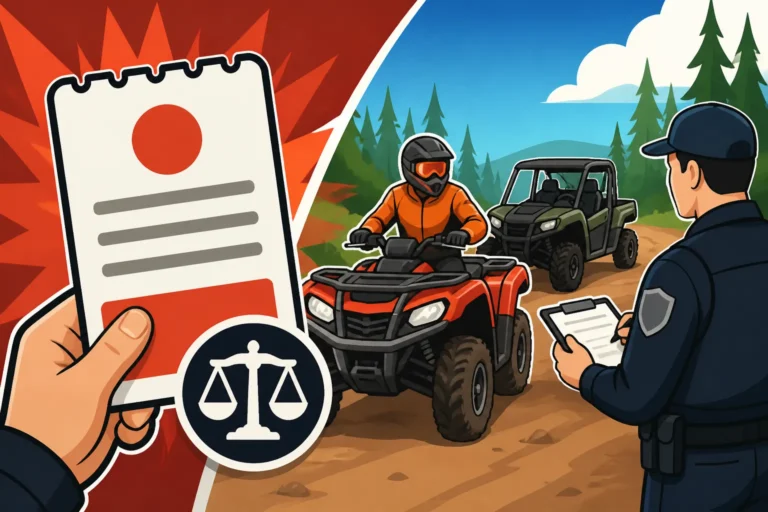
The provincial government and local municipalities don't put up road signage for decoration. These signs are legal directives, and ignoring them is a direct violation of the [Quebec ATV Road Rules Under the LVHR]. The penalties for non-compliance can be steep and can quickly turn a fun ride into a very expensive day.
Fines for riding where prohibited, especially on municipal roads without proper authorization, can easily start in the hundreds of dollars. These aren't just minor infractions; they're tickets that often come with additional administrative fees and can escalate rapidly if other violations are tacked on, such as speeding or not having the proper papers. In severe or repeat cases, law enforcement might even have the authority to impound your machine, leaving you with the headache and expense of retrieving it. It's important to understand that ignorance of the signs is not considered a valid defense in court. You, as the operator, are expected to know and follow the rules, and that includes understanding all the relevant signage. Don't risk your wallet or your riding privileges; always pay close attention to the directives on the signs.
The Importance of Knowing the [Quebec ATV Road Rules Under the LVHR]
While road signage provides immediate, location-specific instructions, it's really just one piece of a larger puzzle. The foundation of responsible off-highway vehicle operation on or near public roads in Quebec lies in a thorough understanding of the overarching [Quebec ATV Road Rules Under the LVHR]. This legislation dictates everything from [Quebec ATV Age Requirements] and [Quebec Helmet and Visor Rules] to speed limits and passenger rules, all of which apply when you're on a legal road segment.
A sign might tell you where you can ride, but the law tells you how you must ride. For instance, even on an "Autorisé" road stretch, you must still adhere to the [Quebec's 50 km/h Speed Limit for ATVs], ensure your machine meets [Quebec Equipment Checks by Patrols] (like proper lighting and mirrors), and always carry your [Carrying Papers on a Long Ride] including your driver's license and proof of registration. The system is designed to create a safe environment for all road users. Understanding the full scope of the law, rather than just isolated signs, empowers you to make informed decisions, stay safe, and avoid unnecessary penalties. The LVHR replaced older legislation, and [Quebec's 2021 Law and What Changed] significantly altered many aspects of quad riding, particularly regarding road access, so staying current with these regulations is essential for any rider.
| Sign / Type | Appearance | Meaning for Quads | Implications |
|---|---|---|---|
| Autorisé | Green, often with quad symbol | Permitted to use this road segment. | Usually for short connections (e.g., [Quebec Municipal Road Access Up to 1 Kilometre]), follow all road rules. |
| Interdit | Red circle, diagonal line over quad symbol | Prohibited from using this road/street. | Do not enter; [Quebec Fines for Riding a Public Road] apply if ignored. |
| Traversée | Yellow diamond, quad crossing symbol | Upcoming trail crossing point. | Be prepared to stop, yield, and cross safely. |
| Arrêt | Red octagon with "ARRÊT" | Stop sign at a crossing or intersection. | Come to a complete stop, look for traffic, yield, then proceed. |
| Local By-Law Sign | Varies, might specify "Quad Route" + distance | Specific local rules for extended road access or routes. | Consult local municipality or club for details; may override general 1km rule. |
Disclaimer
This article is for general informational purposes only and does not constitute professional advice. Laws, prices and regulations vary by location and change over time. Consult a qualified professional for guidance on your specific situation.