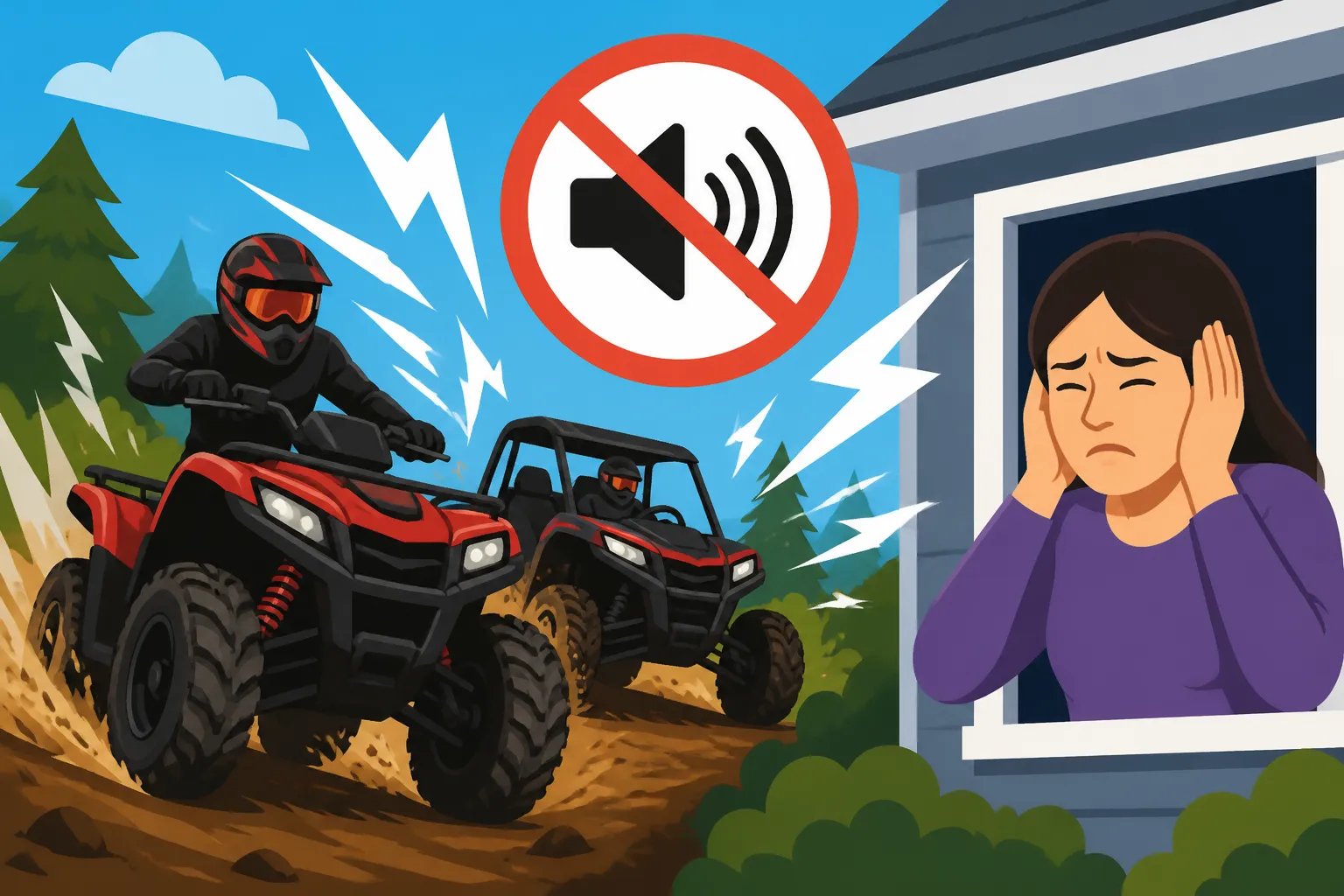
Quebec Noise Complaints About Quads
It can be incredibly frustrating when the peace and quiet of your home or cottage is interrupted by the roar of an off-highway vehicle, especially if it feels like it's happening at all hours or too close for comfort. For those who ride, it's just as frustrating to be unfairly targeted or to unwittingly cause a disturbance. This comprehensive guide aims to shed light on Quebec's regulations surrounding quad and side-by-side noise, how to navigate complaints effectively, and most importantly, how to foster a more respectful co-existence between riders and residents.
Navigating the Reality of Quad Noise in Quebec
Let's be honest, the sound of an ATV or UTV is an inherent part of the experience for many riders. It’s the engine working, the tires gripping, the thrill of the trail. But for those living near popular riding areas, or even just in a community where quads are common, that same sound can quickly become a nuisance, disrupting everything from a quiet morning coffee to an evening spent with family. It's a classic case of one person's passion becoming another's pain point, and Quebec is no stranger to these types of tensions.
The perception of noise is highly subjective, which makes these situations so tricky to resolve. What one person considers a pleasant rumble, another perceives as an unbearable din. This is why understanding the official rules and embracing good neighbour practices is crucial. Ignoring the issue doesn't make it go away; it often just escalates tensions. We've all heard stories of neighbours at odds, and when motorized recreational vehicles are involved, emotions can run high on both sides.
The Fine Line Between Enthusiast and Nuisance
For many quad enthusiasts in Quebec, riding is a cherished pastime, a way to explore the vast landscapes and connect with nature. They invest in their machines, their gear, and their trail passes, eager to hit the extensive [Quebec ATV Trails: The FQCQ Network]. The sound of their machine is often just background to their adventure. However, for those on the receiving end of that sound, especially when it's prolonged, repetitive, or occurs at inappropriate times, it crosses a line from recreational activity to outright disturbance.
Consider a family trying to enjoy a quiet evening meal on their deck, only to have the conversation drowned out by a group of quads passing repeatedly on a nearby trail or accessing a road. Or a shift worker trying to sleep during the day, constantly woken by the sound of engines. These aren't isolated incidents; they're real scenarios that lead to genuine frustration and, eventually, complaints. The challenge lies in respecting both the right to enjoy one's hobby and the right to peaceful enjoyment of one's property. It's not about stopping people from riding; it's about finding a balance that allows everyone to co-exist without constant friction.
Where Noise Complaints Typically Originate
Noise complaints rarely come out of nowhere. They usually stem from repeated incidents or particularly egregious disturbances. Common sources of complaints include:
- Proximity to Residential Areas: Machines operating too close to homes, especially when the [Quebec's 100 Metre Rule Near Homes] is violated or perceived to be violated.
- Operating Outside Permitted Hours: Riding very early in the morning or late at night, which directly contravenes [Quebec Riding Hours From 6 a.m. to Midnight]. Even within these hours, frequent or loud operation can still be disruptive.
- Modified Exhaust Systems: Aftermarket exhausts that amplify engine noise beyond legal limits. Some riders seek a louder, more aggressive sound, but this often comes at the expense of community peace.
- Aggressive Riding Styles: Excessive acceleration, "blips" of the throttle, or prolonged high-RPM operation that might be thrilling on a wide-open trail but is incredibly annoying in a residential setting.
- Lack of Awareness: Sometimes riders genuinely don't realize how far sound travels or how much their machine impacts those nearby. This often happens in areas where trails pass through or near small villages.
- Unauthorized Access: Riding on private land without permission, or using trails that are not federated, can lead to complaints not only about noise but also about trespassing.
- Specific Events: Large groups of riders, poker runs, or other organized events can generate a significant amount of collective noise, leading to many complaints from a concentrated area.
Understanding these common origins helps both residents know what to document and riders know what to avoid. It’s about being mindful of context and community.
Quebec's Specific Rules and What They Mean for Riders
Quebec has a framework of rules designed to manage off-highway vehicle use, including aspects that indirectly address noise. While there isn't a specific "decibel limit" posted for every trail, the spirit of the law and various regulations aim to prevent excessive noise. It's not just about the Act Respecting Off-Highway Vehicles (LVHR); it also involves municipal bylaws and the common-sense obligations that come with being a good neighbour.
Riders need to be aware that their actions, and the condition of their machines, can have legal ramifications beyond just trail infractions. Unregistered machines, improper equipment, or outright defiance of noise expectations can lead to fines and legal headaches. It’s not just the trail patrols you have to consider; it’s also the local police force and municipal authorities.
Legal Limits and Official Riding Hours
The primary piece of legislation governing ATVs and UTVs in Quebec is the Act Respecting Off-Highway Vehicles (LVHR). While this act doesn't typically specify precise decibel limits, it does have provisions that relate to responsible operation and equipment. For instance, machines must be equipped with a functional exhaust system that meets manufacturer standards and is not modified to produce excessive noise. Removing baffles or installing open headers is generally not permitted on public trails or areas where others might be disturbed. [Quebec Muffler and Noise Rules] are quite clear on this.
More directly related to noise complaints are the regulations around operating hours. The LVHR generally restricts the operation of off-highway vehicles on federated trails and authorized access roads to specific times, usually [Quebec Riding Hours From 6 a.m. to Midnight]. Riding outside these hours is a direct violation and is a common trigger for noise complaints, leading to potential fines if reported and verified by authorities. The "why" behind these hours is directly linked to respecting residential areas and ensuring people get their rest.
Municipal Bylaws and Local Variations
Here's where things can get a little more complex. While the provincial LVHR sets a baseline, individual municipalities in Quebec have the power to enact their own bylaws that can further restrict off-highway vehicle use, including specific noise provisions or extended restrictions on riding hours or access points. These local rules are incredibly important because they often reflect the specific concerns of a community.
A municipality might, for example, have a bylaw that prohibits the operation of any motorized vehicle (including quads) before 7 a.m. or after 10 p.m. within a certain distance of residential zones, even if the provincial trail hours are more lenient. They might also define what constitutes "excessive noise" within their jurisdiction. It's absolutely vital for riders to check with the local municipality or the local ATV club for any specific bylaws in the areas they plan to ride. Ignorance of a local bylaw is rarely an acceptable excuse if you're issued a fine for a noise violation. [Quebec Municipal By-Laws on Riding Hours] often come into play here, sometimes allowing or restricting certain activities beyond provincial mandates.
The Role of Equipment and Modifications
The type of equipment on a quad, particularly the exhaust system, plays a massive role in its noise output. Factory-installed exhaust systems are designed to meet certain noise standards. However, many riders choose to modify their machines, sometimes for performance, sometimes for aesthetics, and often resulting in a significantly louder vehicle. While some aftermarket parts are designed for performance without excess noise, others are specifically made to produce a more aggressive sound.
The problem arises when these modified machines are used in proximity to residential areas or on federated trails where noise is a concern. Even if a machine isn't exceeding an explicit decibel limit (which can be hard to measure on the fly for enforcement), if its exhaust system has been tampered with or replaced with a non-compliant version, it's already in violation of the spirit, if not the letter, of the law. This is where companies like SuperATV offer a range of parts. While they have performance-oriented options, riders should always consider how their modifications impact their machine's noise profile, especially if they ride near populated areas. Choosing quieter, compliant exhaust options, or ensuring your stock system is in good repair, is a simple way to be a responsible rider and avoid complaints. Regular maintenance, too, helps prevent rattling or loose components that can add to overall noise.
Taking Action: How to Address or Prevent Noise Concerns
When a noise issue arises, whether you're the one bothered by it or the one being accused, it’s important to know how to respond constructively. For residents, this means understanding the proper channels for complaint. For riders, it means taking proactive steps to be a good neighbour and avoid becoming a source of contention. A little bit of effort and understanding from both sides can go a long way in de-escalating potential conflicts.
The goal isn't just to stop the noise in the moment, but to foster a long-term respectful relationship within the community. When people feel heard and respected, solutions become much easier to find.
For Concerned Residents: Documenting and Reporting
If you're experiencing excessive noise from ATVs or UTVs, taking action effectively involves a few key steps. Simply yelling at riders or confronting them angrily is rarely productive and can even be dangerous.
- Document the Incident: Before contacting anyone, start keeping a detailed log. Note the date, time, duration of the noise, the type of machine (if identifiable, e.g., quad, side-by-side, colour), the direction it came from or where it was operating, and a description of the noise (e.g., loud exhaust, aggressive acceleration, repeated passes). If possible and safe, record video or audio, but avoid putting yourself in harm's way. This documentation is crucial for validating your complaint.
- Identify the Source and Jurisdiction: Is the noise coming from a federated trail, a public road, private land, or an unauthorized area? This will determine who you contact.
- Federated Trails: If the noise is on an FQCQ-federated trail, contact the local ATV club responsible for that section of trail. They often have trail patrols who can address issues, or they can relay concerns to local law enforcement.
- Public Roads/Unauthorized Areas: If machines are riding illegally on public roads or private property without permission, your first point of contact should be your local municipal police or the Sûreté du Québec. Be specific with your documentation. You can also report issues related to [Quebec ATV Road Rules Under the LVHR].
- Municipal Bylaws: If you suspect a violation of a local noise bylaw, contact your municipal bylaw enforcement office.
- Lodge a Formal Complaint: Use the appropriate channels. When speaking to authorities, remain calm and factual. Provide your detailed log. Emphasize the impact the noise is having on your quality of life. Be prepared for the process to take some time. Authorities may need to observe the problem themselves to issue warnings or fines.
- Consider Local Advocacy: If it's a widespread problem, talk to neighbours. A collective, well-documented complaint from multiple households often carries more weight than a single complaint. Attend local council meetings to express your concerns in a public forum.
For Responsible Riders: Proactive Solutions
If you're an ATV or UTV owner in Quebec, being proactive can help you avoid being the target of a noise complaint and contribute positively to your riding community.
- Maintain Your Machine: A well-maintained machine is generally a quieter machine. Check your exhaust system regularly for leaks, loose baffles, or damage. Ensure all components are properly secured to prevent rattles and excess vibration. Keeping your engine tuned correctly also helps.
- Inspect Your Exhaust: Stick to stock or approved aftermarket exhaust systems that meet noise regulations. Avoid "straight pipes" or modified mufflers that are designed to be excessively loud. If you're looking for performance upgrades, research options from brands like SuperATV that also offer quieter solutions or are clearly labelled for off-road use only, away from residential areas. Remember, your modifications reflect on the entire riding community.
- Be Mindful of Riding Hours and Locations: Always respect the [Quebec Riding Hours From 6 a.m. to Midnight] and any stricter local municipal bylaws. Avoid riding early in the morning or late at night, especially near residential zones or cottages. If you're transiting through a village or near homes to get to a trail, do so quietly and efficiently, minimizing throttle blips and high RPMs.
- Respect Setbacks: Pay attention to the [Quebec's 100 Metre Rule Near Homes] and other setback regulations when operating off-trail or on private property. Sound travels further than you think, especially across water or in open fields.
- Educate Yourself and Others: Know the rules of the road and trail, including provincial laws and local bylaws. Share this knowledge with fellow riders. The more informed the riding community is, the better everyone can represent the sport.
- Join Your Local Club: Being part of an FQCQ club means you're supporting the trail network and staying informed about local rules and etiquette. Clubs often work with municipalities to address these kinds of issues proactively. See [Quebec Club Membership and the FQCQ].
The Community Approach: Dialogue Over Division
Ultimately, many noise complaints stem from a lack of understanding or communication between riders and residents. Instead of letting tensions fester, consider how to foster dialogue. Local ATV clubs often play a vital role in this, acting as a liaison between riders and communities. They can organize meetings, post signs, and educate their members on responsible riding practices.
Here's a quick comparison of proactive vs. reactive approaches to noise:
| Feature | Reactive Approach (Complaint-Driven) | Proactive Approach (Community-Driven) |
|---|---|---|
| Trigger | Persistent, annoying noise incidents | Awareness of potential impact, desire for harmony |
| Primary Action | Filing formal complaints with authorities, confrontation | Education, maintenance, respectful riding habits, dialogue |
| Focus | Penalizing violations, stopping immediate disturbance | Preventing issues, building good neighbour relations |
| Result for Residents | Relief (if complaint is resolved), ongoing frustration if not | Quieter environment, sense of respect from riders |
| Result for Riders | Fines, negative perception, restricted access, resentment | Positive public image, continued access, community support |
| Long-Term Impact | Divisive, often leads to stricter regulations or trail closures | Sustainable riding opportunities, shared enjoyment of the region |
By choosing a proactive, community-focused approach, both residents and riders contribute to a more positive environment. This means riders taking ownership of their impact, and residents understanding that not all noise is malicious. It's about finding common ground so that everyone can enjoy the beautiful landscapes and communities Quebec has to offer, whether from the saddle of a quad or the peace of their backyard. Following good [Quebec Trail Etiquette Locals Expect] is a part of this.
Disclaimer
This article is for general informational purposes only and does not constitute professional advice. Laws, prices and regulations vary by location and change over time. Consult a qualified professional for guidance on your specific situation.