Quebec’s Minimum Age of 16 for ATV Riders
It's completely normal to feel a mix of excitement and confusion when you're looking into getting your teenager involved in ATV riding here in Quebec. The rules around age limits for off-highway vehicles, especially with the changes introduced by the Loi sur les véhicules hors route (LVHR), can feel like a maze, leaving many parents scratching their heads and worrying about compliance. This comprehensive guide will walk you through Quebec's specific minimum age requirements for ATV and side-by-side riders, ensuring you and your family can hit the trails safely and legally.
Understanding Quebec's Off-Highway Vehicle Act and Age Requirements
Quebec's approach to off-highway vehicles, or VHRs (Véhicules Hors Route), is built on a foundation of safety and accountability. Unlike some other jurisdictions, Quebec has very specific regulations governing who can ride what, and where, with age being a primary factor. It’s not just about having the physical ability; it’s about demonstrating maturity and understanding the responsibilities that come with operating these powerful machines.
The Legal Foundation: What the LVHR Says
The backbone of all off-highway vehicle regulations in Quebec is the Loi sur les véhicules hors route (LVHR), or the Off-Highway Vehicle Act. This piece of legislation dictates everything from registration to equipment, and, crucially, who is allowed to operate an ATV or side-by-side. Before September 10, 2021, the rules were a little different, and some older riders might still remember a time when a 14-year-old could ride with certain conditions. However, the updated LVHR brought significant changes, tightening the requirements to enhance safety across the board. The Act clearly defines an "all-terrain vehicle" as a VTT (Véhicule Tout Terrain) and sets the minimum age for driving one at 16 years old. It's a clear, provincial standard that leaves little room for ambiguity, designed to protect riders and other trail users alike. If you're wondering what [What the LVHR Replaced] and how these rules came about, it really boils down to a commitment to reducing accidents and ensuring a safer environment for everyone enjoying Quebec's vast trail network.
This legal framework isn't just arbitrary; it's the result of careful consideration of accident statistics, rider capabilities, and public safety. Imagine a family from out of province, accustomed to different rules, suddenly wanting to ride Quebec's magnificent trails. They might assume their 14-year-old, who's been riding for years back home, can join them. However, here in Quebec, that simply isn't the case on federated trails. The LVHR applies to everyone, resident or visitor, and ignoring these age stipulations can lead to significant penalties, not to mention putting the young rider and others at risk. It's a proactive measure, aiming to ensure that anyone operating a VHR possesses a minimum level of cognitive and physical development suitable for the task.
Why 16? The Rationale Behind the Age Limit
The choice of 16 as the minimum age for ATV operators isn't pulled out of thin air. It aligns with the age at which individuals can obtain a driver's license for passenger vehicles in Quebec, suggesting a baseline for maturity, judgment, and understanding of road rules and safety. Operating an ATV requires quick decision-making, the ability to assess terrain, understand machine dynamics, and react appropriately to unexpected situations. These are skills that are still developing in younger teenagers. A 16-year-old is generally considered to have a more developed sense of responsibility and risk perception compared to, say, a 14-year-old.
Consider the potential for serious injury. ATVs are powerful machines, and even at lower speeds, an operator's error can have severe consequences. A 16-year-old is typically better equipped to handle the weight, power, and complexities of an ATV, especially when navigating diverse terrain like rocky paths, muddy sections, or shared trails where they might encounter other vehicles or wildlife. The province isn't trying to dampen anyone's fun; rather, it's a pragmatic decision to reduce the likelihood of accidents and ensure that those behind the handlebars are adequately prepared for the demands of off-road riding. It's about minimizing the chances of a fantastic day turning into a trip to the emergency room, for themselves or for someone else.
The Distinction Between ATVs (VTTs) and Side-by-Sides (Côte-à-Côtes)
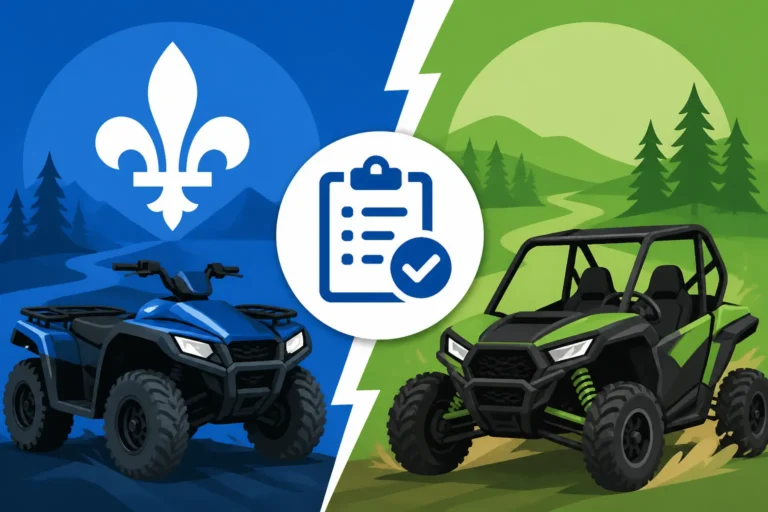
It's crucial to understand that Quebec makes a clear distinction between what most people call an ATV and what's commonly known as a side-by-side or UTV. In Quebec's legal language, an ATV is a VTT (Véhicule Tout Terrain), which generally refers to the quad-style machines where the rider straddles the seat. A side-by-side, on the other hand, is often referred to as a côte-à-côte (literally "side-by-side") or sometimes a VHR, a broader term for off-highway vehicles. While both fall under the VHR umbrella, their specific age requirements differ significantly. You might hear the term [Quebec Calls an ATV a VTT] used frequently, and it’s important to recognize this specific classification. The [Quebec's VHR Vehicle Class] encompasses both, but the rules for operating each are unique, largely due to differences in their design, passenger capacity, and perceived operational complexities.
A VTT, with its handlebars and straddled riding position, requires a specific set of balance and control skills. A côte-à-côte, with its steering wheel, foot pedals, and bucket or bench seats, often feels more like driving a small car, but its off-road capabilities and potential for high speeds present their own challenges. For instance, a 16-year-old might be eager to drive the family's new two-seat côte-à-côte, having seen similar machines in advertisements. However, this is where the specific age rules become paramount. Misunderstanding this distinction can lead to tickets, refusal of access to trails, or even more severe consequences in the event of an accident. Always verify which category your machine falls into and ensure the rider meets the specific age and licensing requirements for that vehicle type.
Specific Age Rules for ATV (VTT) Riders in Quebec
So, your teenager is turning 16, and they're dreaming of hitting Quebec's incredible ATV trails. That's fantastic! But before they rev that engine, there are a few very specific hoops they need to jump through. Quebec isn't just about an age number; it's about a combination of age, training, and licensing to ensure everyone's safety.
Riders Aged 16 and 17: The Training Certificate Requirement
For any 16- or 17-year-old who wants to ride an ATV on a federated trail in Quebec, simply turning 16 isn't enough. They must also obtain an FQCQ training certificate. The Fédération Québécoise des Clubs Quads (FQCQ) is the provincial body that oversees the vast network of ATV trails, and they mandate this training for young riders. This certificate isn't just a formality; it's a comprehensive course designed to equip young operators with essential safety knowledge, riding techniques, and an understanding of trail etiquette and the LVHR. It covers everything from pre-ride inspections and safe operating procedures to environmental responsibility and emergency preparedness.
Imagine a 16-year-old, newly licensed, eager to join their older siblings and friends on a weekend quad trip in the Laurentians. Without this specific FQCQ training certificate, even with a valid driver's license, they would be riding illegally on any federated trail. Trail patrollers, who are often members of local clubs and dedicated volunteers, have the authority to stop riders and request proof of this certification, alongside their driver's license and trail pass. The course aims to instill a proactive safety mindset, teaching young riders to anticipate hazards and make informed decisions, rather than just reacting to them. It's a crucial step in ensuring that these younger operators are not only physically capable but also mentally prepared for the responsibilities of trail riding. You can learn more about these specific requirements by looking into [Quebec FQCQ Training Certificates for Teens].
Driver's Licence Requirement for All Ages (16+)
A significant change introduced with the updated LVHR in 2021 was the mandatory requirement for all ATV operators, regardless of age (as long as they meet the minimum of 16), to hold a valid driver's licence. This isn't just for riding on public roads; it applies to federated trails as well. Before this, you might have heard of experienced riders who never bothered with a car license but could still ride their quads. Those days are gone. Now, whether you're 16 or 60, if you're riding an ATV on a federated trail or crossing a public road, you need a valid Class 5 (passenger vehicle) driver's license or equivalent from another province or country.
Consider a new 16-year-old rider. They've just received their learner's permit for a car. Can they immediately jump on an ATV and ride? No. A learner's permit, or Class 5 probationary license, is generally not considered sufficient. While the specific wording of the law can be complex, the intent is for the rider to hold a full, unencumbered driver's license, indicating a proven level of driving competency and experience. This rule emphasizes the seriousness with which ATV operation is viewed in Quebec – it's treated with the same level of responsibility as driving a car. This measure helps ensure that riders have a foundational understanding of road signs, traffic laws, and general vehicle operation, which are transferable skills vital for safe ATV use. For more details, see [Quebec Requires a Driver's Licence Since 2021].
Parental Authorization for Young Riders on Private Land
What about riding on private property? This is where things get a little nuanced, but it's important not to assume that "private land" means "no rules." While the strict FQCQ training certificate requirement for 16- and 17-year-olds primarily applies to federated trails, the LVHR's minimum age of 16 for operating an ATV still generally holds true. However, there is a provision for supervised riding on private land. For example, a 15-year-old might be permitted to operate an ATV under direct adult supervision on private property, such as a family farm or a remote cottage property, with the express authorization of their parents or legal guardians.
This isn't a carte blanche to disregard all rules. It's an allowance for controlled, educational environments. The spirit of this provision is to allow young riders to learn and develop skills in a safe, monitored setting before they are legally old enough to tackle public trails. However, even on private land, common sense and safety must prevail. The machine should be appropriate for the rider's size and skill level, and all safety gear, like helmets, should be worn. [Quebec Parental Authorization on Private Land] outlines this, but it's crucial to understand it doesn't extend to federated trails or public lands. You wouldn't want to see a reckless accident on your own property, even if legally permissible, so responsible supervision is key. This is also where accessories from companies like SuperATV can come in handy; they offer products like speed limiters or adjustable suspension components that can make a machine safer and more controllable for a developing rider in a supervised private setting, allowing for a tailored learning experience.
Side-by-Side (UTV) Age Requirements: A Different Ballgame
While ATVs (VTTs) and side-by-sides (côte-à-côtes) both offer incredible off-road adventures, Quebec's regulations draw a distinct line between them, especially when it comes to minimum age requirements. This distinction is critical for anyone planning to operate or transport passengers in a side-by-side.
The 18-Year-Old Rule for Side-by-Sides
If your family owns a side-by-side, or you're considering renting one for a group outing, pay close attention: the minimum age for driving a side-by-side in Quebec is 18 years old. This is a full two years higher than the ATV age limit. Why the difference? Side-by-sides are often larger, heavier, and typically carry multiple passengers, resembling a small off-road car more than a traditional ATV. While they might feel safer due to features like roll cages and seatbelts, their increased weight, different handling characteristics, and the potential for greater passenger loads present unique risks.
Imagine a 17-year-old, who legally drives a car and has their FQCQ certificate for an ATV, thinking they can easily transition to driving the family's side-by-side. They cannot, at least not legally on a federated trail or public land. This rule, outlined in [Quebec Requires 18 for a Side-by-Side], underscores the province's view that the added complexity and responsibility of a multi-passenger vehicle requires a higher degree of maturity and experience. The 18-year-old threshold suggests that the operator should be a fully independent adult, legally responsible for themselves and their passengers. It's a measure to ensure that these larger machines, often used for family outings or group excursions, are operated by individuals deemed to have the fullest understanding of both the machine's capabilities and the legal liabilities involved.
Passengers on Side-by-Sides vs. ATVs
The rules for carrying passengers also vary significantly between ATVs and side-by-sides, and these rules are closely tied to the machine's design and factory specifications. For a traditional ATV (VTT), passengers are generally only permitted if the machine is specifically designed by the manufacturer to carry more than one person, typically indicated by a designated passenger seat with handholds and footrests. Riding two-up on a single-seat ATV is strictly prohibited and incredibly dangerous.
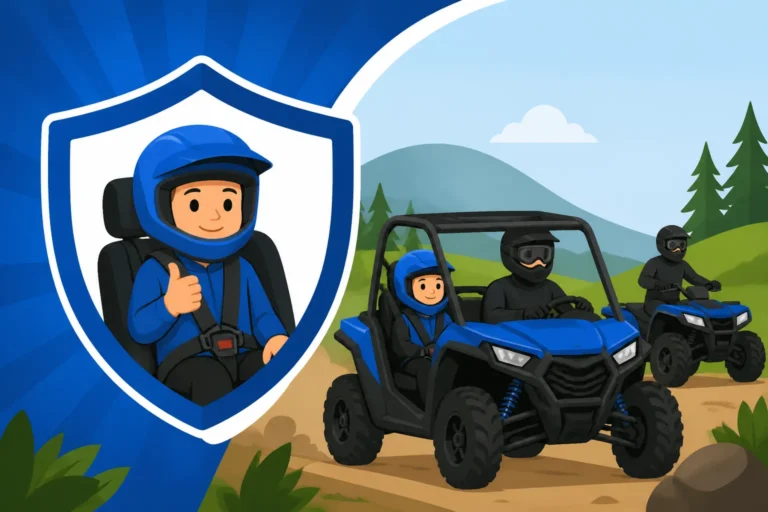
Side-by-sides, on the other hand, are designed with passenger capacity in mind. They usually come with two, three, or even four seats, complete with seatbelts and often a roll cage. The key here is to adhere strictly to the manufacturer's stated capacity. You cannot simply cram more people into a side-by-side than it was built for, even if they're small children. Every occupant must have their own designated seat and use the provided seatbelt. This is a critical safety point, and it's something trail patrollers will look for. For families, this means planning your ride around the actual seating capacity of your side-by-side, not just who you want to bring along. Remember, [Quebec Passenger Rules on an ATV] are very specific, and ignoring them can lead to fines and severe consequences in an accident. Always verify your machine's passenger capacity before heading out.
Rentals and Tours: How Age Limits Apply
If you're considering renting an ATV or side-by-side for a Quebec adventure, or booking a guided tour, be aware that operators often have their own, sometimes stricter, age and licensing policies. While the provincial minimum for an ATV driver is 16 and a side-by-side driver is 18, many rental companies will set their own minimum age for renters at 21 or even 25, largely due to insurance requirements. For drivers, they will always respect the provincial minimums, but might require a full, unencumbered driver's license, not just a probationary one.
For example, a family visiting from Ontario might have a 19-year-old with a full G-class driver's license. While legally able to drive an ATV in Quebec, the rental operator might still require them to be 21 to be the primary renter and responsible for the machine. Guided tours, while offering a fantastic way to explore Quebec's backcountry, also adhere to these rules. The guide is responsible for the safety of the group, and they will strictly enforce age limits for drivers. If you plan a family tour, it's essential to communicate the ages of all potential drivers beforehand to avoid disappointment. Companies often bundle a [Quebec Trail Pass for a Rented Machine] and basic insurance, but violating age rules can void those agreements. Always call ahead and clarify the specific age and license requirements with the rental operator or tour company before you book. You can find more information about this in [Quebec Rental Age and Licence Rules].
Where These Rules Apply: Trails, Roads, and Private Land
Understanding the age rules is one thing, but knowing where they actually apply is just as important. Quebec's vast territory offers diverse riding environments, from meticulously maintained federated trails to remote private lands, and the application of age rules can shift depending on your location.
Federated Trails: The Strictest Application
Quebec boasts an incredible network of over [Quebec's 25,000 Kilometres of Federated Trail], maintained by local FQCQ clubs. These trails are where the age rules are most strictly enforced. When you purchase an FQCQ trail pass, you are agreeing to abide by all the regulations of the LVHR, including age limits, driver's license requirements, and, for 16- and 17-year-olds, the mandatory FQCQ training certificate. These trails are actively patrolled by club volunteers and sometimes by local police or the Sûreté du Québec.
Imagine a group of friends, one of whom just turned 17, heading out for a long weekend ride on the Trans-Québec trail network. If that 17-year-old hasn't completed their FQCQ training and doesn't have the certificate in hand (or accessible digitally), they are riding illegally. A patroller, during a routine check, would ask for their trail pass, driver's license, and proof of age and training. If any of these are missing, the young rider could face a fine, be turned back, or even have their machine impounded in more severe cases. These strict measures are in place to maintain the safety and integrity of the entire trail system, ensuring that everyone using it is qualified and compliant.
Municipal Roads and Crossings: Limited Access, Same Rules
While Quebec's philosophy generally keeps off-highway vehicles off public roads, there are specific, limited circumstances where ATVs and side-by-sides are permitted to use municipal roads. This usually involves crossing a road to connect two trail sections, accessing a service like a gas station, or riding a short, designated stretch where a municipality has explicitly opened a road to VHRs. Critically, whenever an ATV or side-by-side is operating on a public road, even for a short distance, all the provincial rules apply. This includes the minimum age of 16 for ATVs and 18 for side-by-sides, and the requirement for a valid driver's license.
Let's say a group of riders needs to cross a municipal road to continue on their trail. A 16-year-old, even with their FQCQ certificate and trail pass, cannot legally drive a side-by-side across that road. Similarly, an adult needs a valid driver's license to make that crossing. These rules exist because public roads present different hazards than trails, including vehicle traffic and specific road laws. The allowance for [Quebec Municipal Road Access Up to 1 Kilometre] is a convenience for riders, but it comes with the full weight of provincial traffic and VHR laws. It’s not an area where the age rules are relaxed; in fact, enforcement can be even stricter given the presence of other road users.
Private Land: Nuances and Exceptions
Private land is often seen as a free-for-all, but it's important to understand the nuances of Quebec's VHR laws, even here. As mentioned earlier, the LVHR still sets the minimum age of 16 for operating an ATV. However, a significant exception exists for young riders under direct adult supervision on private land, with explicit parental consent. This typically means a 15-year-old, for instance, could learn to ride on a closed, private course or a family property, provided a responsible adult is present and supervising.
However, "private land" doesn't extend to just any land that isn't a federated trail. It must truly be private property where you have explicit permission to ride, and where there's no public access. If the land is leased from the government (Crown land) or is simply unposted private land that the public could access, the standard rules are more likely to apply. The key takeaway for [Quebec Machines Used Only on Private Land] is that while there's more flexibility for supervised learning for slightly younger riders, the general age minimums of the LVHR are still the guiding principle. Owners of private land also retain liability for what happens on their property, so they should always ensure that even under supervision, young riders are operating safely and responsibly, ideally with all appropriate safety gear. This is another situation where a well-maintained machine, perhaps with some aftermarket safety enhancements from SuperATV, could make a difference in providing a controlled learning environment for a young, supervised rider.
Penalties for Non-Compliance and Enforcement
Ignoring Quebec's age and licensing rules for ATVs and side-by-sides isn't just a minor infraction; it carries tangible consequences that can range from hefty fines to more serious legal and financial repercussions. Quebec takes its off-highway vehicle regulations seriously, and enforcement is designed to ensure compliance for the safety of all.
Fines for Underage Riding or Lack of Certification
Getting caught riding an ATV or side-by-side in Quebec when you don't meet the age, driver's license, or training certificate requirements can lead to significant financial penalties. While specific fine amounts can change and are generally not something I can provide exact figures for, you should expect fines to be substantial. For example, a 17-year-old riding a federated trail without their FQCQ training certificate, or a 16-year-old driving a side-by-side, could face a ticket that costs hundreds of dollars. These fines aren't just a slap on the wrist; they are designed to be a deterrent, reflecting the seriousness of operating a powerful vehicle without proper qualification.
Beyond the immediate fine, there can be additional costs such as administrative fees, court costs if you choose to contest the ticket, and potentially even vehicle impoundment in certain situations. Imagine a family's quad adventure being cut short by a patroller, resulting in a large fine and the inconvenience of having to retrieve an impounded machine. It's not just about the monetary cost; it's about the disruption, stress, and potential legal record. These penalties underscore the importance of understanding and adhering to the rules before you ever put a wheel on the trail. While [Quebec Penalties for Riding Unregistered] gives a sense of consequences for registration, similar fines exist for age and certification violations.
The Role of Trail Patrollers and Police
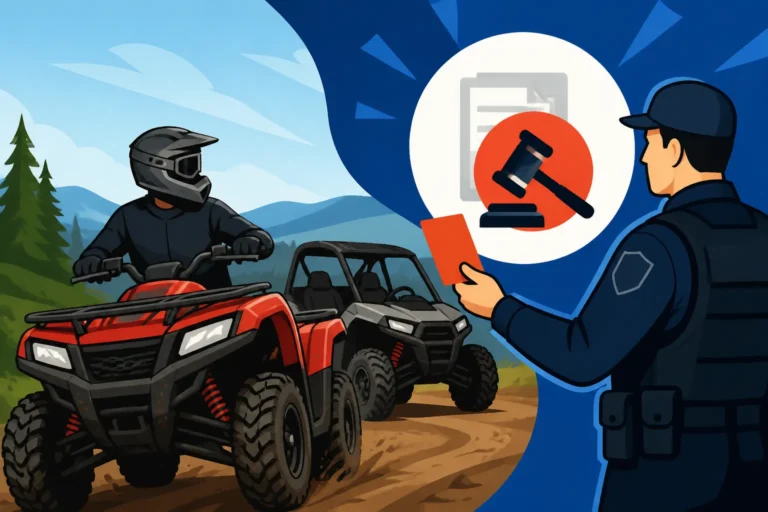
Enforcement on Quebec's ATV trails comes primarily from two sources: FQCQ trail patrollers and the Sûreté du Québec (SQ), the provincial police force. FQCQ patrollers are often dedicated volunteers from local clubs who have received specific training and are authorized to check for trail passes, registration, insurance, driver's licenses, and, crucially, age and training certificates for young riders. They have the authority to stop you, request your documents, and issue warnings or refer serious infractions to the SQ. They are the frontline guardians of the trail network, ensuring that everyone respects the rules that make the trails safe and enjoyable.
The Sûreté du Québec, on the other hand, has full police powers and can enforce all aspects of the LVHR, as well as general traffic laws if you're on a public road or committing other offenses. They can issue tickets, conduct sobriety checks, and impound machines. Encounters with either patrollers or police should always be handled respectfully. Refusing to cooperate or provide documentation can escalate the situation and lead to further charges. Understanding [What a Club Trail Patroller Can Make You Do] is essential for all riders. It's always best to be prepared with all required documents, including your driver's license, trail pass, and for young riders, their FQCQ training certificate, easily accessible.
Insurance Implications and Liability
Perhaps one of the most significant, yet often overlooked, consequences of non-compliance with age and licensing rules is the impact on your insurance and personal liability. Quebec law mandates that all ATV owners carry a minimum amount of liability insurance, currently [The $1 Million Liability Floor Every Owner Carries], which is purchased through the SAAQ (Société de l'assurance automobile du Québec) when you register your machine. This insurance is crucial for protecting you financially if you cause an accident that results in injury or damage to another person or their property.
However, this mandatory insurance, and any additional private insurance you might carry, can be nullified if the operator was in violation of the LVHR at the time of an accident. This means if a 15-year-old, or a 17-year-old without their FQCQ certificate, causes an accident on a federated trail, the insurance company could deny coverage. In such a scenario, the operator, and by extension their parents or legal guardians, could be held personally liable for potentially enormous costs, including medical bills, property damage, and legal fees. This risk alone should be a powerful motivator for strict adherence to age and training requirements. [Quebec's Liability Insurance Rule] is there to protect you, but only if you play by the rules. The financial devastation of an uninsured accident far outweighs any perceived convenience of letting an unqualified person ride.
Preparing Young Riders for Quebec's ATV Trails
Getting a young rider ready for the trails isn't just about meeting the minimum legal requirements; it's about fostering a culture of safety, respect, and preparedness. While the law sets the baseline, responsible parents and guardians will go above and beyond to ensure their teenager is truly ready for the challenges and joys of ATV riding in Quebec.
The Importance of Safety Training Beyond the Minimum
While the FQCQ training certificate is mandatory for 16- and 17-year-olds to ride on federated trails, simply completing the course isn't the end of the journey. Think of it as earning your learner's permit for a car; it's a solid start, but continued learning and practical experience are vital. Encourage your young rider to practice their skills regularly in controlled environments, focusing on things like braking, turning, navigating obstacles, and managing different types of terrain. Consider enrolling them in advanced safety courses if available, or spending time with them on less challenging trails to refine their techniques.
This continuous learning helps build confidence, reinforces good habits, and deepens their understanding of machine control and trail dynamics. It also means actively discussing potential hazards, reviewing trail maps, and talking through responsible riding decisions. Just like with driving a car, the more prepared and knowledgeable a young rider is, the safer they and everyone around them will be. This commitment to ongoing education instills a lifelong appreciation for safe riding practices, making the experience more enjoyable and sustainable.
Essential Gear and Machine Maintenance for Safety
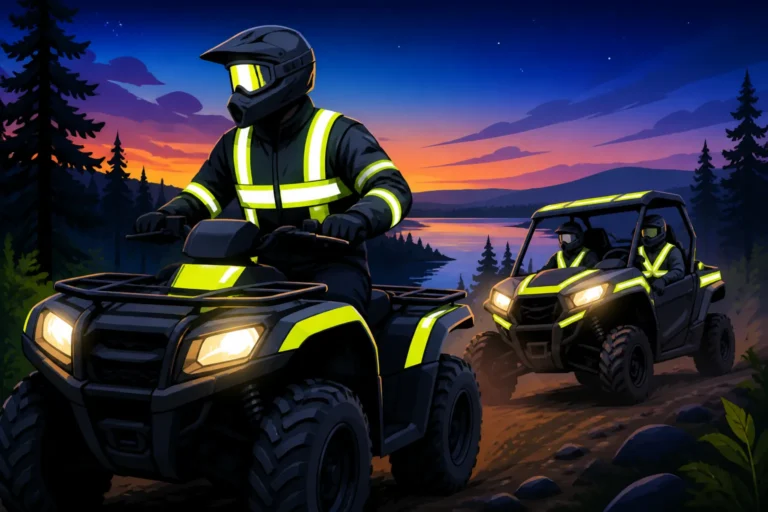
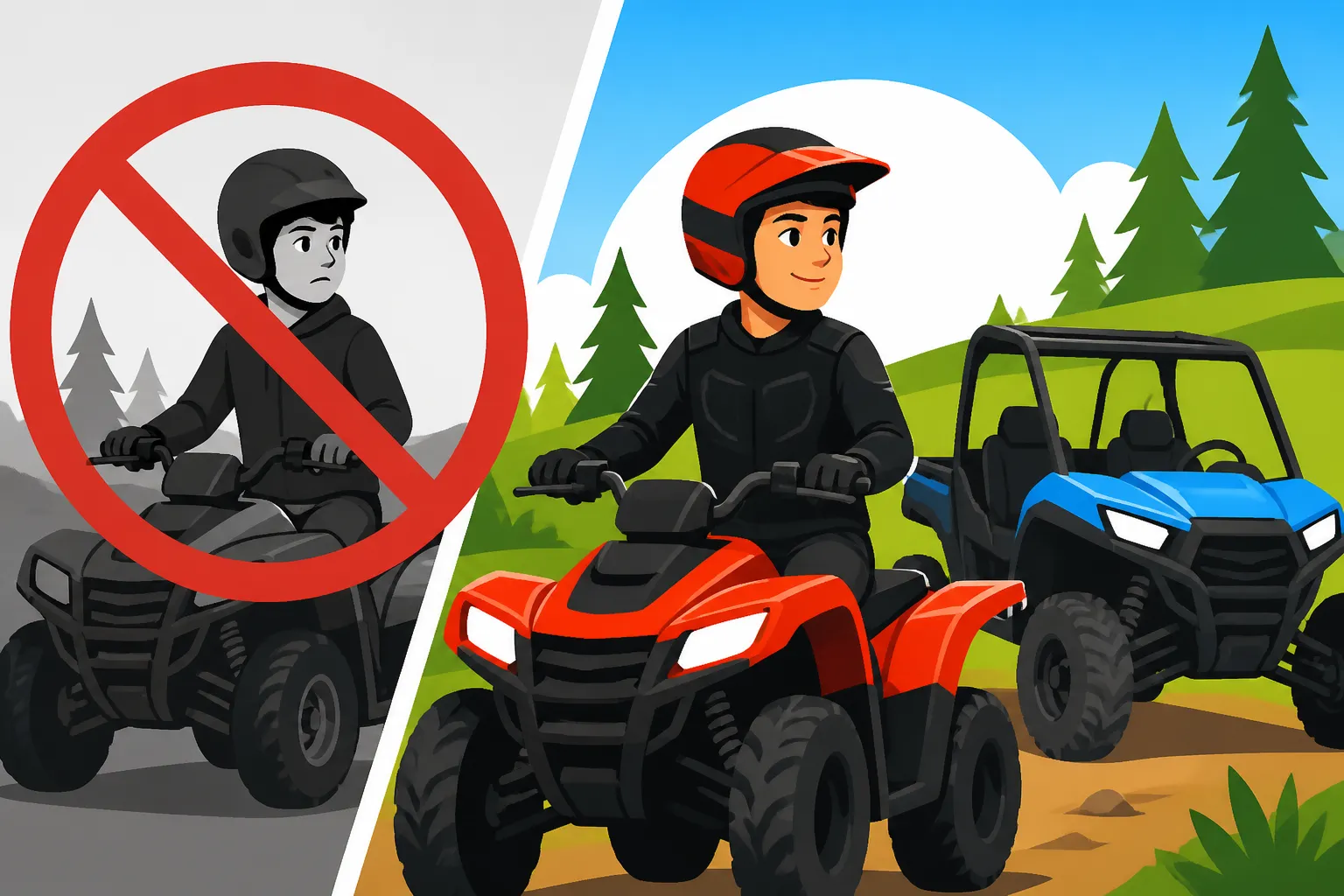
No matter how skilled a rider is, proper safety gear and a well-maintained machine are non-negotiable. For young riders, this is even more critical. Start with a DOT-approved helmet that fits snugly and comfortably. [Quebec Helmet and Visor Rules] mandate a helmet with a visor or separate goggles to protect eyes from dust, debris, and insects. Beyond the helmet, ensure they wear sturdy boots that cover the ankles, long pants (jeans or riding pants are ideal), a long-sleeved shirt or jacket, and gloves. This protective clothing acts as a crucial barrier against scrapes, cuts, and impacts.
Regular machine maintenance is equally vital. Before every ride, conduct a pre-ride inspection (often taught in the FQCQ course). Check tires, brakes, lights, fluid levels, and ensure all controls are functioning correctly. For younger riders, ensuring the machine is the appropriate size and power for their weight and skill level is also key. Aftermarket accessories can enhance safety; for instance, SuperATV offers robust skid plates for underbody protection, or durable A-arms that can withstand the rigors of varied Quebec terrain, reducing the chance of mechanical failure. Keeping the machine in top condition not only prevents breakdowns but also ensures reliable performance, which is a critical safety factor when navigating challenging trails.
Parental Responsibility and Supervision
Ultimately, parents and legal guardians bear a significant responsibility in shaping a young rider's experience and ensuring their safety and compliance with the law. This goes beyond simply signing a parental authorization form or paying for a training course. It involves active supervision, leading by example, and continuous reinforcement of safe riding practices. When riding together, demonstrate proper trail etiquette, adherence to speed limits, and respect for the environment. Teach them to slow down in dusty conditions, yield to oncoming traffic, and always stay on marked trails.
Open communication about the risks involved, the importance of judgment, and the consequences of reckless behavior is crucial. For newer or younger riders, start on easier trails and gradually introduce more challenging terrain as their skills improve. Never pressure a young rider to attempt something they're uncomfortable with. Parental involvement is the cornerstone of responsible ATV riding for teenagers. By being present, supportive, and firm on safety standards, you can help instill the values that will make them responsible, lifelong trail enthusiasts, enjoying Quebec's beautiful wilderness safely and legally.
Common Misconceptions and FAQ
It's natural to have questions and sometimes even a few preconceived notions about ATV age rules, especially when navigating Quebec's specific regulations. Let's tackle some of the common misunderstandings head-on to ensure clarity.
"My kid is a great rider, the rules shouldn't apply."
This is perhaps one of the most common sentiments heard from parents, and while it's wonderful to have a skilled young rider, the law in Quebec doesn't make exceptions for individual talent. The minimum age of 16 for ATVs and 18 for side-by-sides, along with the FQCQ training certificate for 16- and 17-year-olds on federated trails, are universal requirements. The law is designed to apply equally to everyone, regardless of their perceived skill level.
Think of it this way: a prodigy driver might be able to handle a car like a professional at 14, but they still cannot legally drive on public roads until they meet the provincial age and licensing requirements. The same principle applies to ATVs. These age limits are set based on broad safety statistics, cognitive development research, and liability considerations, not on anecdotal evidence of individual prowess. Trying to argue with a patroller or police officer about your child's exceptional riding abilities will not exempt you from fines or penalties. Compliance is key, no matter how "great" a rider they are.
"Can I just say my kid is older?"
Attempting to misrepresent a young rider's age to circumvent the rules is not only dishonest but also carries serious risks. If caught, you could face charges for misrepresentation, fraud, or obstruction. Furthermore, as discussed, if an accident were to occur while a rider's age was misrepresented, any insurance coverage, both mandatory SAAQ liability and private policies, could be entirely voided.
The consequences of being found personally liable for an accident, without insurance, can be financially devastating. Hospitals bills, property damage, and legal fees can easily reach hundreds of thousands, if not millions, of dollars. It's simply not worth the risk. Patrollers and law enforcement are trained to verify identification, and with digital access to SAAQ records, discrepancies are often easily flagged. Always be truthful and ensure your rider meets all the genuine legal requirements.
"What if we're just on our own land?"
The distinction between federated trails/public roads and private land is crucial, but it's not an absolute free pass. While the specific FQCQ training certificate for 16- and 17-year-olds primarily applies to federated trails, the LVHR's general minimum age of 16 for ATV operation still largely guides safe practice. As noted, there's an allowance for supervised riding by a rider under 16 (but still old enough to physically control the machine) with parental authorization on truly private land.
However, even on your own property, you are not exempt from all laws, especially those related to safety and civil liability. If a severe accident occurs due to negligence or extreme recklessness, even on private land, there can be legal ramifications. Property owners have a duty of care. Moreover, the definition of "private land" can sometimes be debated. If it's land accessible to the public, or Crown land, the stricter rules are more likely to apply. Always prioritize safety, ensure machines are ridden responsibly, and equip all riders with proper safety gear, regardless of where they are riding. It’s about ensuring a safe environment for everyone, even on your own turf.
Here's a handy table summarizing the key age requirements:
| Vehicle Type | Minimum Age | Driver's Licence Required? | FQCQ Training Certificate (16-17) | Applies On Federated Trails? | Applies On Private Land (Supervised)? |
|---|---|---|---|---|---|
| ATV (VTT) | 16 | Yes | Yes | Yes | Yes (for 16+) |
| ATV (VTT) | Under 16 | No | No (but not permitted) | No | Yes (with parental authorization & adult supervision) |
| Side-by-Side (UTV) | 18 | Yes | N/A (age 18+) | Yes | Yes (for 18+) |
| Side-by-Side (UTV) | Under 18 | No | N/A (age 18+) | No | No (provincial age is 18 for operation) |
Disclaimer
This article is for general informational purposes only and does not constitute professional advice. Laws, prices and regulations vary by location and change over time. Consult a qualified professional for guidance on your specific situation.