Customs Paperwork at the Border
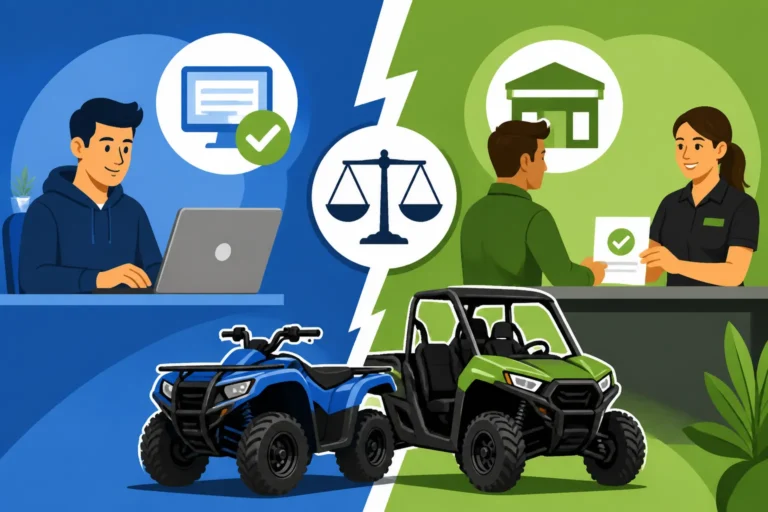
Bringing an ATV or UTV across the border into Quebec can feel like a daunting task, riddled with paperwork, regulations, and the fear of missing a crucial step that could delay your ride for weeks. Many folks find themselves scratching their heads, wondering exactly what documents the border agent will want to see and how this whole process impacts getting their VHR plate in Quebec. This guide is here to untangle the customs paperwork process, ensuring you’re well-prepared and confident when you roll up to the border.
Understanding Why Customs Paperwork Matters for Your Quad
The excitement of finding the perfect ATV or side-by-side, especially if it's a great deal from outside of Canada, can quickly turn into anxiety when you think about the border. It's not just about paying taxes; it's about proving ownership, ensuring safety standards are met, and getting all your ducks in a row for when you finally head to the SAAQ. Skipping steps or having incomplete paperwork at this stage can create a cascade of problems down the line.
The Role of Border Services in ATV Imports
Think of the border services agency as the gatekeeper for all goods entering the country, and that absolutely includes your new-to-you (or brand new) off-highway vehicle. Their primary job isn't to make your life difficult, but to ensure that what's coming into Canada meets all federal regulations, that appropriate duties and taxes are collected, and that prohibited items aren't entering the country. For an ATV or UTV, this means checking things like emissions standards, safety features, and, of course, verifying legitimate ownership. They're looking for clean titles, proper bills of sale, and proof that the vehicle isn't stolen or subject to outstanding liens. It’s a critical first hurdle you need to clear before your machine is truly "yours" on Canadian soil.
Avoiding Headaches at the SAAQ
Once you've successfully navigated the border, the next big step for any Quebec rider is registering their machine with the SAAQ (Société de l'assurance automobile du Québec). This is where your diligent work at the border really pays off. The SAAQ needs to see clear proof that your machine was legally imported and that all federal requirements have been met. If your customs paperwork is incomplete or incorrect, the SAAQ can, and will, send you away. Imagine finally getting to the counter, eager to get your [Quebec VHR Plates Explained], only to be told you need to go back and fix something related to your import. It's a huge waste of time and can be incredibly frustrating. Having your customs declaration, proof of duties paid, and a solid bill of sale means the SAAQ can confidently proceed with your [Quebec ATV Registration With the SAAQ], getting you on the trails faster.
Key Documents You'll Need at the Border
When you arrive at the border, whether it's by car with a trailer or you're riding your new machine if it's road legal in the place of origin (though typically you'll be trailering it), you'll need a very specific set of documents. These aren't just suggestions; they are mandatory for a smooth crossing.
- Proof of Ownership: This is non-negotiable. For a new machine, this would be a manufacturer’s statement of origin (MSO) or certificate of origin (COO). For a used machine, it's typically the previous owner's title or registration document, along with a signed bill of sale. Make sure the bill of sale clearly identifies the buyer, seller, date, price, and the full vehicle identification number (VIN). If you need a robust, legally sound bill of sale, services like LawDepot can provide templates that cover all the necessary information.
- Proof of Identity: Your passport or other valid travel documents for both yourself and any passengers.
- Import Form (if applicable): While not always required pre-arrival for personal imports, it's good to be aware of any specific forms that might be needed depending on the vehicle type or origin. Sometimes, the border agent will guide you through this process.
- Recall Clearance Letter (for certain used vehicles): This is absolutely critical for used vehicles coming from the United States. You need a letter from the manufacturer stating there are no outstanding safety recalls for your specific VIN, or that any recalls have been remedied. Without this, your machine will not be allowed to permanently import.
- Proof of Conformity (for specific vehicles): While ATVs and UTVs have a somewhat different conformity process than passenger cars, the underlying principle is the same: the machine must meet Canadian safety and emissions standards. This is usually covered by the manufacturer's statement of origin for new machines.
- Purchase Receipt/Bill of Sale: This document confirms the value of the machine, which is crucial for calculating duties and taxes. Again, a detailed bill of sale, possibly created with the help of a LawDepot template, is your best friend here.
Navigating the Import Process for Your ATV or UTV
The journey of bringing an ATV or UTV into Quebec from another country, say the United States, isn't just about showing up at the border with your new toy. It involves a series of steps, from pre-planning to post-clearance paperwork, that ensures everything is above board.
Before You Even Cross: Pre-Arrival Preparations
Preparation is key. Before you even hitch up the trailer, do your homework. First, verify that the ATV or UTV you intend to buy is admissible into Canada. This means checking if it meets Canadian import requirements, particularly concerning safety and emissions standards. For used vehicles, specifically from the US, you absolutely must obtain a recall clearance letter from the manufacturer for that specific VIN. This isn't something you can get at the border; it needs to be arranged in advance. Many manufacturers have dedicated import departments that can assist with this.
Next, focus on the financial side. Understand what duties and taxes you will likely pay. While I can't give you specific figures, know that you'll generally pay federal Goods and Services Tax (GST) and potentially provincial Quebec Sales Tax (QST) on the declared value of the machine. There might also be duties depending on the country of manufacture and trade agreements. Having a clear, well-documented bill of sale is paramount here. If you're buying privately, consider using a comprehensive template, like those available from LawDepot, to ensure all essential details are included, such as the full VIN, purchase price, and contact information for both buyer and seller. This pre-planning will save you immense stress and potential delays.
At the Border: What to Expect and Present
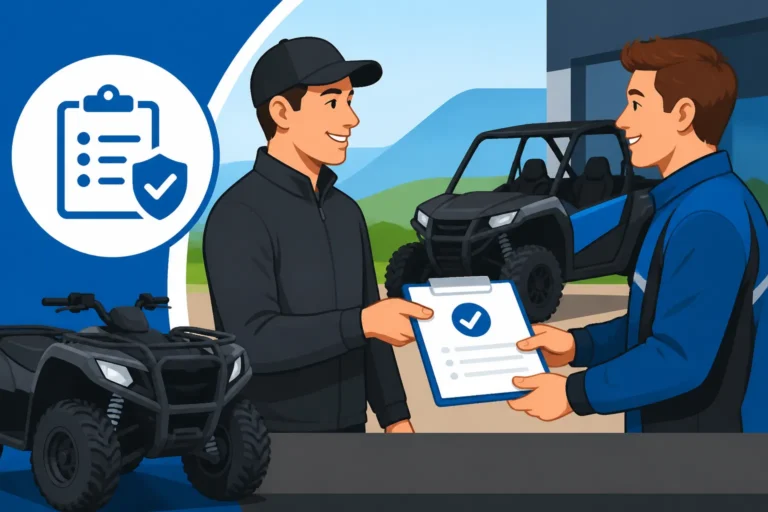
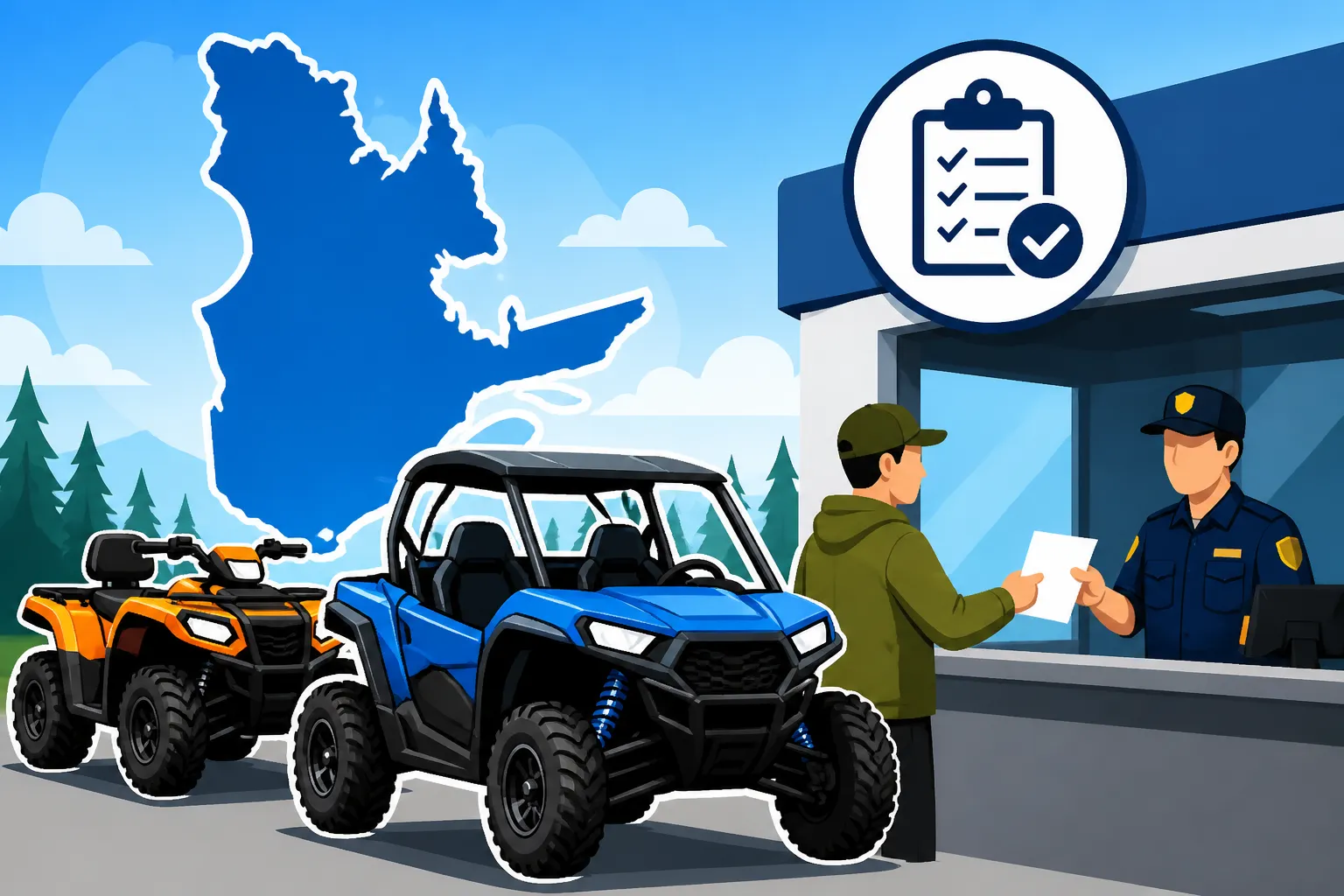
When you arrive at the Canadian border crossing, you'll first interact with a primary inspection officer. Be ready to declare your ATV or UTV and state your intention to import it. You will then likely be directed to a secondary inspection area where a customs officer will review your documentation in detail.
This is the moment to present all your carefully prepared paperwork:
- Your passport or Canadian citizenship card.
- The original title or registration from the previous owner (if used).
- The manufacturer's statement of origin (if new).
- Your detailed bill of sale.
- The recall clearance letter (if applicable for a used US machine).
- Any other supporting documents you've gathered.
The officer will verify the VIN, assess the value of the machine based on your bill of sale, and calculate any applicable duties and taxes. Be prepared to pay these on the spot, usually by credit card or debit. Once everything is in order and payments are made, the officer will provide you with a stamped customs declaration form (often a BSF751 or similar). This document is your proof that the vehicle has been legally imported and all federal levies have been collected. Hold onto this document tightly, as it's vital for your next steps at the SAAQ. The entire process at the border can take anywhere from a few minutes to an hour or more, depending on volume and the complexity of your situation, so factor that into your travel plans.
After Clearance: Your Next Steps in Quebec
Congratulations, you’ve cleared customs! Now that your ATV or UTV is officially in Canada, your focus shifts to Quebec's provincial requirements. The very first thing you need to do is keep all that customs paperwork organized. The SAAQ will absolutely require it as part of your [Quebec ATV Registration for Newcomers] or any import registration.
Your next stop, once you're settled in Quebec, will be a local SAAQ service outlet. You'll need to bring:
- The stamped customs declaration form from the border.
- Your original bill of sale.
- Proof of your identity and Quebec residency.
- Potentially, proof of inspection if required for older or modified vehicles (though this is less common for ATVs unless there are significant changes).
The SAAQ will verify your ownership and the legal import of the machine before they process your registration. This is also when you'll pay the provincial sales tax (QST) if it wasn't collected at the border, along with the standard [Quebec ATV Registration Costs Explained]. They'll issue your [Quebec VHR Vehicle Class] plate, which you’ll need to mount on your machine. Remember, [Quebec SAAQ Is Registrar and Insurer], so you'll also be obtaining your mandatory liability insurance directly through them at this time. Without that precious customs paperwork, the SAAQ will not register your machine, plain and simple.
Common Pitfalls and How to Avoid Them
The import process, while seemingly straightforward on paper, has its share of traps that can catch unsuspecting riders. Being aware of these common issues beforehand can save you a world of trouble and keep your frustration levels low.
The Importance of a Detailed Bill of Sale
This cannot be stressed enough: a vague or incomplete bill of sale is an open invitation for delays and scrutiny. Border agents and SAAQ clerks rely heavily on this document to establish legitimate ownership and the correct value of the machine for tax purposes. A proper bill of sale should always include:
- Full Names and Addresses: Of both the seller and the buyer.
- Date of Sale: Crucial for calculating depreciation or for time-sensitive regulations.
- Purchase Price: Clearly stated, in the currency of the transaction. Avoid writing "gift" unless it genuinely was, as tax implications differ, and you'll still need to justify its value.
- Vehicle Identification Number (VIN): This is paramount. Ensure it's legible and matches the machine exactly. [Photographing a Serial Number Before You Buy] is always a wise move.
- Make, Model, Year, and Odometer/Hour Meter Reading: Providing full details helps confirm the identity of the machine.
- Signatures: Both seller and buyer must sign and date the document.
If you're conducting a private sale, especially across borders, don't just scribble something on a napkin. Take the time to create a professional document. Online resources like LawDepot offer customizable bill of sale templates that can be tailored to include all necessary details, giving you peace of mind and demonstrating to authorities that you've handled the transaction properly. A well-prepared [Quebec SAAQ Forms for a Private Sale] equivalent, even if it's from another jurisdiction, will go a long way.
Understanding Duties and Taxes
This is often where people get tripped up or are surprised by the final cost. When importing an ATV or UTV into Canada, you will almost certainly be subject to taxes.
- Goods and Services Tax (GST): This is a federal tax applied to most goods and services in Canada. You'll pay this at the border on the declared value of your machine.
- Quebec Sales Tax (QST): This is Quebec's provincial sales tax. While some provinces collect their provincial tax at the border, Quebec's QST on vehicles is typically collected by the SAAQ when you register the machine. So, don't be surprised if you pay GST at the border and then QST later at the SAAQ.
- Duties: These are tariffs applied to goods imported from certain countries. If your ATV or UTV was manufactured in a country that doesn't have a free trade agreement with Canada, or if it doesn't meet specific rules of origin, you might have to pay duties in addition to GST and QST. For machines made in the US, Mexico, or Canada, under agreements like CUSMA (formerly NAFTA), duties are often zero, but it's always best to verify.
It’s crucial to be honest about the purchase price on your bill of sale. Customs officers are trained to identify undervalued declarations and can assess penalties or demand a reassessment if they suspect fraud. Always declare the true value of your purchase to avoid legal issues and delays. Remember, while I can't give you current percentages, these taxes and duties are a significant part of the overall cost of [Quebec ATV Registration Costs Explained].
What If Your Machine Doesn't Meet Canadian Standards?
This is a big one, especially for used imports from countries like the United States. Unlike many other types of goods, vehicles must meet specific Canadian safety and emissions standards set by Transport Canada and Environment and Climate Change Canada.
- Recall Clearance: As mentioned, for used US vehicles, you must obtain a recall clearance letter from the manufacturer. Without this, your vehicle cannot be permanently imported. No exceptions.
- Manufacturer Conformity: Newer ATVs and UTVs from reputable manufacturers usually have no problem meeting Canadian standards as they often design for both markets. However, if you're looking at a very old machine, a grey-market import, or a vehicle from a less common manufacturer, you need to verify its conformity. Check for the National Safety Mark (NSM) on the vehicle itself or confirmation in the Manufacturer's Statement of Origin.
- Modifications: If the machine has been heavily modified, especially relating to its emissions system, frame, or safety components, it could potentially run into issues. Be prepared to explain modifications and, if necessary, provide documentation that the modified components still meet or exceed original safety standards.
If your machine doesn't meet these standards, you might be denied entry for permanent import. In some cases, you might be given an option to modify the vehicle to meet standards, but this can be costly and time-consuming. It’s always best to verify conformity before you make the purchase. This is a common hurdle when considering [Quebec Registration for an Imported Machine].
Specific Scenarios and Considerations
Not all imports are created equal. Depending on whether your machine is new or used, or if you're relocating to Quebec, the specific steps and required documentation can shift slightly. Being aware of these nuances will make your border crossing and SAAQ visit much smoother.
Importing a Used ATV or UTV
Importing a used off-highway vehicle often involves a bit more legwork than a brand new one. The primary difference, especially for machines coming from the United States, is the mandatory recall clearance letter. This letter, obtained directly from the manufacturer for your specific VIN, confirms that there are no outstanding safety recalls on the machine, or that any recalls have been rectified. Without it, you simply cannot permanently import the vehicle.
Furthermore, with a used machine, the condition of the title and bill of sale becomes even more critical. Ensure the seller provides a clear, unencumbered title. A title with a lien still on it from a previous lender can create significant problems. Your bill of sale should be explicit about the transfer of ownership. If you're buying from a private seller, remember that [Paperwork Two Individuals Sign on a Private Sale] needs to be comprehensive. A thorough private sale agreement, perhaps utilizing a template from a service like LawDepot, will detail the machine's condition, VIN, purchase price, and both parties' signatures, acting as robust proof of transaction for both border services and the SAAQ. This also helps with [Quebec Registration Without a Bill of Sale] scenarios, which are much harder to resolve.
Moving to Quebec with Your Existing Machine
If you’re relocating to Quebec and bringing your ATV or UTV with you from another country, the process is slightly different because you're not technically "buying" it for import. Instead, you're importing your personal effects. However, the requirement to legally import the vehicle still stands.
You will still need to declare the machine at the border. You'll present its existing registration or title from your previous residence, proof of ownership, and potentially a recall clearance letter if it's a used US-origin machine. While you might not pay duties if it's considered part of your personal effects being moved as part of a residency transfer, you will likely still be liable for GST and QST on the assessed value of the machine. The key is to declare it as part of your move (Form B4, if applicable) and be prepared to show documentation proving you owned it prior to becoming a resident of Canada. Once cleared, you'll take your customs paperwork to the SAAQ for [Quebec ATV Registration for a New Resident].
Gifts and Inherited Machines from Outside Canada
Receiving an ATV or UTV as a gift or inheriting one from outside Canada adds another layer of complexity to the customs paperwork. While it feels like a free machine, it's generally not free of taxes when crossing the border.
For a gifted machine, you will still need a bill of sale or a letter of gift that clearly states the transfer of ownership and assigns a fair market value to the machine. Customs will assess duties and taxes (GST and QST) based on this declared fair market value, not necessarily zero. The person gifting the machine should provide documentation proving their ownership and the machine’s history.
For an inherited machine, you’ll need legal documents such as a will, probate papers, or a death certificate, along with a letter from the estate executor transferring ownership to you. Again, customs will assess a fair market value for the machine, and you will likely be responsible for duties and taxes based on that value. It's not uncommon for people to be caught off guard by these costs. In both gift and inheritance scenarios, a thorough document outlining the transfer of ownership and the agreed-upon value (even if it's zero for the gift itself, for the purpose of the transfer) is paramount. This makes the [Quebec Registration for an Inherited Machine] much smoother.
Here's a quick summary of key documents for importing an ATV/UTV:
| Document Type | Purpose | Required for New? | Required for Used? | Special Notes |
|---|---|---|---|---|
| Passport/ID | Proof of identity and citizenship | Yes | Yes | Always carry valid travel documents. |
| Bill of Sale/Purchase Invoice | Proof of purchase and declared value | Yes | Yes | Must be detailed; consider LawDepot templates for private sales. |
| Manufacturer's Statement of Origin (MSO)/Certificate of Origin (COO) | Proof of initial ownership for new vehicles | Yes | No | Provided by the dealer for new machines. |
| Original Title/Registration | Proof of previous ownership for used vehicles | No | Yes | Must be clear of liens; for US machines, typically the state title. |
| Recall Clearance Letter | Confirms no outstanding safety recalls | No | Yes | Mandatory for used US imports. Obtained from the manufacturer before crossing. |
| Customs Declaration (e.g., BSF751) | Proof of legal import and duties/taxes paid | Yes | Yes | Issued by border services upon clearance. Essential for SAAQ registration. |
| Proof of Conformity | Ensures machine meets Canadian safety/emissions standards | Yes | Yes | Often covered by MSO/COO; check for NSM. |
| Letter of Gift/Inheritance Docs | For non-purchase transfers | No | Conditional | Requires fair market value assessment for tax purposes. |
Ultimately, bringing an ATV or UTV across the border into Quebec requires meticulous planning and a thorough understanding of the paperwork involved. By preparing all your documents, especially a detailed bill of sale and, for used machines, that critical recall clearance letter, you'll ensure a smooth process at customs and a hassle-free registration with the SAAQ. Don't let the paperwork intimidate you; with a little homework, you'll be hitting the trails in no time.
Disclaimer
This article is for general informational purposes only and does not constitute professional advice. Laws, prices and regulations vary by location and change over time. Consult a qualified professional for guidance on your specific situation.