Quebec Tax on an Out-of-Province Purchase
Bringing a new-to-you quad or side-by-side into Quebec after purchasing it in another province or even the United States can feel like navigating a maze, especially when it comes to sales tax. Many riders find themselves scratching their heads, wondering if they'll be double-taxed or how to even declare their machine. This guide aims to clear up that confusion, explaining exactly how Quebec's sales tax applies to out-of-province off-road vehicle purchases, what you need to pay, and how to make the process as smooth as possible.
Understanding Quebec's Sales Tax Landscape for Off-Road Vehicles
Before we dive into the specifics of buying outside Quebec, it's crucial to grasp the basics of how sales tax works for ATVs and UTVs here. In Quebec, we deal with two primary sales taxes: the federal Goods and Services Tax (GST) and the provincial Quebec Sales Tax (QST). Both are applied to most goods and services, including your beloved off-road machine.
When you purchase a new or used ATV or side-by-side from a dealer within Quebec, they collect both the GST and QST at the point of sale, just like any other retail transaction. It's straightforward. However, if you buy privately within Quebec, the GST is generally not applicable (unless the seller is a registered GST/HST registrant), but the QST is still collected by the Société de l'assurance automobile du Québec (SAAQ) when you go to register the vehicle. This is part of Quebec's system to ensure all vehicles used on its trails and land contribute their fair share. For more on this, you might want to read [Quebec Sales Tax on an ATV Purchase].
The key takeaway here is that Quebec wants to ensure it collects its provincial sales tax on any off-road vehicle that will be registered and used predominantly within its borders, regardless of where that machine was originally purchased. This approach helps maintain revenue for public services, including the maintenance of our fantastic trail network. It can feel like an extra hurdle, especially if you're already paid tax elsewhere, but understanding the SAAQ's role as both registrar and, in certain cases, tax collector for QST is key to a smooth registration process.
The Specifics of Out-of-Province Purchases
This is where things can get a little tricky and where many new Quebec quad owners encounter their first real frustration. You've found the perfect machine, maybe it was a better deal over the border, or you happened upon it while visiting family. Now, how does Quebec's sales tax apply when you bring it home?
Buying from Another Canadian Province
Let's say you bought your ATV from a dealer in Ontario. When you made the purchase, you likely paid the Harmonized Sales Tax (HST) directly to the dealer. This HST is a combined federal and provincial sales tax. When you bring that machine to Quebec to register it with the SAAQ, Quebec will assess its own QST. The good news is that Quebec generally provides a credit for the provincial portion of the HST you already paid in the other province. You still owe the difference if Quebec's QST rate is higher, and you will always owe any QST if the provincial portion of the tax you paid elsewhere was less than what Quebec would charge. The federal GST portion, which is consistent across Canada, is usually just accepted as paid. It’s crucial to have clear proof of the sales tax you paid to the dealer in the other province when you go to the SAAQ. This often means a detailed invoice or bill of sale that itemizes the taxes.
If you purchased from a private seller in another Canadian province, things shift slightly. Typically, private sales between individuals within Canada do not involve the collection of provincial sales tax at the point of sale. So, when you bring that machine into Quebec for registration, you will almost certainly be assessed the full QST by the SAAQ on the agreed-upon purchase price, in addition to the GST. This is similar to how private sales are handled within Quebec for QST purposes. Having a well-documented bill of sale is paramount here; a template from a service like LawDepot can be incredibly helpful to clearly establish the purchase price and avoid disputes.
Importing from the United States
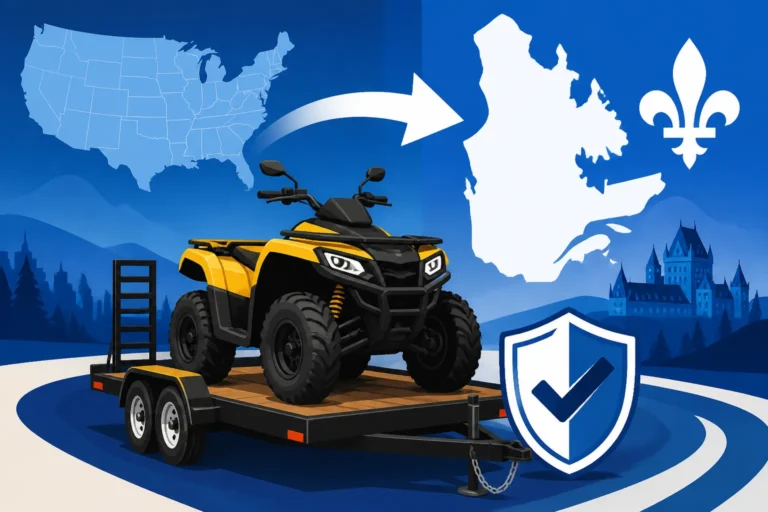
Bringing an off-road vehicle in from the United States adds another layer of complexity. First, you'll deal with customs at the border. Here, you'll pay any applicable federal duties (though many ATVs/UTVs are duty-free under trade agreements) and the federal GST based on the declared value of the machine. It's like a federal welcome mat for your new acquisition. You can find more detail on this process by looking up [Importing a Quad Into Quebec From the United States] and [Customs Paperwork at the Border].
Once you clear customs and bring your machine into Quebec, the provincial QST becomes due when you register it with the SAAQ. The SAAQ will assess QST on the declared value of the vehicle, which is typically the purchase price converted to Canadian dollars, plus any federal duties paid. Unlike Canadian inter-provincial purchases, there's no provincial sales tax paid in the U.S. that Quebec will credit, so you'll pay the full QST at the SAAQ. Again, having impeccable proof of purchase, like a detailed invoice or a properly executed bill of sale (which a service like LawDepot can provide forms for), is critical to avoid issues at registration and ensure the declared value is accepted.
Here’s a quick overview of the tax collection scenarios:
| Purchase Location | Seller Type | Federal Tax (GST) | Provincial Tax (QST) | Notes |
|---|---|---|---|---|
| Quebec | Dealer | Collected by dealer | Collected by dealer | Straightforward. |
| Quebec | Private | N/A (usually) | Collected by SAAQ | QST due at registration. |
| Another Canadian Province | Dealer | Collected by dealer (as part of HST) | Credit for provincial portion of HST; difference paid to SAAQ | Must show proof of HST paid. |
| Another Canadian Province | Private | Collected by SAAQ | Collected by SAAQ | Both GST and QST due at registration on purchase price. |
| United States | Dealer/Private | Collected at border by CBSA | Collected by SAAQ | QST due at registration on value + duties. No U.S. state tax credit. |
Remember, the SAAQ will want to see solid documentation for every claim, whether it's the purchase price or taxes you've already paid. Being prepared with all your receipts and paperwork will save you a lot of grief. For a detailed guide on what papers you need, check out [Quebec Registration Paperwork Checklist].
How to Calculate and Pay the Tax
Now that we understand why you're paying, let's look at the how. The process for calculating and paying the QST when you've bought your machine out-of-province usually happens when you go to register the vehicle with the SAAQ. This is often the first real interaction you'll have with Quebec's system for your new off-road companion, and it's essential to get it right.
Calculating the QST
The QST is calculated on the "taxable value" of your off-road vehicle. This taxable value generally includes the purchase price, converted to Canadian dollars if you bought it in the U.S., plus any federal duties you paid at the border. If you traded in an older machine as part of the deal (though this is less common with out-of-province private sales), the taxable value would be the difference. The SAAQ uses a specific rate for QST, so they will apply that percentage to your declared value.
Let's consider an example: You bought a used side-by-side from a private seller in New Brunswick for $10,000. You didn't pay any provincial sales tax there. When you go to the SAAQ, they will assess the GST (currently at 5%) and the QST (a separate percentage). So, you'd be looking at paying GST on $10,000 and QST on $10,000. For federal purchases, if you bought it for $8,000 USD, and the exchange rate makes it $11,000 CAD, plus you paid $200 in federal duties, the QST would be calculated on $11,200.
The key to a smooth calculation is having irrefutable proof of your purchase price. A simple handwritten note won't cut it. A formal bill of sale, especially one that's been professionally drafted or uses a template from a reputable source like LawDepot, is your best friend. It should clearly state:
- The date of sale
- The names and addresses of both buyer and seller
- A clear description of the vehicle (make, model, year, VIN)
- The agreed-upon purchase price
- Any trade-in allowance (if applicable)
- Confirmation of taxes paid (if any)
Without this, the SAAQ might use a reference value for the machine, which could be higher than what you actually paid, leading to you paying more tax.
Payment at the SAAQ
When you visit an SAAQ service counter to register your out-of-province purchase, you'll need to present all your documentation. This includes proof of ownership (the bill of sale), any customs declarations, and proof of identity. The SAAQ agent will review your documents, verify the purchase price, and calculate the exact amount of GST and QST due.
You will pay these taxes directly to the SAAQ at that time, along with the registration fees. They typically accept various payment methods, including debit cards and sometimes credit cards, though it's always wise to confirm their accepted payment types beforehand. It's a "one-stop shop" for registration and tax payment, making it efficient once you have all your ducks in a row.
It's really important not to try and under-declare the value of your machine to save on tax. The SAAQ has databases of vehicle values and can challenge a declared price if it seems unusually low for the make, model, and year. Misrepresentation can lead to fines and other penalties, so honesty is always the best policy here. Be prepared with all your [Documents to Bring to a Service Counter] to ensure a hassle-free experience.
Common Pitfalls and How to Avoid Them
Even with the best intentions, it's easy to stumble when dealing with out-of-province purchases and tax implications. Many riders have hit snags, from unexpected costs to delays in registration. Being aware of these common pitfalls can help you avoid them entirely.
Pitfall 1: Insufficient Proof of Purchase
This is perhaps the biggest headache for new owners. You bought a fantastic quad from a private seller across the border, maybe shook hands and exchanged cash, but didn't get a formal bill of sale. Or perhaps the bill of sale is vague, missing key details like the VIN or the full names and addresses.
How to avoid it: Always, always insist on a comprehensive bill of sale. Even for private sales, a simple template found online or through a legal document service like LawDepot can make a world of difference. Ensure it clearly states:
- Full names and addresses of both parties.
- The exact date of the transaction.
- The specific purchase price in the currency used.
- Detailed vehicle information, including make, model, year, and the all-important Vehicle Identification Number (VIN).
- Signatures of both buyer and seller.
Without this, the SAAQ might estimate the value of your machine, which could mean paying more QST than you expected. You'll find more information about this in [Quebec Registration Without a Bill of Sale].
Pitfall 2: Misunderstanding Tax Credits from Other Provinces
When buying from another Canadian province, many assume they won't pay any Quebec sales tax if they've already paid HST or PST there. While Quebec does offer a credit for the provincial portion of taxes paid elsewhere, it's not always a dollar-for-dollar match if Quebec's QST rate is higher, or if the provincial tax from the other province was lower than Quebec's QST.
How to avoid it: Keep a detailed invoice or receipt from the dealer that clearly itemizes the taxes paid in the other province. Be ready to explain this to the SAAQ agent and understand that you might still owe a small difference. It's not about being double-taxed, but rather ensuring Quebec collects its full provincial portion.
Pitfall 3: Under-Declaring the Purchase Price
It might be tempting to write a lower price on the bill of sale to reduce the amount of QST you pay. However, the SAAQ has systems in place to flag unusually low declared values for vehicles. They can compare your declared price to average market values for similar machines.
How to avoid it: Always declare the true purchase price. Attempting to evade sales tax can lead to penalties, fines, and even having your registration put on hold. It's simply not worth the risk. Transparency is key here. The SAAQ wants you to be honest, and it ensures a fair system for everyone.
Pitfall 4: Lack of Customs Documentation for U.S. Imports
For machines imported from the United States, forgetting to properly declare the vehicle at the border or not retaining your customs documentation can cause major headaches at the SAAQ. The SAAQ needs proof that the federal GST and any duties were paid upon entry.
How to avoid it: When crossing the border with your new-to-you off-road vehicle, make sure you stop at customs, declare it, and pay all applicable federal taxes and duties. Crucially, keep all the paperwork they give you! This documentation is vital proof for the SAAQ when you go to register. For details on this, see [Federal Import Requirements for a Quebec ATV].
Navigating the tax landscape for an out-of-province ATV or UTV purchase can be daunting, but with the right documentation and a clear understanding of Quebec's requirements, it doesn't have to be. Prepare your paperwork diligently, be honest about your purchase, and you'll be hitting the Quebec trails in no time.
Disclaimer
This article is for general informational purposes only and does not constitute professional advice. Laws, prices and regulations vary by location and change over time. Consult a qualified professional for guidance on your specific situation.