Quebec ATV Registration Without a Bill of Sale
It's incredibly frustrating when you're all set to register your ATV or side-by-side with the SAAQ in Quebec, only to realize you don't have a formal bill of sale. Maybe it was a handshake deal years ago, an inheritance, or a machine you've owned for ages with forgotten paperwork. This guide will walk you through exactly what steps you can take to register your off-highway vehicle (VHR) even when that crucial piece of paper is missing, helping you navigate the process with confidence.
Understanding Why the SAAQ Needs Proof of Ownership
Let's face it, dealing with government agencies can sometimes feel like an uphill battle, especially when you're missing what seems like a basic document. But there's a good reason the SAAQ (Société de l'assurance automobile du Québec) is so particular about proof of ownership, and understanding their perspective can help you prepare your case better.
The SAAQ's Mandate and Your Responsibilities
The SAAQ isn't just there to collect fees; they play a vital role in ensuring that all vehicles, including your beloved quad, are legally owned and properly transferred. Their strict requirements around documentation, like a bill of sale, help combat vehicle theft, prevent fraudulent sales, and ensure that every machine on the trails or roads has a clear and legitimate owner. Think of it as protecting both you, the buyer, and the seller from potential future headaches. Without clear proof, it would be a free-for-all, making it impossible to track ownership, impose liability, or recover stolen machines. They also act as the registrar and insurer for VHRs, which adds another layer of responsibility. This is also why having [Quebec's Liability Insurance Rule] in place is so critical, as it's tied directly to registration.
Common Situations Where a Bill of Sale is Missing
You're certainly not alone in this predicament. A formal, signed bill of sale isn't always part of every transaction, especially in the casual world of recreational vehicles. Here are some scenarios many Quebec riders face:
- The Family Hand-Me-Down: Perhaps your grandfather gave you his old quad when he stopped riding, and no one thought about drawing up a formal document. It was a gift, a gesture of goodwill, not a business transaction.
- The Long-Lost Papers: You've owned your machine for years, maybe bought it a decade ago in a private sale, and the original bill of sale has simply been lost to time – misplaced during a move, damaged, or never properly filed away. You know you own it, but proving it on paper is the challenge.
- An Informal Private Sale: You bought your ATV from a friend or neighbour, and the exchange was simple: cash for keys. You trusted each other, so a detailed contract seemed unnecessary at the time. [Buying From a Neighbour Instead of a Dealer] often works this way.
- Inherited Machines: When a family member passes away, their assets, including ATVs, are sometimes transferred without the benefit of a traditional sale document. You might have the will, but not a bill of sale from the deceased. For more on this, check out [Quebec Registration for an Inherited Machine].
- Gifted Machines: Similar to the family hand-me-down, someone might have explicitly given you a machine as a gift. While wonderful, gifts rarely come with a commercial-style bill of sale. If this is your situation, you'll find [Quebec Registration for a Gifted Machine] helpful.
In all these cases, the machine is genuinely yours, but the SAAQ needs something tangible to confirm it. This is where a little preparation and understanding of their alternatives come into play.
Your Primary Tool: The Sworn Declaration of Ownership
When a traditional bill of sale is simply not available, a sworn declaration, also known as an affidavit, becomes your most powerful tool. It's a formal statement made under oath, affirming your ownership of the vehicle. This document carries significant legal weight, as lying on a sworn declaration can have serious consequences.
What an Affidavit Must Contain to be Effective
Think of your sworn declaration as telling a complete, truthful story about how you came to own the ATV, but in a very specific, structured way. To be effective and convincing for the SAAQ, it absolutely needs to include several key pieces of information:
- Your Full Legal Name and Contact Information: The SAAQ needs to know exactly who is making this declaration.
- A Clear Statement of Ownership: Start by unequivocally stating that you are the rightful owner of the ATV/UTV.
- Detailed Vehicle Information: This is crucial. You need to include the Year, Make, Model, and most importantly, the Vehicle Identification Number (VIN) or serial number of the machine. The SAAQ uses this to identify the specific vehicle. If the serial is gone, that's another, more complicated situation covered in [Quebec Registration When the Serial Is Gone].
- How You Acquired the Vehicle: This is the narrative part. Explain precisely how you came into possession. Was it a gift? An inheritance? An informal private sale years ago where the original bill of sale was lost? Be specific about the date (or approximate date) and circumstances of the acquisition.
- Who You Acquired it From (if applicable): If you received it from another person, include their name and contact information if possible. If they are deceased, state that. If it was a purely informal sale from a stranger long ago and you can't recall details, explain that truthfully too.
- Reason for Missing Bill of Sale: Briefly explain why you don't have a formal bill of sale. "It was a gift from my father," or "The original bill of sale from a private sale in 2010 was lost during a move."
- A Statement of Truthfulness: You must declare that all information provided in the affidavit is true and accurate to the best of your knowledge. This is the "sworn" part.
- Signature and Date: Your signature, dated, is essential.
You can often find templates for sworn declarations online to guide you. Services like LawDepot provide easy-to-use templates that ensure you cover all the necessary legal bases, making the process much less daunting. Using a template can help ensure you don't miss any critical details that the SAAQ will be looking for.
The Process of Getting Your Sworn Declaration Legally Validated
Once you've drafted your sworn declaration, it's not enough to just sign it yourself. For it to hold legal weight, it needs to be witnessed and formally affirmed. This usually involves two steps:
- Finding a Commissioner for Oaths or Notary Public: In Quebec, a sworn declaration must be signed in the presence of an authorized person. This is typically a Commissioner for Oaths (commissaire à l'assermentation) or a Notary Public (notaire). Many law offices, government service centres, and even some accountants or real estate agents are designated as Commissioners for Oaths. A Notary Public offers an even higher level of legal validation.
- Signing Under Oath: You will go to their office, present your draft declaration, and they will verify your identity (bring photo ID!). They will then administer an oath, asking you to swear or affirm that the contents of your document are true. You will sign the document in their presence, and they will then sign and stamp it, making it an official, legally binding declaration. There will be a small fee for this service, but it's a critical step in making your document acceptable to the SAAQ. This official stamp and signature prove that you took the declaration seriously and that the information was attested to under oath.
Remember, the goal here is to provide the SAAQ with a document that replaces the bill of sale by clearly and legally establishing your ownership. The more thoroughly and truthfully you prepare this document, the smoother your registration process will be.
Building Your Case: Complementary Proof of Ownership
While a sworn declaration is your star player, it's always a good idea to bring an entire team of supporting evidence. The SAAQ wants to be convinced, and the more documentation you can provide, the stronger your argument for ownership will be. Think of anything that shows a history of your possession and use of the machine.
Existing Documents That Can Bolster Your Claim
Even if you don't have a bill of sale, you might have other official documents that link you to the ATV. These can be incredibly helpful:
- Old Registration Certificates: Did the previous owner, or even you, have the machine registered at some point? Even if it's expired or in someone else's name, an old registration certificate can show a lineage of ownership. It proves the machine existed and was once formally tied to a specific individual. The SAAQ can often trace past registrations through their system, but having the physical paper gives them an immediate reference. If you've just moved to Quebec, having prior registration from another province, like from [Registering an Ontario Quad After You Move], is also very useful.
- Insurance Policy Documents: If you've been insuring the ATV, your insurance policy or past insurance slips are strong evidence. An insurance company won't insure something you don't own, so this clearly establishes your insurable interest and possession. Make sure the VIN on the insurance documents matches the machine you're trying to register. This also highlights the importance of [Quebec Insurance Minimum for an Owner] which is crucial for any ATV owner.
- Repair or Service Records: Have you taken the ATV to a mechanic for maintenance or repairs? Invoices or work orders with your name, the vehicle's VIN, and the date of service act as proof of ongoing possession and investment in the machine. It shows that you've been treating it as your property.
- Loan or Financing Documents: If you ever financed the ATV, even if the loan is long paid off, the original financing agreement will list you as the borrower and the ATV as collateral, further proving your ownership. For more on this, you can look into [Quebec Registration and Financing Documents].
Gathering these types of documents creates a compelling paper trail, reinforcing the claims made in your sworn declaration. The SAAQ prefers tangible proof, so the more you can supply, the better. When preparing for your visit, compile a clear [Quebec Registration Paperwork Checklist] to ensure you have everything organized.
Creative Solutions for Less Documented Situations
Sometimes, even the supporting documents above are scarce. Don't despair! There are still creative ways to build a case, especially if your acquisition was very informal or happened a long time ago.
- Bank Statements or Transaction Records: If you paid for the ATV via a bank transfer, a copy of the bank statement showing the outgoing payment to the seller can serve as indirect proof of purchase. Similarly, if you paid in cash but withdrew a large sum just before the purchase, that might lend some credence to your claim, though it's less direct.
- Witness Statements: If there was someone present during the transfer of ownership – a friend, family member, or neighbour – their written statement (not necessarily sworn, but signed) corroborating your story can be helpful. This is especially true for gift or informal sale scenarios. Their account can back up the timeline and circumstances you've outlined in your sworn declaration.
- Photos of the ATV with You: While not legal proof of ownership, old photos of you with the ATV over time can demonstrate continuous possession, especially if they are dated. It shows a history of you using and owning the machine.
- Emails or Text Messages: If there was any digital communication regarding the sale or transfer, even informal messages, these can provide context and support your narrative. Print them out clearly.
- Original Advertisements: Did you respond to an old classified ad? If you still have a screenshot or a printout of the advertisement that led to the purchase, it can show the machine was for sale at a certain time and place, linking to your acquisition story.
It's about compiling as much circumstantial evidence as possible to paint a complete picture for the SAAQ. The more pieces of the puzzle you can bring, the easier it will be for them to verify your claim. Remember, they are looking for clear indicators that you are the legitimate owner, and any historical record linking you to the machine is valuable.
Navigating the SAAQ Counter Without a Traditional Bill of Sale
Dealing with the SAAQ can feel intimidating, particularly when you're already starting with a known "missing piece" like the bill of sale. However, with good preparation and a clear understanding of what to expect, you can approach the process confidently.
Preparing for Your Visit to a Service Centre
Preparation is truly key to making this process as smooth as possible. Don't just show up with your sworn declaration and hope for the best; go in with a fully organized file.
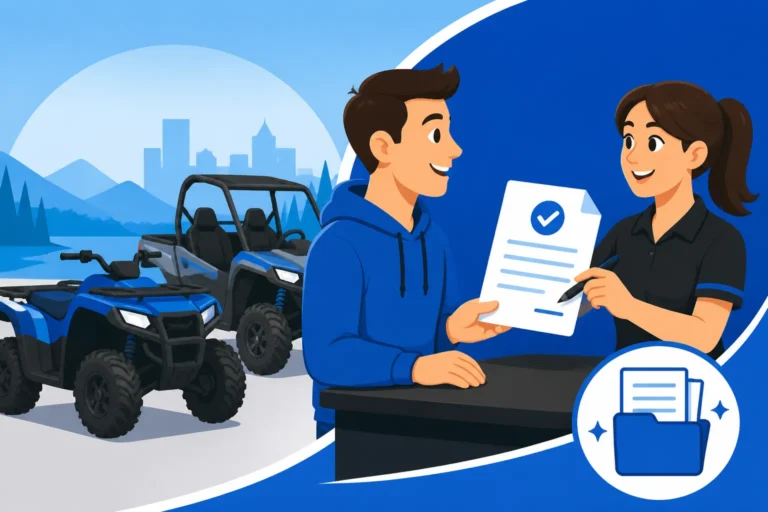
- Gather All Your Documents: This includes your sworn declaration, any old registration or insurance papers, repair receipts, bank statements, witness statements, and personal identification (driver's license, proof of address like a utility bill). Put everything into a well-organized folder. Make copies of everything, keeping the originals safe. The SAAQ will likely want to keep copies of certain documents. Bringing your [Quebec Driver's Licence Since 2021] is also essential as you need it to operate the machine.
- Verify Machine Details: Double-check that the VIN/serial number on your machine matches all your documents. Even a single digit off can cause significant delays. Make sure the year, make, and model also correspond.
- Be Ready to Explain: Mentally rehearse your story – how you acquired the ATV and why you don't have a bill of sale. Be concise, clear, and consistent. The SAAQ agents are professionals; they've heard it all, so honesty and clarity are your best policy.
- Check SAAQ Hours and Location: Confirm the operating hours of your local SAAQ service centre and plan your visit during less busy times if possible. Some locations might have specific counters for vehicle registration. For more insights, you might want to review [Quebec Registration Questions Clerks Hear].
- Anticipate Costs: While you won't know the exact registration fees beforehand, be prepared for [Quebec ATV Registration Costs Explained] and the associated sales tax. The SAAQ website provides general fee structures, so you can have an idea of the financial commitment involved.
Being well-prepared demonstrates to the SAAQ agent that you've taken the process seriously and are genuinely trying to comply with their requirements. It builds a foundation of trust that can help immensely.
What to Expect During the Registration Interview
When you finally get to the SAAQ counter, the agent will review your documents. Here's a realistic look at what might happen:
- Initial Document Review: The agent will first look for the standard documents. When you present your sworn declaration instead of a bill of sale, they might pause or ask for clarification. This is normal.
- Asking Questions: Expect a series of questions about your sworn declaration and how you acquired the ATV. They might ask for more details about the date, the person you acquired it from, or why the bill of sale is missing. Be patient and answer truthfully and consistently with your written declaration. They may even ask questions like those found in [Quebec SAAQ Questions in English].
- Verification and Discretion: The SAAQ agent has a certain level of discretion. They might call a supervisor, or they might take extra time to verify information, especially the VIN. In some rare cases, they might even ask for additional proof if they feel something is unclear or suspicious. This is why having all those complementary documents is so valuable. They are trying to ensure [Quebec Registration and Proof of Ownership] is solid.
- Potential Delays: The process might take longer than a standard registration with a bill of sale. Be prepared for this. It might not be a quick in-and-out visit.
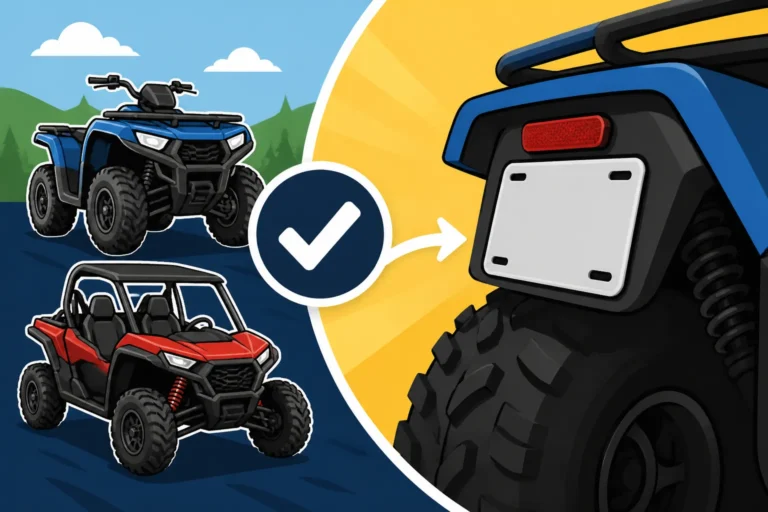
- Successful Registration: If the agent is satisfied with your sworn declaration and supporting evidence, they will proceed with the registration. You'll pay the applicable fees, and they will issue your [Quebec VHR Plates Explained] and registration certificate. This means you've successfully navigated a tricky situation!
Remember, the agents are there to enforce rules, but they are also there to help you complete the process legally. Approach them respectfully, provide clear and honest answers, and have all your documentation in order. With a solid sworn declaration and a collection of supporting evidence, you stand a very good chance of successfully registering your Quebec ATV, even without that elusive bill of sale.
Here's a quick summary of what kind of proof is most useful in these situations:
| Type of Document | Usefulness Without Bill of Sale | Notes |
|---|---|---|
| Sworn Declaration (Affidavit) | Essential. Your primary legal document confirming ownership under oath. | Must include VIN, date/method of acquisition, and be signed before a Commissioner for Oaths/Notary Public. |
| Old Registration Certificate | High. Shows previous legal ownership, often traceable by SAAQ. | Can establish a chain of custody, even if not in your name. |
| Insurance Policy/Slips | High. Proves insurable interest and possession over time. | Must match VIN of the machine. |
| Repair/Service Invoices | Medium. Shows ongoing possession and financial investment in the machine. | Needs to list your name and the machine's VIN. |
| Bank Transfer Records | Medium. Indirect proof of payment for a purchase. | More convincing if clearly linked to the specific sale. |
| Witness Statements | Medium. Provides corroboration for informal transfers (gift, informal sale). | Best if signed and dated; ideally, include contact info for the witness. |
| Photos of Machine with Owner | Low. Provides visual history of possession. | Less direct legal proof, but can help build a narrative, especially if dated. |
| Old Advertisements/Emails | Low. Provides context for how the machine was acquired. | Supporting evidence only, not direct proof of ownership. |
Disclaimer
This article is for general informational purposes only and does not constitute professional advice. Laws, prices and regulations vary by location and change over time. Consult a qualified professional for guidance on your specific situation.