Sticking a Pass Where Patrols Can See
A trail pass only helps if patrols can identify it on the machine. Mud, glare, a poor mounting spot or a sticker placed on removable gear can make a valid pass hard to check. Here’s how to mount a Quebec ATV or UTV trail-pass sticker so it stays readable, what to keep separate from your registration plate, and what to do if the sticker is damaged or missing.
Where to put a Quebec trail-pass sticker
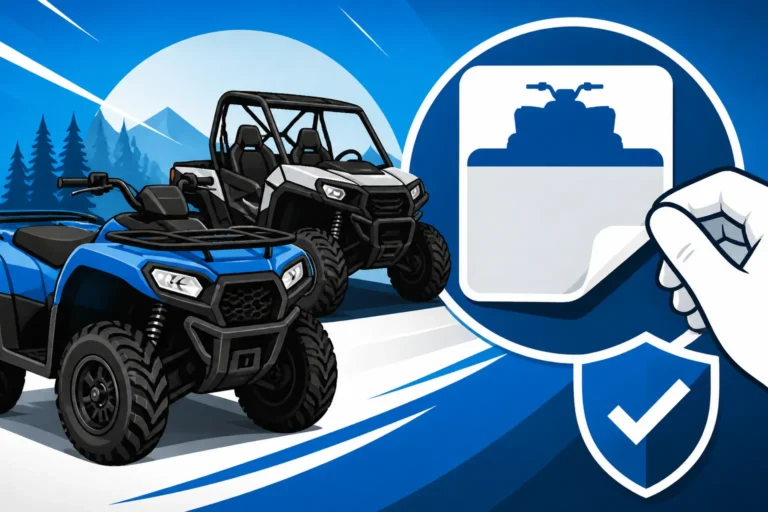
Mount the trail-pass sticker on the machine, in a place that is easy to see from outside and likely to be visible during a routine trail check. A broad, outward-facing fender is often a practical choice: it gives the sticker a flat surface and makes it easier to spot than a decal tucked under a seat, behind a rack or inside a storage compartment.
The exact placement instructions supplied with the pass take priority. Follow them if they specify a location or orientation. If you cannot find the instructions, check with the Fédération Québécoise des Clubs Quads (FQCQ) or the club that maintains the trail you plan to ride. Avoid guessing where a required sticker belongs, especially if the machine has an unusual body shape or limited fender space.
Aim for a spot that is:
- Visible without removing luggage, opening a compartment or moving a cover.
- Readable from a normal standing position beside the machine.
- On a stable, reasonably flat part of the vehicle.
- Away from deep grooves, sharp bends, vents and surfaces that flex or rub.
- Unlikely to be covered by a passenger’s leg, a bag, a spare tire or other equipment.
The sticker should be easy to find, not merely somewhere on the machine. A decal hidden behind a rack may be technically attached but difficult for a patrol member to verify. Mounting it where it can be seen without handling the vehicle makes checks simpler for everyone.
Keep the trail sticker distinct from the registration plate
A Quebec trail pass and a vehicle registration plate serve different purposes. The registration plate is tied to the machine’s registration. The trail-pass sticker is evidence of trail access under the relevant pass requirements. One does not take the place of the other.
Do not put the trail sticker over the registration plate, its numbers or any required vehicle marking. Keep it clear of lights, reflectors and other equipment that needs to remain visible. If you are unsure which document or sticker a patrol may ask for, Quebec Registration and Trail Pass Together explains how the two fit into a ride, while Quebec Pass Proof on the Trail focuses on showing pass evidence during a check.
A simple layout helps: use the designated plate location for the registration plate, and mount the trail sticker separately where it is visible. Do not assume that a registration document, a phone screenshot or a trail-pass purchase confirmation means the physical sticker can be left at home. Check the pass instructions for what proof is required and carry any supporting documents the rules call for.
Choose the machine, not your riding gear
Attach the pass to the ATV or UTV itself rather than to a helmet, jacket, cargo bag, removable windshield or trailer. Gear can be changed, removed or transferred between people and machines. The pass is associated with trail access for a particular machine, so its display should remain with that machine.
This is especially important if you carry equipment on the front or rear rack. Before settling on a spot, load the machine as you would for a real ride. Check that a fuel can, cooler, tool bag, winch accessory or passenger’s leg will not cover the decal. A mounting position that looks clear in the garage may disappear under normal riding gear.
For a rented machine, don’t move or replace a sticker without the rental operator’s permission. Ask the operator to show you where the pass is displayed and whether it covers the machine you are using. See Quebec Trail Pass for a Rented Machine for the separate pass questions that can come up with rentals.
How to apply the sticker so it stays put
A good location is only part of the job. A sticker applied over dirt, wax, water or loose plastic may peel early, while a decal placed across a sharp curve can wrinkle or lift at the edges. Take a few minutes to prepare the surface before pressing it down.
- Read the pass instructions first. Check for a stated mounting location, orientation or application method. If the decal comes with a backing or specific placement information, keep it until the sticker is installed and you have confirmed the location.
- Pick a suitable surface. Choose a clean, dry area that is visible and relatively flat. Avoid textured plastic, cracked panels, loose graphics and spots where the sticker will be scraped by boots or equipment.
- Clean the surface. Remove mud, dust, grease and old adhesive. Use a cleaner that is safe for the machine’s plastic and finish, and let the area dry completely. If you are uncertain about a solvent, check the vehicle maker’s guidance rather than risking damage to the panel.
- Position before peeling. Hold the sticker against the chosen area and check its visibility from more than one angle. Make sure the final position will not be hidden when the machine is loaded.
- Apply it carefully. Follow the supplied application directions. Press it down evenly so there are no large bubbles, folded corners or raised edges.
- Check the finished result. Stand back and confirm that the sticker can be seen, is not obstructed and is attached securely. Take a clear photo for your own records, but don’t treat the photo as a substitute for the displayed pass unless the current pass rules say that is acceptable.
Avoid stretching a sticker to make it fit a curved panel. Stretching can distort the decal and encourage the edges to lift. If there is no suitable flat space, ask the pass issuer or club for guidance instead of cutting, folding or altering the sticker.
Be cautious with clear covers and protective film
A clear protective layer may seem like an easy way to keep mud and scratches off the decal. But a cover can create glare, cloud the print, trap dirt or make the sticker look altered. Do not laminate, trim, punch holes in or cover the pass unless the issuer confirms that the method is acceptable.
Generic clear decal film sold through retailers such as Amazon is not automatically suitable for a trail-pass sticker. If you are considering any protective layer, ask the FQCQ or the relevant club whether it is allowed and whether it could interfere with inspection. When in doubt, leave the sticker uncovered and clean it gently as part of your normal machine wash.
Keep the sticker readable through the ride
A sticker can be perfectly placed at the start of a ride and hard to read by the first patrol check. Mud, dust, rain, snow, scratches and repeated washing all take a toll. Check the decal before leaving and again during a long trip, particularly after a muddy section or a close encounter with branches.
Wipe away loose dirt with water and a soft cloth. Avoid aggressive scraping, abrasive pads and harsh chemicals that might remove the printed information or lift the edges. If the sticker is damaged, partly detached or no longer readable, don’t try to repair it with tape or redraw missing details. Ask the issuer how to replace it and what proof to carry while the issue is resolved.
A quick pre-ride check can prevent avoidable confusion:
- Is the sticker still attached to the machine it was issued for?
- Can you see it without moving bags or opening a compartment?
- Is the printed information legible?
- Are all edges still holding?
- Has mud, a strap or an accessory covered part of it?
- Is the vehicle registration plate also visible and unobstructed?
For a multi-day ride, include the pass sticker in your daily walk-around. If you wash the machine at a motel, campground or service stop, check afterward that the sticker has not lifted. Use care around the decal rather than directing a high-pressure spray at its edges.
Don’t rely on a phone photo as the display
A photograph is useful for your records. It can help you remember where the sticker was placed or document its condition before a trip. It does not necessarily replace the physical display requirement. The pass sticker is intended to be displayed on the machine so it can be checked there.
If the sticker is missing or damaged, contact the issuer or consult its current instructions. Carrying an email receipt or purchase confirmation may help explain the situation, but don’t assume it grants permission to ride without the required display. For the proper replacement steps, see [Quebec Trail Pass Replacement If Lost].
This distinction matters when traveling with a group. A rider may have a valid purchase confirmation on a phone while the decal is at home, on another machine or unreadable under a layer of mud. Make sure the correct pass is displayed on the correct ATV or UTV before the group starts riding.
What patrols need to see during a check
A visible sticker helps a patrol member identify that a machine has the required trail pass. It does not remove the need to follow other trail rules, and it does not guarantee that every part of a ride is authorized. Patrols may also ask for other required proof, such as a driver’s licence or training certificate, depending on the rider and circumstances.
When you are stopped, pull over safely, switch off the machine if directed and follow the patrol member’s instructions. Keep your documents accessible, but don’t reach suddenly into a bag or storage box. If a patrol member cannot see the sticker, point out where it is rather than peeling it off or handling it unnecessarily.
A clear display can prevent a minor delay from turning into a confusing conversation. If your sticker is in a location that requires the patrol member to crouch, move equipment or touch the machine to find it, consider choosing a more visible spot for the next pass, following the issuer’s placement rules.
For more on how these checks work, What Happens When a Patrol Checks Your Sticker covers what a trail check may involve. The broader pass rules are also explained in Quebec’s Annual FQCQ Trail Pass and Quebec Trail Passes Cover Every Club. A pass is not a substitute for checking whether a particular trail is open or whether your machine and rider meet the requirements for that route.
A sticker is not permission to ride a closed trail
A displayed pass does not override a closure, land-access restriction, local rule or safety direction. Trails may close for seasonal conditions, maintenance, weather or other reasons. Check current trail information before setting out, and obey posted signs and patrol instructions even when your sticker is valid.
This is worth remembering when the group is planning a long route across several club areas. A pass may cover access across the relevant federated network, but the actual trail conditions can still change. A decal cannot tell you whether a corridor is open today, and it does not grant permission to ride on land outside the trail network.
Visitors should check reciprocity separately
A sticker that was valid in another province or state may not automatically count as a Quebec trail pass. Reciprocity arrangements can change, and an old decal or permit should not be treated as current proof without checking. Visitors from Ontario, New Brunswick or the United States should confirm the requirements that apply to their trip before heading onto Quebec trails.
The practical step is to verify the pass rule for the planned ride, then make sure the required Quebec pass is attached to the machine in a visible location. Quebec Visitors From Ontario discusses the visitor question in more detail. Checking in advance is much easier than discovering at a trailhead that a pass from home does not meet Quebec’s requirements.
Common placement mistakes and what to do instead
Most display problems are easy to avoid. The table below summarizes common choices and why they can cause trouble.
| Placement or handling choice | Why it can be a problem | Better approach |
|---|---|---|
| Under a seat or inside a storage box | A patrol cannot see it during a normal visual check | Display it on an exposed part of the machine |
| Behind a rack or spare tire | Cargo can block the sticker once the ATV is loaded | Test visibility with normal riding gear in place |
| On a helmet, jacket or bag | The item can be removed or used with another machine | Attach the pass to the machine, following its instructions |
| Across a sharp curve or textured panel | The decal may wrinkle, lift or become difficult to read | Choose a flatter, clean, dry surface |
| Over the registration plate or required markings | It can obscure separate vehicle information | Keep the trail sticker and registration plate distinct |
| Covered with unapproved film or tape | The print may be obscured or the decal may appear altered | Ask the issuer before adding any protective layer |
| Covered in mud or partly peeled | The pass may be difficult to verify | Clean it gently and contact the issuer if it is damaged |
| Left on a different machine | It may not show that the ridden machine has the required pass | Confirm the pass is on the ATV or UTV being used |
If you are buying a used machine, don’t assume a previous owner’s sticker transfers with the vehicle. Confirm which pass, if any, applies to the machine and whether you need to obtain your own. The trail pass and the machine’s registration history are separate questions. For the registration side, Quebec Registration and Proof of Ownership explains what establishes ownership, while [Quebec Trail Pass for a Second Machine] covers the separate question of having more than one machine available.
If a sticker is already on the machine when you acquire it, ask the seller or pass issuer what it represents and whether it is valid for your use. A decal’s appearance alone may not establish that it is current, transferable or associated with the machine in the way you need. Resolve that question before riding rather than relying on what a previous owner says.
Frequently Asked Questions
Does a trail-pass sticker go on the ATV or the rider?
Display it on the machine, following the pass issuer’s instructions. A sticker on a helmet, jacket or removable bag can be separated from the ATV or UTV and may not meet the display requirement.
Can I put the sticker on any fender?
A fender is often a practical place because it is exposed and easy to see, but follow the current instructions supplied with the pass. Choose a stable, clean surface that does not block the registration plate, lights or other required markings.
Can a photo of the sticker replace the sticker on the machine?
Do not assume so. A photo can be useful for your records, but it may not replace a required physical display. If your sticker is lost or damaged, check the issuer’s current replacement instructions before riding.
Should I cover the sticker with clear film?
Only if the FQCQ or the relevant club confirms that the covering method is acceptable. A layer that creates glare, obscures the print or changes the appearance of the decal can make inspection harder.
Does displaying a pass mean I can ride any trail?
No. A pass does not override trail closures, local restrictions, land-access rules or rider and machine requirements. Check the route and current trail conditions before leaving.
Disclaimer
This article is for general informational purposes only and does not constitute professional advice. Laws, prices and regulations vary by location and change over time. Consult a qualified professional for guidance on your specific situation.