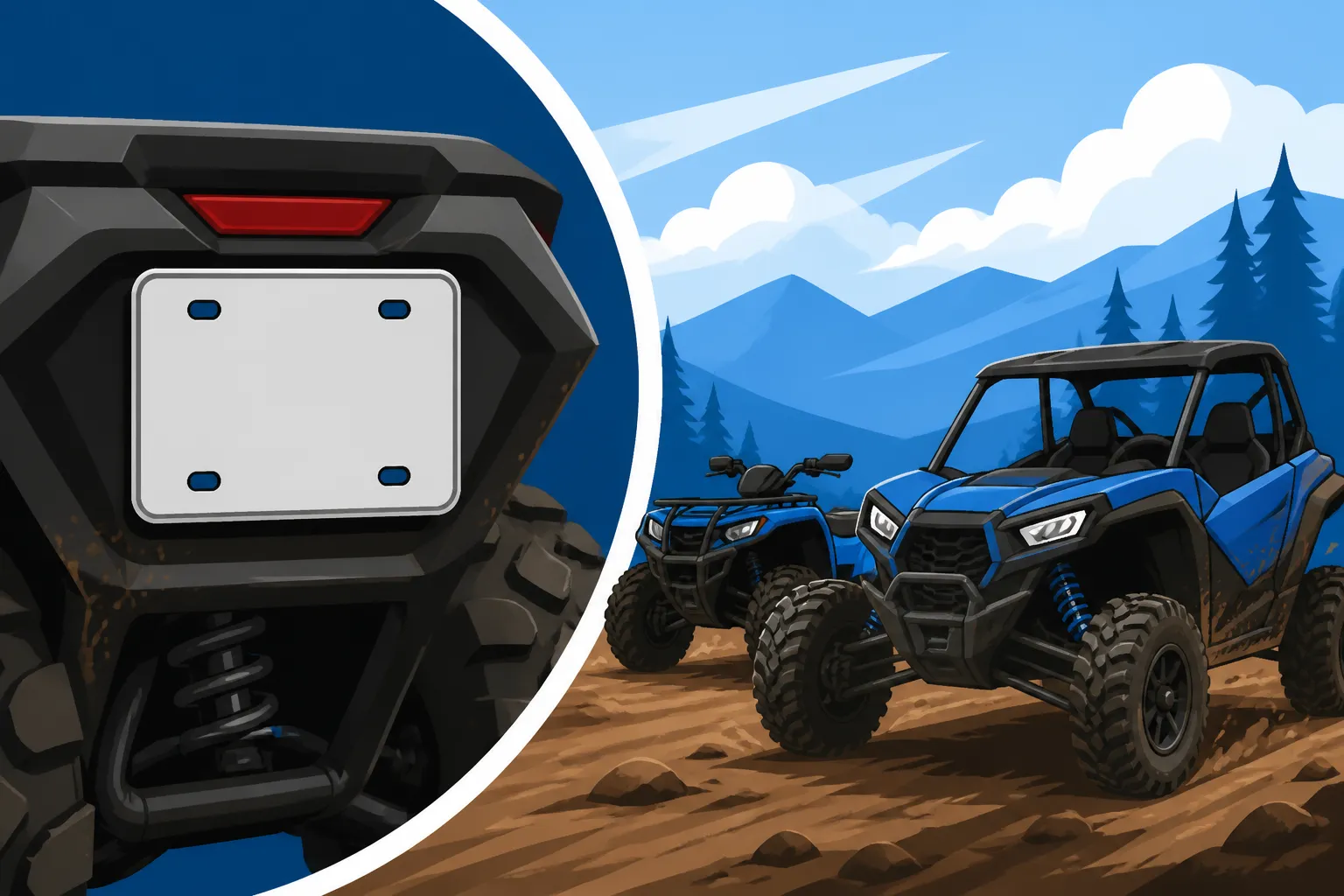
Quebec Plate Size on an Off-Road Machine
When you're out enjoying the vast network of trails across Quebec on your ATV or side-by-side, one of the details that might not immediately jump to mind but is absolutely crucial is your machine's license plate. Many riders new to the province, or even seasoned veterans who haven't paid close attention to the specifics, often wonder about the actual physical size of the plate itself, where it goes, and why it's so important. This guide will walk you through everything you need to know about the Quebec plate size on your off-road machine, dispelling common myths and ensuring you're fully compliant and ready for your next adventure.
Understanding the Quebec VHR Plate for Off-Road Machines
Before we even get to the dimensions, it's vital to understand what the plate on your off-road machine truly represents here in Quebec. It's more than just a piece of metal with numbers; it's a statement of legality, responsibility, and your right to access the amazing trail system.
What "VHR" Actually Means for Your Quad
In Quebec, an ATV is officially called a VTT (Véhicule Tout-Terrain), but the class of registration it falls under is VHR – Véhicule Hors Route, which simply means "Off-Road Vehicle." So, when you see a plate with "VHR" on it, you know it belongs to an ATV, a side-by-side, or another type of off-road machine that's registered to be ridden on designated trails or permitted areas. It's the SAAQ (Société de l'assurance automobile du Québec), our provincial vehicle registration and insurance board, that assigns these plates and manages the entire process.
This designation is quite specific and sets these machines apart from regular on-road vehicles. It signifies that your quad or side-by-side is recognized by the province as a legitimate off-highway vehicle. Understanding this initial classification is the foundation for comprehending all the rules and regulations that follow, including those pertaining to your actual plate. For a deeper dive into the terminology, you might want to read [What VHR Stands For] or [Quebec Calls an ATV a VTT].
The SAAQ's role extends beyond simply handing out a plate; they are deeply intertwined with regulating and ensuring the safe operation of these machines. The VHR plate serves as visual proof that your machine has met the provincial requirements, including mandatory liability insurance, which is part and parcel of the registration process. This integrated system, where [Quebec's SAAQ Is Registrar and Insurer], simplifies things for owners but also places a clear expectation of compliance.
Why a Dedicated Off-Road Plate is Necessary
Many new riders often scratch their heads, wondering, "Why do I even need a plate if my machine is only going to be on trails and not public roads?" It's a completely fair question, especially if you're used to jurisdictions where off-road machines might have less stringent identification requirements. The simple truth is that in Quebec, that small piece of plastic or metal on the back of your machine is absolutely essential for a multitude of reasons.
Firstly, it serves as immediate identification for law enforcement, trail patrols, and other riders. If there's an incident on the trail, or if your machine is involved in an accident, that plate provides a quick and undeniable link back to its registered owner. It allows authorities to confirm that the machine is legally registered and that the mandatory liability insurance is in place. Without this, tracking down responsible parties in unfortunate situations would be incredibly difficult, undermining the safety and order of our vast trail network.
Beyond identification, the plate is your ticket to legally accessing the thousands of kilometres of federated trails throughout Quebec. Trail clubs, which meticulously maintain these routes, often rely on patrols to ensure that only registered and insured machines are using the trails. Your plate is visual proof of compliance, helping maintain the integrity of the trail system and, by extension, the safety of all riders. It's part of the comprehensive framework that ensures our off-road recreational activities are both enjoyable and responsible.
The Standard Plate Size and Appearance
So, you're registered, you understand the "VHR" designation, and you know why you need a plate. Now, let's talk about the physical characteristics of the plate itself. Riders often picture a car-sized plate, but that's simply not the case for off-road machines in Quebec.
Dimensions of a Quebec Off-Road Plate
Unlike the larger, rectangular plates you see on cars and trucks, the Quebec VHR plate issued for ATVs and side-by-sides is notably more compact. While I can't give you exact dimensions down to the millimetre, it's designed to be proportionate to the machines it adorns, meaning it won't be an unwieldy appendage hanging off your fender. Think of it as a sturdy, miniature version of a standard license plate, perfectly suited for the often rugged environments these machines operate in.
Its smaller size is a practical consideration, allowing it to fit neatly on various machine models without protruding excessively or becoming easily damaged by brush and debris. Typically, these plates feature a clear numeric and alphabetic sequence, often accompanied by the "VHR" designation to immediately identify it as an off-road vehicle plate. The colour scheme usually follows the provincial standard for readability against varying backgrounds, ensuring that even in challenging light conditions, the plate's details are legible.
The compact nature of the plate makes it easier to mount securely without interfering with the machine's operation or requiring extensive modification. It's engineered to be robust enough to withstand the vibrations, mud, and occasional bumps that come with aggressive trail riding, yet it's designed to be as unobtrusive as possible. Its purpose is purely functional: clear identification.
Distinguishing VHR Plates from Other Quebec Plates
Stepping back for a moment, it's worth noting how the VHR plate stands out from other types of vehicle registration plates you'll see in Quebec. It's essential not to confuse them, as each type of plate serves a distinct purpose and adheres to different regulatory frameworks.
The most obvious comparison is with a standard Quebec passenger vehicle plate. These are significantly larger, typically rectangular, and designed for mounting on the front and rear of cars, trucks, and vans. They display a full provincial slogan and are instantly recognizable as on-road vehicle identifiers. The VHR plate, with its smaller stature and specific "VHR" marking, is clearly distinct. Then there's the Quebec snowmobile plate, which also has its own unique size and designation, reflecting the specific regulations for winter off-road use. While all these plates are issued by the SAAQ, their physical characteristics immediately tell you what type of vehicle they belong to and, by extension, what rules apply to its operation.
This clear visual distinction is incredibly helpful for everyone, from law enforcement and trail patrols to fellow riders. It allows for quick identification of machines operating within their legal parameters. An ATV with a VHR plate is rightfully on the trail, whereas one with a regular car plate would instantly raise questions. This differentiation underscores the province's commitment to ensuring that off-road recreational activities are managed safely and responsibly within their designated environments.
Proper Placement and Visibility Requirements
Having the correct plate is just one piece of the puzzle. Equally, if not more important, is how and where you mount it on your machine. An improperly placed or obscured plate is as good as no plate at all in the eyes of the law and trail patrols.
Where to Mount Your VHR Plate on an ATV or Side-by-Side
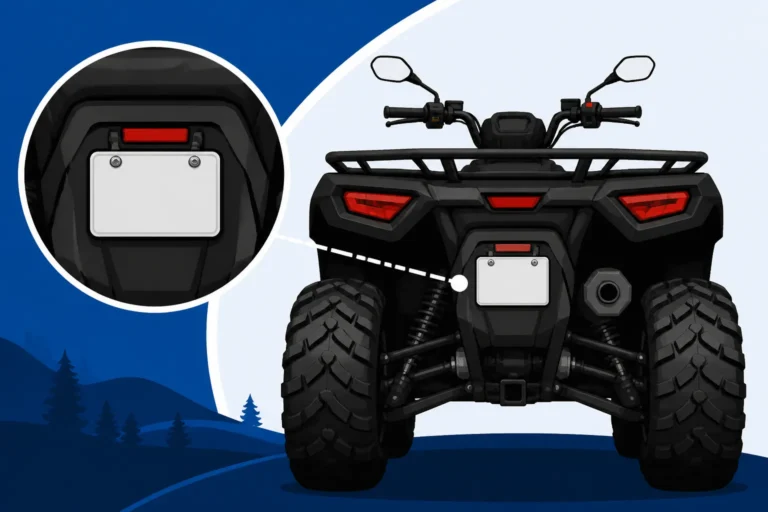
The key directive for mounting your VHR plate is clear visibility from the rear. For most ATVs, this means securing it firmly to the rear fender or the back of a cargo rack. The exact spot might vary slightly depending on your machine's make and model, but the principle remains the same: it must be unobstructed. For side-by-sides, the mounting location is typically on the rear frame or cargo bed, ensuring it's clearly visible to anyone following or inspecting your machine from behind.
It's crucial that the plate is mounted horizontally and securely. You don't want it flapping around, getting bent, or falling off mid-ride. Using sturdy bolts or appropriate fasteners is highly recommended. Avoid mounting it in a position where accessories like spare fuel cans, cooler boxes, or even heavily packed cargo bags could consistently block the view of the plate. Remember, this plate is your machine's primary identifier, and its visibility is non-negotiable. For more specific guidance, [Where a VHR Plate Mounts on a Quad] offers additional insights.
Consider the angles at which a trail patrol might approach you, or how it would appear to emergency services. If your plate isn't clearly readable from a reasonable distance, especially from directly behind your machine, it's not compliant. Many riders take a moment after mounting to step back, get low, and ensure that the plate is easily visible under various conditions, which is a smart habit to adopt.
The Importance of Keeping Your Plate Clean and Visible
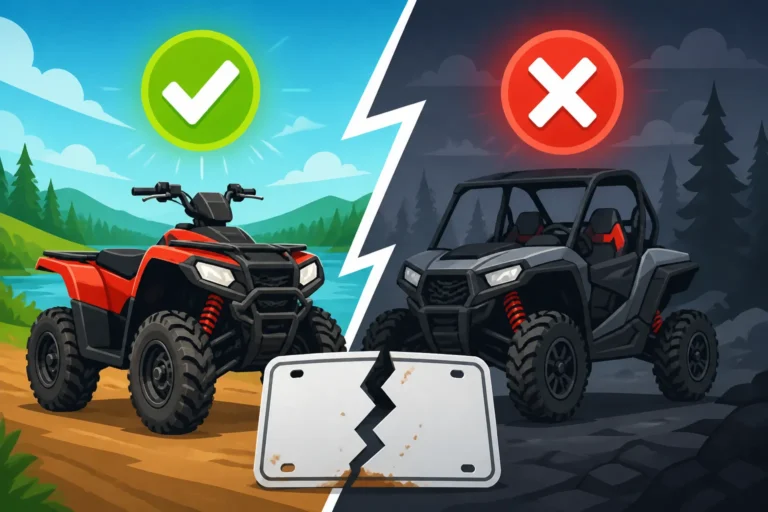
Picture this: you've just finished an epic mud run, your machine is caked from top to bottom, and you're heading back to the truck. Your plate, once clearly visible, is now indistinguishable under a thick layer of Quebec trail clay. While it might seem like a minor detail after a thrilling ride, an obscured plate is a problem. Trail patrols and law enforcement need to be able to read your plate easily and instantly. If they can't, it could lead to you being stopped, questioned, and potentially even fined.
Mud, snow, dust, and even strategically placed branches from tight trails can all contribute to obscuring your plate. It's a common frustration for riders, but it's one that you simply must stay on top of. Before every ride, especially if you anticipate dusty or muddy conditions, take a moment to ensure your plate is clean and free from obstruction. A quick wipe with a rag or even your glove can make all the difference. This small act of maintenance is not just about avoiding a fine; it's about ensuring accountability and safety on the trails.
Patrols are out there to ensure everyone's safety and compliance, and a visible plate is one of the first things they check. They want to confirm that you're a registered, insured, and legal rider. If your plate is unreadable, it creates an immediate barrier to that verification. Neglecting this simple detail can escalate into a frustrating encounter, potentially spoiling your day on the trails. It's part of the essential [Quebec Equipment Checks by Patrols] that can happen at any time.
What Happens If Your Plate is Lost, Damaged, or Stolen?
Life on the trails can be unpredictable, and sometimes, despite your best efforts, things go wrong. A rock could kick up and bend your plate, a branch could rip it off, or, unfortunately, it could be stolen. Knowing what to do in these situations is just as important as knowing the rules for initial registration.
Replacing a Damaged or Missing VHR Plate
If you find yourself in the unfortunate situation of having a damaged, lost, or stolen VHR plate, the first thing to do is not panic, but to act quickly. Riding without a valid and intact plate is against the law, so you'll want to address the issue as soon as possible. Your first point of contact will be the SAAQ. They are the governing body for all vehicle registrations in Quebec, including your off-road machine. You'll need to report the issue and request a replacement.
The process typically involves filling out specific SAAQ forms and providing identification. If your plate was stolen, you might also need to file a police report, which could be required by the SAAQ as part of their replacement procedure. While there is usually a fee associated with replacing a lost or damaged plate, it's far less costly than the potential fines you could face for riding without one. You can find more details on this process by looking into [Quebec Plate Replacement If Lost].
It's a good idea to keep a record of your plate number (perhaps a photo on your phone) and the date you reported it missing or damaged. While you await your new plate, avoid riding your machine on federated trails or any public land where a plate is required. It’s better to be safe than sorry, as patrols are not always sympathetic to explanations without immediate proof of action taken.
Riding Without a Plate: Risks and Penalties
Riding an off-road machine in Quebec without a valid, visible, and properly mounted plate is not just a minor infraction; it carries significant consequences. The plate is your primary proof of registration and, by extension, that you meet the mandatory insurance requirements. Removing it, or riding with one that is unreadable, is viewed seriously by authorities.
The penalties can include substantial fines. These fines are not trivial and can quickly add up, easily overshadowing the cost of a replacement plate. In more severe cases, or for repeat offenders, your machine could even be impounded. Imagine being hundreds of kilometres from home, having your quad impounded, and then needing to arrange transport and pay impound fees on top of a hefty fine. It's a scenario no rider wants to face. This aspect highlights the importance of understanding [Quebec Penalties for Riding Unregistered].
Beyond the direct legal repercussions, riding without a plate means you're operating outside the system that ensures safety and accountability on Quebec's trails. You're not contributing to the pool that helps maintain trails and compensate victims in accidents, and you're jeopardizing the privilege of off-road riding for everyone. It's a fundamental requirement, and respecting it is paramount for enjoying the sport responsibly and without unnecessary stress.
Common Misconceptions and Practical Tips
There are always questions that bubble up, especially for newcomers or those considering a purchase. Let's tackle some of these common concerns and offer some practical advice to keep you on the right side of the rules.
Does Plate Size Change for Different Machine Types?
A frequent question is whether the VHR plate size varies depending on the type of off-road machine you own. For example, do side-by-sides get a larger plate than a sport quad? What about youth models? Generally speaking, the SAAQ issues a standard VHR plate for all registered off-road machines, regardless of their specific type or size. So, whether you're riding a nimble sport ATV, a powerful utility quad, or a multi-passenger side-by-side, the physical dimensions of the VHR plate you receive will be consistent.
This standardization simplifies things for both riders and enforcement. It means there's no confusion about which plate belongs to which category, and trail patrols don't need to carry a mental checklist of different plate sizes. The focus remains on the "VHR" designation and the unique alphanumeric code, which links back to your machine's registration. So, if you're registering a new side-by-side, expect the same compact VHR plate you'd get for a standard ATV; see [Quebec Registration for a Side-by-Side] for more.
The critical factor is that the plate is appropriate for off-road use, not its exact dimensions in relation to your specific machine. As long as it's the official VHR plate from the SAAQ and properly displayed, you're good to go. This consistency contributes to the overall clarity and ease of regulation within Quebec's off-road community.
Practical Advice for New Owners and Visitors
For those new to off-road riding in Quebec, or individuals bringing a machine into the province, navigating the registration process and understanding plate requirements can feel like a maze. My best advice is to start by understanding the basics of [Quebec ATV Registration for Newcomers]. Ensure you have all your proof of ownership documentation in order, whether it's a bill of sale from a dealer or a private seller. If you're buying privately, ensure you use a clear, comprehensive bill of sale, perhaps even one drafted using a service like LawDepot, to ensure all details are legally sound. This helps avoid headaches when you go to the SAAQ to transfer ownership and get your new plate.
When you purchase a machine privately, the seller typically removes their plate (as it's tied to them, not the machine). You, as the buyer, are then responsible for registering the machine in your name and obtaining a new plate. The paperwork for this transfer is critical. Services like LawDepot can be invaluable for creating ironclad documents like a bill of sale, which clearly outlines the transaction details and protects both parties. This makes the SAAQ process smoother for getting your new registration and plate. Having all your ducks in a row with the paperwork is half the battle; [Quebec SAAQ Forms for a Private Sale] or [Paperwork Two Individuals Sign on a Private Sale] are excellent resources.
For visitors, remember that Quebec has specific rules. If you're from out of province, you'll need to check the current reciprocity agreements, if any, or plan on purchasing a Quebec trail pass, which will require your machine to be properly registered in your home province or state. While your home province's plate will be valid for identification, you still need to adhere to Quebec's trail access rules. Always verify before you head out, as rules can change.
Table: Key Features of Quebec Vehicle Plates
To help clarify the differences between various Quebec plates, here’s a quick overview:
| Feature | Quebec VHR (Off-Road) Plate | Quebec Passenger Vehicle Plate | Quebec Snowmobile Plate |
|---|---|---|---|
| Primary Use | ATVs, UTVs, Side-by-Sides | Cars, Trucks, Vans, SUVs | Snowmobiles |
| Size (General) | Compact, designed for off-road machines | Standard, larger rectangular | Intermediate, slightly smaller than car |
| Designation | Clearly marked "VHR" | Often includes a slogan | Clearly marked "SN" or "Motoneige" |
| Visibility | Rear, unobstructed | Front and rear | Rear, unobstructed |
| Registrar | SAAQ | SAAQ | SAAQ |
| Insurance | Mandatory SAAQ liability | Mandatory SAAQ liability | Mandatory SAAQ liability |
| Mounting | Securely to fender/frame | Securely to vehicle body | Securely to tunnel/frame |
This comparison helps visualize why the VHR plate is distinct and perfectly suited for its intended purpose. It’s small, yet mighty in its importance for legal riding in Quebec. Remember, whether you're using a template from LawDepot for a private sale or simply doing your annual [Quebec ATV Registration Renewal Each Year], keeping your plate in mind is key to smooth sailing on the trails.
Disclaimer
This article is for general informational purposes only and does not constitute professional advice. Laws, prices and regulations vary by location and change over time. Consult a qualified professional for guidance on your specific situation.