Quebec Guided Quad Tours Worth Booking
A guided quad tour can turn a Quebec outing into a manageable adventure, but choosing the right one takes more than picking a scenic photo. Vehicle type, route, guide credentials, included gear and the rules you must meet all affect the day. Here’s how to compare tours, know what to ask before booking and arrive ready to ride.
What a guided quad tour is good for
A guided quad tour is a practical choice if you want to ride without planning every turn yourself. The operator sets the route, provides an orientation and leads the group. That can make the experience less intimidating for a first-time rider, and it can simplify logistics for visitors who don’t have a suitable machine or local trail knowledge.
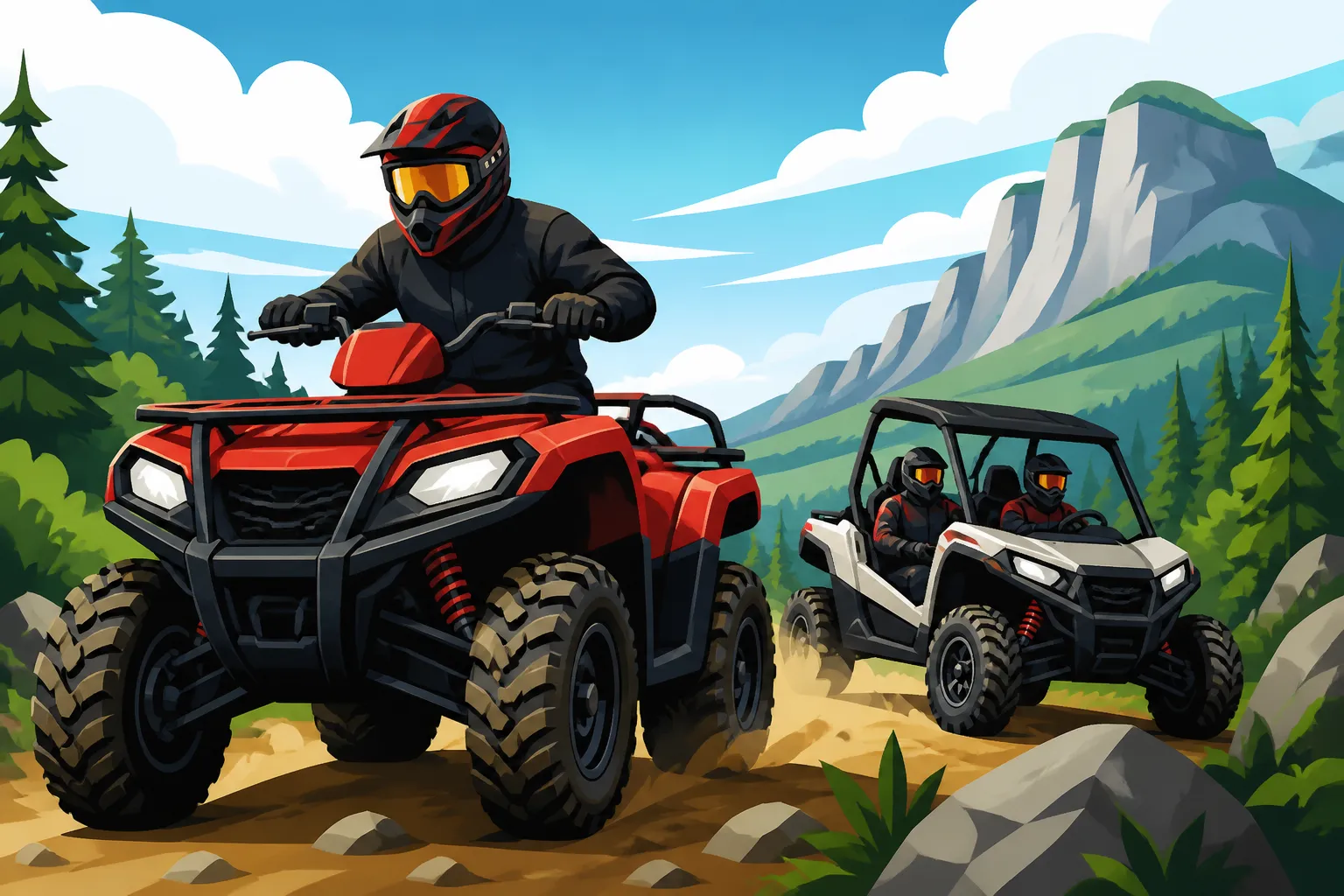
Guided tours are not all the same. Some focus on a short introduction to riding; others build a longer outing around scenery or a regional destination. The vehicle may be a quad, also called an ATV or four-wheeler, or a side-by-side, also called a utility task vehicle. A quad is ridden astride the seat, while a side-by-side has seats and steering controls more like a small vehicle. Don’t assume that a tour described as a “quad tour” uses the vehicle you have in mind. Confirm the exact type before you reserve.
The guide’s role is more than showing the way. A responsible briefing should explain how to use the controls, what to do if the group stops, how to follow the guide’s signals and what to do if you have a problem. The operator should also set expectations about the pace and terrain. You can ask for those details before booking rather than discovering them at the staging area.
A tour is a particularly good fit when:
- You’re new to off-road riding and want an introduction before considering a longer or independent outing.
- You’re visiting Quebec and don’t want to transport a machine.
- You’re travelling with a group whose members have different levels of experience.
- You want a planned route and a person responsible for leading the ride.
- You’re choosing a side-by-side and want to ask about passenger seating, rather than assume a quad can carry another person.
There are trade-offs. A guided ride follows the operator’s schedule and route, so you may have less flexibility than you would on a private ride. You’ll need to keep pace with the group and follow the guide’s instructions, even if you would prefer to stop longer or take a different track. The outing may also be affected by trail conditions, weather or an operator’s operating schedule. Ask what happens if the route changes or the tour cannot go ahead.
If you’re weighing a guided outing against renting a vehicle for an independent ride, start with Quebec ATV Rentals: What They Cost. That comparison can help clarify what’s included in a rental and what arrangements you’d need to make yourself. For visitors who want a guided experience specifically, Quebec Tours With a Certified Guide is also a useful related read.
Where to look and how to assess an operator
Quebec has a large trail network, but a long network does not mean every trail is available to every tour at every time. The Gouvernement du Québec says the province has over 30,000 km of quad trails managed and maintained by member clubs. Actual access can depend on the route, trail conditions, local arrangements and the operator’s itinerary. Treat a tour description as a starting point, then confirm the route and meeting details with the business.
For a guided quad or side-by-side tour, the Ministère du Tourisme recommends booking through Quality-Safety certified businesses and approved network operators, including Nord Expé, which offers excursions in regions such as Charlevoix. Certification is a useful screening point, not a substitute for reading the tour details. Ask what the certification means for the specific operator and whether the activity you’re booking is covered.
Charlevoix is one place to look if you want to combine a guided ride with a regional visit. Tour formats, machines and departure arrangements can differ between businesses, so check the current offering rather than assuming that operators in the same region provide the same experience. [Charlevoix Quad Tours in Quebec] can help you think through regional options.
A booking platform such as Viator may help you compare listed activities, but don’t rely on a short listing to answer every practical question. Check who operates the ride, where it starts, which vehicle is supplied and what the booking includes. If a detail matters to your trip, confirm it with the operator before paying. This is especially useful for tour language, passenger arrangements, minimum requirements, weather policies and equipment.
Use a few basic checks when comparing businesses:
- Look for clear operator details. The listing should identify the business responsible for the ride, not only describe a destination.
- Check the tour’s actual format. Confirm whether it is guided, self-drive or a mix. A guided tour still usually means you operate the vehicle yourself under the guide’s direction.
- Find the precise meeting location. A regional name alone may not be enough to plan transport or arrival time.
- Ask what experience the route suits. “Beginner-friendly” is more useful when the operator explains what the ride involves and how the guide handles different skill levels.
- Check the policy for changing conditions. Ask whether the operator can change the route and what happens if weather or trail access affects the outing.
- Read the booking terms. Pay attention to cancellation, rescheduling, deposits and damage responsibility. Quebec Rental Waivers You Sign explains why it’s worth understanding the terms before you arrive.
A clear operator should be able to answer practical questions without making you guess. If the listing is vague about the vehicle, guide, inclusions or requirements, ask before booking. If you still can’t get a clear answer, compare another tour rather than hoping the details will be sorted out on the day.
Choosing a quad, a side-by-side and a tour format
The vehicle changes the feel of the outing. A quad puts the rider directly in control of a single machine, while a side-by-side has a seated cabin-style layout and may be suitable for passengers, subject to the vehicle’s seating and the operator’s rules. The terms can be confusing: Quebec treats quad bikes and utility task vehicles as off-road vehicles, but the driver requirements are not identical.
If you want to drive a quad, ask whether it’s a standard ATV or a modified machine. A quad designed for a single rider is not automatically suitable for carrying a passenger. Ask the operator about the specific model, seating and passenger rules. Don’t assume an extra seat or a marketing photo means every participant can ride as a passenger.
A side-by-side may suit visitors who prefer seated controls or are planning to ride with another adult. However, the driver still needs to meet the applicable requirements, and the operator’s rules may be stricter than the legal minimum. Check whether the quoted tour is for a driver, a passenger or a whole vehicle, and whether passengers need to be booked separately. For a closer look at this vehicle type, see Quebec Side-by-Side Rentals.
The tour format matters as much as the machine:
| Tour format | Could suit you if | What to confirm |
|---|---|---|
| Introductory guided ride | You are new to off-road riding or want a supported first outing | How the briefing works, the route’s difficulty and whether the pace is adjusted for beginners |
| Scenic guided outing | You want a ride organized around a region or landscape | The route, stopping opportunities and how much time is spent riding |
| Side-by-side tour | You prefer seated controls or plan to travel with a passenger | Driver eligibility, passenger arrangements, seating and any vehicle-specific restrictions |
| Private or small-group option | Your group wants a more personal pace or needs a particular arrangement | Whether the option is available, what it changes and any added requirements |
| Multi-part or longer outing | You want more time on the machine | Breaks, food, fuel, included equipment and how the operator handles changing conditions |
Descriptions like “easy,” “scenic” or “for everyone” are not precise enough on their own. Ask what the terrain is like and whether the operator expects riders to manage mud, uneven ground, hills or tight turns. You don’t need to know technical riding terminology to ask: “What will I actually have to do on this route?”
Be honest about experience and comfort. A rider who is uneasy with the controls may find a fast-paced group stressful, even if the trail is described as suitable for beginners. A passenger may also have different needs from the driver. Tell the operator if anyone in your group has concerns about balance, motion, noise, riding in changing weather or sitting for an extended outing. The business can explain whether its tour is a good match.
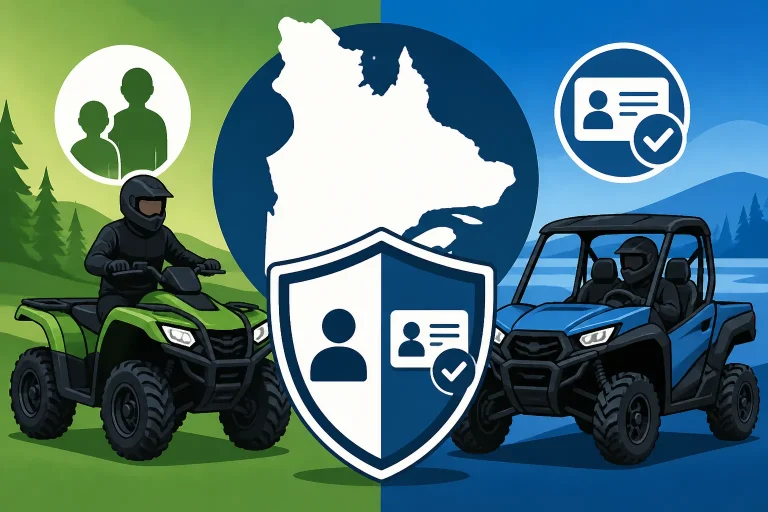
Age and licensing are important when you’re comparing vehicle types. The Gouvernement du Québec says a person must be at least 18 and hold a valid driver’s licence to drive a utility task vehicle. For an ORV driver aged 16 or 17, the Gouvernement du Québec requires a driver’s licence and a training certificate from a recognized federation to ride on a trail, road, public land or municipal private land. Those are not the same as the requirements to rent a machine: ask the operator which rules apply to the exact tour and vehicle. See Quebec Rental Age and Licence Rules for more detail.
For rentals, the Gouvernement du Québec says you must be at least 18, hold a valid driver’s licence and receive minimum training from the renter on vehicle operation and safety rules. Meeting a rental threshold does not guarantee that an operator will accept every customer for every tour. A business may set conditions based on its equipment, insurance, route or booking policy. Confirm eligibility for each person who will drive, and don’t book on the assumption that a passenger can switch to the driver’s seat.
What to ask before you book
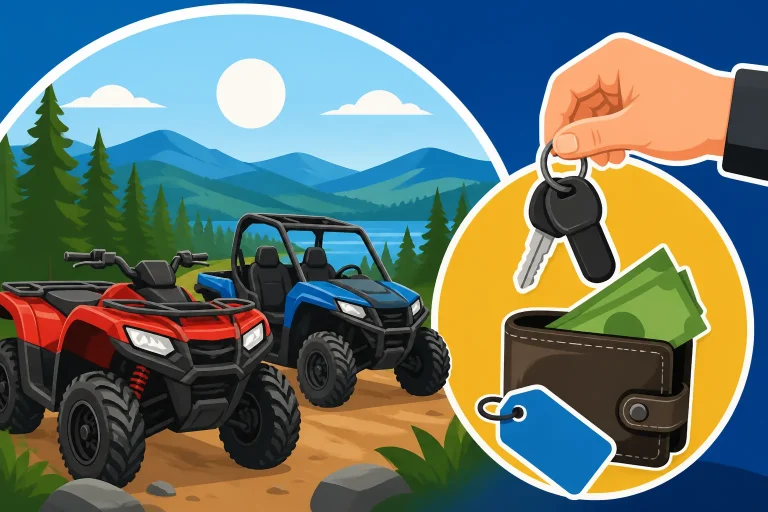
A tour price on a listing may not tell you the full cost of the day. The useful question is not simply “How much?” but “What does that amount include, and what could I be charged separately?” For named companies or booking platforms, current prices and terms can change, so check the provider’s own listing and booking conditions.
Ask whether the booking covers the vehicle, guide, required protective equipment, trail access and any transportation to the meeting point. Then ask what is excluded. Fuel, food, optional equipment or other extras may be treated differently by different operators. Don’t assume an item is included just because it appears in a photo or a general description.
Get clarity on the payment and damage terms. A rental or tour may involve a deposit, a payment hold or financial responsibility for damage, but the amount and conditions depend on the provider. Read the relevant terms and ask what happens after a rollover, collision or mechanical problem. If the answer is unclear, request an explanation before completing the booking. Quebec Rental Deposits and Insurance covers the kinds of details worth checking.
Use this booking checklist:
- Who is driving? Confirm each driver’s age and licence eligibility, and ask what documents to bring.
- What machine is provided? Get the model category and seating arrangement, not just the broad word “quad.”
- Who may ride as a passenger? Ask which passenger arrangements are allowed and whether a passenger must be reserved in advance.
- What gear is supplied? Confirm helmets, goggles or other equipment, along with available sizes.
- What should you wear? Ask about footwear and clothing appropriate for the activity and forecast.
- What does the tour include? Clarify trail access, guide service, fuel, transport and refreshments.
- How long are you expected to be away? Confirm the full time commitment, including arrival, briefing and return arrangements.
- Where do you meet? Get a precise location and instructions for finding it.
- What happens if plans change? Check cancellation, rescheduling and weather policies.
- What if a rider is uncomfortable? Ask whether the guide can pause, turn back or make another arrangement, and whether doing so affects the booking.
Check the booking terms before relying on a third-party listing. If you use Viator, compare the listing with the operator’s own information where possible and make sure you understand which business is responsible for delivering the activity. Keep the confirmation and any instructions available, but don’t treat a booking email as a replacement for required identification or vehicle documents.
A final practical check is whether the outing suits the whole group, not just the person making the reservation. A participant who is not licensed, is below an operator’s age threshold or expects to ride as a passenger may need a different arrangement. Ask about each person before you book so the tour does not unravel at check-in.
Rules, safety and trail etiquette
A guided tour does not exempt riders from Quebec’s off-road vehicle rules. The guide may help the group follow the route, but each driver remains responsible for operating safely, wearing required equipment and following instructions and signs. The Gouvernement du Québec says off-road vehicles are permitted on roads and trails between 6 a.m. and midnight; ask your operator about the tour’s schedule and follow local requirements.
The Gouvernement du Québec requires drivers and passengers to wear a helmet with a visor, or safety goggles if the helmet has no visor. Drivers must wear shoes or boots that allow them to control the vehicle’s pedals easily. Confirm what the operator supplies, and bring suitable footwear rather than assuming casual shoes will be accepted. For more information on protective requirements, see Quebec ATV Helmet Rules.
The Gouvernement du Québec says drivers must keep the front white headlights and red taillights turned on while operating an ORV. It also notes that vehicles need proper equipment for public roads and trails. An operator should explain any machine-specific controls and safety features during the briefing. Pay attention to those instructions even if you have driven a similar-looking vehicle elsewhere; controls and operating rules can vary.
Speed and location matter. The Gouvernement du Québec sets a maximum allowed speed of 50 km/h for all-terrain off-road vehicles, but a posted or local restriction may require a slower pace. Near sensitive locations, the rules are more restrictive: according to the Gouvernement du Québec, drivers must not exceed 50 km/h within 100 m of dwellings or health and recreational facilities, and must not exceed 30 km/h within 30 m of such sites. The Gouvernement du Québec also says trail use is prohibited within 100 m of a dwelling or health care facility unless another distance is set by municipal bylaw, and within 30 m for a trail built before January 1, 2012. These are location-specific rules, not invitations to ride up to the boundary; follow signs and the guide’s directions.
The route is not a private playground. Stay on the authorized trail and respect closures, detours and land access restrictions. The Gouvernement du Québec says riding an off-road vehicle off trail in a designated restricted area can lead to a minimum fine of $250. Don’t leave the corridor to take a photograph or bypass a wet or difficult patch without the guide’s approval.
Trail signs provide useful information, so learn to recognize the ones the operator points out. The Gouvernement du Québec explains that an advance sign can warn that a road crosses the trail, a groomer sign indicates the possible presence of a groomer, and a detour sign directs riders around trail work. A designated ORV trail sign indicates that snowmobiles and quad bikes use the same trail. If a guide slows or stops the group, wait for instructions rather than riding ahead.
You may encounter patrols. The Gouvernement du Québec says peace officers and trail wardens patrol snowmobile and ATV trails. A trail warden appointed by a local club patrols a defined territory, while an association-appointed warden may cover a larger area. Club-appointed wardens may stop an ORV to inspect it and check equipment. Riders may be asked for identification showing proof of age, a driver’s licence, vehicle registration, proof of insurance or a valid trail access permit. Ask the operator which documents you need for the tour and where to keep them accessible.
Don’t ride after drinking or using drugs. The Gouvernement du Québec says impaired-driving offences involving drugs or alcohol can result in an immediate licence suspension and a fine of $300 by police officers, as of November 2026. Passengers must also follow rules: the Gouvernement du Québec says passengers who have consumed alcoholic beverages while in an ORV, trailer or sled may be fined at least $150. A guided activity is still vehicle operation, and a guide cannot make impaired riding safe or lawful.
For the group’s sake, keep a steady distance from the vehicle ahead, avoid sudden moves and follow the guide’s pace. If you need to stop, signal or follow the operator’s procedure rather than leaving the group unexpectedly. On multi-use and forest roads, the Gouvernement du Québec says heavy trucks have the right of way. Treat other trail users with care and don’t assume they can see or hear your machine in time to react. Quebec Trail Etiquette Locals Expect offers more context for sharing the corridor.
Getting ready for the ride
Preparation starts before departure. Check the operator’s message for the meeting place, arrival instructions, clothing and gear requirements. If anything is unclear, contact the business in advance. Arriving without the required licence or footwear can be more than an inconvenience: it can leave you unable to drive or join the tour.
Wear clothing that allows you to move comfortably and protects you from the conditions. Ask the operator what it recommends for the expected route and weather. Even a warm forecast does not tell you exactly how a ride will feel once the machine is moving or the terrain changes. Bring layers if the operator recommends them, and avoid loose items that could interfere with riding controls.
If the operator supplies a helmet, check that it fits properly and ask for a replacement if it does not. If you need goggles, confirm whether they are included and whether they fit with the helmet. The Gouvernement du Québec requires drivers and passengers to wear a helmet with a visor or safety goggles if there is no visor. Don’t treat a poor fit as a minor detail; ask the guide to help before the ride begins.
Listen carefully during the orientation. Ask for a demonstration if you’re unsure how to operate the controls, stop the vehicle or respond to a signal. Make sure you understand how the guide wants the group to ride and what to do if you fall behind. A short question before departure is easier to handle than confusion on the trail.
If the route or vehicle changes on arrival, pause and ask how the new arrangement affects your booking and safety. Don’t accept a vehicle you don’t understand simply because the group is ready to leave. Tell the guide about a concern before the ride starts, and ask whether the outing can be adjusted. A good operator should make expectations clear and take safety questions seriously.
Before travelling to the departure point, verify the route and operating conditions. The Gouvernement du Québec says trail conditions can be checked through the Fédération québécoise des clubs quads interactive map. Trail status can change, so check close to the outing and follow the operator’s latest instructions. Quebec Trail Conditions Before You Go and Quebec Trail Maps and the iQuad App can help with that planning.
During the ride, stay with the group and follow the guide’s directions, even if a section looks familiar or another trail seems more appealing. Take breaks when the guide provides them, and speak up if you feel tired, uncomfortable or unsure about the terrain. The point of a guided tour is that you have someone leading the route; use that support instead of improvising.
After the ride, allow time for the return process. Ask in advance whether the machine needs to be returned in a particular condition and what to do if it has a problem. If there is damage or a mechanical issue, report it promptly and follow the operator’s instructions. Taking a moment to understand the return procedure can prevent a disagreement later.
Frequently Asked Questions
Are guided quad tours suitable for first-time riders?
They can be, but “beginner-friendly” varies by operator and route. Ask what terrain the tour covers, how the guide handles different experience levels and whether you will drive the machine yourself. Be honest about your comfort with the controls before you reserve.
Do I need a driver’s licence to drive on a Quebec tour?
The requirement depends on the vehicle and activity. The Gouvernement du Québec says a person must be at least 18 and hold a valid driver’s licence to drive a utility task vehicle. For a rental, the Gouvernement du Québec also requires a valid driver’s licence and minimum instruction from the renter. Confirm the rules for the particular machine and tour with the operator.
Can I book a side-by-side tour as a passenger?
Possibly, but the operator’s vehicle, seating and booking rules determine the arrangement. Ask whether passengers are accepted, whether they must be booked separately and what requirements apply. Don’t assume a quad tour includes passenger seating.
What should I verify about tour equipment?
Ask whether the operator supplies a helmet and, if needed, goggles, and whether equipment is available in a suitable fit. The Gouvernement du Québec requires drivers and passengers to wear a helmet with a visor or safety goggles if there is no visor. Confirm footwear and clothing requirements with the business.
Should I book through a platform or directly with the operator?
Either may be convenient, but make sure you know which business is operating the tour and what the booking includes. A platform listing can help with comparison; the operator can clarify machine, route, eligibility and day-of logistics. Read the cancellation and damage terms before confirming.
Sources
- Gouvernement du Québec — Lieux pour circuler en véhicule hors route | Gouvernement du Québec (checked November 3, 2026)
- Gouvernement du Québec — Off-highway vehicle trail patrol | Gouvernement du Québec (checked November 3, 2026)
- Gouvernement du Québec — Rules for off-road vehicles | Gouvernement du Québec (checked November 3, 2026)
- Gouvernement du Québec — Off-road vehicle riding areas | Gouvernement du Québec (checked November 3, 2026)
- Gouvernement du Québec — Signs for off-road vehicles | Gouvernement du Québec (checked November 3, 2026)
- Gouvernement du Québec — Safety tips for off-road vehicles | Gouvernement du Québec (checked November 3, 2026)
Disclaimer
This article is for general informational purposes only and does not constitute professional advice. Laws, prices and regulations vary by location and change over time. Consult a qualified professional for guidance on your specific situation.