Buying From a Neighbour Instead of a Dealer
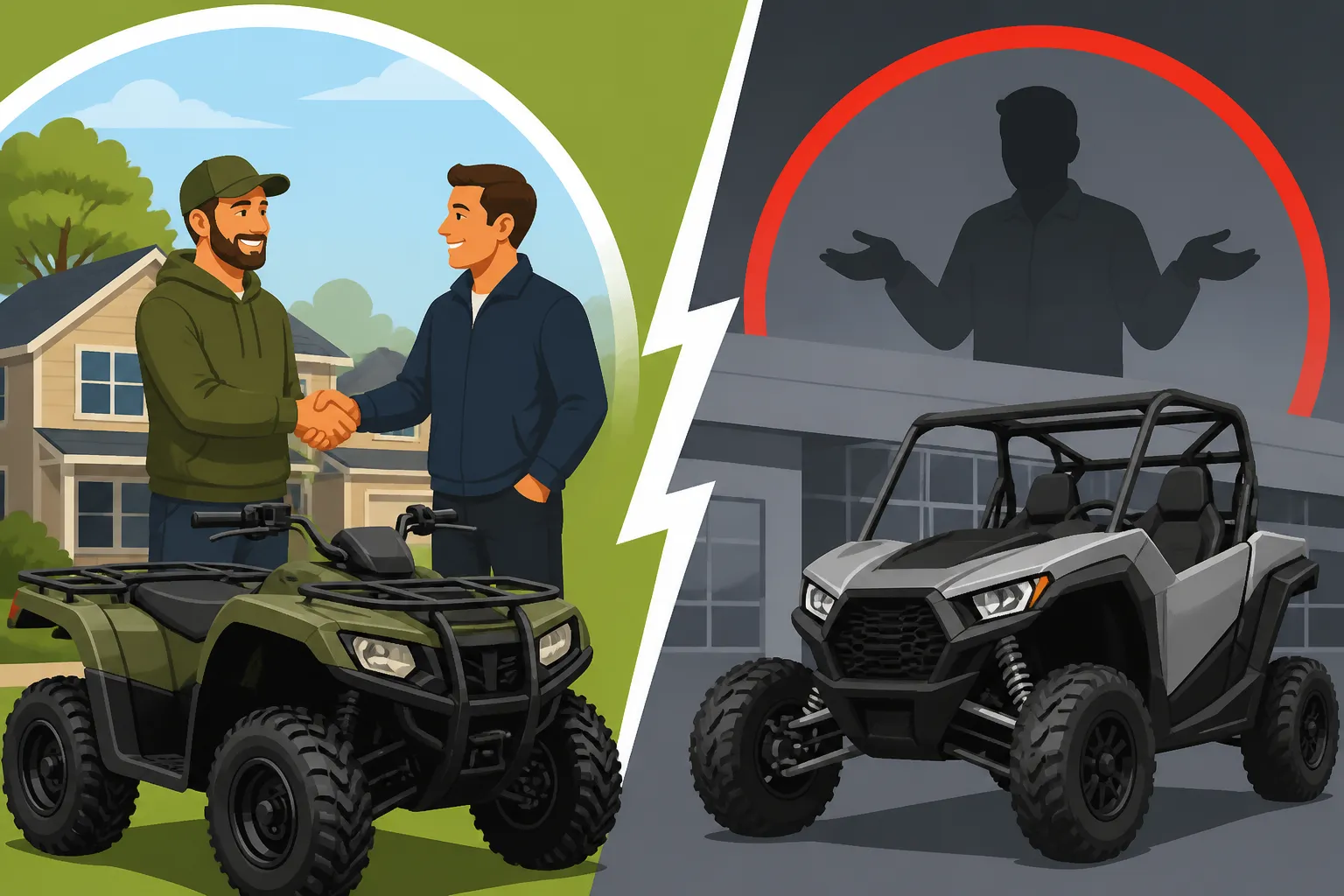
You've found that perfect quad or side-by-side – maybe it's just down the road, sitting in your neighbour's garage, and the price is right. But buying privately in Quebec can feel like a whole different ball game compared to walking out of a dealership, leaving many riders scratching their heads about what forms they need, what taxes apply, and how to even start the transfer. This guide is here to walk you through every step of securing your new-to-you off-highway vehicle (OHV) through a private sale in Quebec, ensuring you navigate the SAAQ process smoothly and ride legally.
The Allure and Anxiety of a Private ATV/UTV Sale in Quebec
There's a special kind of thrill that comes with finding a great deal on a used ATV or UTV. Often, private sellers are more flexible on price, and you might even know the machine's history if it's from someone in your community. However, that excitement can quickly turn into apprehension when you think about all the paperwork and official steps required to make that machine legally yours in Quebec. Unlike a dealer, who handles much of the heavy lifting, a private sale puts the responsibility squarely on your shoulders.
Why Private Sales are Appealing (and Why They Can Be Scary)
Let's be real: buying from a neighbour or through an online classified ad can often save you a good chunk of change. You're cutting out the dealer's markup, preparation fees, and often, their push for extended warranties or accessories you might not need. This direct approach means more of your hard-earned money stays in your pocket, potentially allowing you to get a newer machine or put funds towards essential gear. It also gives you the chance to really chat with the previous owner, understand the machine's quirks, and sometimes even get personal insights into its maintenance history.
However, the flip side is the worry about getting scammed or missing a crucial step. Without a dealership's established process, you're responsible for verifying everything – from the machine's actual ownership to its mechanical condition and ensuring all legal requirements for transfer are met. This can be intimidating, especially for first-time buyers or those new to Quebec's specific rules for off-highway vehicles. The anxiety often stems from a lack of clear information on exactly what's needed at the SAAQ, leading many to wonder if they're making a costly mistake.
The Dealer Difference: Convenience vs. Cost
When you buy a new or used ATV from a dealer, they typically handle almost everything. They'll manage the sales tax calculations, process the registration transfer with the SAAQ, and often even provide temporary plates so you can ride away legally. This convenience is a huge draw for many, as it minimizes the administrative burden and provides a sense of security that all the legalities are in order. Dealers also usually offer financing options, trade-in values, and a warranty, even if it's just a limited one on used machines. For some, the peace of mind that comes with a professional handling the transaction is worth the extra cost.
However, this convenience comes at a price. Dealerships have overheads, sales commissions, and profit margins to maintain, which inevitably means higher sticker prices. They also often add various "dealer fees" or "preparation fees" that can quickly inflate the final cost. While buying from a dealer certainly simplifies the paperwork, understanding [Quebec SAAQ Steps After a Dealer Purchase] can help you see what's involved from their end, even if you're not doing it yourself. In a private sale, you become the administrator, which, while requiring more effort, allows you to avoid these additional charges and often negotiate a better price for the machine itself.
Crucial Pre-Purchase Steps for a Quebec Private Sale
Before you even think about handing over cash for that sweet ride, there are some absolutely essential groundwork steps you need to take. Skipping these can lead to major headaches down the road, from discovering the machine isn't legally owned by the seller to facing unexpected repair bills. Think of this as your due diligence checklist; it's what protects you as a buyer in a private transaction.
Verifying Ownership and Machine History
This is perhaps the most critical step in a private sale: confirming the seller actually owns the ATV or UTV they're trying to sell you. You wouldn't buy a house without checking the deed, and an OHV is no different. The seller should be able to provide the current SAAQ registration certificate for the machine, and the name on this document should match their personal identification. If it doesn't, or if they offer a convoluted story about why they don't have it, consider that a major red flag. Always ask to see the registration certificate and compare the Vehicle Identification Number (VIN) on the document to the physical VIN stamped on the machine itself. They must match perfectly.
Beyond simple ownership, it's wise to inquire about the machine's history. Has it been involved in any major accidents? Does it have any outstanding liens against it? A lien means someone else (like a bank or finance company) has a claim on the machine until a debt is paid off. If you buy a machine with a lien, that debt could become yours. The SAAQ does keep records of liens, and you can often perform a search, sometimes for a small fee, to check for any registered encumbrances. This step is often overlooked, but ensuring there are no hidden debts or ownership disputes is vital before you commit to buying. Understanding [Quebec Registration and Lien Records] is crucial here.
Inspecting the Machine: Beyond a Quick Look
Don't let the excitement of a potential new toy blind you to mechanical issues. A thorough inspection is paramount. This goes beyond just kicking the tires. You want to check the obvious things like tire tread, brake function, and lighting, but also dive deeper. Look for signs of fluid leaks (oil, coolant, brake fluid), listen for unusual noises from the engine or drivetrain, and check for excessive play in the steering or suspension components. Are the plastics cracked or patched up? Does it start easily, hot or cold? Test all gears, including reverse, and pay attention to how the machine handles.
If you're not mechanically inclined, seriously consider taking a knowledgeable friend with you, or even better, arranging for a pre-purchase inspection by a qualified mechanic. This small investment could save you hundreds or even thousands of dollars in unexpected repairs down the line. A mechanic can spot issues that an untrained eye might miss, such as worn bearings, bent frames, or engine problems that indicate improper maintenance or hard use. Remember, once you buy it privately, it's typically "as-is," with no recourse if something breaks shortly after.
The Importance of a Clear Bill of Sale (and Where to Find One)
Even in a private sale between friends or neighbours, a formal, written bill of sale is non-negotiable. This document is your proof of purchase and a critical piece of paperwork for transferring ownership at the SAAQ. It should clearly state:
- The full names and addresses of both the seller and the buyer.
- The date of the sale.
- The purchase price (even if it's a gift or a trade, a nominal value might be needed).
- A detailed description of the ATV or UTV, including make, model, year, and crucially, the full Vehicle Identification Number (VIN).
- A declaration from the seller that they are the legal owner and that the machine is free of liens (if applicable).
- Signatures from both the buyer and the seller.
Having a robust bill of sale protects both parties. It serves as your legal record of the transaction and is essential for the SAAQ. If you're wondering where to get one, you don't need to reinvent the wheel. Many online resources offer free or low-cost templates for a [Paperwork Two Individuals Sign on a Private Sale]. In fact, resources like LawDepot provide excellent, legally sound templates specifically designed for vehicle sales, which can be easily adapted for an ATV or UTV. Using a template from a reputable source like LawDepot ensures all necessary legal clauses are included, giving you peace of mind. Without a proper bill of sale, the SAAQ might not process your transfer, leaving you with an unregistered machine.
| Key Documents for Private Purchase | Description | Why it's Important |
|---|---|---|
| Seller's SAAQ Registration | The current SAAQ registration certificate for the ATV/UTV. | Proves current ownership, contains VIN. |
| Bill of Sale | A written agreement detailing the sale, price, VIN, and buyer/seller info. | Legal proof of purchase, required by SAAQ, protects both parties. |
| Seller's Identification | Driver's license or other government-issued ID. | Verifies seller's identity matches registration. |
| Buyer's Identification | Your driver's license or other government-issued ID. | Required for SAAQ processing. |
| Proof of Address | Utility bill, lease, or other document showing your Quebec address (for buyer). | SAAQ needs to confirm your residency. |
Understanding Quebec's Registration and Tax Requirements for Private Sales
Quebec has specific rules when it comes to registering and taxing ATVs and UTVs, and private sales are no exception. Unlike buying a snowmobile, which has a separate registration process, ATVs and UTVs (or VTTs as they're called in Quebec) fall under the SAAQ's vehicle registration system. It's crucial to understand how this works to avoid fines and ensure your new ride is completely legal.
The SAAQ's Role in a Private Sale Transfer
The Société de l'assurance automobile du Québec (SAAQ) is the government body responsible for registering all road and off-road vehicles in the province, including your ATV or UTV. When you buy privately, you, as the buyer, are responsible for going to an SAAQ service outlet to transfer the ownership into your name. This isn't just about getting a new piece of paper; it's about officially registering the machine under your identity and, importantly, purchasing the mandatory liability insurance that the SAAQ provides. This is why [Quebec SAAQ Is Registrar and Insurer].
The SAAQ needs to record the sale, collect the applicable taxes, and issue you a new registration certificate and a VHR (Véhicule Hors Route) plate if the machine doesn't already have one. Without this official transfer, the machine technically still belongs to the previous owner in the SAAQ's records, which could lead to all sorts of complications, including traffic violations or accident liability falling back on the seller. It's in everyone's best interest to complete this transfer promptly. You can learn more about the broader process by reading [Quebec ATV Registration With the SAAQ].
Calculating and Paying Sales Tax (QST)
Here's where many private buyers get a surprise: Quebec Sales Tax (QST) is almost always payable on a private sale of an ATV or UTV, just as it would be if you bought from a dealer. The SAAQ acts as the collection agent for this tax. Generally, the QST is calculated on the higher of the purchase price listed on your bill of sale or the SAAQ's estimated value for that make and model of machine. This means even if you got an incredible deal, or if the bill of sale lists a very low price, the SAAQ might assess the tax based on what they deem to be fair market value.
This rule is in place to prevent people from declaring a ridiculously low sale price to avoid paying taxes. Be prepared for this when you visit the SAAQ. The tax rate can change, so it's always best to check the current Quebec Sales Tax percentage. This payment is typically made at the SAAQ service counter when you complete the registration transfer. For a full breakdown, check out [Quebec Tax on a Private ATV Sale]. Note that there's no federal Goods and Services Tax (GST) collected by the SAAQ on private sales of used vehicles.
What Happens If There's No Paperwork?
This is a tricky situation and one that can cause significant headaches. If the seller doesn't have the SAAQ registration certificate or a clear bill of sale, you could be facing an uphill battle. The SAAQ requires proof of ownership to transfer a vehicle. Without these documents, you might struggle to prove that the machine is legitimately yours and that you're not attempting to register a stolen vehicle. In such cases, the SAAQ might require additional documentation, like statutory declarations, or even refuse the transfer altogether.
If you're buying an older machine that might have genuinely lost its paperwork over time, you may need to go to greater lengths. This could involve contacting the SAAQ to see if they have any records of the VIN, trying to trace previous owners, or in some extreme cases, having a police check done on the VIN to ensure it's not stolen. It's a complex scenario, and the best advice is to be very cautious about buying any machine without proper documentation. You can dive deeper into this specific challenge by reading [Registering an Older Quad With Missing Papers] before you make any commitments. It's always best to have all your ducks in a row.
The Transfer Process at the SAAQ Counter
Once you've done your due diligence, secured a solid bill of sale, and are ready to make the machine legally yours, the next step is a visit to your local SAAQ service outlet. This is where the magic happens – or where you might encounter delays if you're not prepared. Being organized and knowing what to expect can make the process much smoother.
Documents You'll Need to Bring
Preparation is key for a successful visit to the SAAQ. You'll need more than just your charming smile. Here's a checklist of what to absolutely bring with you:
- Your Valid Driver's Licence: This serves as your primary identification. The SAAQ will need to verify who you are.
- Proof of Quebec Residency: A utility bill, lease agreement, or other official document showing your current Quebec address.
- The Seller's SAAQ Registration Certificate: The original document provided by the previous owner. This is crucial for verifying the machine's details.
- The Bill of Sale: Your formal, signed document with all the required information about the transaction, the machine, and both parties. Remember, templates from services like LawDepot are excellent for this.
- Payment Method: Be ready to pay the SAAQ registration fees and the Quebec Sales Tax (QST). They typically accept debit, credit cards, or sometimes cash, but it's good to have options.
- Proof of Insurance (Optional, but Recommended): While the SAAQ provides mandatory basic liability insurance, if you've arranged additional private coverage (like collision or comprehensive), having that policy information can be helpful, though not strictly required for the registration itself.
Having all these [Documents to Bring to a Service Counter] ensures you won't be sent home empty-handed. Any missing document can result in your visit being unproductive, forcing you to make another trip.
Navigating the SAAQ Visit for a Transfer
Once you arrive at the SAAQ service outlet, you'll typically take a number and wait for your turn. When called to the counter, clearly state that you are there to transfer ownership of an off-highway vehicle purchased privately. The clerk will review your documents. They'll verify your identity, check the bill of sale against the seller's registration, and input the details of the sale into their system. This is also when they'll calculate the QST based on the higher of your declared price or their assessed value.
During this process, you will pay the registration fees and the QST. The SAAQ will then issue you a new registration certificate in your name and a new VHR license plate for the machine if it's the first time it's being registered or if the old plate wasn't valid for transfer. Make sure all the details on your new registration certificate are correct before you leave the counter. Double-check your name, address, and the machine's VIN. The entire process, assuming you have all your documents, usually takes less than an hour, but this can vary depending on SAAQ wait times. Keep in mind that [Quebec ATV Registration Processing Time] can sometimes be affected by system issues or busy periods, so patience is a virtue.
Special Cases: Inherited, Gifted, or Lien-Encumbered Machines
Private sales can sometimes involve situations beyond a straightforward cash transaction.
- Inherited Machines: If you've inherited an ATV or UTV, the transfer process involves additional documentation, such as a will, letters of administration, or a declaration of transmission from the estate. The SAAQ needs to confirm your legal right to the machine from the deceased owner's estate.
- Gifted Machines: If a machine is gifted to you, a formal gift declaration or an amended bill of sale stating "Gift" and a nominal value (like $1.00) will be required. While you might not pay a "purchase price," QST is still assessed by the SAAQ based on the machine's fair market value, as if it were a sale.
- Lien-Encumbered Machines: If, despite your best efforts, you discover a lien on the machine, you absolutely cannot complete the transfer until that lien is cleared. This means the seller must provide proof from the financial institution that the debt has been fully paid off. The SAAQ will not transfer ownership if a lien is on record, as this would make you responsible for the previous owner's debt. This is why understanding [What a Lienholder on File Means for a Buyer] is so critical before the SAAQ visit.
In all these special scenarios, it's wise to contact the SAAQ directly or visit their website for specific requirements, as they may ask for additional forms or affidavits to process the transfer.
Post-Purchase Responsibilities and Best Practices
Congratulations! You've successfully navigated the private sale, completed the SAAQ transfer, and your new-to-you ATV or UTV is officially registered in your name. But the journey isn't quite over. To truly enjoy your machine legally and safely, there are a few more critical steps to take.
Securing Your Annual Trail Pass
In Quebec, if you plan to ride on the vast network of federated trails maintained by the Fédération Québécoise des Clubs Quad (FQCQ), you absolutely need an annual trail pass. This pass is separate from your SAAQ registration and helps fund the maintenance, signage, and grooming of these trails across the province. Riding on a federated trail without a valid pass can result in significant fines. This is often an overlooked cost for new private buyers.
You can purchase your [Quebec Annual FQCQ Trail Pass] online through the FQCQ website or through one of its member clubs. The pass typically runs for a specific season, and there are different types available, such as annual, summer, or short-term passes. Make sure you get the physical sticker and place it prominently on your machine as required, as trail patrols will be looking for it. Consider purchasing your pass well in advance of your first planned ride, especially during peak seasons, to ensure it arrives in time.
Ensuring Proper Insurance Coverage
While your SAAQ registration includes mandatory third-party liability insurance (currently set at a minimum of [$1 Million Liability Floor Every Owner Carries]), this coverage is very basic. It primarily protects you if you cause damage or injury to others or their property. It does not cover damage to your own ATV or UTV, nor does it cover theft, fire, or other personal losses. For comprehensive protection, you'll want to explore additional private insurance options.
Many insurance companies offer specific ATV/UTV policies that can provide collision, comprehensive, and even increased liability coverage. It's highly recommended to get quotes from several providers to find a policy that fits your needs and budget. Having robust insurance protects your investment and provides peace of mind in case of an accident or unforeseen event. Always ensure you have proof of your insurance coverage, whether it's the SAAQ certificate or your private policy, and make sure you understand [Quebec Insurance Minimum for an Owner].
Planning Your First Legal Ride
With your registration in hand, your trail pass affixed, and your insurance sorted, you're almost ready to hit the trails! Before you do, take a moment to familiarize yourself with [Quebec's Off-Highway Vehicle Act and Your Papers]. This act outlines the rules and regulations for riding in Quebec, including age restrictions, helmet requirements, speed limits, and where you can and cannot ride. Ignorance of the law is not an excuse, and fines for violations can be steep.
Plan your first ride responsibly. If you're new to the machine, start on familiar or less challenging terrain. Make sure you have all the necessary safety gear, including an approved helmet, eye protection, and appropriate riding apparel. Always tell someone where you're going and when you expect to return, especially if you're venturing into remote areas. And remember, carrying proof of your driver's license, registration, and trail pass is mandatory on the trails – a physical copy is always best, as cell service can be spotty. With all these steps completed, you can now enjoy your privately purchased ATV or UTV with confidence, knowing you've done everything by the book.
Disclaimer
This article is for general informational purposes only and does not constitute professional advice. Laws, prices and regulations vary by location and change over time. Consult a qualified professional for guidance on your specific situation.