Quebec Trailheads With Parking
Arriving at a Quebec ATV trailhead only to find a full lot, a locked gate, or no safe room to unload can throw off an entire ride. Planning parking is part of planning the route: confirm where trailers may be left, whether overnight parking is allowed, and how to reach the trail legally. This guide helps you choose a practical starting point and avoid common parking headaches.
How to choose a Quebec ATV trailhead with parking
Confirm that parking is actually available
A trail shown on a map does not necessarily have a public parking area beside it. Some routes begin near a village or regional road, while others connect through land managed by a club, municipality, outfitter, campground, or private property owner. A wide shoulder or an open-looking gravel area is not automatically a place where you may leave a truck and trailer.
Before travelling, look for information from the local ATV club, municipality, land manager, or business associated with the trail. Ask whether the location is open to riders, whether trailers fit, and whether parking is permitted for the length of your ride. If a trailhead has a posted lot, read the signs when you arrive. Restrictions can apply to vehicle size, hours, overnight stays, or seasonal access.
It also helps to distinguish between a convenient place to unload and an approved trailhead. A parking area may serve a business or neighbouring property rather than the trail network. If you are unsure, contact the organization responsible for the access point instead of assuming that being near a marked trail makes parking acceptable.
Match the lot to your vehicle and group
A lot that works for one pickup may be awkward for a long truck pulling a two-place trailer. Before setting out, consider the length of your full rig, the space needed to turn around, and whether you can unload without blocking other vehicles. If your trailer is wide or difficult to reverse, a larger, clearly designated staging area may be a better choice than a small roadside pull-off.
Group rides need extra planning. Several trucks arriving separately can fill a modest lot quickly, especially on a busy weekend. Agree on a meeting time and a backup location before anyone leaves home. For a larger group, ask the club or land manager whether the lot can accommodate everyone. The practical advice in [Where to Stage a Group of Eight] can help you think through arrival order, trailer space, and keeping access clear.
| Parking question | Why it matters | What to check before leaving |
|---|---|---|
| Is the parking area designated for trail users? | Nearby open land may be private or restricted | Confirm with the club, municipality, or land manager |
| Can your truck and trailer turn around? | Tight access can create delays or block others | Estimate the full rig length and ask about lot layout |
| Is overnight parking allowed? | Permission to park during a ride may not include an overnight stay | Check posted rules and ask the property manager |
| Is the lot usable in the current season? | Snow, mud, thaw, or closures can affect access | Check local trail and parking updates |
| Does the group fit? | Multiple trailers can crowd a small staging area | Coordinate vehicles or choose an approved larger lot |
Plan your route from the parking area
Verify the connection between the lot and the trail
The parking location and the trail entrance may not be the same place. You may need to unload, follow signs to a nearby access point, or travel a short connector. Confirm the route before you arrive so you do not accidentally ride along a road or across property where ATV access is not permitted.
Use current local trail information alongside a route map. [Quebec Trail Maps and the iQuad App] is a useful starting point for understanding how riders follow the network, but a map should not replace signs, club notices, or local directions. A marked corridor can be subject to a closure or detour, and a route that looks connected on a screen may not offer a legal connection from the parking lot.
Navigation tools such as onX Offroad can help you review a planned route and keep track of your intended direction. Use onX Offroad as one part of your preparation, not as proof that a particular trail is open or that a nearby lot allows parking. Before you ride, compare your route with local trail information and follow signs on the ground. For a more deliberate route-planning process, see [Planning a Route on the Interactive Map].
Keep trail access and parking permission separate
A trail pass and permission to park solve different problems. A pass may relate to use of federated trails, while the right to leave a vehicle in a particular lot depends on the owner or manager of that parking area. Do not assume that having a pass means every nearby lot is available to you, or that permission to park grants access to every trail in the area. [Quebec Trail Pass Proof on the Trail] explains why it is useful to have the relevant pass information ready while riding.
Once you unload, stay on the authorized corridor and avoid creating a new route between the lot and the trail. Riding across a field, cutting through a private driveway, or using an unmarked shortcut can create problems for landowners and trail users. [Staying on a Federated Corridor] is a helpful reminder to keep your ride on the permitted route.
If the official access point is closed or full, do not improvise by leaving the trailer on a narrow shoulder or blocking a gate. Look for a designated alternative, contact the local club, or change the starting point. A short delay is frustrating, but an unauthorized parking choice can obstruct residents, farm equipment, emergency access, or trail maintenance.
Prepare for parking conditions and seasonal changes
Check access shortly before the ride
Trailhead conditions can change with the weather and season. A gravel lot that is easy to use in dry conditions may become soft or muddy after rain. Snow can reduce usable space in winter, while spring thaw closures may affect trail access and the roads leading to a staging area. Check [Quebec Trail Conditions Before You Go] close to departure, and look for notices from the club or municipality responsible for your planned area.
This matters even when the forecast looks manageable. A storm can leave standing water, wash debris onto an access road, or make a sloped parking area difficult for a trailer. In remote areas, do not count on a second nearby lot being open as a fallback. Identify an alternative before you leave, and make sure it provides lawful access rather than simply appearing convenient on a map.
When researching areas around larger centres, such as the Laurentians north of Montreal or routes in the broader Quebec City region, treat each specific trailhead as its own access point. General regional information can help narrow your search, but it cannot confirm that a particular lot is open, suitable for trailers, or available for overnight parking. You can use [Quebec Trails Near Montreal] and [Quebec Trails Near Quebec City] as starting points for exploring those areas, then verify parking details locally.
Decide whether you need day parking or an overnight arrangement
A day ride and a multi-day trip create different parking needs. For a day ride, confirm the opening hours, space for your rig, and whether there are restrictions on leaving a vehicle while you are on the trail. For a longer trip, ask explicitly about overnight parking. A lot that allows daytime staging may close at night or prohibit vehicles from being left unattended.
If you are staying at a campground, lodge, or outfitter, ask whether parking is included, whether your trailer can remain there, and whether you can ride directly from the property onto an authorized trail. Avoid relying on a casual assumption that accommodation and trail access automatically come together. The person managing the property can tell you what is permitted and where guests should leave their vehicles.
For remote routes, plan with your return in mind. Keep your truck keys, phone, and any required documents secure, and avoid leaving valuables visible in the cab. Tell someone your general route and expected return time, especially if your ride will take you far from services. If you use onX Offroad to review your route, save the information you need before leaving reliable cell coverage and still pay attention to local signs and closures.
A practical trailhead parking checklist
Before departing, confirm the exact starting location with the organization responsible for the trail or parking area. Check that the lot is intended for riders, that your truck and trailer fit, and that the planned route begins from an authorized access point. For a group ride, coordinate arrival times and agree on a backup plan if the first lot is full.
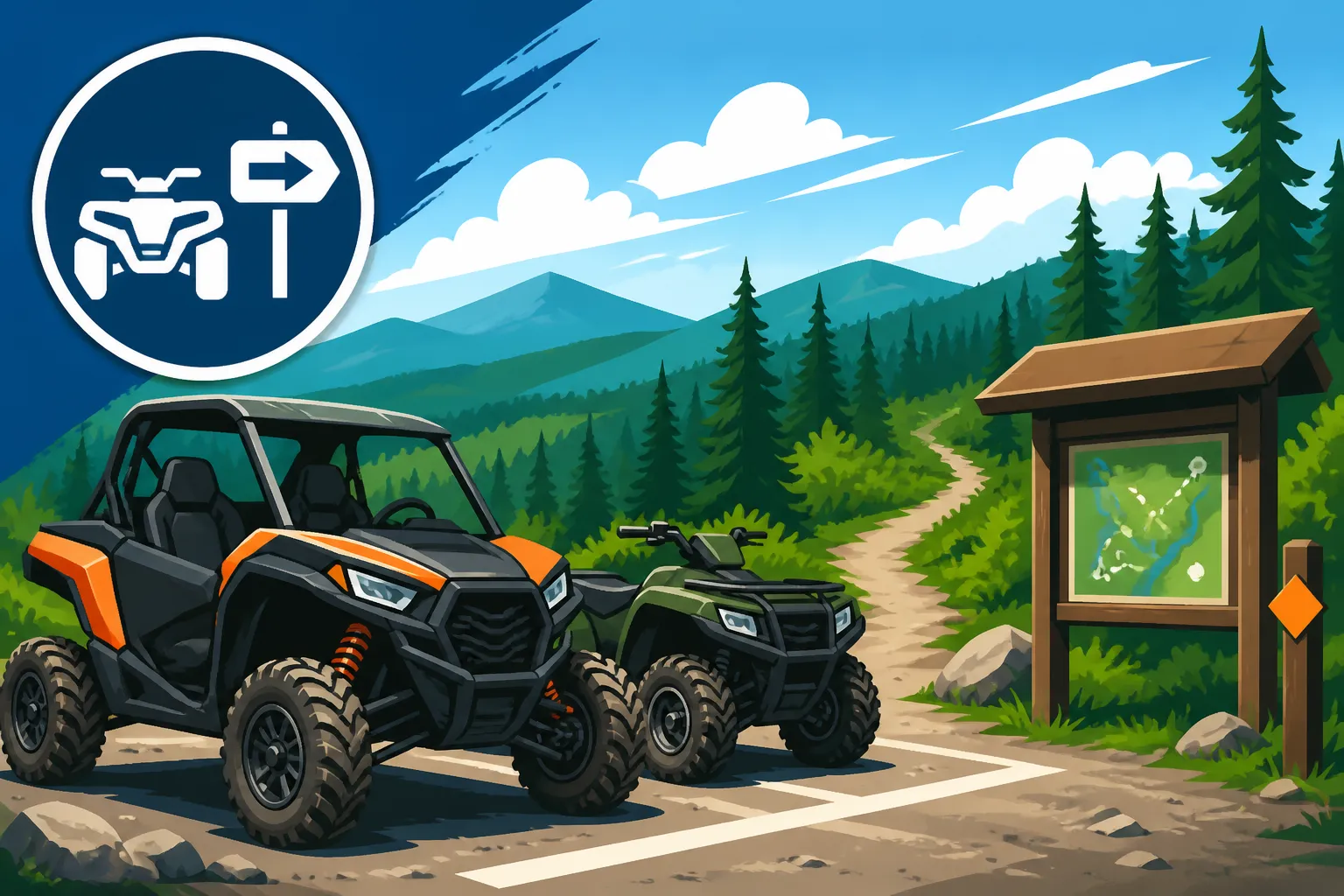
When you arrive, read posted signs before unloading. Park within marked spaces, keep gates and roadways clear, and leave room for other riders to manoeuvre. Do not block a trail entrance, private driveway, maintenance access, or emergency route. If the conditions differ from what you expected, pause and contact the local club or property manager rather than treating an unmarked space as an acceptable substitute.
A few minutes of checking can make the start of the ride feel much less stressful. It is easier to confirm parking at home than to arrive with a loaded trailer and discover that the apparent trailhead is not a suitable place to leave it. Build parking into your route plan, verify the details locally, and choose an access point that works for both your machine and your vehicle.
Disclaimer
This article is for general informational purposes only and does not constitute professional advice. Laws, prices and regulations vary by location and change over time. Consult a qualified professional for guidance on your specific situation.