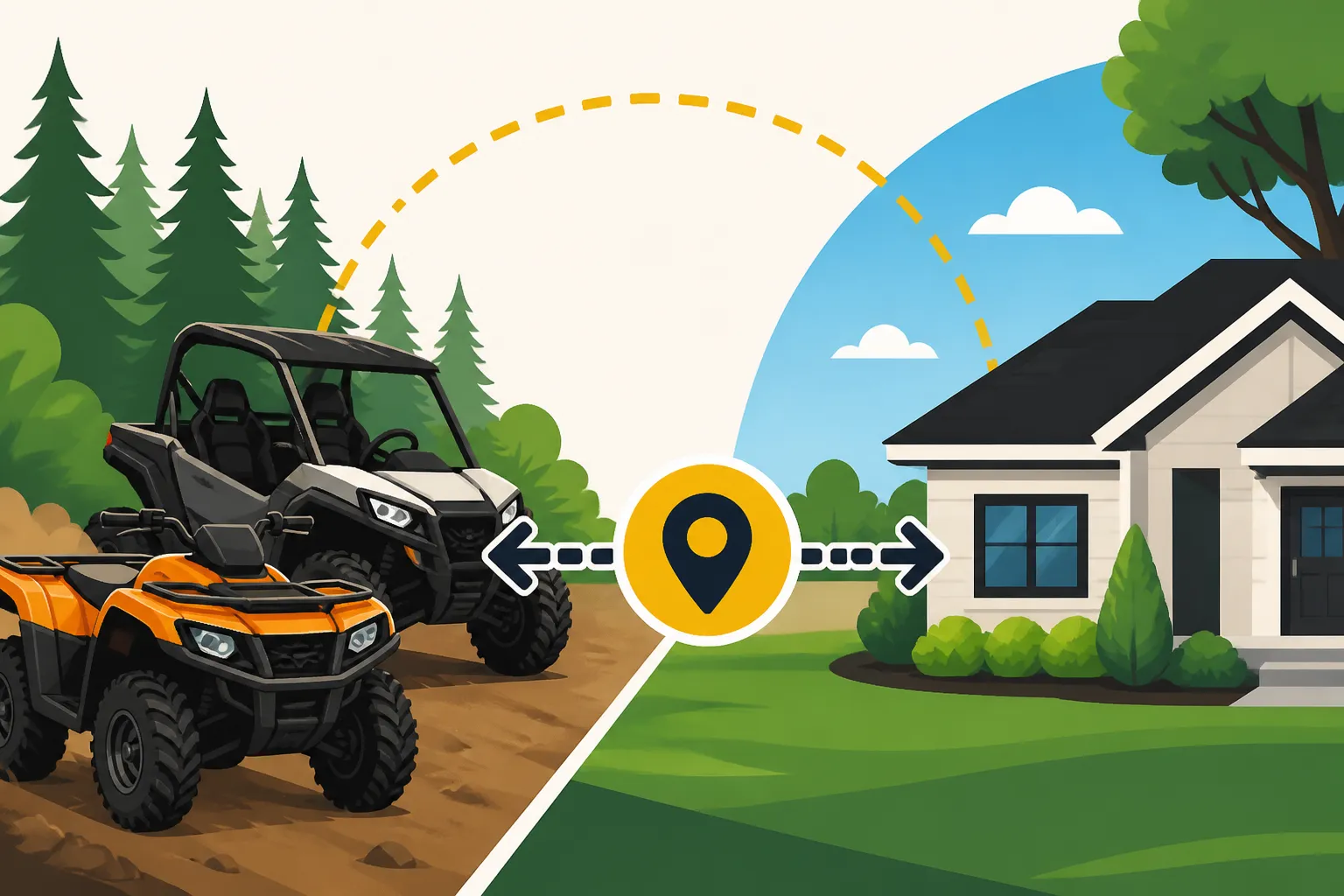
100 Metres From a Dwelling
One of the most common worries for Quebec ATV and UTV riders isn't just navigating tricky terrain or finding the best trails; it's understanding the complex rules that govern where you can actually ride your machine. A major point of confusion, and a frequent source of frustration, is the proximity rule to dwellings. This guide will meticulously break down the crucial "100 metres from a dwelling" rule, helping you ride confidently and respectfully through our beautiful province.
Understanding the 100-Metre Setback from Dwellings
Let's cut to the chase: Quebec's Act respecting off-highway vehicles (the LVHR, for Loi sur les véhicules hors route) is pretty clear on this. When you're operating an off-highway vehicle like an ATV or a side-by-side, you generally cannot be within 100 metres of a dwelling. This isn't just some suggestion; it's a legal requirement designed to protect the peace, privacy, and safety of residents across the province.
The definition of a "dwelling" here is quite broad. It's not just your primary residence in the city or a fully insulated, year-round house. It extends to any building or structure that serves as a habitation, whether it's a rustic cabin deep in the woods, a summer cottage by the lake, or even a hunting camp that's only used seasonally. The spirit of the law is to prevent the disturbance and potential danger that off-highway vehicles can pose to people enjoying their homes, regardless of their permanent status. Think about the noise, the dust, and simply the presence of a motorized vehicle so close to someone's personal space. This rule aims to create a necessary buffer.
This 100-metre rule applies to anyone riding an off-highway vehicle, whether you're on a federated trail, a forest road, or even private land that isn't your own. It's a foundational element of [Quebec's Off-Highway Vehicle Act and Your Papers], ensuring that while you enjoy your passion for riding, you're not infringing on the rights of others to quiet enjoyment of their property. It means you need to be constantly aware of your surroundings, especially when navigating trails that might wind close to populated areas or remote homesteads. Ignorance of this rule is unfortunately no defence if you find yourself facing a fine.
Nuances and Exceptions to the 100-Metre Rule
Now, like many rules, there are some specific situations and historical considerations that can create exceptions or slightly modify the 100-metre setback. It's essential to understand these nuances to avoid inadvertently breaking the law or causing unnecessary friction with local residents. The law isn't always black and white, and context often matters.
The Grandfathered 30-Metre Rule
One of the most significant exceptions revolves around older trails. For off-highway vehicle trails that were legally established before January 1, 2012, there's a specific provision. These older trails are permitted to pass within 30 metres of a dwelling, rather than the more stringent 100 metres. This is often referred to as the "grandfathered" rule, acknowledging the existing infrastructure and property lines that were in place before the current legislation came into full effect.
This exception is critical for many established trail networks, as it allows them to maintain their historical routes without requiring massive, costly, and often impossible rerouting. However, it only applies to those specific, pre-existing trails. Any new trail construction or significant alterations to an existing trail's path after that date would typically fall under the 100-metre rule. So, while you might be tearing up the trails with some performance upgrades from SuperATV, remember that the trail's age, not your machine's, determines this specific setback. Always check trail maps and local signage, as they often indicate these older, narrower sections. More details on this can be found in [Quebec's 30 Metre Grandfathered Trails].
Riding on Your Own Land and Nearby Dwellings
When you're riding on your own private land, the 100-metre rule generally doesn't apply to your own dwelling. You're allowed to operate your ATV or UTV near your house if it's on property you own. However, this freedom comes with a significant caveat: if your private land borders a neighbour's property, and their dwelling is within 100 metres of where you are riding on your land, then the rule still applies to their dwelling.
This means that while you can cruise around your backyard, you need to be mindful of your neighbours. This is where good neighbourly relations and common sense often prevail, even if the strict letter of the law can sometimes be complex. If you have permission to ride on [Quebec Private Land Permission] from another landowner, you still need to respect the 100-metre setback from any other dwelling that might be nearby, including the property owner's or their neighbours'. Always clarify boundaries and sensitive areas with the landowner before you ride.
The Role of Public Assemblies
Here's a nuance that many riders might not be aware of: the law allows for local municipalities or regional county municipalities (RCMs) to adopt specific by-laws related to the 100-metre setback. Through a process involving a public assembly, these local authorities can, under certain conditions, vote to shorten the 100-metre distance for specific trail segments within their jurisdiction. This is a rare occurrence, but it highlights the local control that can be exercised over off-highway vehicle regulations.
This process involves public consultation and a vote, ensuring that the local community has a say in how these rules are applied in their specific area. It's not a free-for-all, but rather a carefully considered exception for unique local circumstances. You might come across information about this in specific local [Quebec Municipal By-Laws on Riding Hours]. For a deeper dive into this specific legal mechanism, check out [How a Public Assembly Can Shorten the 100-Metre Setback]. It's a reminder that rules can sometimes be shaped by local community input, making local club involvement and awareness important.
Practical Implications for Your Rides
So, what does this 100-metre rule mean for you, the everyday rider, when you're planning a trip or out on the trail? It’s not just about avoiding fines; it’s about responsible riding, maintaining access, and fostering positive relationships with the communities your trails pass through. Ignoring these rules can lead to significant headaches for everyone involved, from individual riders to the clubs that maintain our federated network.
Planning Your Route and Staying Aware
The first and most crucial step is planning. Before you even head out, take a good look at your intended route on a detailed map. The official [Quebec Trail Maps and the iQuad App] are invaluable resources here. They often show property lines, residential areas, and trail setbacks, helping you identify potential conflict zones. Look for sections where the trail appears to run very close to buildings, especially in more populated rural areas or near small villages. If you're on a multi-day journey with your SuperATV equipped machine, thinking ahead about these sections can save you a lot of trouble.
While you're riding, maintain constant awareness of your surroundings. Keep an eye out for houses, cabins, and other structures. If you find yourself approaching a dwelling within what seems like the 100-metre zone, slow down significantly. Reduce your speed, minimize noise, and pass through as quickly and discreetly as possible, provided you are on an authorized trail. If you suspect you are off an authorized trail and too close to a dwelling, it's best to stop, check your map, and re-route immediately. It's always better to be overly cautious than to risk a confrontation or a fine.
Respecting Residents and Protecting Trail Access
The 100-metre rule isn't just about legal compliance; it's about good neighbourly conduct. Noise is a major concern for many residents living near trails. Even with a stock exhaust, ATVs and UTVs produce considerable sound, especially when accelerating or riding at higher speeds. Being mindful of your speed and throttle input when near dwellings demonstrates respect for those who live there. This respect is fundamental to [Quebec Trail Etiquette Locals Expect].
When residents feel disturbed by off-highway vehicle traffic, it often leads to complaints. These [Quebec Noise Complaints About Quads] can unfortunately lead to pressure on municipalities and the provincial government to restrict trail access further, or even close down segments of trails entirely. Every time a rider ignores the setback rules, they put the entire trail network at risk. By adhering to the 100-metre rule, you're not just protecting yourself from a ticket; you're helping to preserve the future of ATV and UTV riding in Quebec for everyone. It's a collective responsibility that we all share as enthusiasts of this sport.
Consequences of Non-Compliance
If you're caught riding too close to a dwelling in violation of the 100-metre rule, the consequences can be unpleasant. Off-highway vehicle patrols, including provincial police (Sûreté du Québec) and authorized club patrollers, have the authority to enforce these regulations. While specific fine amounts can change, you can expect a significant financial penalty. These fines are designed to be a deterrent, reflecting the seriousness with which Quebec regards residential peace and safety.
Beyond the immediate fine, repeated violations or particularly egregious incidents could lead to more severe penalties or even the loss of riding privileges. Furthermore, such incidents contribute to negative perceptions of off-highway vehicle riders within the community, making it harder for clubs and associations to advocate for new trails or maintain existing ones. The costs associated with trail violations can add up quickly, especially when you factor in court costs and the hassle of dealing with the legal system. Patrols regularly conduct [Quebec Equipment Checks by Patrols] and are also on the lookout for compliance with all riding rules, including proximity to dwellings. Remember, riding is a privilege, and it comes with responsibilities.
| Rule Type | Standard Setback | Grandfathered Setback | Applies To | Key Condition |
|---|---|---|---|---|
| General Rule | 100 metres | N/A | Any dwelling | All new trails/situations |
| Exception | N/A | 30 metres | Dwellings adjacent to specific older trails | Trail established before January 1, 2012 |
| Own Property | N/A | N/A | Your own dwelling on your own property | Does not apply to your dwelling |
| Neighbour's Dwelling | 100 metres | N/A | Neighbour's dwelling, even if riding on own land | Applies if neighbour's dwelling is within 100m of your riding path |
Disclaimer
This article is for general informational purposes only and does not constitute professional advice. Laws, prices and regulations vary by location and change over time. Consult a qualified professional for guidance on your specific situation.