Quebec Rules for a Visiting Ontario Rider
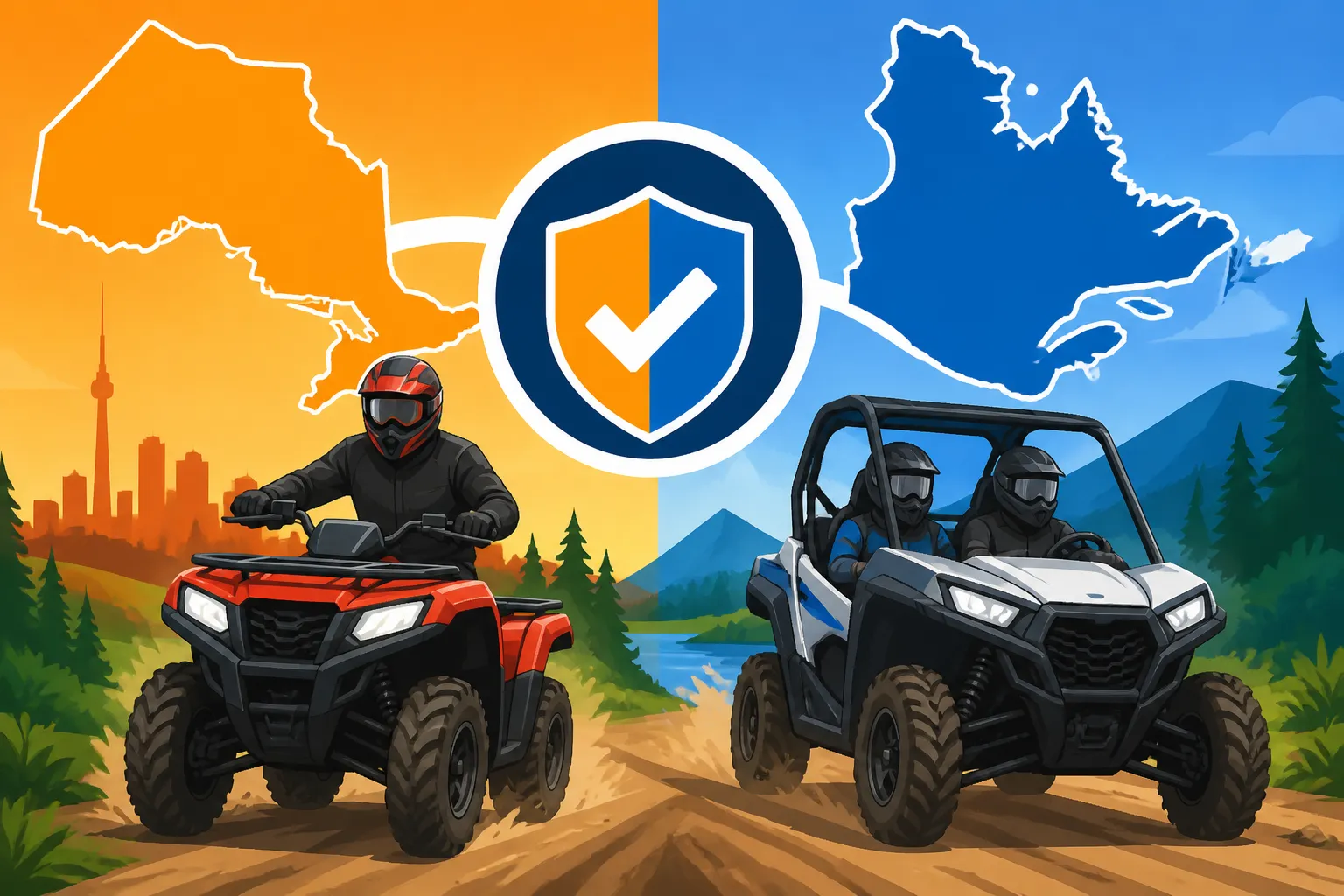
Oh, the open trails of Quebec call to many of us, and for our friends from Ontario, the allure of a new riding landscape is totally understandable! But let's be honest, crossing provincial borders with your ATV or side-by-side can feel like stepping into a whole new world of paperwork and rules. Many Ontario riders hit a wall trying to figure out if their home province's registration, insurance, or even their driver's license holds up in La Belle Province. This guide is designed to cut through that confusion, giving you a clear, realistic picture of what you need to know and do before you trailer your machine into Quebec.
Understanding Quebec's Unique ATV & UTV Framework for Visitors
When you're an Ontario resident planning to ride your off-highway vehicle (OHV) in Quebec, you're entering a system that, while similar in spirit, has some crucial differences in practice. It's not as simple as just showing up; Quebec has its own distinct way of managing trail access and machine operation, and it applies these rules to visitors just as much as to locals. Getting caught off guard can lead to some hefty fines and a ruined trip, so let's make sure you're properly prepared.
Registration and Trail Passes for Ontario Riders
Here’s where the biggest difference often lies for Ontario riders. In Quebec, the SAAQ (Société de l'assurance automobile du Québec) handles the registration of off-road vehicles. This registration is primarily for Quebec residents and their machines. Your Ontario registration is valid for your machine's ownership, but it doesn't automatically grant you access to Quebec's vast federated trail network.
For any Ontario rider wanting to legally ride on Quebec's club-maintained trails, you absolutely must purchase a Quebec trail pass. This isn't an optional extra; it's a fundamental requirement. You might remember a time when there was some reciprocity between the provinces, but that era has passed. [Quebec Ended Reciprocity With Ontario], meaning your Ontario trail pass won't cut it here. You'll need to purchase a specific [Quebec's Annual FQCQ Trail Pass], or one of its shorter-term options like the summer, daily, or three-day pass, depending on the length of your stay. These passes are sold exclusively online through the Fédération québécoise des clubs de quads (FQCQ) website. It's usually a straightforward process, but make sure to complete it well in advance of your trip so you can affix the required sticker to your machine, visible to trail patrols. You can find out more about [How to Buy a Quebec Trail Pass] on the FQCQ's official channels. Without this, you're not allowed on the federated trails, plain and simple.
Insurance Requirements You Can't Skip
Insurance is another area where Quebec operates a bit differently. While Ontario has its own liability requirements, Quebec sets its own minimums for off-highway vehicles. The SAAQ provides mandatory liability insurance to Quebec residents who register their machines with them. As an Ontario visitor, your vehicle is registered in Ontario, so the SAAQ doesn't cover you directly. This means you need to ensure your personal off-road vehicle insurance policy, issued by your Ontario provider, meets Quebec's minimum liability requirement.
Historically, the minimum liability in Quebec was $500,000, but that changed. Now, [Quebec's Liability Insurance Rule] mandates a significantly higher minimum. The current requirement is that every owner must carry at least [The $1 Million Liability Floor Every Owner Carries]. This is a crucial detail. Before you even think about trailering your quad to Quebec, call your insurance provider in Ontario. Explain that you plan to ride your ATV or side-by-side in Quebec and need to confirm that your policy provides at least $1 million in third-party liability coverage while operating in that province. Don't assume anything; get it confirmed in writing if possible. Being underinsured or uninsured could leave you personally exposed to significant financial risk in the event of an accident, far beyond a simple ticket.
Quebec's Riding Rules for All, Including Visitors
Once you've sorted out your trail pass and confirmed your insurance, you're ready to dive into the actual riding rules. Quebec's off-highway vehicle laws are quite specific, and they apply to every rider on their trails and designated access roads, regardless of where they're from. Ignoring these rules won't win you any friends and will definitely attract the attention of local authorities or trail patrols.
Driver's License and Age Requirements
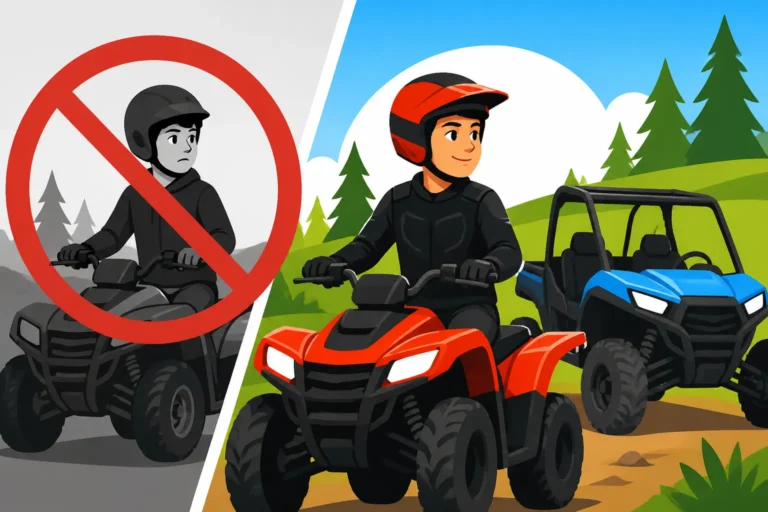
One of the most significant changes in recent years for Quebec ATV riders, including visitors, is the driver's license requirement. [Quebec Requires a Driver's Licence Since 2021] for anyone operating an off-road vehicle on public land or federated trails. For Ontario riders, this means you need a valid, full-privilege G-class driver's license. Your G1 or G2 learner's permits from Ontario are generally not considered sufficient for independent ATV operation in Quebec under these rules. Always carry your physical driver's license with you when you ride.
Age restrictions are also strictly enforced. [Quebec's Minimum Age of 16 for ATV Riders] on federated trails and most public areas. If you're riding a side-by-side, the age requirement is even higher: [Quebec Requires 18 for a Side-by-Side] operator. This means if you have a 17-year-old with an Ontario G2 license who routinely drives your side-by-side back home, they are not permitted to drive it on Quebec trails. These rules are in place for safety, and trail patrols are vigilant about checking ages. There might be some exceptions for supervised riding on private land, but for federated trails, these are the hard and fast rules that apply to everyone.
Equipment, Helmets, and Speed Limits
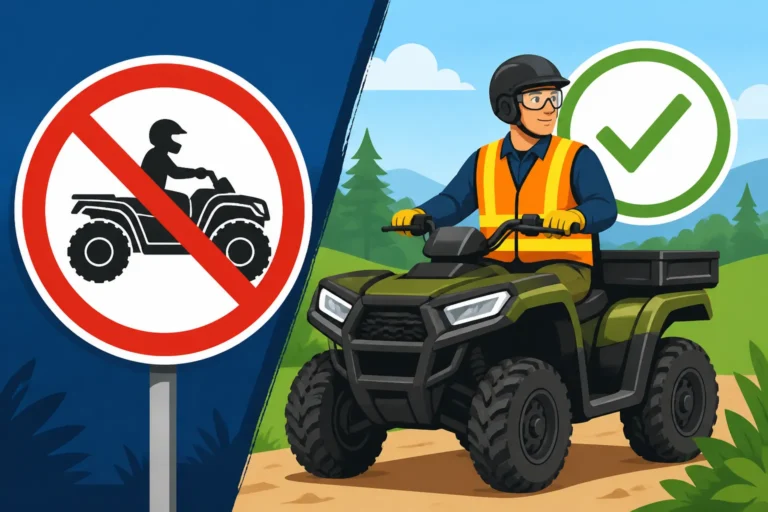
Quebec takes its safety equipment seriously, and your machine must meet certain standards, and you as a rider have specific obligations. For starters, [Quebec Helmet and Visor Rules] are mandatory. You must wear a helmet that meets recognized safety standards (like DOT or ECE) and it must be properly fastened. While your Ontario-approved helmet is likely fine, ensuring it's a full-face helmet or that you have proper eye protection like goggles with an open-face helmet is important. This isn't just about avoiding a ticket; it's about your personal safety on the trails.
In terms of speed, Quebec trails have a clear limit. [Quebec's 50 km/h Speed Limit for ATVs] is enforced on all federated trails. This applies uniformly across the network, so don't expect to open up your throttle on wide-open sections just because it feels safe. Speeding is a common reason for tickets in Quebec. Beyond personal safety gear, ensure your machine is in good working order. Your lights (headlights and taillights) must be functional, and if your machine has mirrors, they should be present and provide adequate visibility. If you're thinking of upgrading, SuperATV offers a range of durable mirrors and lighting solutions that can help ensure your machine complies with these requirements and enhance your visibility on the trails. Making sure your machine is ready for the rigors of Quebec riding, perhaps with some aftermarket protection, can prevent headaches.
Road Access and Setbacks
Riding off-road vehicles on public roads in Quebec is generally very restricted, and this is a common point of confusion for visitors. The short answer to [Can You Ride an ATV on the Road in Quebec?] is, for the most part, no, unless specifically authorized and signed. You can't just cruise down a main street to get to the next section of trail or a gas station.
There are limited exceptions, primarily for crossing roads or for very short distances to access trails where [Quebec Municipal Road Access Up to 1 Kilometre] is explicitly permitted and indicated by specific signage. These are not open invitations to travel long distances on paved roads. Furthermore, there are rules about how close you can ride to dwellings. [Quebec's 100 Metre Rule Near Homes] means you generally need to keep a safe distance from residences, even if you're on a marked trail. Respecting these setbacks is crucial for maintaining good relations with landowners and avoiding noise complaints, which can lead to trail closures. Always pay attention to signage, and when in doubt, assume roads are off-limits. If you find yourself needing to bridge gaps, it’s usually best to trailer your machine or find alternative, authorized routes.
Planning Your Cross-Border ATV Adventure
Preparing for a Quebec ATV trip involves more than just knowing the rules; it's about smart planning and packing. A little foresight can save you a lot of trouble and ensure your adventure is smooth and enjoyable. Quebec's trail system is extensive and beautiful, but it demands respect and preparedness.
Essential Documents and Proof
When you're out on the trails in Quebec, you need to be able to prove that you're legal to ride. Trail patrols and law enforcement officers do conduct checks, and they will ask for specific documents. As an Ontario rider, you should always have the following on you:
- Your valid Ontario driver's license: This proves you're legally allowed to operate the machine.
- Your Quebec trail pass sticker: This should be affixed to your machine in a visible location, typically on the front fender. Having the purchase confirmation email on your phone is a good backup, but the physical sticker is what they're looking for.
- Proof of insurance: Carry your pink slip or a printout from your Ontario insurance provider clearly showing your policy number and, critically, confirming that you have at least $1 million in third-party liability coverage that is valid in Quebec.
- Your Ontario vehicle registration: This proves you are the legal owner or authorized operator of the machine you are riding.
It is absolutely vital to be [Carrying Papers on a Long Ride]. Don't leave them back at the cabin or in your truck at the trailhead. A phone photo is generally not accepted as official proof for many of these documents if you're stopped, so bring the actual paper or card. Imagine being hundreds of kilometers from home and getting a ticket for not having physical proof – it's a terrible way to end a day of riding.
Navigating Trails and Local Etiquette
Quebec boasts an incredible network of over 25,000 kilometres of federated trails, managed by the FQCQ and its member clubs. This network, known as [Quebec ATV Trails: The FQCQ Network], is well-maintained and signed, but understanding the local context is key. [Quebec Trail Signage in French] is the norm, so familiarizing yourself with basic French terms for directions and warnings can be very helpful. Apps like iQuad are fantastic for navigation and can show you your location on the trail network.
Local etiquette is also important. Always remember that many trails cross private land, and the clubs work tirelessly to maintain good relationships with landowners. Respecting [Quebec Trespass Rules for Riders] means staying on marked trails and not venturing onto private property. Always leave gates as you found them, pack out everything you pack in, and keep noise levels reasonable, especially near residential areas. Be aware of seasonal closures, particularly during the [Quebec's Spring Thaw Closure], when trails are extremely vulnerable to damage and are closed to all traffic, often with significant fines for non-compliance. These closures are posted on club and FQCQ websites, so always check trail conditions before you head out.
What to Expect from Trail Patrols
When you ride in Quebec, understand that trail patrols are a regular part of the experience. These patrols, often volunteers from local clubs, work in conjunction with provincial police (Sûreté du Québec) to ensure safety and compliance. If you are stopped, cooperate fully. [Being Stopped on a Trail] is a normal procedure. They will typically ask to see your driver's license, proof of insurance, and your valid Quebec trail pass sticker. They'll also check your machine for basic safety equipment like proper lighting and a functioning muffler.
If you are found to be in violation of any rules, whether it's riding without a pass, without adequate insurance, or operating your machine negligently, you can expect consequences. [Quebec Fines for Riding Without a Trail Pass] are substantial, and the same goes for [Quebec Fines for Riding Without a Licence]. These fines are not just minor inconveniences; they can add up quickly, potentially costing you hundreds of dollars or more, plus the hassle of dealing with provincial court systems from out of province. Prepare your machine thoroughly before your trip. While SuperATV offers robust upgrades that enhance performance and durability, such as their heavy-duty control arms or lift kits, remember that any modifications should still align with Quebec's regulations for safe and legal trail use, and that trail preservation and rider safety are paramount. Ensure your machine is trail-ready and compliant, and your paperwork is in order, and you'll have a fantastic time exploring Quebec's amazing ATV landscape.
Key Requirements for Ontario Riders in Quebec
To make it easy, here's a quick summary of the main differences and what you need to have in order to ride legally in Quebec as an Ontario resident:
| Requirement | Ontario Rider's Home Standard | Quebec Standard for All Riders | What an Ontario Rider Needs to Do |
|---|---|---|---|
| Machine Registration | Ontario ATV/UTV Registration | SAAQ Registration (locals) | Keep valid Ontario registration on machine |
| Trail Pass | Ontario OFATV/OFSC Pass | Quebec FQCQ Pass | MUST buy a Quebec FQCQ trail pass online |
| Liability Insurance | Typically $500,000+ | MINIMUM $1 Million | Confirm current policy covers $1M in Quebec |
| Driver's License | G1/G2 for young riders OK | Full G-class (Ontario) or Class 5 (Quebec) | Carry valid, full-privilege Ontario G license |
| ATV Operator Age | Varies by context | 16 years minimum | Ensure all ATV operators are 16+ |
| Side-by-Side Operator Age | Varies by context | 18 years minimum | Ensure all SxS operators are 18+ |
| Helmet | Approved & Fastened | Approved & Fastened, Visor/Goggles | Ensure compliant helmet with proper eye protection |
| Trail Speed Limit | Varies by trail | 50 km/h | Adhere strictly to 50 km/h on trails |
| Road Access | Limited, but some options | Extremely limited, signed only | Assume roads are forbidden unless clearly signed |
| Documents to Carry | Licence, Registration, Insurance | Licence, Registration, Insurance, Trail Pass | Carry all physical documents (licence, registration, insurance, trail pass sticker) |
Disclaimer
This article is for general informational purposes only and does not constitute professional advice. Laws, prices and regulations vary by location and change over time. Consult a qualified professional for guidance on your specific situation.