Quebec Rules for Riding Near Houses
There's nothing quite like the freedom of hitting Quebec's incredible trails on your ATV or side-by-side, but that sense of freedom can quickly turn into anxiety when you find yourself near residential areas. Many riders grapple with understanding exactly how close is too close to someone's home, fearing fines or inadvertently causing a disturbance. This guide is here to untangle the specific rules Quebec has in place for riding off-highway vehicles near houses, helping you ride confidently and respectfully.
The Fundamental 100-Metre Rule: What You Need to Know
One of the most crucial regulations for ATV and UTV riders in Quebec, especially for those venturing beyond the deep woods, concerns how close you can legally operate your machine to a dwelling. This isn't just about common courtesy; it's a specific legal requirement designed to protect residents from noise and intrusion. Ignoring it can lead to hefty fines and a lot of unnecessary grief with local authorities or upset neighbours.
Understanding the "100-Metre Setback"
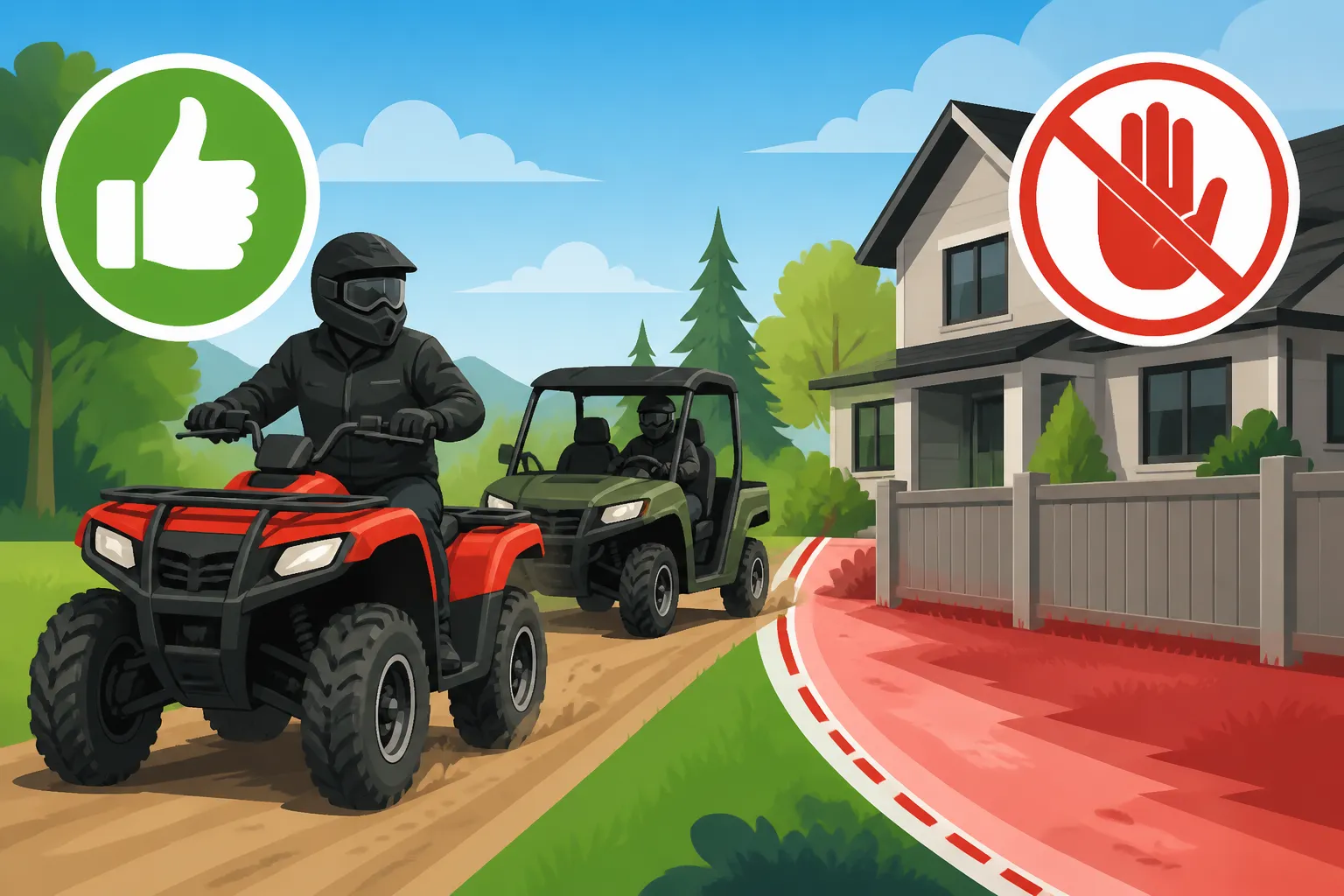
Quebec's Off-Highway Vehicle Act (LVHR) is quite clear on this: generally, you are prohibited from riding an off-highway vehicle within 100 metres of a dwelling. This "100-metre setback" is a significant distance, roughly the length of a football field. It's intended to create a buffer zone between the sounds and activities of off-road vehicles and the peace and quiet residents expect in their homes. This rule applies whether you're on a federated trail, a designated access route, or even on private land if it's not your own property or a specific exception applies. It's a blanket rule meant to prevent disturbance in residential zones. Think of it as a mandatory invisible shield around every home in Quebec, pushing quad riders back.
This rule often catches riders off guard, especially if they're used to riding in areas with less stringent regulations. You might be following a trail that seems perfectly legitimate, only to find it skirts a residential area a little too closely. It’s essential to be constantly aware of your surroundings and any visible homes. A great way to stay on the right side of the law is to plan your routes using the official [Quebec ATV Trails: The FQCQ Network] maps and the iQuad app, which typically show trail alignments that respect these setbacks. If you're riding in an unfamiliar area, slow down and keep a keen eye out for any houses that might pop up unexpectedly.
Why This Rule Exists: Noise and Nuisance
The primary reason behind the 100-metre setback is quite simple: noise reduction and nuisance prevention. Let's be honest, ATVs and side-by-sides, while incredibly fun, aren't exactly quiet machines. Even a well-maintained stock muffler can be startlingly loud to someone inside their home, especially early in the morning or late in the evening. This regulation acknowledges the legitimate concerns of residents who live near trails or common riding areas. The roar of an engine, the sound of tires on gravel, or even just the general presence of a machine can disrupt the peace of a neighbourhood.
Beyond just noise, there's also the element of privacy and safety. While most riders are respectful, the sight and sound of vehicles passing too close to homes can feel intrusive to residents. The 100-metre rule gives homeowners a reasonable expectation of privacy and a reduced risk of accidental issues, like dust, thrown debris, or simply the feeling of being "watched" as people pass by. It's all about balancing the recreational enjoyment of riders with the right of residents to live without undue disturbance. This rule is a cornerstone of [Quebec's Off-Highway Vehicle Act and Your Papers], ensuring harmonious coexistence between riders and communities.
What Constitutes a "Dwelling" in Quebec Law
Understanding what the law considers a "dwelling" is crucial because it's not always just a single-family home. In Quebec, a dwelling is generally defined as any building or part of a building that is occupied or designed to be occupied as a residence. This can include:
- Single-family homes: The most obvious example, from sprawling country estates to modest suburban houses.
- Cottages or chalets: Even if they're seasonal residences, they're still considered dwellings when occupied.
- Apartment buildings or condominiums: While you won't typically ride directly up to one, the rule applies to the building itself.
- Mobile homes or trailers: If someone resides there, it's a dwelling.
- Farmhouses: Though farm machines have some exceptions, the residence itself is protected.
Essentially, if someone lives there, or could live there, it generally falls under the umbrella of a "dwelling" for the purposes of this rule. This means that even a remote cabin in the woods, if it's someone's residence, is protected by the 100-metre setback. It's not about the type of structure, but its function as a place where people live. When in doubt, assume it's a dwelling and maintain your distance. Ignorance of what constitutes a dwelling won't excuse a violation in the eyes of a trail patrol or the Sûreté du Québec.
Exceptions and Nuances to the Setback Rule
While the 100-metre rule is broadly applied, like many laws, it does come with certain exceptions and important nuances that riders need to be aware of. Quebec recognizes that some situations require a more flexible approach, particularly concerning long-established trails or local community regulations. It's not always a black-and-white situation, and understanding these finer points can keep you compliant and out of trouble.
Grandfathered Trails: The 30-Metre Exception
One of the most significant exceptions to the 100-metre rule applies to what are often referred to as "grandfathered trails." These are specific segments of the federated trail network that were established and in use before January 1, 2012. For these particular trail sections, the required setback from a dwelling is reduced from 100 metres to 30 metres. This acknowledges that some trails were built and integrated into the landscape long before the more stringent 100-metre rule came into effect.
However, this isn't a carte blanche to ride closer to every house you see. This 30-metre exception is very specific to designated trail sections that meet the January 2012 cutoff. It's not something you can generally assume. The trail clubs, under the FQCQ (Fédération Québécoise des Clubs Quads), are responsible for maintaining and marking these trails, and they would be the ones to know which specific sections qualify. As a rider, unless you're absolutely certain that a specific segment of trail has this grandfathered status, you should always err on the side of caution and adhere to the 100-metre rule. Trying to argue a grandfather clause without definitive proof on the spot is a battle you're unlikely to win with a patroller. This is why staying on marked trails is so important, as clubs work hard to ensure compliance where possible.
Municipal By-Laws and Their Impact on Setbacks
Another layer of complexity comes from municipal by-laws. While the Off-Highway Vehicle Act sets the provincial standard, municipalities in Quebec have the authority to enact their own by-laws that can either be more restrictive or, in certain specific circumstances, provide additional access. This means that the rules regarding riding near houses can vary slightly from one town or region to another. For instance, a municipality might have a by-law that prohibits off-highway vehicles on specific local roads or within certain areas, even if those areas might technically be outside the 100-metre setback from a dwelling. Conversely, some towns might have specific [Quebec Municipalities That Opened Roads] to connect trails, and these routes are generally planned to minimize impact on residences.
It's your responsibility as a rider to be aware of any local by-laws in the areas where you plan to ride. This can be a challenge, as municipal regulations aren't always widely publicized for ATV riders. A good starting point is to check the website of the local municipality or contact the regional FQCQ club for information on specific local rules. If you're on a federated trail, the club will usually ensure their trails comply with all local regulations. However, if you're exploring areas outside the official trail network (where permitted), a quick check beforehand can save you from an unexpected ticket. The key takeaway here is that provincial law sets the minimum, but local rules can always add further restrictions.
Public Assemblies and Temporary Exemptions
There are rare situations where temporary exemptions to the 100-metre setback might apply, usually in the context of organized public assemblies or events. For example, if a town hosts a parade that involves ATVs, or a specific off-road event is held with permits, the organizers would typically obtain the necessary authorizations that might temporarily override certain aspects of the setback rule for the duration of the event. These are not everyday occurrences, and they always involve official permits and careful planning to ensure public safety and minimize disruption.
As an individual rider, you cannot simply decide to ignore the 100-metre rule for a "private assembly" or event. These exemptions are granted by authorities for specific, sanctioned occasions. If you are participating in such an event, the organizers will provide clear instructions on the approved route and any temporary waivers that are in effect. Outside of these very specific, officially sanctioned circumstances, the 100-metre rule remains firmly in place. It's always best to assume the rule applies, rather than hoping for a rare exception. This is another reason why adhering to official trails and organized events is the safest bet for compliance.
Here's a quick summary of the key setbacks:
| Situation | Standard Setback Distance | Notes |
|---|---|---|
| General Rule (post-Jan 2012 trail sections) | 100 Metres | Applies to most trails and any off-trail riding near a dwelling. |
| Grandfathered Trails (pre-Jan 2012 sections) | 30 Metres | Specific, designated trail sections only. Riders should confirm status with local club. |
| Municipal Roads (authorized access) | Varies | Depends on local by-laws; usually marked with specific signage. Still subject to general noise rules. |
| Public Assemblies (permitted events) | Temporary Exemption | Requires official permits and specific authorization. Not applicable to individual riding. |
Riding Legally and Respectfully in Populated Areas
Beyond just the 100-metre rule, there are several practical steps you can take to ensure you're riding both legally and respectfully when you're anywhere near houses or communities. It's about being a good neighbour and ambassador for the sport, minimizing your impact, and showing consideration for those who live nearby. This approach not only helps you avoid fines but also contributes to the overall positive perception of ATV and UTV riding in Quebec.
Keeping Noise Down: Mufflers and Riding Style
Noise is by far the biggest complaint from residents when off-highway vehicles are operating nearby. Your machine's muffler plays a critical role in managing its sound output. Quebec law mandates that your ATV or UTV must have a muffler that is in good working order and effectively reduces engine noise. Removing your muffler, tampering with it, or using an aftermarket exhaust system that is excessively loud are all violations that can lead to fines. Make sure your machine is equipped with a functional, compliant exhaust system. Sometimes, a simple inspection can reveal a loose baffle or a crack that's making your quad louder than it should be. Many riders choose quality aftermarket parts, like those from SuperATV, that are designed to meet or exceed OEM specifications while often offering performance benefits, ensuring your machine remains compliant while still performing well.
But it's not just about the equipment; your riding style makes a huge difference. When you're near houses, or even just approaching a village on a designated access road, ease off the throttle. Avoid aggressive acceleration, revving the engine unnecessarily, or riding at high speeds. Think about [Riding Quietly Past Cottages] – it's about being mindful. Shift into a higher gear, maintain a steady, low RPM, and simply cruise past. A slow, consistent rumble is far less disruptive than bursts of acceleration or engine braking. Remember, sound carries, especially in quiet rural areas. Being considerate with your throttle hand is one of the easiest ways to be a good neighbour and avoid [Quebec Noise Complaints About Quads].
Observing Speed Limits Near Dwellings
Speed limits are another crucial factor, especially when you're riding near homes. While trails often have a default 50 km/h limit (or 70 km/h for snowmobiles on shared trails), this general rule doesn't always apply when you're in proximity to residential areas or on designated access roads. Many municipalities impose lower speed limits on their roads, and even on trails, if they pass through or near populated zones, it's wise to reduce your speed significantly. You might encounter specific [Quebec Municipal Road Access Up to 1 Kilometre] signs, which often come with reduced speed advisories.
Going slower gives you more time to react to unexpected obstacles, reduces the amount of dust you kick up, and, crucially, dramatically cuts down on the noise your machine generates. A machine moving at 20 km/h is far quieter and less imposing than one flying by at 50 km/h. When you see a dwelling, consider it a natural slowdown zone. Not only does this show respect for residents, but it also protects you from potential [Quebec Speeding Fines From $90] which can escalate quickly depending on how far over the limit you're caught. Always prioritize safety and respect over speed, especially in areas where people live.
What to Do If Approached by Residents or Patrols
Sometimes, despite your best efforts, you might find yourself approached by a concerned resident or a trail patrol officer. This can be a stressful situation, but how you react can make all the difference.
- Be Polite and Respectful: If a resident approaches you, even if they seem agitated, stay calm and be polite. Listen to their concerns without interruption. A simple "I understand your concern, I'm trying my best to be respectful" can go a long way. Avoid confrontation at all costs. Often, a calm and apologetic response can de-escalate the situation far more effectively than arguing.
- Comply with Patrols: If a trail patrol officer, local police, or Sûreté du Québec officer stops you, always comply immediately and respectfully. Turn off your engine, remove your helmet, and have your documents ready. They will likely ask to see your [Quebec ATV Registration With the SAAQ], your [Quebec Annual FQCQ Trail Pass], and your driver's license. [Quebec Equipment Checks by Patrols] are common, so ensure your machine is compliant. Refusing to cooperate can lead to additional charges and fines.
- Know Your Rights (and the Rules): While you should always be cooperative, it's also helpful to have a basic understanding of the rules. Knowing the 100-metre setback, the 30-metre exception, and that your [Quebec's 50 km/h Speed Limit for ATVs] applies on trails (and often lower in residential zones) helps you understand the interaction. If you believe you were riding legally, you can politely explain your actions, but do so calmly and without argument. You'll get your chance to contest any tickets later, but on the trail, compliance is key.
- Learn from Feedback: Whether it's from a resident or a patrol, take any feedback as a learning opportunity. Perhaps you didn't realize how far sound carries, or you missed a small dwelling tucked away. The goal is to be a responsible rider, and sometimes that means adjusting your habits based on local conditions and community feedback. Companies like SuperATV also provide various accessories, from quieter exhaust tips to improved suspension components, that can contribute to a smoother, less disruptive ride, helping you meet expectations in sensitive areas.
By understanding and respecting these rules and adopting a considerate riding style, you can continue to enjoy Quebec's vast off-highway vehicle network while fostering a positive relationship with residents and ensuring the longevity of access to our incredible trails.
Disclaimer
This article is for general informational purposes only and does not constitute professional advice. Laws, prices and regulations vary by location and change over time. Consult a qualified professional for guidance on your specific situation.