What the LVHR Replaced
For a long time, riders across Quebec faced a patchwork of rules and a lot of uncertainty about what they could and couldn't do with their off-road vehicles. It was a common source of frustration, feeling like you needed a lawyer just to understand if you could ride down the street to the gas station or if your teenager was allowed on the trails. This guide is here to untangle that, explaining exactly what the new Loi sur les véhicules hors route (LVHR), or Off-Highway Vehicle Act, replaced and why these changes were so necessary for the safety and clarity of our riding community.
The Old Régime: Why Change Was Needed
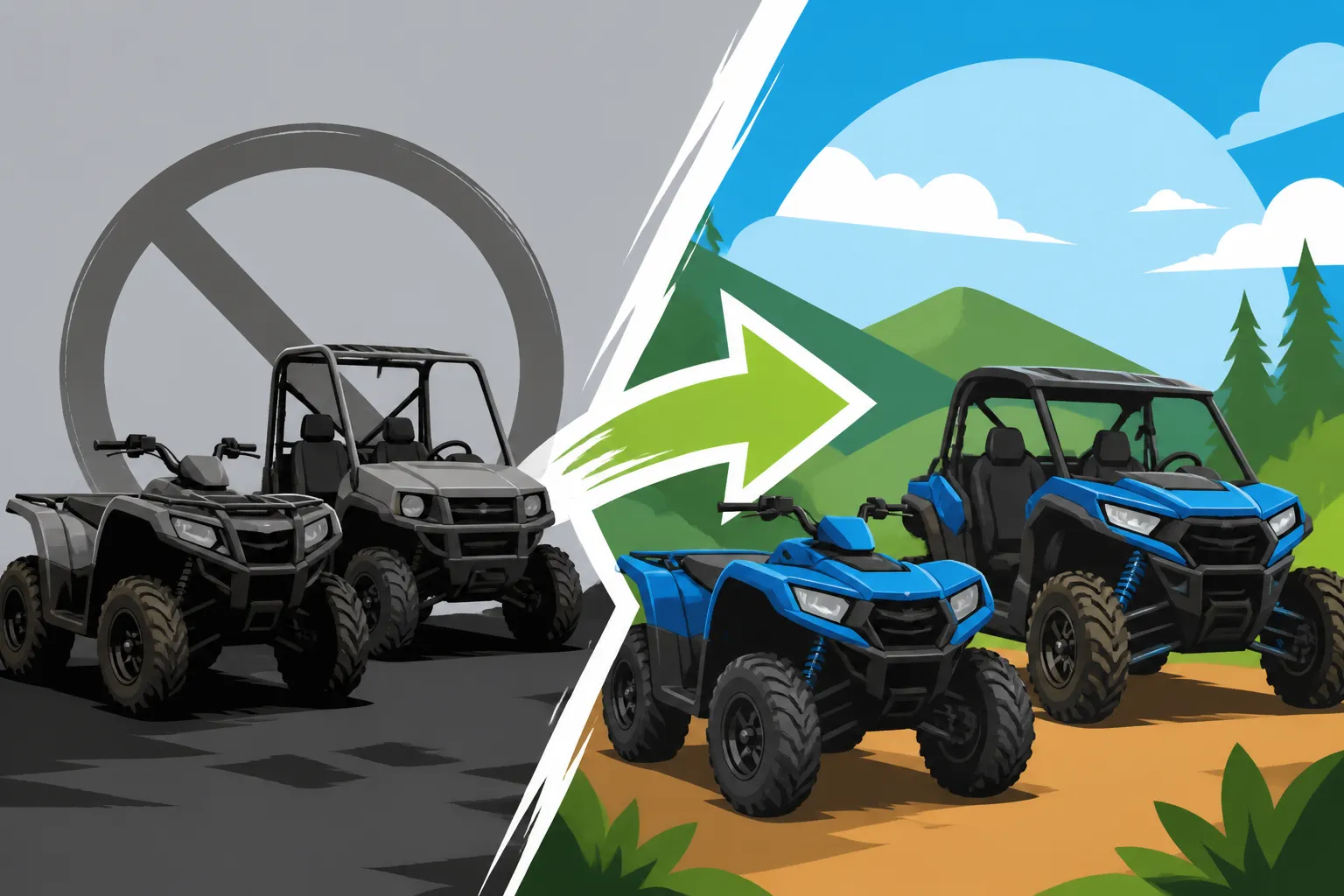
Before the LVHR came into effect in September 2021, the landscape for off-road vehicle (OHV) enthusiasts in Quebec was, to put it mildly, a bit messy. The previous legislation, while well-intentioned, hadn't kept pace with the evolution of the sport, the increasing power of machines, or the growing number of riders. This led to a lot of grey areas and inconsistencies that created real headaches for everyone involved, from individual riders to the clubs that maintained our beloved trail networks.
Inconsistent Rules Across Municipalities
One of the biggest pain points for riders was the sheer variability of rules depending on where you were in the province. Imagine planning a multi-day trip, only to find out that what was perfectly legal in one town became a ticketable offense just a few kilometres down the trail in the next. Some municipalities allowed limited road access, others strictly forbade it, and there was no universal standard. This made it incredibly difficult to navigate, and it often left riders feeling confused and, frankly, exposed to fines simply because they weren't aware of a local by-law that differed from what they knew back home. It was a constant game of "guess the rule," which nobody enjoyed playing. This local variation particularly affected those who used their machines for practical purposes, like getting to a hunting camp or a remote cottage, where a short stretch of road was unavoidable.
Ambiguity Around Age and Licensing
Another major issue was the lack of clear, consistent regulations regarding rider age and the necessity of a driver's licence. Before the LVHR, while there were general guidelines, the specifics could often be blurry, leading to varying interpretations and enforcement. For parents, figuring out exactly when their child could legally ride a quad, especially on designated trails or during supervised outings, was a constant source of anxiety. This ambiguity didn't just affect families; it also posed a safety risk. Without clear age and licensing requirements, there was less assurance that riders had the necessary skills and maturity to operate these powerful machines safely, particularly on shared trails where speeds could be high and conditions unpredictable. This situation sometimes led to tragic accidents, highlighting the urgent need for a more robust and unambiguous framework to protect all users.
Limited Road Access and Safety Concerns
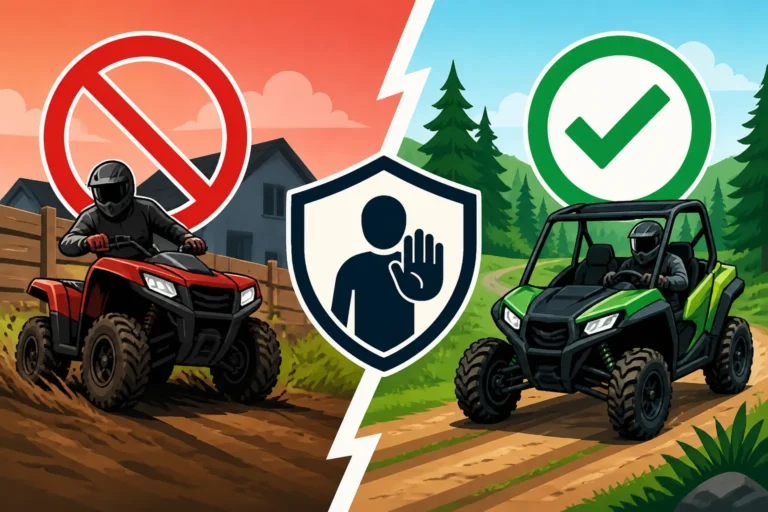
The old act also had significant limitations concerning how and where off-road vehicles could interact with public roads. For many riders, accessing trails or essential services like gas stations and restaurants often meant traversing short sections of municipal roads. Under the old rules, these crossings and short stretches were often either illegal or subject to highly restrictive conditions, which were not always clearly communicated or uniformly enforced. This created a dilemma: obey the letter of an often impractical law and potentially risk safety by seeking alternative, perhaps more dangerous, routes through ditches or private land, or break the law by using the road for a brief, necessary stretch. The LVHR sought to address this by providing more defined parameters for road access, aiming to enhance safety for riders and other road users by bringing some much-needed order to these interactions.
Key Changes Introduced by the LVHR
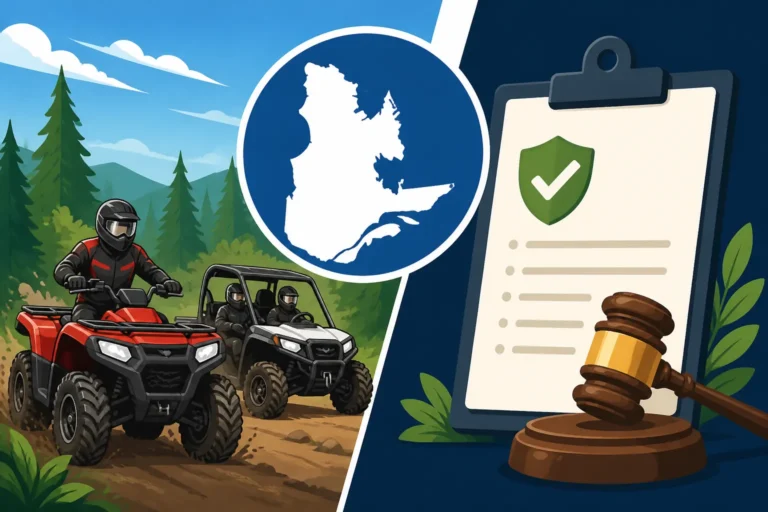
The Loi sur les véhicules hors route, which came into full force on September 10, 2021, wasn't just a tweak; it was a comprehensive overhaul of how off-road vehicles are regulated in Quebec. It addressed many of the frustrations riders had faced for years, aiming to standardize rules, enhance safety, and bring clarity to an often-confusing legal landscape. This new act finally gave a clear answer to many of the questions that lingered in the community. You can read more about [What the LVHR Replaced].
Mandatory Driver's Licence and Age Rules
One of the most impactful changes was the introduction of a mandatory driver's licence requirement for anyone operating an off-road vehicle on trails or public land. This meant that the days of just jumping on a quad without any formal driving credential were officially over. Now, to hit the trails, you need a valid driver's licence, such as a Class 5 for cars or another equivalent. This aligns the operation of OHVs more closely with other motor vehicles, emphasizing responsibility and a baseline understanding of road rules. Furthermore, the LVHR firmly established specific age requirements: riders must be at least 16 years old to operate an ATV, and those between 16 and 18 must also hold a valid training certificate issued by a recognized organization like the FQCQ. For side-by-sides, the minimum age was set even higher, at 18 years old, reflecting the increased size and power of these machines. This measure was a direct response to safety concerns and aimed to ensure that riders have a certain level of maturity and training before operating these vehicles. More details can be found in [Quebec ATV Age Requirements] and [Do You Need a Licence for an ATV in Quebec?].
Standardized Road Access Guidelines
To combat the municipal patchwork problem, the LVHR introduced standardized rules for limited road access. This was a huge relief for many riders. While off-road vehicles are generally not permitted on public roads, the new act created specific exceptions for short distances. Riders can now legally use public roads for up to one kilometre to connect two trail sections or access services like fuel, food, or lodging, provided the municipality has authorized it and proper signage is in place. This eliminated much of the ambiguity and provided a clear, consistent framework across the province. However, it's crucial to remember that this isn't a carte blanche to ride anywhere; strict conditions apply, including speed limits and rules about riding on the shoulder. This structured approach aims to balance rider convenience with public safety, ensuring that road interactions are predictable and controlled. Understanding these new rules is key for any rider, and you can delve deeper into [Quebec Municipal Road Access Up to 1 Kilometre].
Enhanced Safety Equipment and Passenger Rules
The LVHR also brought updates to safety equipment requirements and passenger rules, putting a strong emphasis on protecting riders. Helmets, of course, remain mandatory, but the act clarified specifications, often requiring a visor or goggles. This is a critical detail that some riders might overlook, but it's all about ensuring maximum protection. When it comes to passengers, the law now strictly adheres to the manufacturer's design. If your ATV is designed for one rider, you cannot carry a passenger. For machines designed to carry more than one person, like many side-by-sides or two-up ATVs, passengers must always occupy a seat intended by the manufacturer and use seat belts if provided. This closed a loophole where people might dangerously carry extra passengers or ride two-up on a single-seat machine, which was a significant safety hazard. These regulations are designed to prevent injuries and fatalities, ensuring that every rider and passenger is as safe as possible while enjoying the trails. For more on this, check out [Quebec ATV Helmet Rules] and [Quebec Rules for Passengers on a Quad].
Specific Rules That Were Updated
The LVHR didn't just introduce broad categories of change; it meticulously updated specific rules that govern the day-to-day operation of off-road vehicles in Quebec. These granular changes directly impact how and where you can ride, influencing everything from the speed you maintain on a trail to how you cross a road. Understanding these specifics is vital for staying compliant and ensuring a safe and enjoyable experience.
Age and Machine Type Distinctions
One of the most critical clarifications brought by the LVHR pertains to the age of riders relative to the type of machine they operate. Prior to the new act, there was sometimes confusion, especially with the rise of various machine types. The LVHR explicitly states that a rider must be 16 years old to operate an ATV (VTT, véhicule tout-terrain). However, for larger, multi-passenger side-by-sides (VHR, véhicule hors route), the minimum age is now 18. This distinction acknowledges the differing characteristics and power levels of these vehicles. It's not just about getting behind the handlebars; it's about the responsibility that comes with controlling a potentially powerful machine. The act further specifies that 16 and 17-year-olds need a specific safety training certificate from the FQCQ to ride on federated trails, even if they have a driver's licence. This ensures that younger riders gain essential safety knowledge before hitting the public trail networks. These rules aim to match rider maturity and training with the demands of the machine, making our trails safer for everyone.
Strict Speed Limits and Road Crossing Protocols
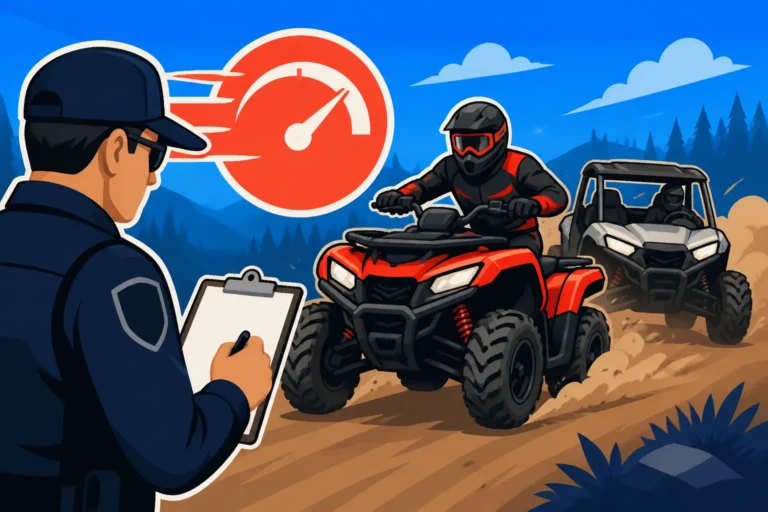
The LVHR also brought clarity and stricter enforcement to speed limits and how off-road vehicles interact with public roads. On federated trails, the maximum speed limit for ATVs is now a consistent 50 km/h. While some might find this restrictive, it's a measure designed to reduce accident severity and protect wildlife and other trail users. Exceeding this limit can result in significant fines. When it comes to crossing public roads, the act lays out precise protocols. Crossings must be made at a right angle to the road, and operators must yield to all other traffic. There are also specific sightline requirements, meaning you must have an unobstructed view for a certain distance in both directions before proceeding. These detailed rules replace the more ambiguous guidelines of the past, reducing the guesswork and aiming to minimize dangerous encounters between OHVs and road traffic. It's a fundamental shift from a general "be careful" approach to a clear, actionable set of safety directives.
Muffler and Noise Regulations
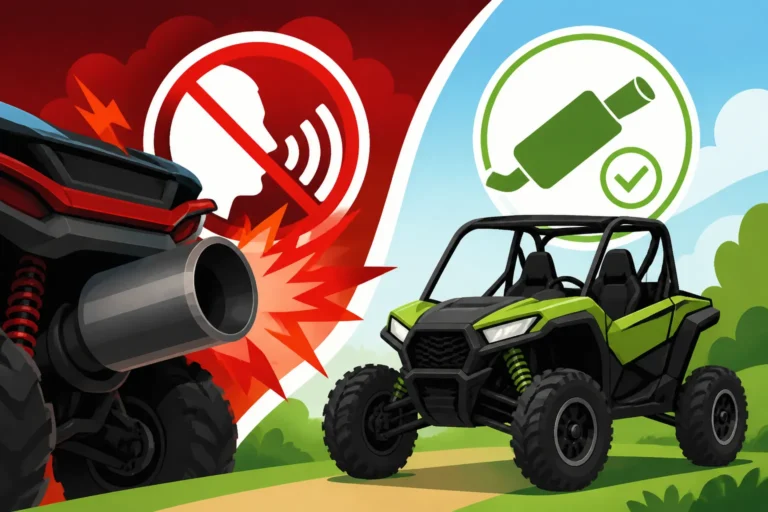
Noise has always been a point of contention between off-road enthusiasts and local residents. The LVHR sought to address this by reinforcing regulations around mufflers and vehicle noise levels. The act requires that all off-road vehicles be equipped with a muffler in good working condition, conforming to the manufacturer's specifications. It explicitly prohibits the use of modified, cut, or removed mufflers, as well as devices that amplify engine noise. This means that aftermarket exhaust systems that significantly increase noise output, even if they claim performance benefits, might put you in violation of the act. The intention here is to reduce noise pollution, particularly in residential areas or near cottages adjacent to trails, fostering better coexistence between riders and non-riders. While companies like SuperATV offer a wide range of performance-enhancing parts, it's essential for riders to ensure that any modifications, especially to the exhaust system, still comply with Quebec's strict noise regulations to avoid fines and maintain access to trails.
Impact on Riders and Clubs
The LVHR wasn't just a set of new rules; it fundamentally reshaped the experience of off-road riding in Quebec. For individual riders, it meant a new learning curve and adjustments to long-held habits. For the clubs that form the backbone of our extensive trail network, it brought both new responsibilities and a clearer framework for their vital work.
Daily Riding Habits and Compliance
For many seasoned riders, the changes meant a significant shift in their daily riding habits. The days of a quick hop onto a quad without considering a licence or age certificate were over. Now, every ride requires a check of documents – driver's licence, proof of registration, and for younger riders, the FQCQ training certificate. The standardized road access rules, while a welcome clarity, also demand a more cautious and informed approach when traversing public ways; you can't just take any road, and signage is paramount. This shift has arguably made riding more organized and safer, but it also placed a greater onus on individual riders to be aware of and adhere to the law. It meant more proactive engagement with the rules, understanding the distinctions between a 16-year-old on an ATV and an 18-year-old on a side-by-side, and being prepared to show your papers to a trail patrol. The learning curve was real, but ultimately, it was about creating a more responsible and respected riding community. [Quebec Insurance Proof on the Machine] and [What a Patrol Can Ask to See] are good reads for preparing for your next ride.
Club Responsibilities and Trail Management
Quebec's off-road clubs, particularly those federated under the FQCQ, found themselves with new responsibilities and a clearer mandate under the LVHR. These clubs are the unsung heroes who maintain thousands of kilometres of trails, and the new act solidified their role in promoting safety and compliance. With standardized rules, clubs now have a more consistent legal framework to operate within, reducing the local variations that once complicated trail management. They play a crucial role in educating riders about the new laws, ensuring proper signage for road access points, and working with municipalities to gain official authorization for these stretches. Furthermore, the emphasis on age, licensing, and safety training means clubs are more involved in verifying rider eligibility and ensuring that everyone on their trails meets the legal requirements. This often means more vigilance from trail patrols and a renewed focus on safety initiatives. While it added to their workload, the LVHR also empowered clubs to maintain safer, more orderly trail systems, which benefits all members. [Quebec ATV Trails: The FQCQ Network] provides more context on their role.
Enforcement and Penalties
The LVHR also brought a stronger hand to enforcement and outlined clearer penalties for non-compliance. This was a necessary step to give the new rules teeth. Patrol officers, whether from the Sûreté du Québec or authorized club patrols, now have clear guidelines for checking licences, registration, and ensuring adherence to age restrictions and equipment rules. Fines for violations, such as riding without a licence, on prohibited roads, or with an unapproved muffler, were clearly defined and can be substantial. For example, riding a federated trail without a valid trail pass or the required licence can lead to significant financial penalties, far beyond the cost of simply buying the pass or getting properly licensed in the first place. The aim isn't just to punish, but to deter dangerous behaviour and promote a culture of responsibility. Riders must understand that the days of casual disregard for the rules are over, and enforcement is now more consistent and robust across the province. This includes understanding [Quebec Fines for Riding Without a Licence] and other penalties.
Navigating the New Landscape
The LVHR has undeniably transformed the Quebec off-road scene. While the initial adjustment might have felt like a lot to take in, the goal was always to create a safer, more predictable, and ultimately more enjoyable environment for everyone. Navigating this new landscape successfully means being proactive, informed, and committed to responsible riding.
Staying Informed and Up-to-Date
The best way to adapt to the LVHR is to stay continually informed about its provisions and any subsequent updates. The SAAQ (Société de l'assurance automobile du Québec) website is a primary resource, offering detailed information on registration, licensing, and specific regulations. The FQCQ (Fédération des clubs de motoneigistes et de VTT du Québec) also provides invaluable resources, including information on safety training, trail passes, and trail conditions. Joining a local club is highly recommended, as they are often the first to receive updates and can provide localized advice. Attending club meetings or reading their newsletters can keep you abreast of changes that might affect your riding area. Remember, ignorance of the law is not an excuse, so taking the time to understand the rules is a personal responsibility for every rider. You can find comprehensive information on [Quebec's Off-Highway Vehicle Act and Your Papers].
Essential Documents and Equipment Checks
Before every ride, especially if you're venturing onto federated trails or might briefly interact with public roads, make it a habit to perform essential checks. First, ensure you have all your necessary documents: your driver's licence, your machine's registration certificate, and your trail pass (if applicable). For younger riders, the FQCQ training certificate is also a must-have. Keep these documents in a waterproof bag on your person or securely stored on your machine. Secondly, conduct a quick equipment check. Is your helmet in good condition and correctly fitted? Does it have a visor or are you wearing goggles? Are your headlights, taillights, and brake lights functional? Is your muffler intact and not overly loud? While companies like SuperATV provide fantastic accessories and upgrades, always double-check that any modifications still allow your machine to meet Quebec's legal requirements for safe operation and noise levels. These simple steps can save you from fines and ensure your safety. For a practical list, consider reviewing [Quebec Registration Paperwork Checklist].
Promoting a Culture of Safety and Respect
Ultimately, the success of the LVHR in making Quebec's off-road environment safer and more enjoyable depends on all of us. It's about fostering a culture of safety and respect—respect for the rules, for other trail users (whether they're on a quad, a snowmobile, or hiking), for landowners, and for the environment. This means riding within the speed limits, yielding to others, staying on marked trails, and always being prepared. It also means educating newer riders, gently reminding fellow enthusiasts about the rules, and setting a good example. When the off-road community embraces these principles, it not only enhances safety but also strengthens our collective reputation, which can lead to better trail access and continued enjoyment for generations to come. The LVHR replaced a less defined past with a clearer future, and it's up to every rider to champion that vision.
| Aspect of Regulation | Before LVHR (Pre-September 2021) | After LVHR (Post-September 2021) |
|---|---|---|
| Rider's Licence | Often not explicitly required for OHV operation | Mandatory driver's licence (e.g., Class 5) |
| Minimum Age (ATV) | Varied, sometimes ambiguous | 16 years old |
| Minimum Age (Side-by-Side) | Less defined, sometimes same as ATV | 18 years old |
| Training Certificate (16-17) | Not consistently required | Mandatory FQCQ-issued certificate (for 16-17 year olds) |
| Road Access | Highly inconsistent, varied by municipality, often illegal | Standardized, limited (up to 1 km) with municipal authorization & signage |
| Passenger Rules | Often vague, led to unsafe practices | Strict adherence to manufacturer's seating capacity & safety equipment |
| Trail Speed Limit | Varied, sometimes higher or less enforced | 50 km/h (on federated trails) |
| Muffler/Noise | Less stringent, more room for modification | Strict adherence to factory standards, modified mufflers prohibited |
Disclaimer
This article is for general informational purposes only and does not constitute professional advice. Laws, prices and regulations vary by location and change over time. Consult a qualified professional for guidance on your specific situation.