Quebec Passenger Rules on an ATV
Riding an ATV or UTV in Quebec is an incredible way to experience the province's vast natural beauty, from the rolling Laurentians to the rugged Gaspesie. However, many riders, especially those new to the sport or visiting from out of province, often find themselves scratching their heads over the specific rules about carrying passengers. It's not as simple as just hopping on and going, and misunderstandings can lead to fines or, worse, accidents. This comprehensive guide will walk you through everything you need to know about who can ride with you, where they can sit, and what safety precautions are absolutely essential, ensuring your adventures on Quebec's trails are both fun and fully compliant with the law.
Understanding the Foundation: Quebec's Off-Highway Vehicle Act
Before we dive into the nitty-gritty of carrying passengers, it’s crucial to understand the legal bedrock that governs all off-highway vehicle (OHV) operation in Quebec. This isn't just a set of suggestions; these are laws designed to keep everyone safe and preserve the trail system. When you're out there enjoying the fresh air and stunning scenery, remember that every ride happens within a legal framework that dictates everything from your registration to the equipment you need.
The Legal Framework: Why Rules Exist
Quebec's off-highway vehicle rules are rooted in the Act Respecting Off-Highway Vehicles (LVHR). This legislation isn't some arbitrary collection of bureaucratic hurdles; it's a carefully crafted set of guidelines aimed at minimizing risks for riders, passengers, and other trail users, while also protecting the environment. Think of it as the grand playbook for all things quad and side-by-side in Quebec. It dictates who can operate a machine, where they can ride, and critically for our discussion today, under what conditions passengers can be carried. Ignoring these rules isn't just a risk for a fine; it significantly increases the chance of an injury or a serious accident, turning a day of enjoyment into a regrettable memory. You can learn more about the specifics of this overarching law by reading [Quebec's Off-Highway Vehicle Act and Your Papers].
The spirit of the LVHR is preventative. It aims to create a predictable and safe environment for all recreational users. For instance, requiring specific equipment or dictating age limits for drivers and passengers directly addresses common causes of ATV accidents, such as loss of control due to improper loading or inexperienced operation. These rules also help maintain harmonious relationships between riders and landowners, whose cooperation is vital for the extensive trail network we all enjoy. When everyone adheres to the rules, the entire community benefits from safer trails and a more sustainable riding culture.
Defining an ATV in Quebec Law
In Quebec, what most people call an ATV (All-Terrain Vehicle) is officially referred to as a VTT (Véhicule Tout-Terrain). The law differentiates between various types of off-highway vehicles, and this distinction is crucial when it comes to passenger rules. A traditional ATV/VTT typically has a straddle-style seat, handlebars for steering, and is designed for a single rider or, in some cases, a driver and one passenger, depending on its factory design.
Contrast this with a side-by-side (SxS) or UTV (Utility Task Vehicle), which generally features bucket seats, a steering wheel, and often a roll cage, resembling a small off-road car. These machines, while also off-highway vehicles, have different capacities and therefore different rules regarding passengers. Understanding which category your machine falls into is the very first step in determining how many people you can legally and safely carry. If you're unsure about the legal definition, remembering the key difference often comes down to the seating: straddle vs. bucket.
The SAAQ's Role in Safety
The Société de l'assurance automobile du Québec (SAAQ) plays a central, multifaceted role in off-highway vehicle safety and regulation in the province. While many associate the SAAQ primarily with vehicle registration and driver's licenses for cars, they are also the registrar and insurer for ATVs and UTVs. This means they are the authority behind things like your VHR plate and mandatory liability insurance, which every owner must carry.
Beyond the administrative side, the SAAQ is deeply involved in promoting road and trail safety. They develop educational campaigns, publish official guides, and enforce the regulations set out in the LVHR. When you receive a registration renewal notice, or if you ever have questions about specific rules, the SAAQ is the primary government body to consult. Their involvement ensures a consistent application of the law and a constant focus on preventing accidents, which includes very specific guidelines on who can be a passenger and how they must be equipped. Their role is to make sure that the rules aren't just written down, but that they are communicated and ultimately contribute to a safer environment for everyone enjoying Quebec's outdoors.
Specific Rules for ATV Passengers
Now, let's get into the heart of the matter for traditional ATVs – the rules surrounding carrying passengers. This is an area where many riders make assumptions, often with unintended consequences. The law is quite clear, and it largely revolves around the design of your specific machine.
Factory-Designed Seating Capacity
The most critical factor in determining if you can carry a passenger on your ATV is whether the machine was specifically designed by the manufacturer for more than one person. Most standard ATVs are single-rider machines, period. These are typically smaller, nimbler quads where the seat is clearly engineered for one person to straddle comfortably. Attempting to squeeze a second person onto such a machine, even for a short distance, is not only illegal but extremely dangerous, as it throws off the machine's balance and handling capabilities.
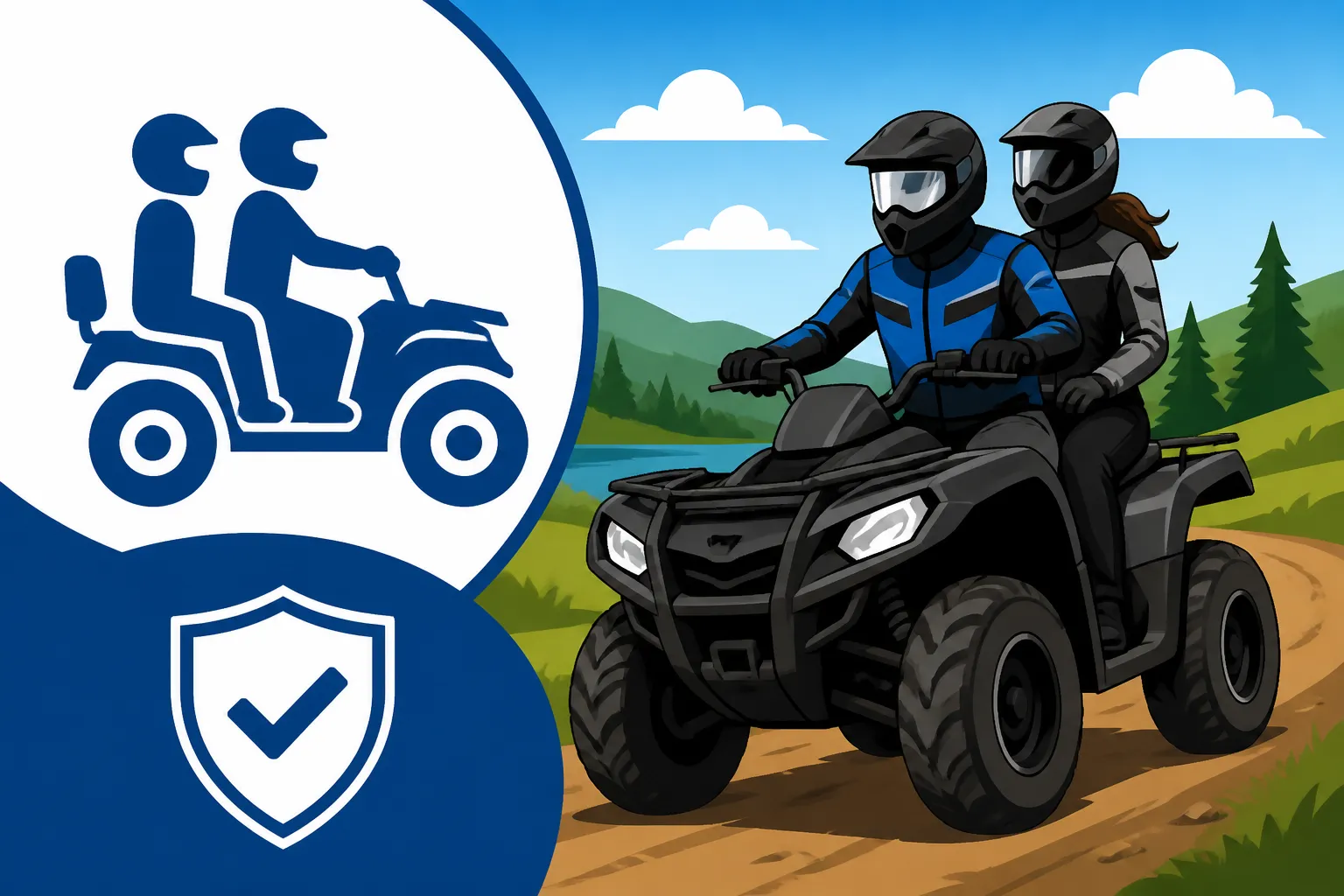
However, some ATVs are manufactured as "two-up" models, or tandem ATVs. These machines have an extended seat, often with a raised rear portion, footrests for the passenger, and sometimes grab handles. If your ATV is a factory two-up model, then carrying one passenger is permitted, provided all other conditions are met. Always check your ATV's owner's manual or the manufacturer's specifications to confirm its designed seating capacity. Never assume a slightly longer seat means it's okay for two. Riding a single-rider ATV with a passenger is a direct violation of the law and puts both individuals at serious risk.
Age and Physical Requirements for Passengers
Even if your ATV is a factory two-up model, there are still rules about who can be your passenger. In Quebec, passengers on an ATV must be able to sit securely and have their feet firmly on the designated footrests. This is a common-sense safety measure; if a passenger can't maintain their position, they could easily fall off during bumps, turns, or acceleration. This rule often implicitly sets a minimum height or size for passengers, even if a specific age isn't always explicitly stated for adult passengers.
Furthermore, passengers must be able to hold onto the designated grab handles, if available, or firmly around the driver. This ensures they can brace themselves and move with the machine and driver, reducing the risk of being unseated. For youth, there are additional, stricter age requirements which we'll cover in more detail shortly. These rules aren't about exclusion; they're about ensuring that anyone riding as a passenger has the physical capability to stay safe and secure on a machine that can be quite dynamic on the trails. When considering modifications, remember that accessories like those from SuperATV are great for enhancing performance or utility, but they don't change the fundamental legal requirements for passenger safety or seating capacity.
Driver Responsibility with a Passenger
When you take on a passenger, your responsibilities as the driver escalate significantly. You are now accountable for the safety of two individuals. This means adjusting your riding style:
- Reduced Speed: You should absolutely ride slower and more cautiously. The added weight and altered balance of a passenger make the ATV handle differently, especially in turns, over bumps, and during braking.
- Increased Braking Distance: With extra weight, your ATV will require a longer distance to stop. Anticipate stops and apply brakes smoothly.
- Smooth Acceleration and Turns: Jerky movements can easily unbalance a passenger. Accelerate gently and take turns wider and at a reduced speed.
- Communication: Maintain clear communication with your passenger, especially on longer rides or challenging terrain. A simple hand signal or verbal check-in can go a long way.
- Vigilance: Be extra vigilant for obstacles and trail conditions. What might be a minor bump for a solo rider could be jarring or dangerous for a passenger.
Essentially, you need to drive defensively and with heightened awareness. Your passenger is relying on your judgment and skill. It's not just about obeying the letter of the law, but about exercising good judgment and prioritizing safety above all else when someone else's well-being is in your hands. Taking on a passenger is a privilege, and it demands a higher level of conscientious operation.
Side-by-Side (SxS/UTV) Passenger Considerations
Side-by-sides, or UTVs, have become incredibly popular in Quebec, offering a different kind of off-road experience that often includes seating for multiple people. However, just like ATVs, there are specific legal requirements regarding passengers that must be meticulously followed. Don't confuse the multi-seat capacity with a free-for-all; the law is precise.
Seating Capacity and Seat Belts
One of the primary appeals of a side-by-side is its capacity to carry multiple passengers, making it ideal for family outings or group rides. Unlike ATVs, which might only allow one passenger on a specific two-up model, side-by-sides are often designed with two, four, or even more seats. The crucial point here is that you absolutely cannot carry more passengers than the number of seats that were originally installed by the manufacturer and equipped with seat belts. For example, if your SxS has two bucket seats, you can carry one passenger. If it's a four-seater, you can carry three. It's that simple.
Furthermore, every single passenger, just like the driver, must be wearing a seat belt that is properly fastened at all times while the vehicle is in motion. This isn't optional. Side-by-sides, with their steering wheels and bench-style seating, give a false sense of security for some, but rollovers and collisions are very real risks. The seat belt is your primary restraint and a non-negotiable safety feature. Never allow a passenger to ride without their seat belt securely fastened. These rules directly tie into [Seat Belts and Factory Capacity] for safer riding.
Age Requirements for SxS Passengers
While side-by-sides generally have a more car-like feel, the age requirements for passengers are still a significant consideration in Quebec. For a side-by-side, the driver must be at least 18 years old. This implies a level of maturity and experience expected when operating a multi-passenger vehicle. While there isn't a hard-and-fast minimum age specified for a passenger on a side-by-side in the same way there is for an ATV, the underlying principle of being able to sit securely with feet on the floor and wear a seat belt applies.
Parents need to use their best judgment, ensuring that younger passengers can fit properly in the seat, are safely secured by the seat belt, and can understand and follow basic safety instructions. The ride can be bumpy and dynamic, so a very young child who cannot adequately brace themselves or whose body doesn't fit the seat belt correctly might not be safe. When you're kitting out your machine with high-performance parts, perhaps from SuperATV, always remember that superior mechanicals don't override the need for passenger compliance with legal and safety requirements. You can find more details on driver age requirements at [Quebec Side-by-Side Age Rule of 18].
Driver Responsibility with Multiple Passengers
Operating a side-by-side with multiple passengers means your responsibilities multiply. You are now responsible for everyone's safety, and the dynamics of the vehicle change dramatically with a full load.
- Vehicle Stability: With more weight, especially if unevenly distributed, the SxS will handle differently. Be mindful of its center of gravity, particularly on inclines, declines, and off-camber trails.
- Visibility: Passengers, especially taller ones, can obstruct your view, particularly to the sides or rear. Use mirrors effectively and be extra cautious when backing up or maneuvering in tight spaces.
- Noise and Distraction: A lively group of passengers can create distractions. Maintain focus on the trail and operating the vehicle safely.
- Weight Limits: Be acutely aware of your side-by-side's total weight capacity, including passengers and any gear. Overloading can strain the suspension, brakes, and engine, leading to mechanical failure and dangerous handling characteristics.
- Emergency Preparedness: With more people, consider carrying additional first-aid supplies and being even more prepared for potential breakdowns or emergencies.
Just like with an ATV, a smoother, more cautious driving style is paramount. Avoid aggressive maneuvers, sudden acceleration, or abrupt braking. Ensure all passengers are aware of the ride's inherent risks and are committed to following safety instructions.
Children and Youth as Passengers
The rules regarding children and youth as passengers are particularly strict and for very good reason: safety. Off-highway vehicles are powerful machines, and what might seem like a fun family outing can quickly turn tragic if the specific age, size, and supervision requirements aren't met. Quebec takes this very seriously.
Minimum Age and Size for ATVs
For ATVs (VTTs) specifically, the law has clear stipulations regarding youth passengers. A child under the age of 14 is generally prohibited from riding as a passenger on an ATV, even on a two-up model. There's a common misconception that if the ATV is designed for two, any age is fine, but this is not the case in Quebec. This rule is in place because younger children typically lack the physical strength, size, and cognitive ability to effectively brace themselves and react appropriately to the movements of an ATV. Their smaller stature means their feet may not reach the footrests, and their grip might not be strong enough for grab handles, making them highly vulnerable to being thrown off.
Even for children aged 14 and over, they must still meet the physical requirements: being able to sit securely, reach the footrests, and hold on firmly. This emphasizes that it's not just about age, but also physical development. Ignoring these rules puts a child in extreme danger and can result in significant fines for the driver. You can find a more direct breakdown of these guidelines in [Quebec Rules for a Child Passenger] and [Quebec Rules for Passengers on a Quad].
Parental Authorization and Supervision
For youth aged 14 and 15 who are eligible to ride as passengers on a two-up ATV (meeting all physical requirements), there's another layer of protection: they must have written parental authorization. This isn't just a formality; it ensures that parents are aware of the risks and have given their explicit consent for their child to participate. This authorization should be carried by the driver at all times, along with other necessary paperwork.
Beyond written authorization, the spirit of the law also encourages direct adult supervision. While a 14 or 15-year-old might be legally allowed, constant vigilance from the driver and potentially other adults in the riding group is essential. This applies whether you're riding on private land or on federated trails. The focus is always on ensuring the child's well-being and mitigating the inherent risks of off-highway vehicle activity.
Specific Rules for Youth Side-by-Sides
The rules for youth side-by-sides are a bit different, primarily because side-by-sides inherently offer a more enclosed and seat-belted environment. As mentioned earlier, while the driver of a side-by-side must be 18, there isn't a strict minimum age for passengers as long as they can be properly secured with a seat belt and their feet can reach the floor. However, this is where common sense and parental responsibility are absolutely paramount.
A child must fit the seat belt system correctly, meaning the belt should lie across their chest and lap without riding up onto their neck or abdomen. If a child is too small for the seat belt to fit properly, they should not be a passenger. This might mean using booster seats designed for vehicles if they are compatible and secure within the SxS, but always prioritize what the manufacturer recommends and what truly provides safety in an off-road environment. Just because a SxS has four seats doesn't mean it's safe for four toddlers. Always consider the child's size, maturity, and the terrain you'll be covering.
Equipment and Safety Gear for Passengers
Beyond who can ride, what they wear and carry is just as critical for safety. In Quebec, certain safety gear is mandatory for all off-highway vehicle users, including passengers. This isn't just about looking the part; it's about crucial protection in the event of an incident.
Helmet and Visor Requirements
This is non-negotiable: every single person riding an ATV or side-by-side in Quebec, whether driver or passenger, must wear an approved protective helmet. This helmet must be securely fastened and in good condition. Furthermore, the helmet must be equipped with a visor, or the rider must wear safety goggles. Sunglasses are not an acceptable substitute for eye protection when riding. The visor or goggles protect your eyes from dust, debris, insects, branches, and even unexpected splashes. For more detail, you can check [Quebec Helmet and Visor Rules].
It’s not enough to just wear any helmet. It must be a helmet designed for off-road use, compliant with recognized safety standards (such as DOT, ECE, or Snell). A bicycle helmet or a construction hard hat simply won't cut it. Inspect your helmets regularly for cracks, deep scratches, or worn straps, as these can compromise their protective capabilities. A damaged helmet offers little protection in a fall. Investing in a good quality, properly fitting helmet for every passenger is one of the most important safety decisions you'll make.
Appropriate Clothing and Footwear
While not always explicitly outlined in the law with the same detail as helmets, appropriate clothing and footwear are vital for passenger safety and comfort. Think about what you'd wear if you were riding a motorcycle or going hiking in rough terrain.
- Long Sleeves and Pants: Protect limbs from scrapes, branches, sun exposure, and bug bites. Denim or other durable fabrics are preferable to thin cotton.
- Over-the-Ankle Boots: Provide ankle support and protection from hot engine parts, debris, and potential impacts. Sneakers or open-toed shoes offer virtually no protection and are completely unsuitable.
- Gloves: Protect hands from blisters, scrapes, and cold, and improve grip.
- Layered Clothing: Quebec weather can be unpredictable, even in summer. Layers allow passengers to adjust to changing temperatures, keeping them comfortable and focused on the ride.
Even if you're just doing a short ride, encourage your passengers to dress for the conditions and potential hazards. Comfort leads to better focus, and proper protection can prevent minor bumps from becoming painful injuries. Some riders find that accessories from SuperATV can improve comfort and utility, like storage solutions for extra layers or water, which is always a good idea for any passenger.
Ensuring Passenger Comfort and Stability
A comfortable passenger is a safer passenger. An uncomfortable passenger is more likely to shift around, complain, and distract the driver, increasing the risk of an incident.
- Pre-Ride Briefing: Before setting off, talk to your passenger. Explain how to hold on, where to place their feet, and how to lean with the machine in turns. Tell them to inform you if they need a break or are uncomfortable.
- Foot Placement: Ensure their feet are securely on the designated footrests (for ATVs) or floorboards (for SxS) and remain there. Dangling feet can get caught on obstacles or hit the ground.
- Holding On: On an ATV, passengers should hold onto the driver's waist or hips, or the machine's grab handles if equipped. On a side-by-side, they should keep their hands inside the vehicle and on grab handles if available, or brace themselves.
- Regular Breaks: Especially on longer rides, take frequent breaks. Allow passengers to stretch, rehydrate, and simply take a breather. This is particularly important for children.
- Communicate: Consistently check in with your passenger. A quick "You good back there?" can make a big difference in their comfort and your peace of mind.
By prioritizing passenger comfort and stability, you’re not just being a good host; you’re actively contributing to a safer and more enjoyable experience for everyone on the trail.
Consequences of Non-Compliance
Breaking the rules regarding passengers on ATVs or side-by-sides in Quebec isn't just frowned upon; it carries serious legal and financial repercussions. It's vital to understand what's at stake before you decide to bend or break a rule. Ignorance of the law is never a valid defense, especially when safety is concerned.
Fines and Penalties for Violations
Quebec's off-highway vehicle patrols, which include provincial police (SQ) and authorized club patrollers, have the authority to issue tickets for violations of the LVHR. These fines are not trivial. For instance, carrying a passenger on a single-rider ATV, or exceeding the factory-designated capacity, can result in significant monetary penalties. Similarly, riding without a helmet or safety goggles will quickly lead to a fine. These penalties are designed to be a deterrent, emphasizing the seriousness of the safety regulations.
Beyond the initial fine, some violations can also lead to demerit points on your driver's license, depending on the severity and nature of the infraction. Accumulating too many demerit points can lead to license suspension, impacting your ability to drive not just your ATV but also your car. It's not just about a few hundred dollars; it's about your driving privileges and your record. Always make sure you're compliant to avoid these costly and inconvenient consequences. You can learn more about general penalties in [Quebec Penalties for Riding Unregistered].
Insurance Implications After an Incident
One of the most overlooked, yet potentially devastating, consequences of non-compliance involves your insurance coverage. Every ATV and side-by-side owner in Quebec is required to carry liability insurance, which is typically purchased through the SAAQ when you register your machine. This insurance protects you financially if you cause an accident that results in injury or damage to others. However, if you are found to be operating your machine in violation of the law – for example, carrying an illegal passenger, not wearing a helmet, or being underage – your insurance coverage could be jeopardized.
In the event of an accident where you were non-compliant, your insurer could deny coverage, leaving you personally responsible for potentially massive medical bills, property damage claims, and legal fees. Imagine the financial ruin if a passenger you illegally carried was seriously injured and your insurance refused to pay. This is a terrifying prospect and a powerful reason to always adhere strictly to all passenger and safety regulations. Your [Quebec Insurance Minimum for an Owner] provides a baseline, but that coverage is contingent on legal operation.
Safety Risks and Accident Prevention
Beyond the legal and financial ramifications, the most profound consequence of ignoring passenger rules is the increased risk of severe injury or even fatality. Off-highway vehicles, by their very nature, operate in dynamic, sometimes unpredictable environments. Adding extra weight, especially improperly, fundamentally alters the machine's handling characteristics:
- Reduced Stability: Overloading or improper passenger positioning can make an ATV or SxS much more prone to rollovers, especially on uneven terrain or during turns.
- Impaired Braking: More weight means longer stopping distances, significantly increasing the risk of collision.
- Compromised Steering: An unbalanced machine is harder to steer accurately, making obstacle avoidance more challenging.
- Ejection Risk: An improperly secured or undersized passenger can easily be ejected from the machine during a sudden jolt, turn, or collision, often leading to severe head, neck, or spinal injuries.
These aren't abstract risks; they are the very real dangers that the LVHR and its passenger rules seek to mitigate. The laws are there to protect you and those you choose to bring along for the ride. By understanding and respecting these regulations, you are not just avoiding fines; you are actively engaging in accident prevention, ensuring that your adventures on Quebec's beautiful trails remain safe and enjoyable for everyone involved.
Disclaimer
This article is for general informational purposes only and does not constitute professional advice. Laws, prices and regulations vary by location and change over time. Consult a qualified professional for guidance on your specific situation.